How to Dress Confidently for a Changed Body Over 50
Getting dressed can feel surprisingly different when your body changes, even when your personal style has stayed much the same. A pair of jeans may sit differently, a blazer may feel tighter through the arms, or a once-reliable outfit may no longer give you the same confidence.
Those changes can make your wardrobe feel confusing. But the issue is not that you suddenly need to dress a certain way because you are over 50. More often, your clothes simply need to catch up with your current proportions, comfort needs, and lifestyle.
You also do not have to throw away everything you own. A few changes to fit, fabric, proportions, and styling can help your existing wardrobe feel much more comfortable while still reflecting the woman you are today.
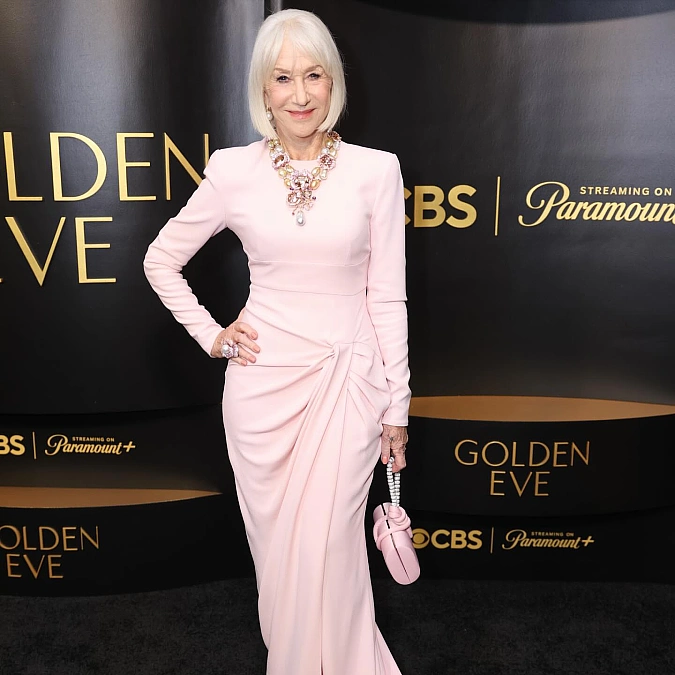
Stop Dressing for the Body Your Wardrobe Remembers
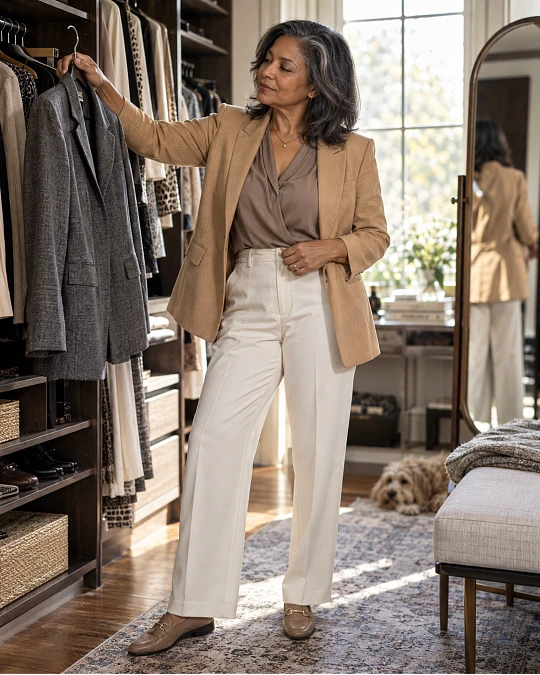
Image credit: Sagely Chic
It is easy to compare today’s clothes with the way your favorite outfits fit years ago. You may automatically reach for the same jeans rise, jacket shape, neckline, or trouser cut because those choices once made getting dressed simple.
There is nothing wrong with wearing familiar styles. The important part is making sure they still work with your current proportions. A style that suited you before may need a small adjustment rather than being completely abandoned.
Pay attention to what happens when you actually wear a garment today. Can you move easily? Does the material fall naturally? Can you sit without feeling restricted? Most importantly, do you like the shape you see?
Instead of trying to recreate your old wardrobe exactly, use your current body as the starting point.
Here is a more useful way to look at some familiar clothing rules:
| Old Rule | What Works Better Now |
|---|---|
| Keep buying your usual size | Choose the size that gives you the most comfortable and attractive fit today |
| Loose clothes hide everything | Combine relaxed pieces with enough structure to maintain shape |
| Fitted clothes always look smarter | Look for clothing that follows your shape without squeezing it |
| Dark colors are always more flattering | Wear color when it makes your outfit feel fresh and suits your personal taste |
| Certain styles are “too young” | Consider the fabric, proportions, and styling instead of relying on age labels |
The number printed on a clothing tag does not determine whether something looks good. How the garment sits, moves, and works with your proportions is much more useful information.
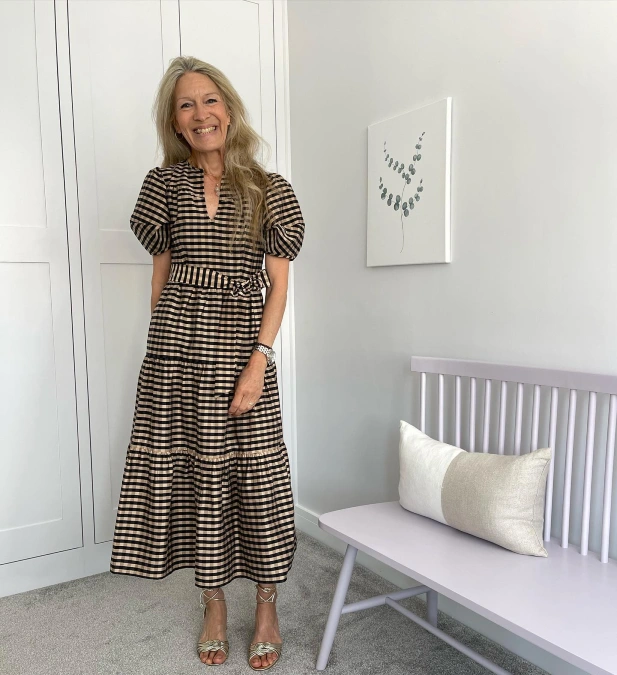
Start With Clothes That Fit Without Negotiation
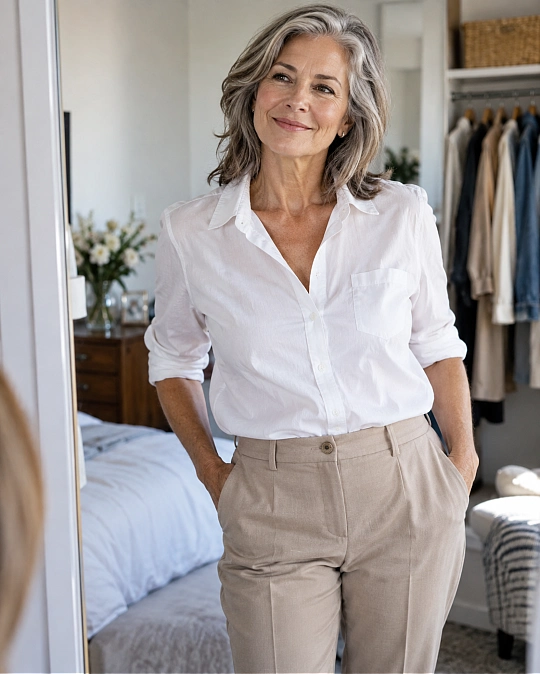
Image credit: Sagely Chic
A wardrobe becomes easier to wear when your clothes do not require constant adjustment. Waistbands should feel comfortable when you sit, shirts should not strain across the bust, and sleeves should allow normal movement.
Good fit can also change how you carry yourself. When you are not pulling down a top, readjusting a waistband, or checking whether a jacket is sitting correctly, you can concentrate on your day instead of your clothes.
Before buying replacements, try the trousers, jeans, jackets, knit tops, and dresses you already wear regularly. Separate the pieces that still feel good from those that consistently cause problems.
Look closely at exactly where the problem occurs. You may find that only one part of the garment is creating the issue.
- A trouser rise may not sit where you now find it most comfortable.
- A jacket may finish at an awkward point across the hips.
- A shirt may have plenty of room through the body but pull across the bust.
- A dress may fit well through the torso while restricting your arms.
- A waistband may feel fine while standing but become uncomfortable once you sit.
These observations give you practical information for future shopping. Instead of simply deciding that a garment “doesn’t suit you,” you can identify the particular feature that needs to change.
Fit note: When you are choosing between sizes, consider which part of the garment needs the most room. A waist or sleeve can sometimes be altered, while changing the basic shoulder or hip proportions of a garment may be much more difficult.
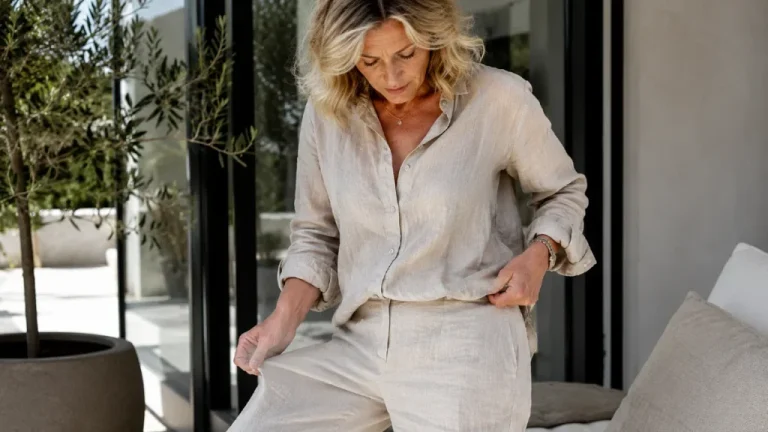
Let Fabric Skim Rather Than Cling or Collapse
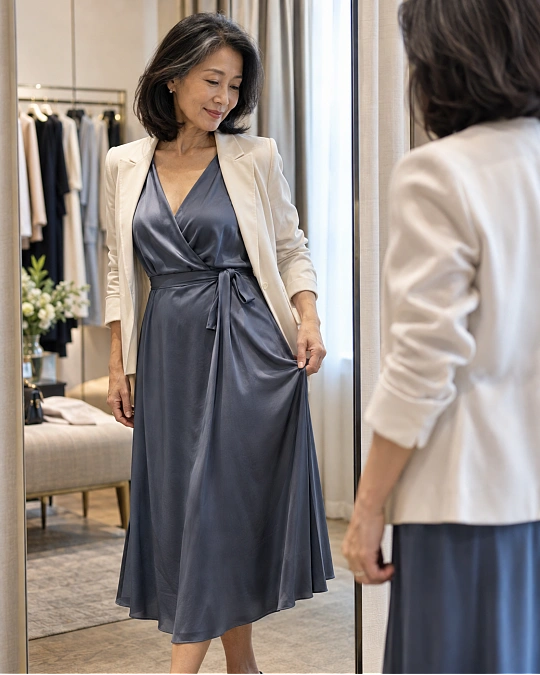
Image credit: Sagely Chic
The fabric of a garment can make a major difference to how polished and comfortable an outfit feels. Very lightweight materials may cling to layers underneath, while extremely thick fabrics can create more volume than you intended.
Look for materials that have enough body to hold their shape while still moving naturally. Depending on the garment, options such as soft denim, ponte, quality jersey, fine knits, linen blends, and fluid woven fabrics can all be useful.
Stretch can make clothing easier to move in, but stretch should not be used to compensate for a poor fit. If a garment only feels comfortable when the material is pulled tightly across your body, another size or cut may create a much cleaner result.
When shopping, use the following as a simple guide:
| Garment or Fabric | What to Look For and Why |
|---|---|
| Jeans | A little flexibility can improve comfort while still allowing the denim to maintain its shape |
| Trousers | A fabric with enough substance can fall smoothly from the hips instead of clinging |
| Knit tops | Fine or medium-weight knits can create a smoother line without feeling restrictive |
| Dresses | Fluid materials can provide movement while enough structure keeps the garment looking polished |
| Jackets | Soft tailoring can provide definition without making the shoulders or arms feel stiff |
Try this: Never judge a garment only while standing in front of a fitting-room mirror. Walk around, sit down, bend your arms, reach forward, and raise your hands. Your clothes should remain comfortable during the movements you actually make throughout the day.
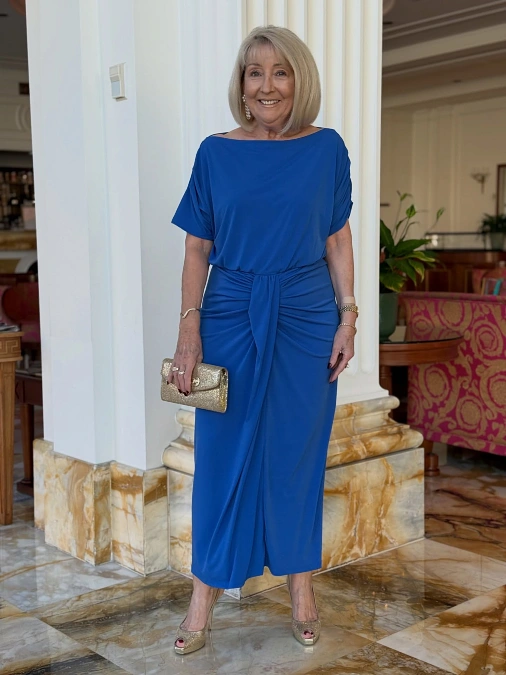
Use Proportion to Create Shape Without Hiding Yourself
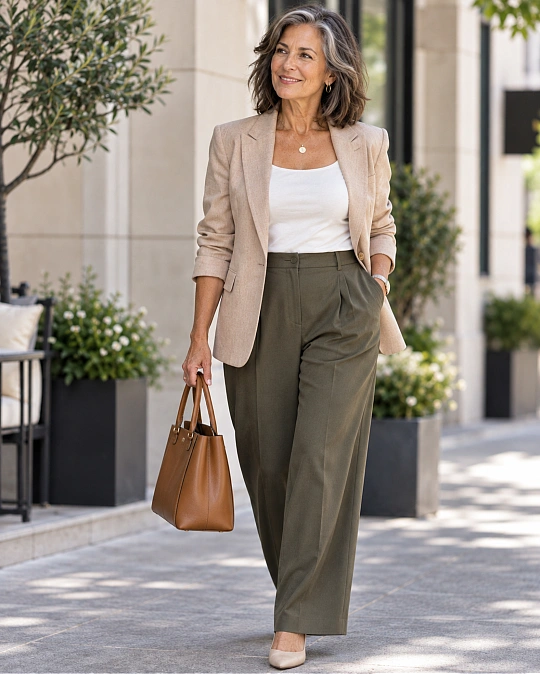
Image credit: Sagely Chic
When an outfit suddenly feels dated or shapeless, the problem may have more to do with proportion than your body. Wearing several oversized or very long pieces together can make an outfit lose definition.
Going too far in the opposite direction can create another problem. Multiple fitted garments may feel restrictive or expose more of your shape than you actually want to emphasize.
A simple solution is to create contrast between relaxed and structured pieces.
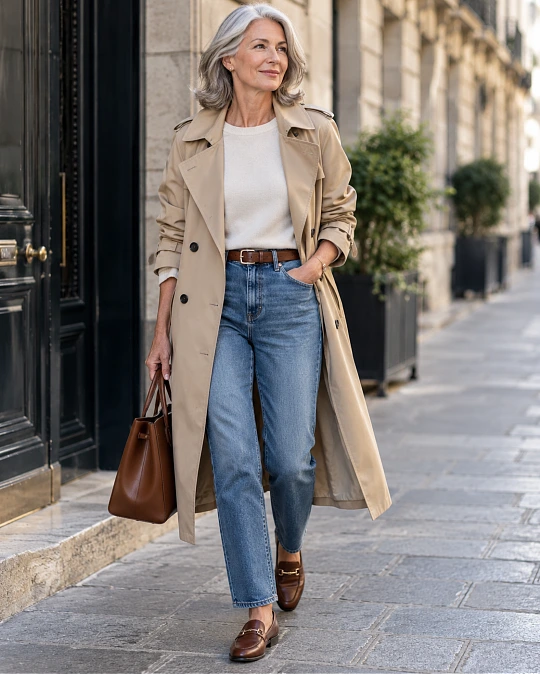
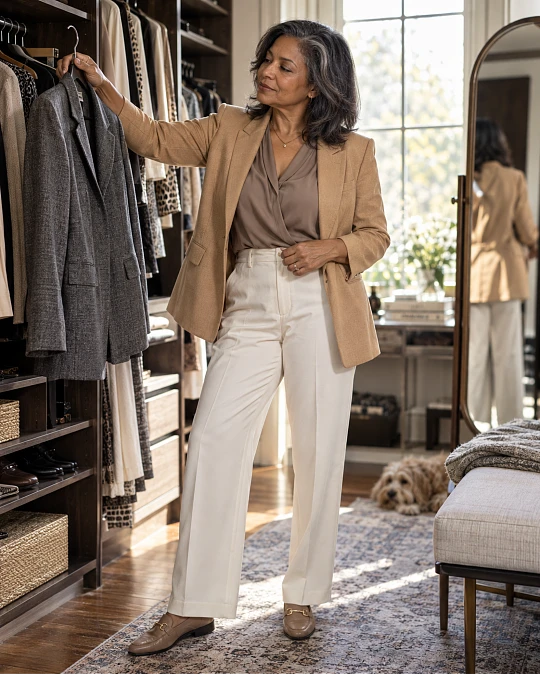
For example, wide-leg trousers can work beautifully with a neater sweater, partially tucked shirt, or shorter jacket. If an oversized shirt is your preference, straight-leg jeans or trousers can provide a cleaner shape underneath.
Do not overlook the importance of length. Moving a jacket slightly higher, shortening the visual line of a top, or creating a partial tuck can change an outfit without making anything tighter.
You can also create a sense of definition without drawing attention directly to your waist. An open jacket, vertical row of buttons, long necklace, layered top, or sharp trouser crease can give the outfit direction.
There is no universal silhouette that every woman over 50 needs to follow. The goal is simply to make the combination of lengths, volume, and structure look deliberate rather than accidental.
Build a Personal Formula Around the Clothes You Actually Wear
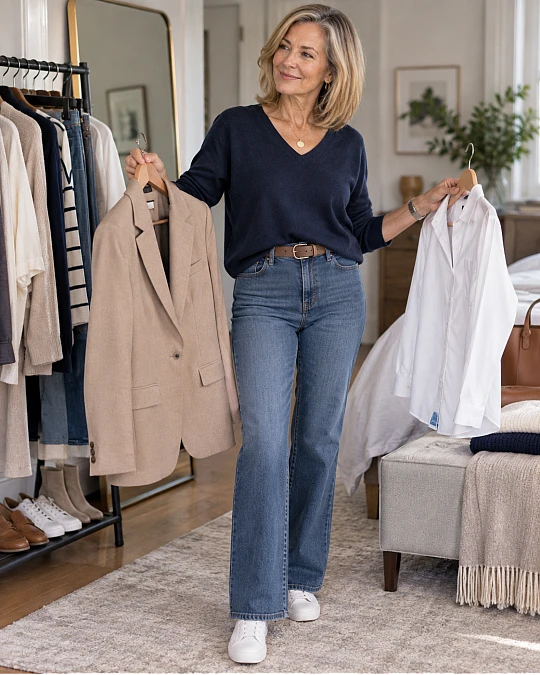
Image credit: Sagely Chic
Refreshing your style does not require creating an entirely different wardrobe. Often, it is easier to identify one combination that already feels comfortable and use it as the foundation for several outfits.
For one woman, that might mean straight-leg jeans with a soft sweater. For another, it could be wide-leg trousers with a crisp shirt. Your formula should reflect the clothes you genuinely enjoy wearing rather than an outfit formula you feel obligated to follow.
Once you know which proportions work for you, changing colors, shoes, jewelry, and layers can create variety without making your wardrobe complicated.
Here are several practical outfit formulas you can adapt:
| Occasion | Pieces | Why It Works |
|---|---|---|
| Errands | Straight jeans + relaxed knit + clean sneakers | A comfortable combination that still gives the outfit a defined shape |
| Lunch | Fluid trousers + tucked blouse + loafers | Soft fabric and an intentional tuck create balance |
| Casual workday | Dark jeans + knit top + soft blazer | Everyday basics gain polish from an easy structured layer |
| Travel | Pull-on trousers + fine knit + lightweight jacket + supportive shoes | Comfortable pieces provide freedom of movement without looking overly casual |
| Dinner | Midi dress + cropped jacket + low heel or sleek flat | A simple base and defined outer layer create a polished silhouette |
Think of these combinations as starting points rather than strict uniforms.
Keep the proportions that make you feel comfortable and change the details around them. A different neckline, color, shoe, necklace, or jacket can make the same basic structure feel completely different.
That approach can make a smaller wardrobe feel much more versatile without forcing you to buy something new every time you want a different outfit.
Use Tailoring Where It Makes a Visible Difference
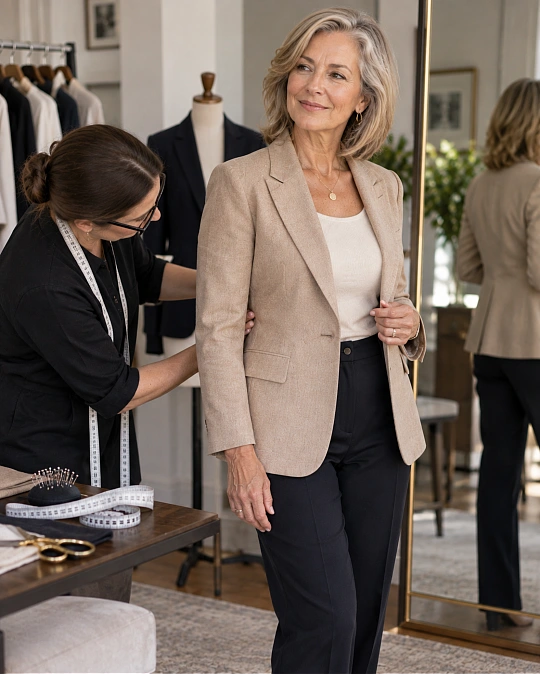
Image credit: Sagely Chic
Not every garment needs professional alterations, but a small adjustment can make a surprisingly large difference to a piece that is almost right.
Common alterations include shortening trouser hems, adjusting sleeves, refining a jacket waist, changing shirt length, or repositioning a button. These small changes can improve how a garment sits without changing its overall character.
This can be especially helpful when your proportions do not line up perfectly with standard ready-to-wear measurements. You might need extra room in one area while wanting less fabric somewhere else.
That is not unusual. Clothing is manufactured using standardized measurements, while real bodies naturally come in many different combinations of proportions.
Before giving away a good-quality garment because it does not fit perfectly, check whether the problem is something a tailor could realistically correct. A relatively small alteration may allow you to keep wearing a piece you already like.
Make One Small Wardrobe Change Today
You do not need to spend an afternoon shopping to begin improving your wardrobe.
Choose an outfit you wear regularly and look at it from head to toe. Instead of asking whether it makes you look younger or slimmer, consider whether the proportions feel balanced, the clothes are comfortable, and the overall look feels intentional.
Then make just one adjustment.
Try exchanging a long cardigan for a shorter jacket, replacing very fitted jeans with a straighter cut, partially tucking your shirt, changing your shoes, pushing up your sleeves, or choosing a neckline that gives the outfit more definition.
Making one change at a time helps you understand which styling choices actually work for you. It can be more useful than replacing an entire wardrobe without knowing what was wrong with the original outfits.
The goal is not to conceal the changes your body has gone through. It is to learn how your clothes can complement the body and lifestyle you have now.
Frequently Asked Questions
How can I look stylish after 50 if my body has changed?
Begin with clothing that fits comfortably and creates a balanced silhouette. Pieces that follow your shape without pulling, bunching, or restricting movement will generally feel more polished than garments chosen only because they are currently fashionable.
Once you have a comfortable foundation, bring in current details through accessories, footwear, colors, denim shapes, or jackets. You can update your look without abandoning your personal style.
Should women over 50 wear loose or fitted clothes?
There is no need to choose only one. A combination of ease and structure can create an outfit that feels comfortable while still looking intentional.
Try pairing relaxed trousers with a neater top or an oversized shirt with straighter trousers. The key is to choose clothes that have room to move without completely overwhelming your shape.
How do I stop feeling frumpy after 50?
Start by examining the proportions of the entire outfit. Several oversized layers, long tops, loose trousers, or bulky footwear worn together can make a look feel heavier than intended.
Try changing one element at a time. A different jacket length, a more defined shoulder, a partial tuck, a visible wrist or ankle, or a cleaner shoe can change the overall balance without requiring a complete wardrobe overhaul.
What clothes should I buy first after my body changes?
Start with the clothes you reach for most often. A comfortable pair of jeans or trousers, a versatile top, supportive everyday shoes, and one useful jacket can create the foundation for many outfits.
Build around your actual routine rather than buying clothes for an imagined lifestyle. The most useful wardrobe is one that works for the things you really do.
Do I need a whole new wardrobe after 50?
Not necessarily. Many garments can continue working when you combine them differently, adjust their proportions, or have a small alteration made.
Replace pieces gradually when they repeatedly feel uncomfortable, no longer fit the way you prefer, or no longer make sense for your current lifestyle. This gives you time to discover what you genuinely want from your wardrobe instead of replacing everything at once.