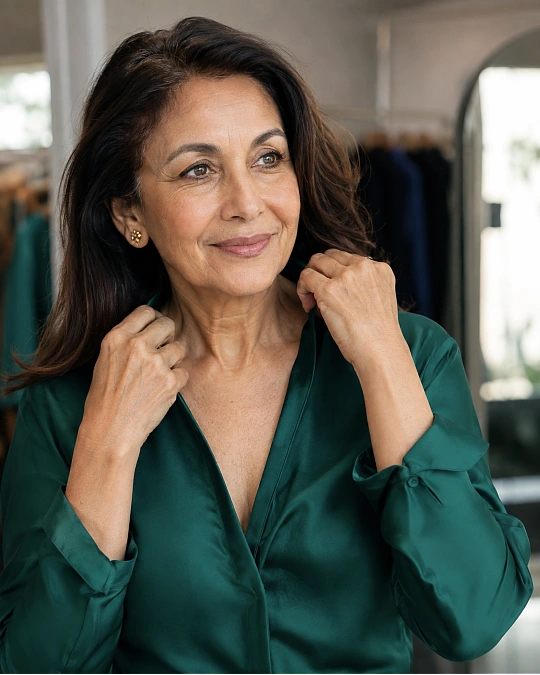
The old money aesthetic continues to attract attention because it feels polished without needing to look flashy. But recreating that style after 50 is not about copying outfits from social media or filling your closet with expensive labels.
The most wearable version of this look comes down to thoughtful basics, comfortable tailoring, quality-looking textures, and colors that work together.
A well-planned old money capsule wardrobe over 50 can make getting dressed much easier because the pieces are designed to mix, layer, and repeat.
The goal is simple: clothes that feel comfortable on your body while still giving every outfit a refined finish.
What Makes “Old Money” Style Work for Real Life
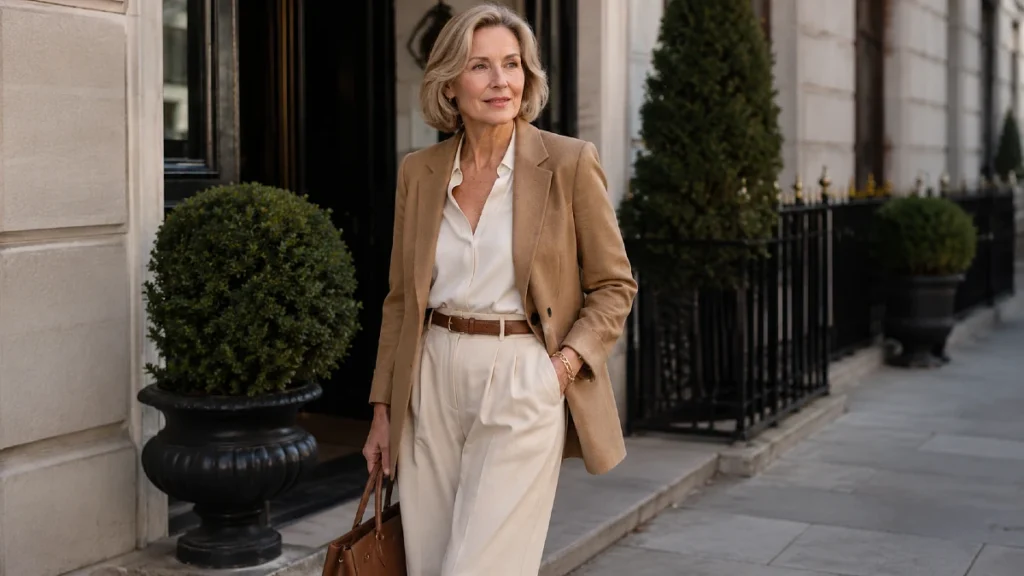
Image credit: Sagely Chic
The appeal of old money style comes from restraint rather than excess. Instead of relying on large logos, loud details, or constantly changing trends, the look usually centers on classic shapes, calm colors, and thoughtful styling.
For women over 50, this can be especially practical because the focus moves away from chasing every new trend and toward clothing that works consistently.
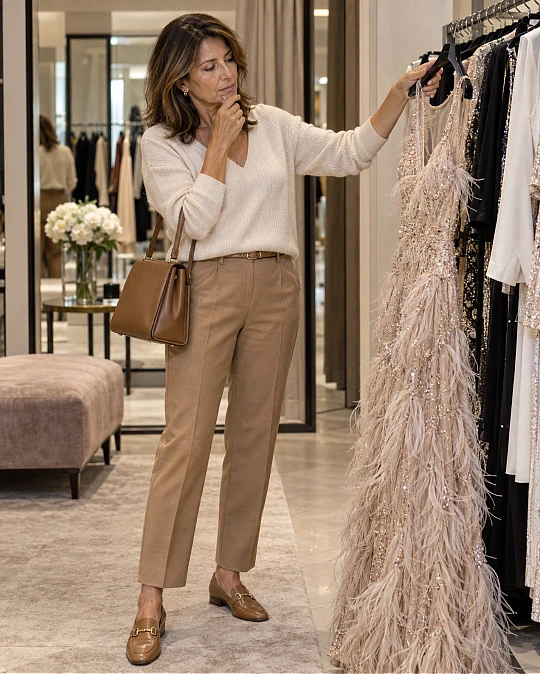
Neutral shades such as navy, ivory, camel, cream, chocolate brown, black, and soft gray can form an easy foundation.
Texture matters just as much as color. A softly knitted sweater, brushed wool coat, smooth leather loafer, or fluid blouse can make a simple outfit feel more considered.
The fit also makes a major difference.
Clothing does not need to be extremely tight to look polished. A softly structured jacket, straight trouser, or gently draped blouse can create a clean silhouette while allowing room to move.
The result is a wardrobe that looks intentional without feeling overly formal.
The Soft Tailored Foundation Pieces
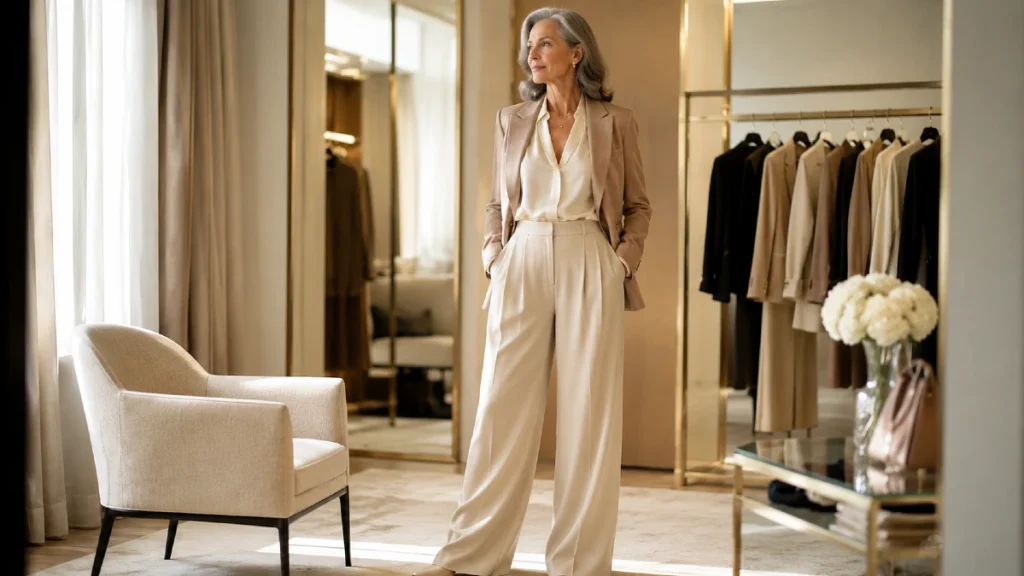
Image credit: Sagely Chic
A useful capsule wardrobe starts with pieces that can handle several different occasions.
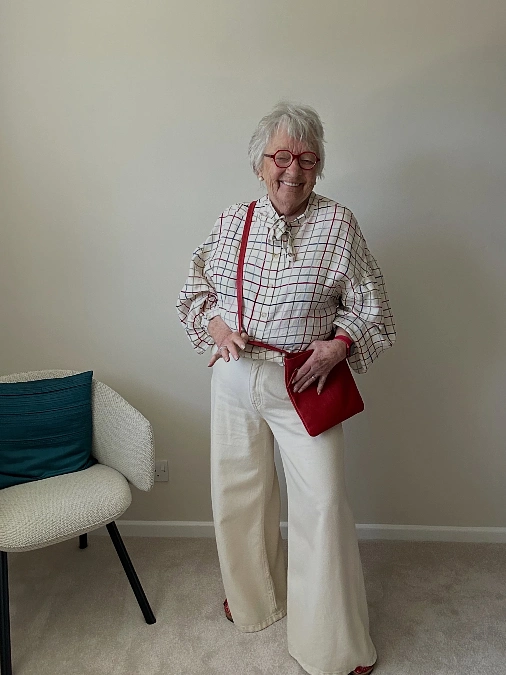
Trousers are an excellent place to begin. Straight-leg and wide-leg styles can create a long, clean line while still providing comfortable movement.
Look for fabrics with enough weight to drape smoothly without becoming stiff. Wool blends, crepe, structured viscose, and other fluid materials can work well depending on the season and climate.
A softly tailored blazer is another versatile foundation piece.
Instead of choosing a rigid jacket with strong shoulder pads, consider a softer construction that follows your natural shape and works comfortably over knitwear or a simple T-shirt.
A button-down shirt can also become one of the hardest-working pieces in the closet. Wear it tucked into trousers, open over a tank, or layered beneath a jacket.
| Garment | What to Look For | Why It Works |
|---|---|---|
| Trousers | Flat front, straight or wide leg, smooth drape | Creates a clean silhouette while allowing comfortable movement |
| Blazer | Soft shoulder, relaxed structure, single-breasted shape | Adds polish without making the outfit feel overly formal |
| Button-Down | Washed cotton, viscose, silk blend, or another fluid fabric | Can be styled tucked, untucked, layered, or worn open |
These pieces do not have to be expensive. The priority is finding versions that fit comfortably, coordinate with your existing wardrobe, and hold up well through regular wear.
Refined Layers That Do the Most Work
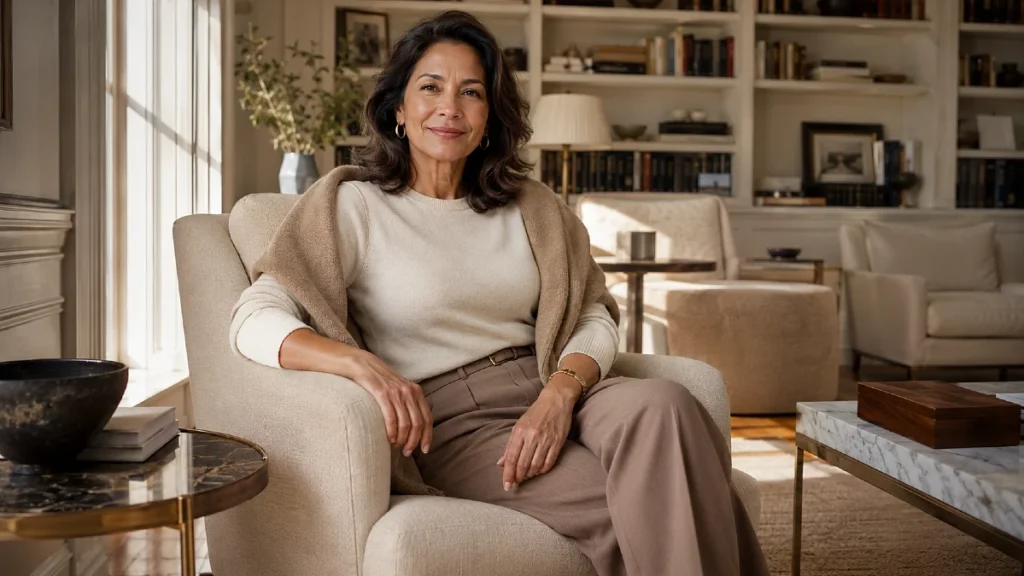
Image credit: Sagely Chic
The tops and knitwear in a capsule wardrobe often get more wear than statement pieces.
A fine-knit sweater in navy, camel, cream, ivory, or soft gray can work with trousers, jeans, skirts, and layered outfits throughout the year.
Natural fibers can feel particularly comfortable, but the most important factor is how the material performs for your lifestyle. A good sweater should feel pleasant against the skin, maintain its shape, and work with several outfits.
A striped cotton knit is another useful option. A classic stripe can add interest to neutral outfits without requiring complicated styling.
If you prefer a more refined appearance, look for a relaxed silhouette and a neckline that feels comfortable rather than choosing a very tight-fitting version.
Fabric note: When shopping for blouses, pay attention to how the fabric falls when tucked into trousers. Materials with some fluidity can create a smoother appearance without adding unnecessary bulk.
Keep a few different weights in your wardrobe as well. A lightweight knit can work under a blazer, while a slightly heavier sweater can become the main layer on cooler days.
The Outerwear That Pulls It All Together
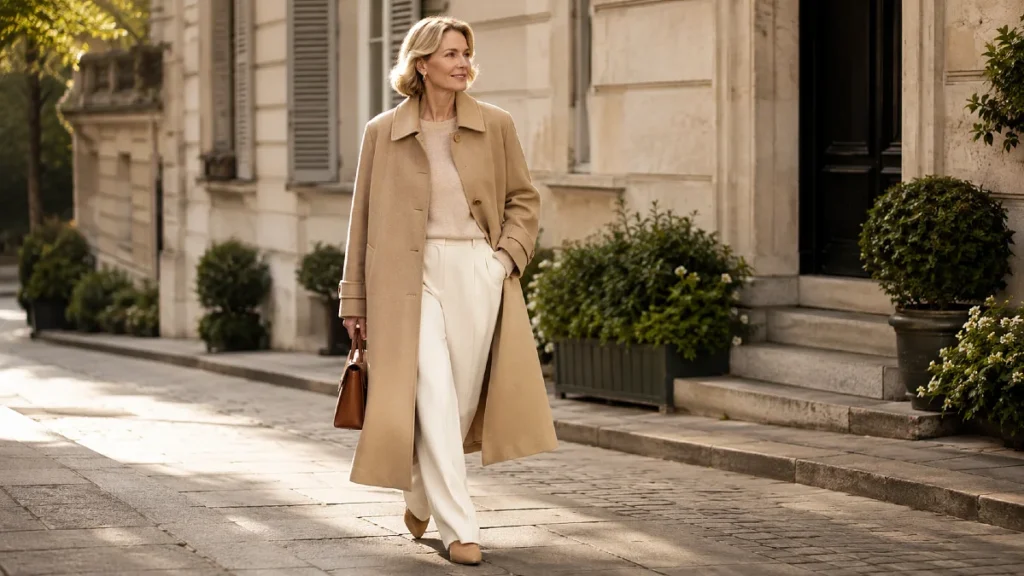
Image credit: Sagely Chic
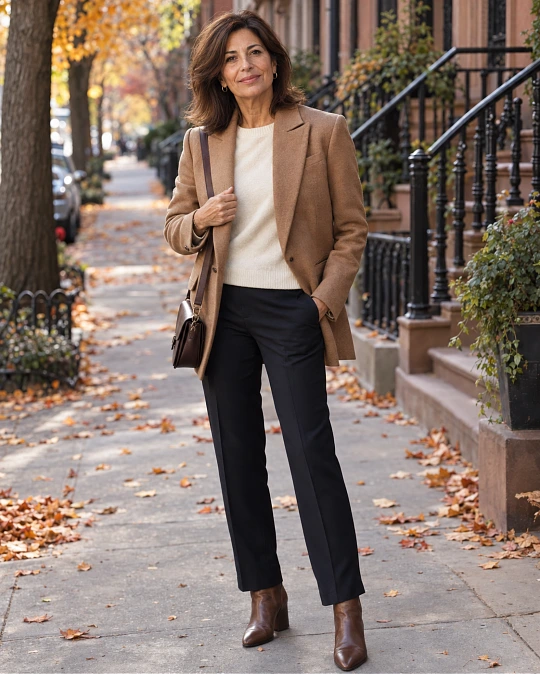
Outerwear can change the entire impression of an outfit in seconds.
A well-fitting coat or jacket can make simple jeans and a sweater look much more finished without requiring additional accessories.
A classic trench is one option worth considering. Choose a length and shape that work with your usual outfits rather than automatically choosing the traditional version.
Try this: If a double-breasted trench feels too heavy or overwhelming, look for a simpler single-breasted mac or lightweight belted coat.
For colder weather, a wool or wool-blend wrap coat can provide warmth while keeping the outfit visually clean.
The advantage of a wrap style is its flexibility. You can adjust the waist depending on whether you are wearing a thin blouse or several layers underneath.
To make your wardrobe useful throughout changing seasons, adapt the same outfit formulas instead of replacing them completely.
| Base Outfit Formula | Warm Weather Swap | Cool Weather Swap |
|---|---|---|
| Trouser + Knit Top | Lightweight short-sleeve knit + linen-blend trousers | Fine merino sweater + wool-blend trousers |
| Blazer + Jeans | Unlined linen blazer + light denim | Soft wool blazer + dark denim |
| Dress + Light Coat | Cotton shirt dress + lightweight mac | Knit midi dress + wool wrap coat |
This approach allows the same basic wardrobe to work across more months of the year.
Shoes and Details That Ground the Look
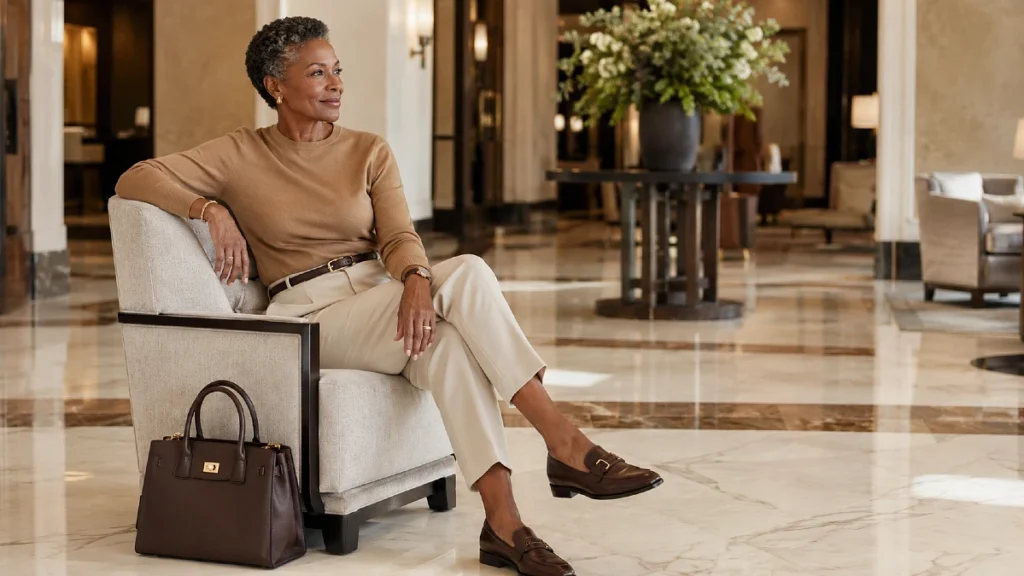
Image credit: Sagely Chic
Accessories do not need to be numerous to make a difference.
A carefully chosen pair of shoes can give a basic outfit a completely different personality.
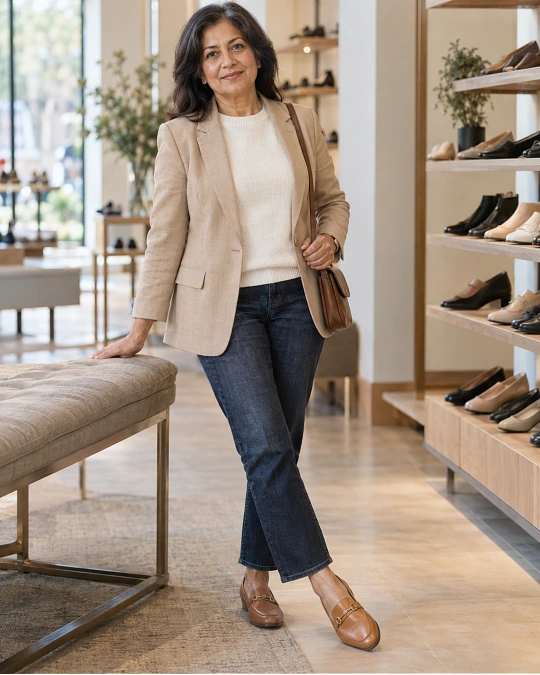
A sleek loafer in leather or suede is particularly versatile. It can work with trousers, straight-leg jeans, ankle-length pants, and even some skirts and dresses.
If you prefer a little height, a low slingback or modest block heel can provide a dressier finish without requiring a very high heel.
Pay attention to the shape of the shoe as well. A streamlined toe can complement tailored clothing, while a simple flat can keep casual outfits looking neat.
A belt is another small detail that can make an outfit feel complete.
Choose a simple leather style with a subtle buckle if you want something that works across several outfits. Matching the belt loosely with your shoes or handbag can create an easy sense of coordination.
The idea is not to accessorize every inch of the outfit. A few deliberate finishing touches are often enough.
How to Build This Capsule Without Overspending
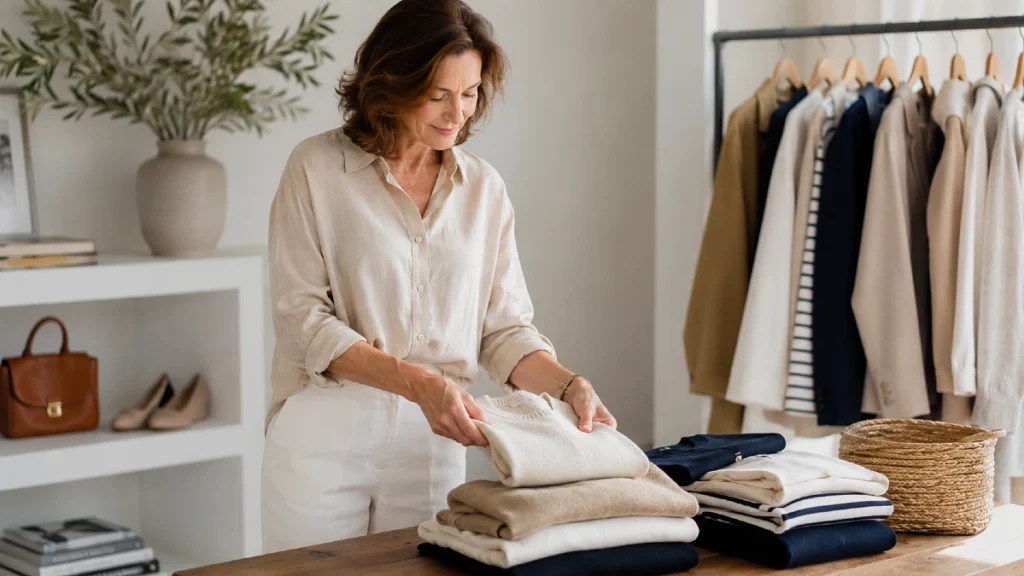
Image credit: Sagely Chic
Creating an old money capsule wardrobe over 50 does not require replacing everything you own.
Start with a closet audit.
Look for pieces you already have that fit the aesthetic: neutral colors, clean silhouettes, comfortable tailoring, simple knitwear, classic denim, and understated accessories.
You may discover that several of the foundations are already there.
When you do need to shop, think about where additional spending will make the biggest practical difference.
A comfortable sweater that gets worn constantly may deserve more attention than a special-occasion item that spends most of the year in the closet. The same can apply to shoes, trousers, coats, and everyday bags.
You can also build the wardrobe gradually. There is no reason to purchase ten new pieces in one shopping trip.
| Outdated Rule | What Actually Works Now |
|---|---|
| Everything must be fitted closely to show your shape. | Soft structure and relaxed proportions can create a polished silhouette too. |
| You need heels to make an outfit look dressed up. | Pointed flats, loafers, slingbacks, and low heels can all create a refined finish. |
| Blazers belong only in professional outfits. | A relaxed blazer can work just as well with jeans, knitwear, and casual basics. |
Capsule Wardrobe Rules
- Choose colors that coordinate naturally with the rest of your closet.
- Prioritize pieces you can wear in several different combinations.
- Buy for your current lifestyle rather than an imaginary future one.
- Check comfort as carefully as appearance.
- Choose quality where an item will receive frequent wear.
- Allow room for personal style instead of following the aesthetic too literally.
Frequently Asked Questions
What colors work well in an old money capsule wardrobe?
Classic neutrals such as navy, cream, ivory, camel, beige, gray, brown, and black provide an easy foundation. You can add muted greens, burgundy, dusty blue, or other understated colors when they complement the rest of your wardrobe.
Does an old money wardrobe have to be expensive?
No. The overall appearance comes more from coordination, fit, fabric, and simplicity than from a designer label.
Thrift stores, outlet sections, secondhand shops, and carefully chosen affordable brands can all provide useful pieces. Focus on how the garment looks, feels, fits, and works with what you already own.
How many pieces should an old money capsule wardrobe have?
There is no required number. A smaller wardrobe can work extremely well if the pieces coordinate and cover your real lifestyle.
Instead of counting every garment, consider whether you have enough tops, bottoms, layers, shoes, and outerwear to create several complete outfits for your normal week.
Can I wear jeans with an old money aesthetic?
Absolutely. Straight-leg or relaxed dark denim can work beautifully with a knit sweater, button-down shirt, loafers, or a softly tailored blazer.
The styling around the jeans often matters more than the fact that they are denim.
How can I make this style feel less formal?
Mix polished pieces with relaxed basics. Try a blazer with a simple T-shirt and jeans, a fine sweater with casual trousers, or loafers with everyday denim.
This keeps the wardrobe refined without making every outfit feel like it belongs at a formal event.
Conclusion
Building an old money capsule wardrobe over 50 is really about making your closet easier to use.
You do not need designer labels, uncomfortable tailoring, or a wardrobe full of strict rules.
Start with comfortable trousers, versatile knitwear, softly structured jackets, useful outerwear, classic shoes, and simple accessories.
Then choose colors and fabrics that work naturally with the clothes you already enjoy wearing.
The result can be a wardrobe that feels polished without feeling forced—and classic without looking dated.