15 NYC Winter Outfits: Essentials, Layers, Colors & Weather Tips
Winter in New York City calls for clothing that can handle cold temperatures, wind, occasional snow, and plenty of walking. The good news is that practical winter pieces can still look polished and fashion-forward.
A well-planned NYC winter wardrobe usually comes down to smart layering, dependable footwear, warm outerwear, and accessories that add personality without creating bulk. From relaxed streetwear to dressier evening combinations, there are plenty of ways to build outfits around the weather.
Below are 15 NYC winter outfit ideas, followed by practical guidance on winter essentials, layering, colors, patterns, and staying comfortable during colder days.
Here are 15 NYC Winter Outfits for women that will make you look chic and stay warm in NYC:
1) The Luxe Wool Coat Dream
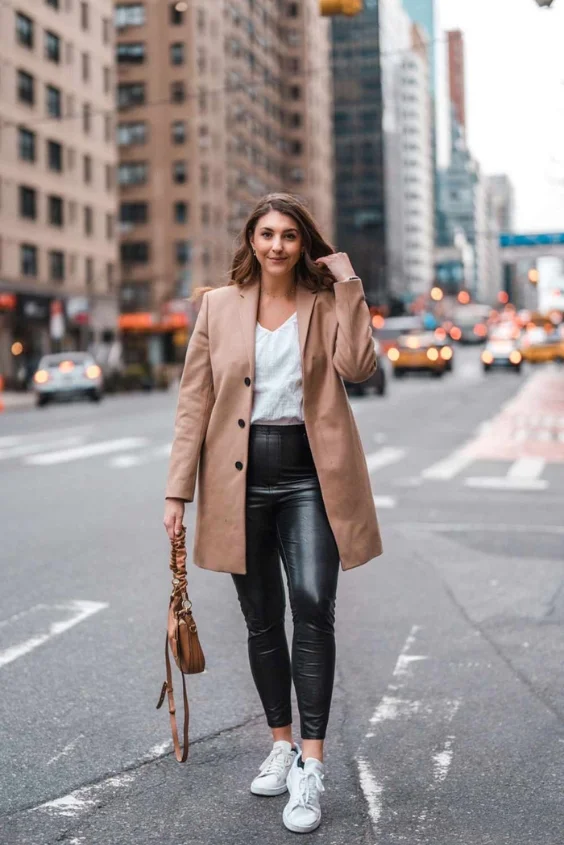
A long camel wool coat instantly gives a winter outfit a refined appearance. Wear it with a fitted cream turtleneck, black jeans, and knee-high boots for a balanced combination that works for city walks, brunch, shopping, or casual dinners.
Finish the look with a soft cashmere or wool scarf and a compact crossbody bag. Gold or minimal jewelry can add a polished detail without making the outfit feel overdone.
Pro tip: If you expect to spend a lot of time outdoors, choose a wool coat with enough room for a warm sweater underneath rather than buying an extremely fitted style.
2) Streetwear in a Puffer Jacket
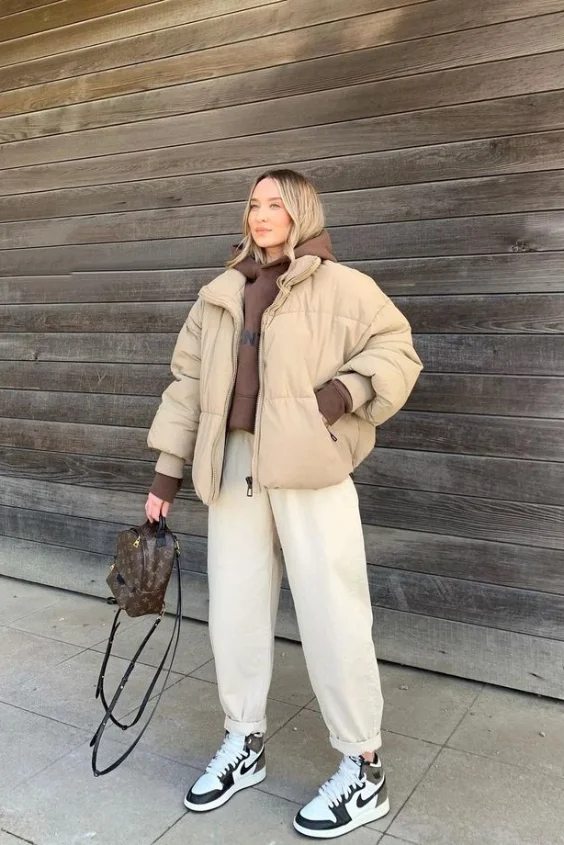
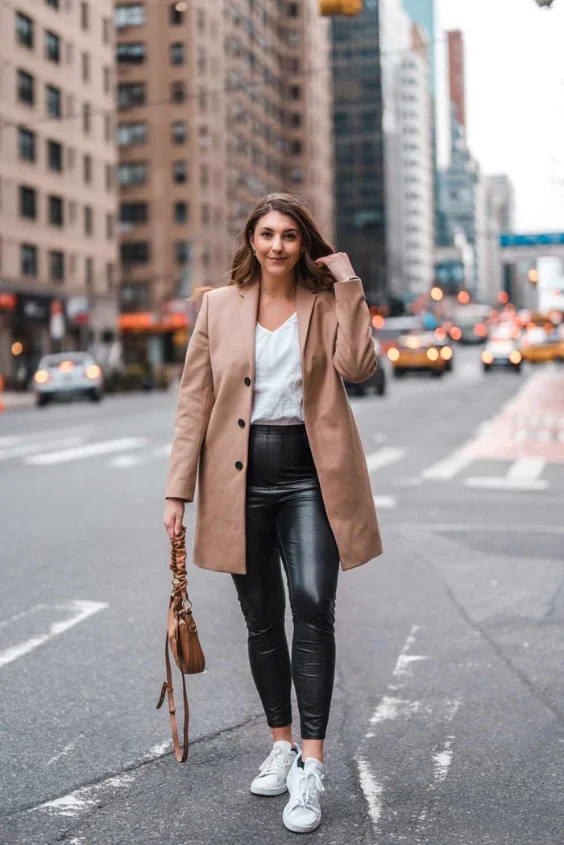
For a more relaxed NYC look, start with an oversized puffer jacket. Pair it with faux-leather leggings or slim trousers, a hoodie, and sturdy winter boots.
A knitted beanie and small hoop earrings can bring the outfit together while keeping the overall look casual. A crossbody or compact shoulder bag is also convenient when you’re moving around the city.
Pro tip: A slightly longer puffer can provide more coverage on windy days, especially when you’re waiting outdoors for transportation.
3) Winter White Elegance
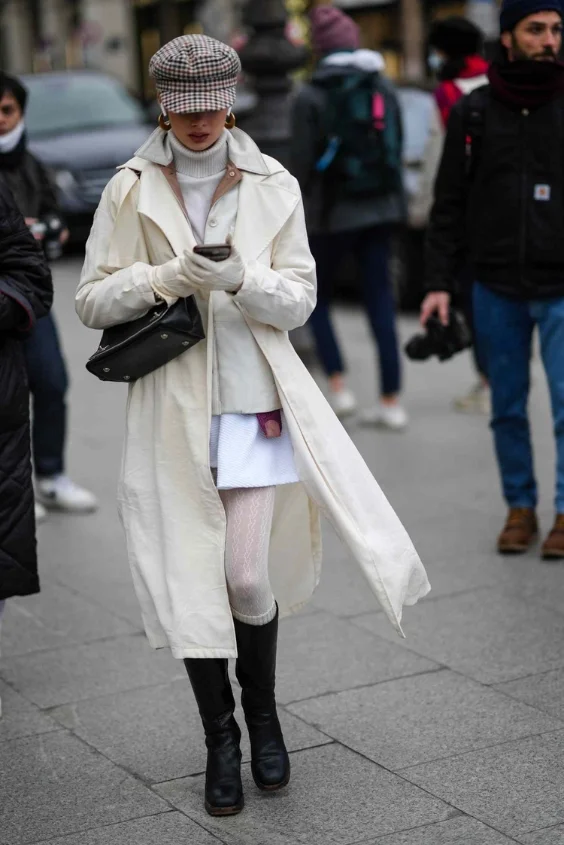
An all-white or cream winter outfit creates a clean monochromatic effect. Try combining a light-colored coat with tailored trousers, a warm knit sweater, and pointed or almond-toe ankle boots.
Cream, ivory, and off-white pieces can be mixed together instead of trying to match every item perfectly. Add simple gold jewelry or a structured handbag for a sophisticated finish.
This combination works particularly well for dinners, museums, galleries, and other occasions where you want something more polished than everyday streetwear.
Pro tip: Keep a stain-removing pen in your bag when wearing lighter winter clothing around busy streets and restaurants.
4) Cable-Knit Sweater Bliss
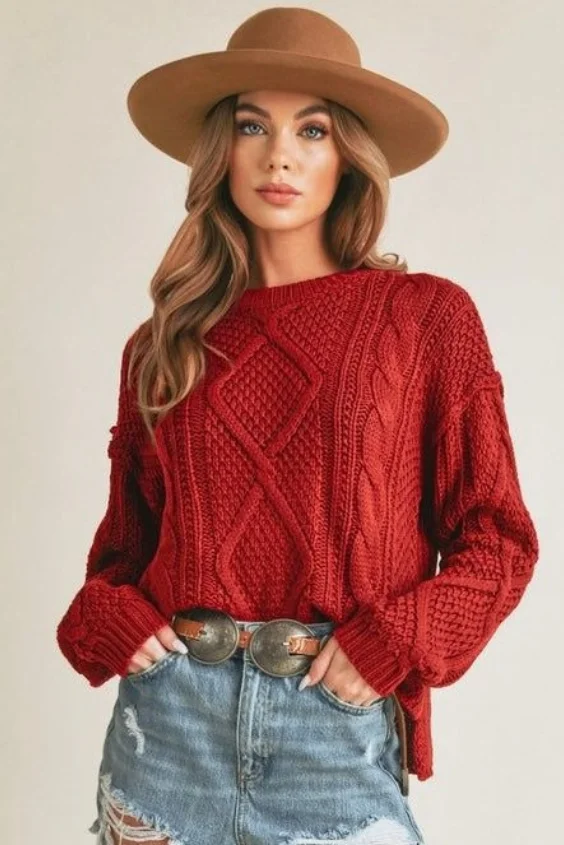
A chunky cable-knit sweater is an easy foundation for a cozy winter outfit. Try a forest-green or other rich-toned sweater with dark jeans, Chelsea boots, and a warm scarf.
A leather crossbody bag adds structure to the relaxed knitwear, while a wool hat can provide additional warmth. This combination is suitable for sightseeing, markets, casual lunches, and everyday errands.
Pro tip: When your sweater is oversized, balance the proportions with straight or slim-fitting bottoms to keep the outfit from looking overly bulky.
5) Burgundy Power Layers
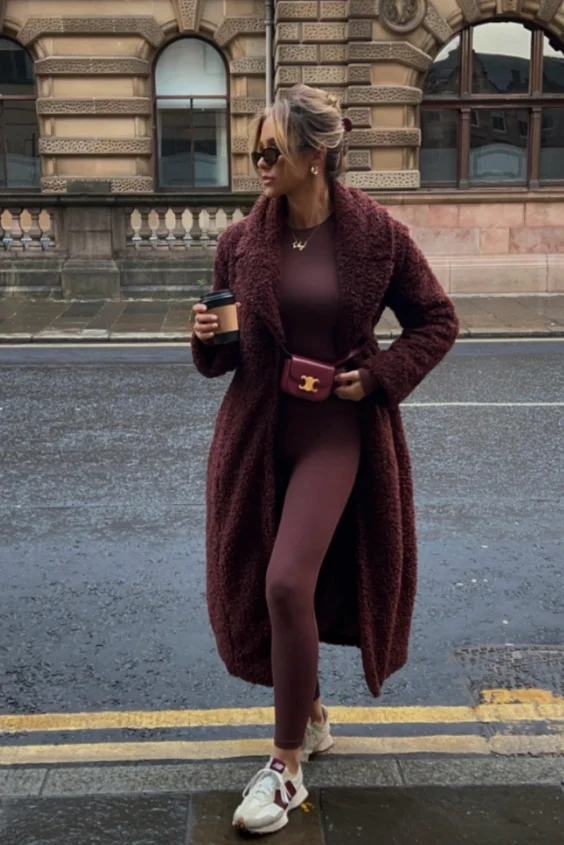
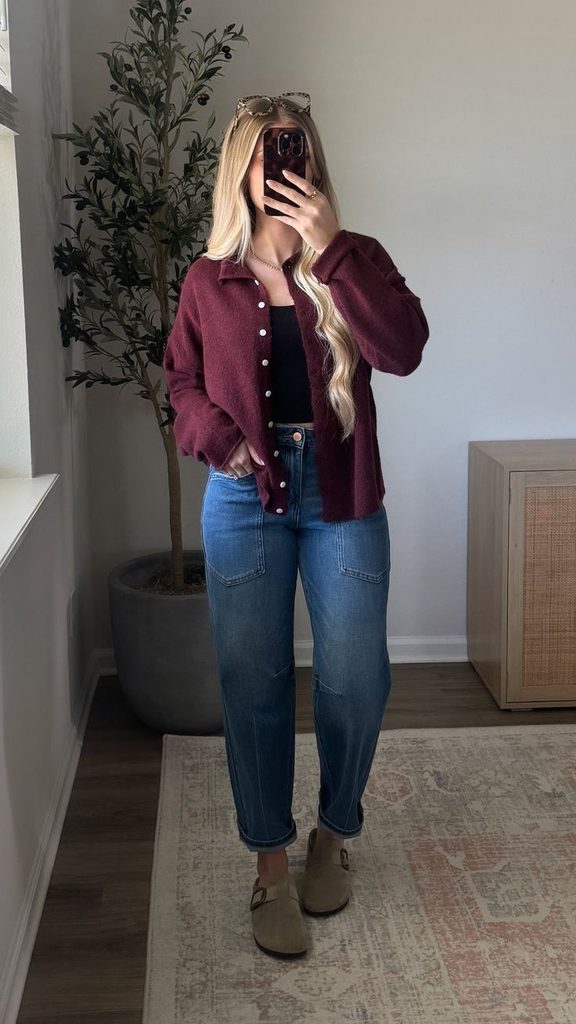
Deep burgundy works beautifully with the darker neutrals commonly worn throughout winter. Build the outfit around a burgundy pea coat, beige sweater dress, black tights, and ankle boots.
A structured handbag and understated jewelry can make the combination feel more sophisticated. For an evening setting, switch to dressier boots and add a statement accessory.
This outfit can easily transition from daytime activities to dinner or an evening event with a few small changes.
Pro tip: If your coat is the statement piece, keep the remaining colors relatively restrained so the burgundy remains the focal point.
6) Glam in Faux Fur
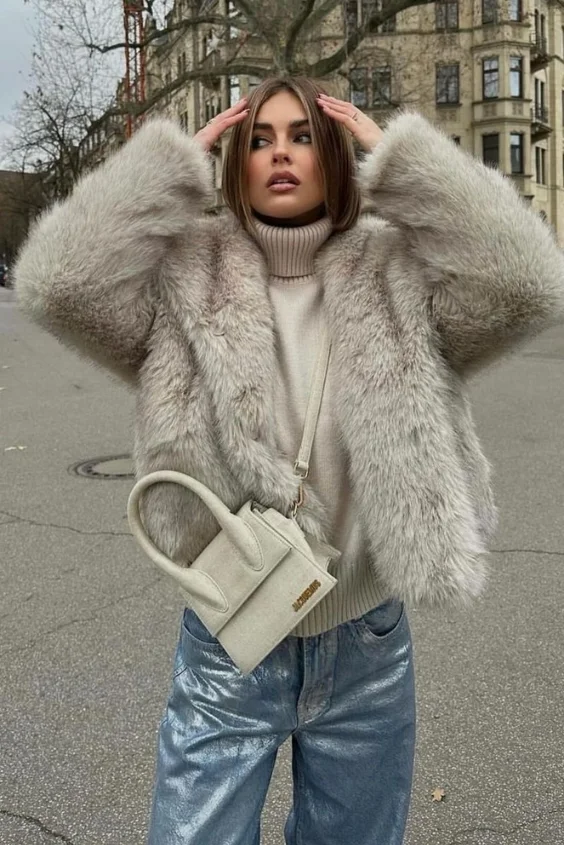
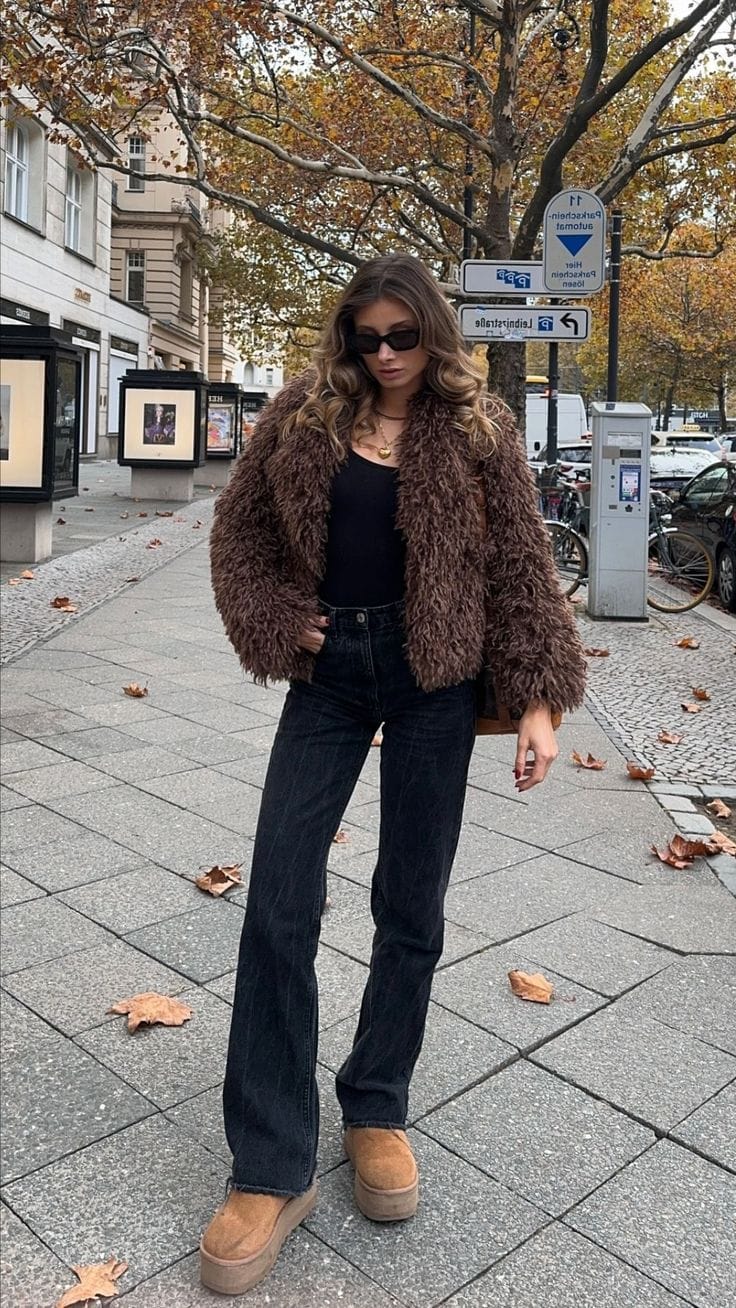
A faux-fur jacket can add texture and drama to a winter outfit without requiring a complicated combination. Wear one with black jeans, fitted trousers, or a simple dress and pair it with tall boots.
Statement earrings, sunglasses, or a metallic handbag can make the outfit suitable for a party or night out. For daytime, tone things down with a simple knit top and understated accessories.
Pro tip: Because faux fur adds visual volume, streamlined bottoms can create a more balanced silhouette.
7) Tweed Blazer Sophistication
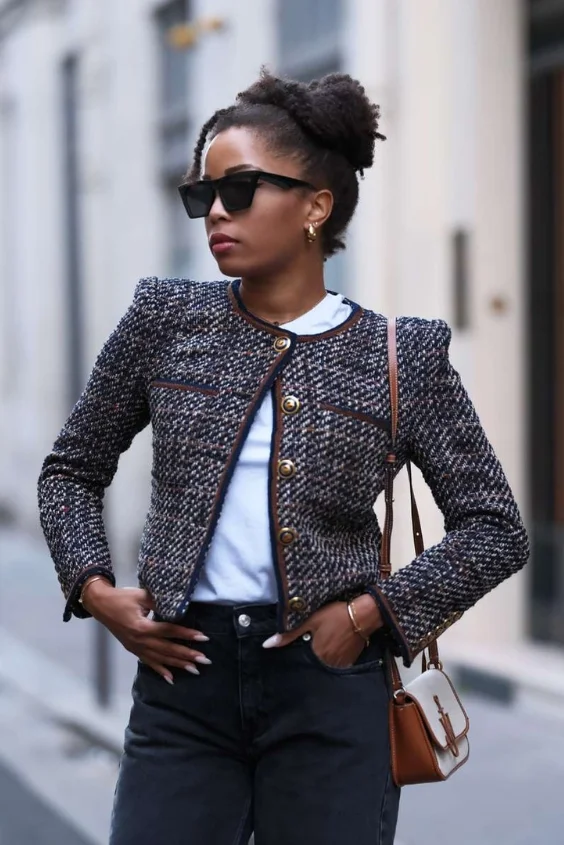
A tweed blazer brings a tailored element to winter dressing. Layer it over a fitted turtleneck and combine it with leather trousers, dark jeans, or tailored pants.
Ankle boots and a structured handbag complete the polished appearance. A beret or another simple winter accessory can add personality without overwhelming the outfit.
This look works well for coffee meetings, lunches, gallery visits, and other occasions where you want to look put together without wearing a formal coat and dress.
Pro tip: On particularly cold days, wear a thin thermal layer beneath the turtleneck or choose a roomier blazer that allows additional layers underneath.
8) Practical Yet Chic in a Hooded Parka
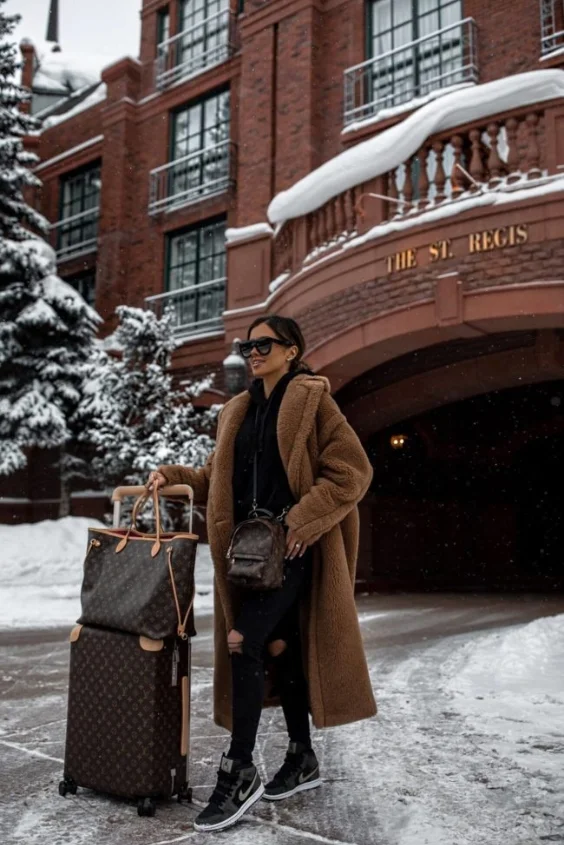
A hooded parka is one of the most useful options for cold and snowy city days. Pair it with thermal leggings or warm trousers and boots designed for wet conditions.
Add a knitted scarf, insulated gloves, and a warm hat when temperatures drop. The result is practical enough for outdoor activities while still looking coordinated.
This outfit is especially useful for long walks, winter sightseeing, outdoor markets, or days when the forecast calls for snow.
Pro tip: Prioritize a water-resistant or waterproof outer layer when precipitation is expected. Looking stylish matters much less if your clothing becomes soaked.
9) Sequin Skirt Holiday Sparkle
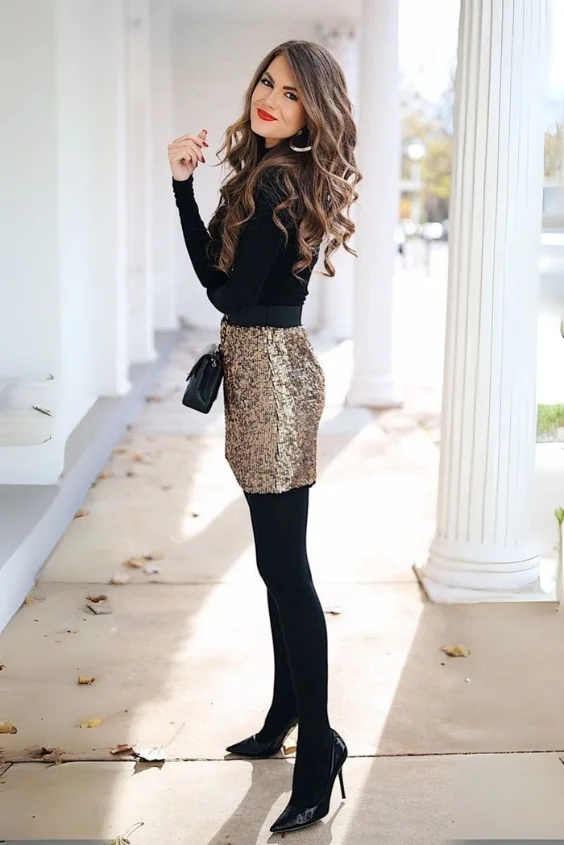
For winter parties, a sequin skirt can become the centerpiece of an outfit. Pair it with a simple black turtleneck and a tailored long coat to balance the sparkle.
Opaque tights and closed-toe boots provide additional coverage, while delicate jewelry keeps the outfit from becoming too busy. A small evening bag works well for dinners and holiday gatherings.
Pro tip: If you’re walking between locations, wear comfortable boots and change into dressier shoes once you arrive.
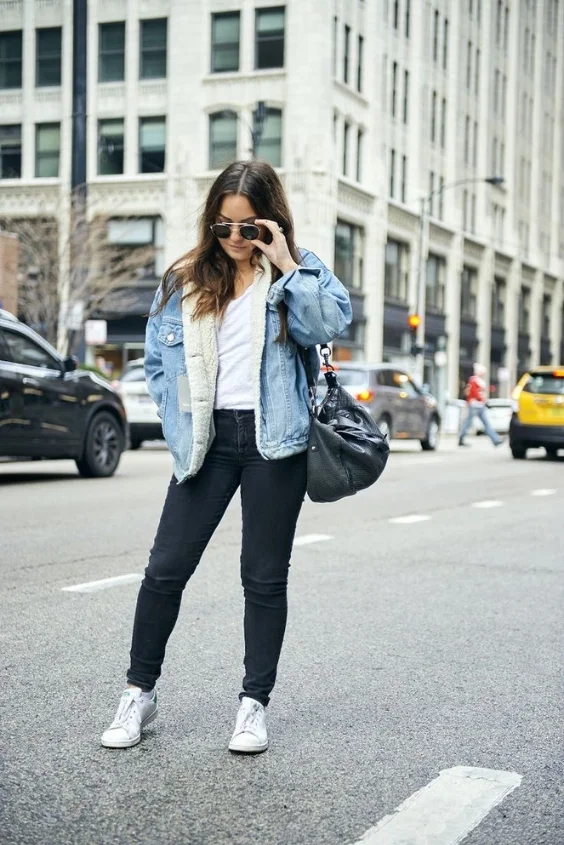
10) Casual Chic in Shearling Denim
A shearling-lined denim jacket offers a casual alternative to heavier winter coats on milder days. Style it with black jeans, combat boots, and a chunky scarf for an easy city-ready outfit.
A backpack can be particularly useful when you’re carrying everyday essentials, while a simple knit top underneath keeps the outfit comfortable.
This combination is a good choice for relaxed weekends, coffee runs, shopping trips, and exploring neighborhoods around the city.
Pro tip: Save this type of jacket for moderate winter conditions. On very cold or windy days, choose an insulated coat instead.
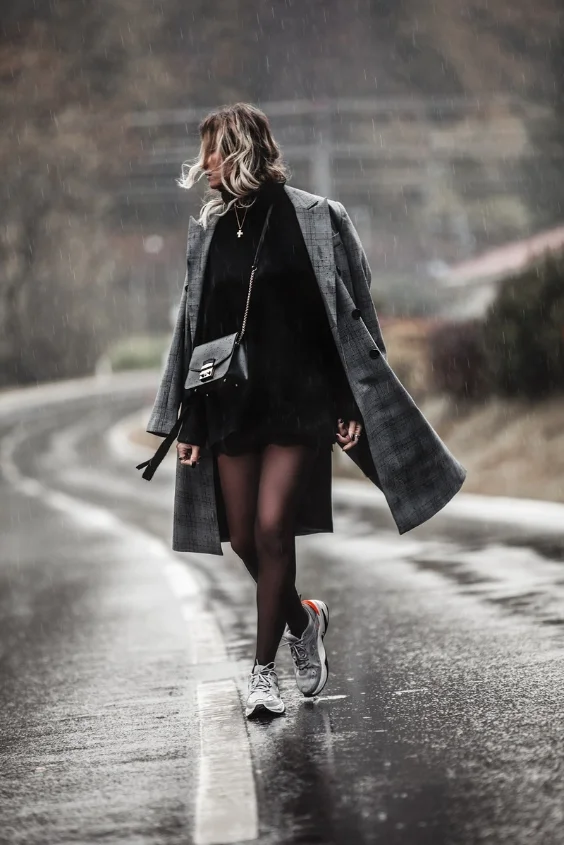
11) Plaid Perfection with a Long Coat
A long plaid coat can add pattern to an otherwise simple winter wardrobe. Pair it with straight-leg jeans, a neutral sweater, and leather boots for a timeless combination.
A chunky scarf introduces another layer of warmth while giving the outfit a little more dimension. A crossbody bag keeps the look practical for walking around the city.
The combination works for brunch, casual sightseeing, shopping, and everyday winter plans.
Pro tip: If your coat has a noticeable plaid pattern, keep the rest of your outfit relatively simple so the print remains easy to style.
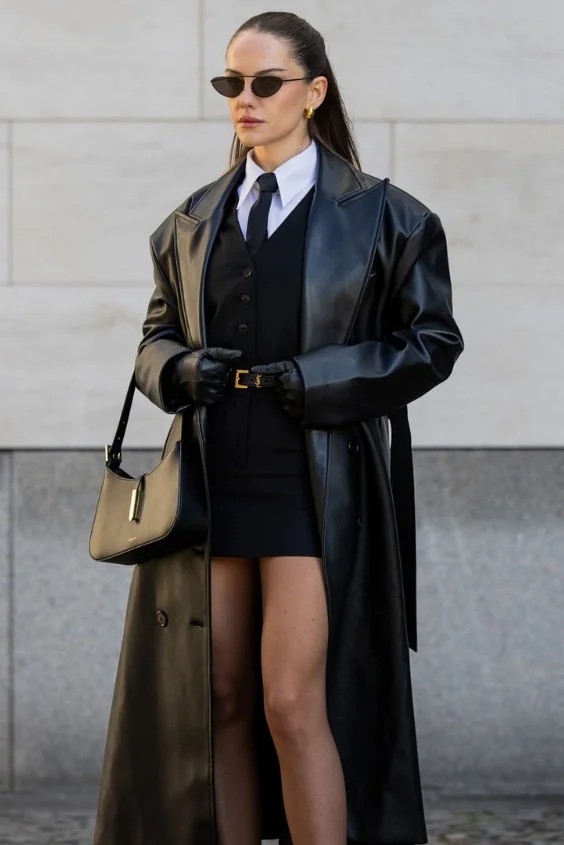
12) Bold Leather Trench Drama
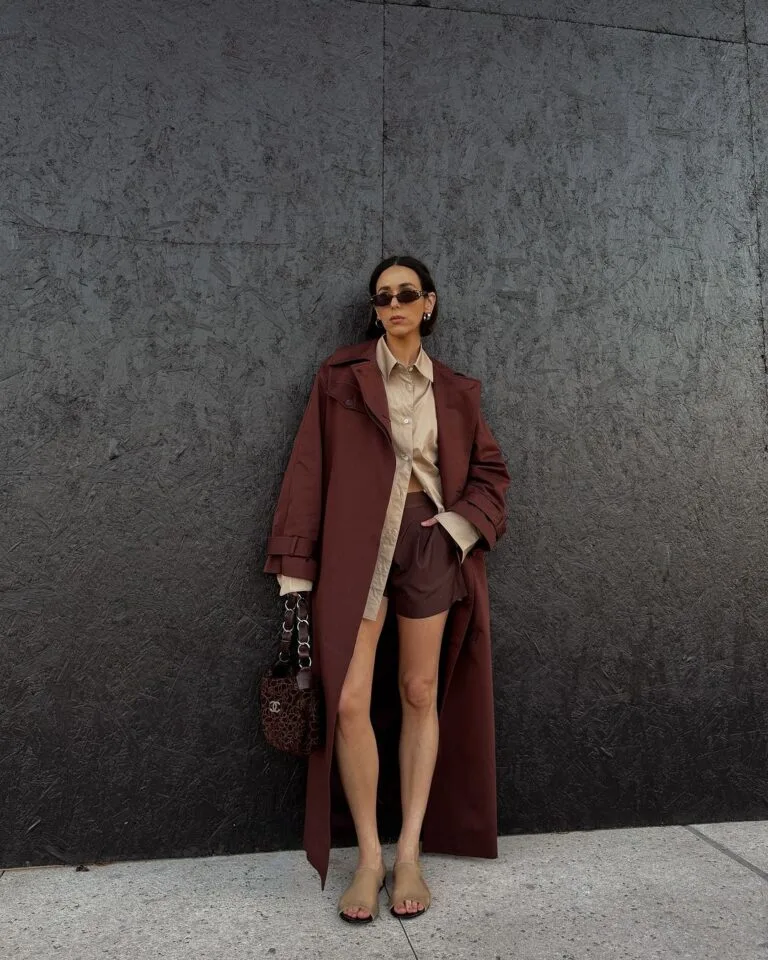
A leather trench creates a more dramatic winter look and works especially well for evenings. Layer it over a sweater dress with opaque tights and ankle or platform boots.
Keep the accessories streamlined with a compact clutch or shoulder bag. Minimal jewelry can complement the strong texture of the coat without competing with it.
This outfit is suitable for dinners, parties, nightlife, and other occasions where you want a sharper winter aesthetic.
Pro tip: Leather and leather-look materials can feel restrictive when layered. Try the full outfit indoors before heading out to make sure you can move comfortably.
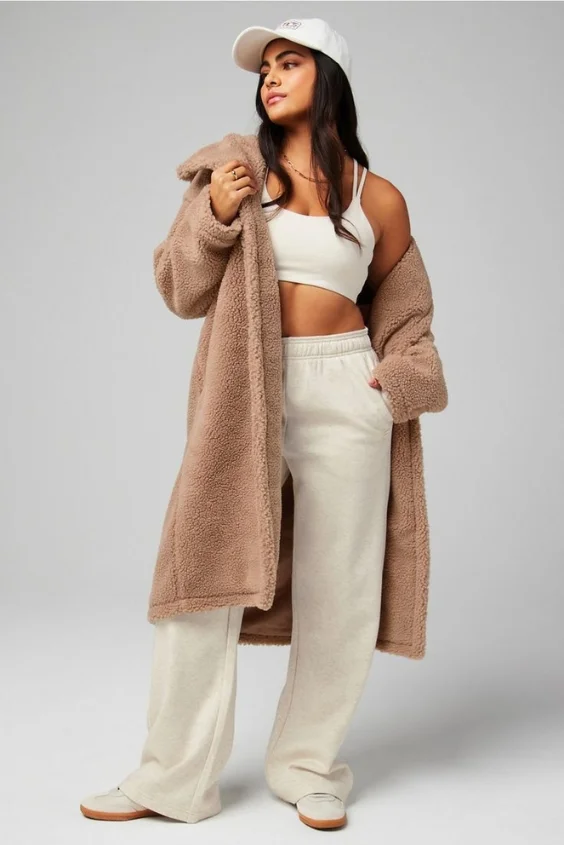
13) Fluffy Teddy Coat Warmth
A teddy coat is ideal when you want a soft, cozy texture in your winter wardrobe. Wear an oversized version with a ribbed turtleneck, straight or skinny jeans, and ankle boots.
A knitted beanie and backpack can keep the outfit casual, while a structured handbag makes it feel more polished. Neutral shades such as cream, tan, gray, and brown are especially easy to combine with existing winter basics.
Pro tip: Because teddy fabric can add noticeable volume, choose a cleaner silhouette underneath to keep the outfit balanced.
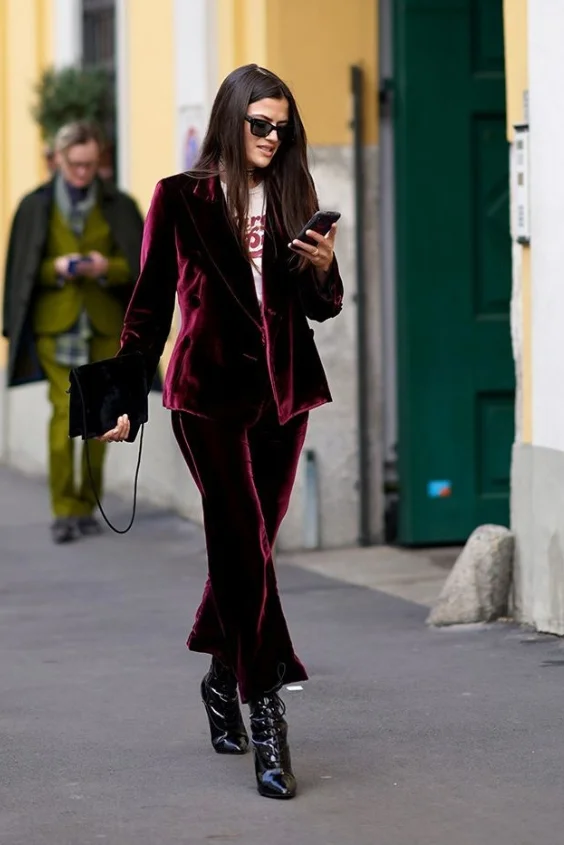
14) Velvet Suit Glam
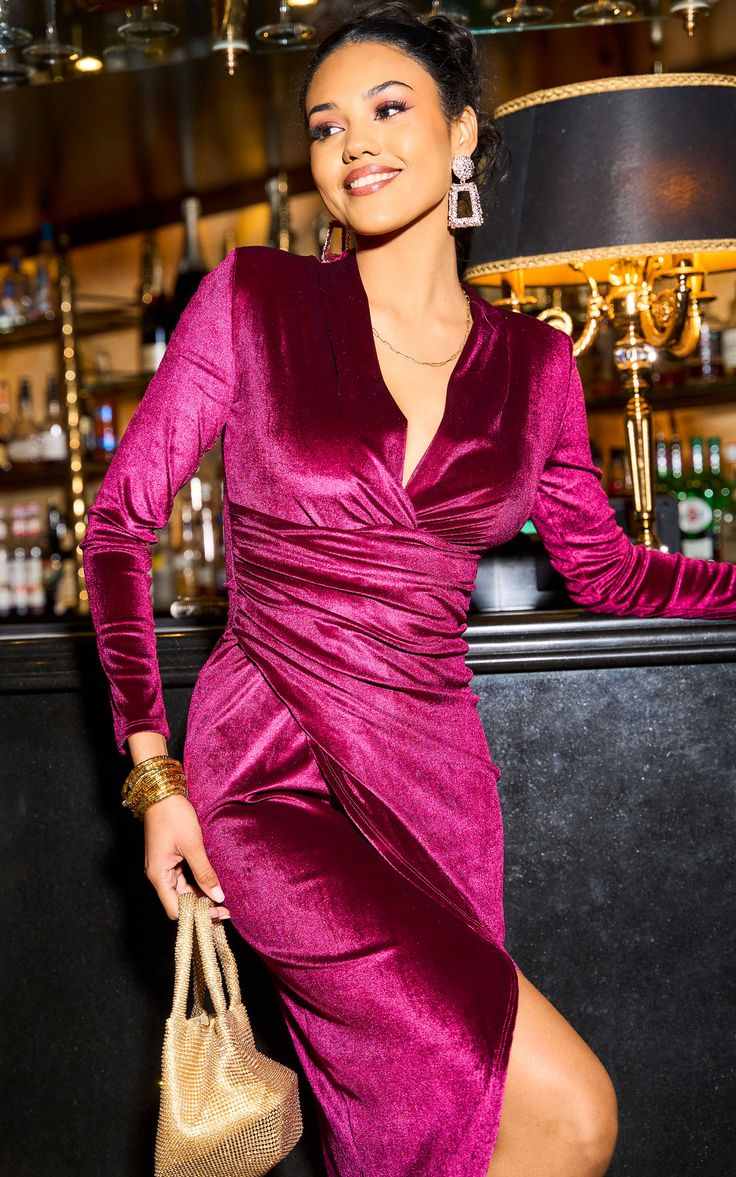
A velvet suit gives traditional winter tailoring a richer, seasonal feel. Deep navy, emerald, burgundy, or chocolate shades can work beautifully for evening occasions.
Wear the suit with a silk camisole or lightweight blouse and finish with pointed-toe shoes or dressy boots. Statement earrings and a small metallic bag can provide the final details.
This is a strong option for formal dinners, celebrations, holiday events, and upscale winter gatherings.
Pro tip: Velvet can be warm, so consider the temperature of the venue before adding heavy layers underneath the blazer.
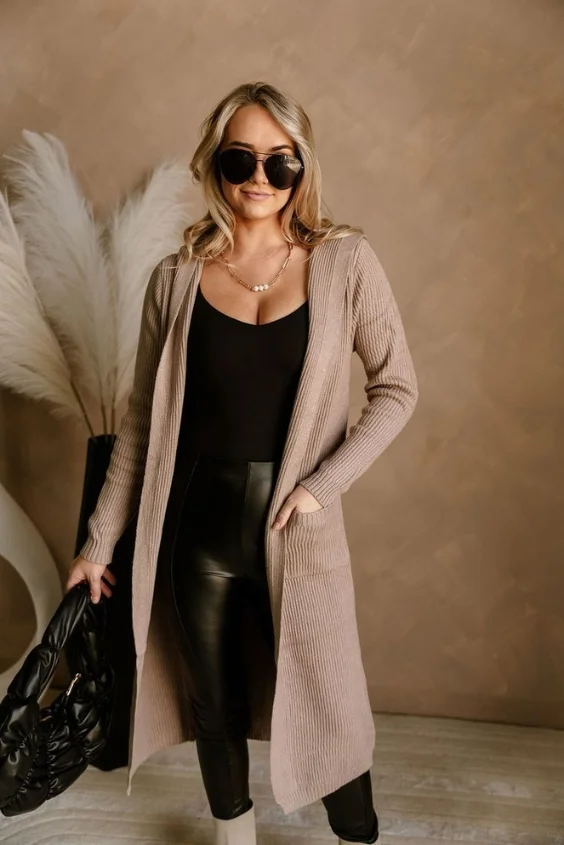
15) Neutral Layers for Everyday Cool
Neutral layering makes it easy to create an everyday NYC outfit without overthinking color combinations. Try a taupe cardigan over a white turtleneck with beige trousers and comfortable sneakers.
Add a wool scarf and a practical crossbody bag for extra function. If the weather is colder, replace the cardigan with a longer wool coat or add a thin thermal layer underneath.
This understated combination works well for shopping, coffee stops, casual lunches, and daily city activities.
Pro tip: Combine different textures—such as wool, cotton, leather, and knitwear—to make a neutral outfit look more interesting without adding bright colors.
What Are NYC Winter Style Essentials?
A useful NYC winter wardrobe needs to do more than look good. It should help you stay warm while walking outdoors, waiting for transportation, and dealing with changing weather conditions.
Start with a dependable outer layer. Wool coats, insulated puffers, parkas, and weather-resistant jackets can all work depending on the temperature and forecast.
Footwear is equally important. Look for boots with good traction and enough room for warm socks. Waterproof or water-resistant materials are useful when streets are wet or slushy.
Warm accessories also make a noticeable difference. Wool scarves, knitted hats, insulated gloves, and thermal socks can help keep exposed areas comfortable without adding much bulk.
Pro tip: Build your winter wardrobe around one reliable coat and one pair of weather-ready boots first. Trend-focused pieces can be added later.
How to Layer for NYC Winters: Practical Tips
Effective layering lets you adjust your outfit as temperatures change throughout the day. Instead of relying on one extremely heavy garment, combine several useful layers.
- Begin with a moisture-managing base layer. Merino wool or synthetic thermal tops can provide warmth without excessive bulk.
- Add a mid-layer such as a fleece, wool sweater, cashmere knit, or lightweight insulated vest.
- Finish with an outer layer that blocks wind and handles rain or snow when necessary.
- Choose thermal or wool socks for colder days, especially if you will be walking for long periods.
- Keep gloves, a scarf, and a hat available because wind can make exposed skin feel considerably colder.
- Avoid making every layer extremely thick. Several lighter layers are often easier to adjust than one oversized combination.
Pro tip: Leave enough room between layers for comfortable movement. A coat that fits perfectly over a thin shirt may become uncomfortable once a sweater and thermal top are added.
What Colors and Patterns Define NYC Winter Looks?
Winter outfits in New York often make use of versatile neutrals such as black, gray, cream, camel, navy, brown, and beige. These colors are easy to combine and work across casual and dressier outfits.
That doesn’t mean winter wardrobes have to be boring. Burgundy, red, emerald, cobalt, and metallic accents can bring more personality to an otherwise neutral outfit.
Plaid, houndstooth, checks, stripes, and subtle geometric patterns can also add visual interest. One patterned coat, scarf, skirt, or sweater is often enough to change the entire appearance of a simple outfit.
Pro tip: Choose two or three core neutral colors for your winter wardrobe, then use seasonal accent colors to create variety without buying an entirely new wardrobe.
Maintaining Comfort and Style in Extreme NYC Weather
When temperatures fall sharply, clothing performance should come before trends. Wind-resistant outerwear, insulating layers, and footwear with dependable traction are particularly useful when you’re spending significant time outside.
Thermal leggings can be worn underneath trousers or jeans on especially cold days. Warm socks can also make a major difference, particularly when your plans involve extended walking.
For windy conditions, look for coats with high collars, adjustable hoods, storm flaps, or cuffs that reduce exposure. Water-resistant outerwear can be helpful when rain or wet snow is expected.
You can still maintain a polished appearance by keeping the visible layers coordinated. A fitted turtleneck under a structured coat, for example, provides warmth while maintaining a clean silhouette.
Pro tip: Check the weather forecast before getting dressed rather than relying only on the temperature. Wind, precipitation, and the amount of time you’ll spend outside can change which outfit makes sense.
FAQs About NYC Winter Outfits
What are the warmest winter coats for NYC?
Insulated parkas, quality down or synthetic-insulated puffers, and substantial wool coats are common choices for cold NYC conditions. The right option depends on the temperature, wind, precipitation, and how much time you plan to spend outdoors.
Look for useful features such as a protective hood, high collar, secure cuffs, and enough space for your base and mid-layers.
What shoes are best for icy streets?
Choose boots with strong traction and weather-resistant construction. Waterproof winter boots are useful during snow and slush, while insulated Chelsea or combat-style boots can work for less severe conditions.
Avoid relying on smooth fashion soles when sidewalks may be icy.
How can I look stylish without freezing?
Build your outfit around layers instead of sacrificing warmth for appearance. A thermal base layer can sit underneath a sweater, while a polished coat and coordinated accessories provide the finished look.
Choose one statement element—such as a colorful coat, patterned scarf, or textured bag—and keep the rest of the outfit simple.
How should I dress in NYC in the winter?
Use a three-part approach: a comfortable base layer, a warm mid-layer, and an outer layer suited to the weather. Add insulated footwear, warm socks, gloves, a scarf, and a hat when conditions require them.
For a cohesive appearance, use neutral outerwear and introduce color through sweaters, scarves, bags, or other accessories.
What to wear in New York to not look like a tourist?
There is no single dress code for New York City, and residents wear many different styles. If you want a streamlined city look, focus on practical pieces with clean silhouettes, such as a tailored coat, dark trousers or jeans, weather-ready boots, and minimal accessories.
The most important consideration is dressing appropriately for the season and your planned activities rather than trying to follow a specific stereotype.
What do you wear on your feet in New York in the winter?
Weather-ready boots are a practical choice. Look for insulation when temperatures are low and good traction when snow or ice is possible.
For milder days, leather or weather-resistant ankle boots can work well. For snowy conditions, choose footwear specifically designed to handle moisture and slippery surfaces.
Do you need boots in winter in NYC?
Boots aren’t mandatory every day, but they are often one of the most useful footwear choices during winter. Snow, rain, slush, cold temperatures, and long walks can make sneakers or delicate shoes impractical.
A pair with good traction and weather resistance can cover many winter situations while still working with jeans, dresses, skirts, and tailored outfits.