
Image credit: Sagely Chic
Some emotional conflicts stay with us for years, especially when the person involved is no longer here to explain, apologize, or change what happened.
I am 58, and for decades I carried anger toward my father. He had been gone for six years, yet I was still having imaginary conversations with him, replaying old situations, and wondering how things might have been different.
Eventually, I realized that continuing the argument was costing me more than I understood.
Through individual therapy, journaling, and acceptance-based work, I began looking at the relationship differently. Forgiveness did not erase what happened or turn my father into someone he was not. Instead, it changed the amount of emotional space the past occupied in my everyday life.
Forgiveness does not have to mean reconciliation, approval, or forgetting. Sometimes it simply means deciding that an old injury no longer gets to control every present-day reaction.
Quick Tips Before You Start
📓
Keep a journal
Write regularly about what you are feeling and noticing. The goal is not to judge your emotions but to recognize patterns that may have been operating for years.
🗣️
Find a professional
A qualified mental health professional can provide structured support when unresolved family experiences continue affecting your relationships, emotions, or daily life.
🛑
Pause the blame
Without excusing harmful behavior, try shifting some attention away from what the other person should have done and toward what you need now.
0. Somatic Tension Completely Dissolved

Image credit: Sagely Chic
I used to think of resentment as something that existed entirely in my thoughts. Over time, I began noticing that difficult memories could also affect how tense I felt physically.
When I thought about my father, I would tighten my shoulders, hold my breath, or become aware of tension around my chest and neck. Those reactions did not disappear overnight, but they became easier to recognize once I started paying attention to them.
Therapy helped me understand that emotional stress and physical sensations can interact. That did not mean every ache or muscle tension came from resentment, but I could see how certain memories consistently changed the way my body felt.
Instead of fighting those sensations, I learned to notice them and allow them to settle.
💡 Tip: When a difficult memory comes up, notice whether you tighten your shoulders, jaw, hands, or chest. Take a slow breath and observe the sensation without immediately reacting to it.
The Physical Toll of Resentment
BEFORE
Before Processing
Frequent shoulder tension and a tendency to breathe shallowly during emotionally difficult moments.
➜
AFTER
After Acceptance
Greater awareness of physical tension, easier relaxation, and less automatic bracing when difficult memories appeared.
0. Mental Rewriting Simply Stopped

Image credit: Sagely Chic
One of the most exhausting parts of holding onto resentment was how often I replayed old conversations.
I would imagine saying something different. I would create the perfect response to something my father had said decades earlier. Sometimes I would picture an apology that never happened or imagine how different my childhood might have been if he had responded differently.
None of those conversations could actually change the past.
Journaling helped me recognize how much mental energy I was spending on situations that were permanently finished. Rather than trying to create a better version of history, I started accepting that some parts of my story would always remain painful and incomplete.
That realization did not make the memories disappear. It simply made them less demanding.
My mornings became quieter. I could make coffee without immediately slipping into an imaginary argument. I could remember something painful without spending the next hour trying to rewrite it.
Letting the past remain imperfect gave me more attention for the life actually happening in front of me.
✕
Holding the Grievance
- Running mental arguments
- Revising old memories
- Waiting for an apology that could never arrive
- Looking for a different ending to the past
✓
Releasing the Past
- Focusing on current responsibilities
- Accepting that history cannot be changed
- Reclaiming attention for everyday life
- Allowing the present to become more important than old arguments
0. Genuine Autonomy Finally Settled In
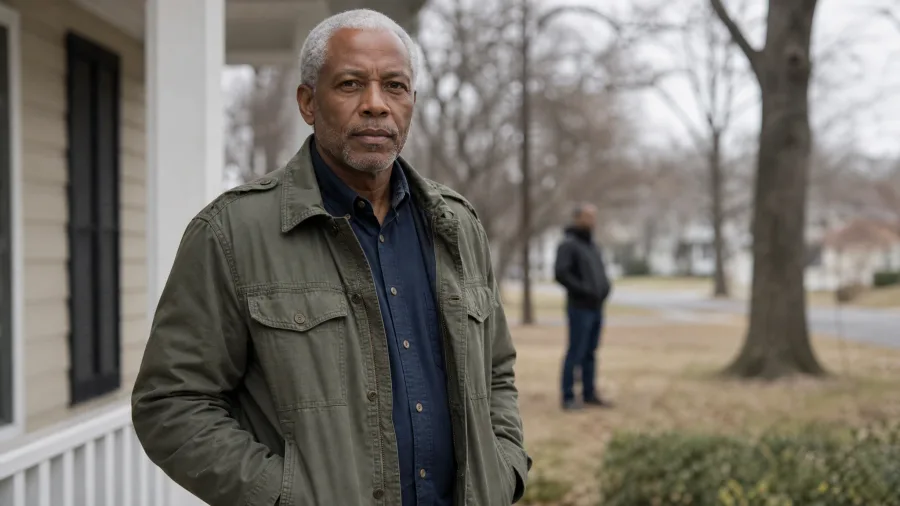
Image credit: Sagely Chic
I had always considered myself independent. Yet as I worked through my relationship with my father, I noticed how often I still measured my decisions against standards I associated with him.
Would he approve? Would he think I was making the right choice? Was I proving myself enough?
Those questions could influence decisions even though he had been gone for years.
Therapy helped me separate my own values from the expectations I had internalized while growing up. I began asking a different question: “What do I actually want?”
That shift felt surprisingly important.
I no longer needed to imagine earning approval from someone who was not capable of giving it. I could make decisions based on my present circumstances, priorities, and values.
Emotional independence did not arrive as one dramatic moment. It developed gradually as I stopped looking backward for permission to move forward.
The Path to Emotional Independence
1
Phase 1
Invisible Dependence
Noticing how adult choices were still being compared with expectations I had learned from my father.
2
Phase 2
Active Processing
Identifying the need for approval and examining where that need came from.
3
Phase 3
Genuine Autonomy
Making decisions according to my own current values instead of an imagined judgment from the past.
0. Boundary Guilt Vanished Permanently

Image credit: Sagely Chic
For years, setting a simple boundary could trigger an unexpected amount of guilt.
If I turned down a request, I would immediately start creating explanations in my head. I worried about disappointing people, appearing selfish, or being judged for putting my own needs first.
As I worked through older family patterns, I started recognizing that not every present-day disagreement required the same emotional defense I had learned in childhood.
One small example happened when someone asked me to take on a favor I genuinely did not have time for. In the past, I would have written a long explanation and probably offered another solution just to make sure the other person was not disappointed.
This time, I simply said that I was unable to help.
I did not create a complicated excuse. I did not spend the evening wondering whether I had been rude. I made my tea and continued with my day.
That experience reminded me that a boundary can be respectful without being accompanied by guilt.
⚠️ COMMON MISTAKE
Defending Against Ghosts
Sometimes we continue mentally defending our boundaries against old expectations long after the original relationship has changed or ended. Notice when a present-day request is triggering a response that belongs to an earlier chapter of your life.
0. Professional Imposter Syndrome Faded

Image credit: Sagely Chic
For much of my career, I sometimes felt that the next accomplishment would finally make me feel secure.
If a project went well, I wanted another success. If work became difficult, I immediately questioned whether I was good enough.
Eventually, I recognized that some of that pressure was connected to a much older desire to prove myself.
As I processed my relationship with my father, I became more aware of how much external approval had influenced my definition of success.
My work did not suddenly become perfect. I still experienced uncertainty and professional challenges. What changed was the meaning I attached to them.
A difficult project no longer had to become a verdict on my worth. I could make a mistake, learn from it, and continue.
That distinction gave me more freedom to focus on the work itself rather than constantly wondering whether someone from my past would approve.
Shifting Professional Motivation
🎯 Past Drive
Earning validation
📈 Current Focus
Doing meaningful work and improving my skills
🧠 Mental State
Greater steadiness and less pressure to prove myself
0. Empathy Replaced Lingering Bitterness

Image credit: Sagely Chic
Understanding someone is not the same as excusing what they did.
That distinction became extremely important to me.
For years, I had viewed my father almost entirely through the damage I believed he had caused. That perspective made sense from the place I was standing in, but it left very little room for understanding the complicated circumstances surrounding his own life.
As I worked through the relationship, I became curious about what he had experienced growing up and what limitations he may have carried into adulthood.
That did not erase the ways I had been hurt. It did not make harmful behavior acceptable. It simply allowed me to see him as a complicated and imperfect human being rather than reducing his entire identity to the ways he had failed me.
One question from therapy stayed with me: “What if he gave you what he had, even though what he had was not enough?”
I could finally acknowledge both truths at the same time: I deserved better, and he may have had serious limitations of his own.
That perspective reduced the intensity of the bitterness without requiring me to rewrite my childhood.
The Shift in Perspective
20
Resentment Focus
Seeing the person primarily through the harm and disappointment associated with the past.
VS
80
Contextual Empathy
Recognizing that a person can have caused real hurt while also being a complicated human being with their own limitations and history.
0. Interpersonal Conflict Became Calm

Image credit: Sagely Chic
After years of carrying unresolved anger, I had become sensitive to small signs of criticism.
A short email, a canceled plan, or a disagreement could sometimes feel much bigger than the situation actually was.
As I processed the past, I began noticing a difference between what was happening now and what had happened decades ago.
A friend changing plans was simply a friend changing plans. A coworker disagreeing with an idea was not automatically a personal rejection.
That separation made everyday conflict easier to handle.
Instead of immediately preparing a defensive response, I could pause and ask what the situation actually required.
Sometimes the answer was a conversation. Sometimes it was a clarification. Sometimes it was simply letting a minor disagreement pass.
The past did not disappear, but it stopped being the automatic lens through which I interpreted every difficult interaction.
Relational Security Check
✕
Panic at criticism
A present disagreement can feel connected to old emotional experiences.
!
Assuming the worst
Interpreting small misunderstandings as signs of rejection or danger.
✓
Calm de-escalation
Pausing, clarifying the situation, and responding to the actual problem in front of you.
0. Unexpected Grief Finally Emerged

Image credit: Sagely Chic
I expected forgiveness to bring relief. I did not expect it to make room for grief.
One quiet morning, years after my father’s death, I suddenly felt the sadness of everything that had never happened between us.
There was no argument in that moment. No anger. No need to prove anything.
Just sadness.
I began grieving not only the father I had lost but also the relationship I had wanted and never received.
That distinction mattered.
For a long time, anger had been easier for me to carry than vulnerability. Anger gave me something to fight against. Grief required me to acknowledge that some things could never be repaired because the opportunity for repair was gone.
The tears were painful, but they were different from the resentment I had carried for decades.
I could finally mourn what was missing without spending the entire experience searching for someone to blame.
Forgiveness did not produce a perfect ending. It allowed me to accept an imperfect story and continue living my own life.
Frequently Asked Questions
Do I need to forgive them while they are still alive?
No. Forgiveness is personal, and there is no universal timeline for it.
You also do not have to reconcile with someone who has harmed you. Forgiveness can be an internal process that helps you decide how much emotional space you want the past to occupy, while maintaining whatever boundaries are necessary for your safety and well-being.
How long does acceptance therapy take to work?
There is no standard timeline. Different people respond differently to therapy depending on their history, circumstances, goals, and the type of support they receive.
In my own experience, the process took many months. Someone else may experience meaningful changes sooner or may need considerably longer.
If you are considering therapy, a qualified mental health professional can help determine which approach fits your situation.
Does physical tension always accompany emotional resentment?
No. People experience emotional stress in different ways, and physical tension is not proof that a particular emotion or unresolved issue is causing a symptom.
Some people notice tightness, headaches, sleep changes, or other physical sensations during stressful periods, while others may notice mainly emotional or behavioral changes.
Persistent or concerning physical symptoms should be discussed with a healthcare professional rather than automatically attributed to emotional stress.
Will forgiving them make me vulnerable to other difficult people?
Forgiveness does not require you to remove healthy boundaries.
You can release some of your anger toward someone while still deciding that certain behavior is unacceptable. In fact, separating forgiveness from reconciliation can make it easier to understand that you are allowed to protect your time, emotional space, and personal safety.
The One Thing Forgiving Him Actually Changed
Forgiving my father did not rewrite my childhood.
It did not turn painful memories into happy ones, and it did not make everything that happened suddenly acceptable.
What changed was my relationship with those memories.
At 58, I no longer wanted to spend so much of my present life arguing with someone who was no longer here. I could acknowledge the hurt, recognize what I had needed as a child, and still choose to build a different emotional life as an adult.
Forgiveness became less about what my father deserved and more about what I wanted to do with my remaining time and attention.
You do not have to forget what happened to move forward. You can remember the past, maintain appropriate boundaries, and still decide that it will not determine every reaction you have today.
Check Your Own Somatic Holding
Take a quiet moment to notice what happens in your body when you think about a difficult person or unresolved experience from your past.
Do your shoulders rise? Does your jaw tighten? Do you hold your breath or feel your stomach tense?
You do not need to force the sensation away. Simply noticing it can be a useful first step toward understanding how your body responds to emotionally difficult memories.
If painful memories continue to interfere with your daily life, relationships, sleep, or sense of well-being, consider discussing them with a qualified mental health professional.