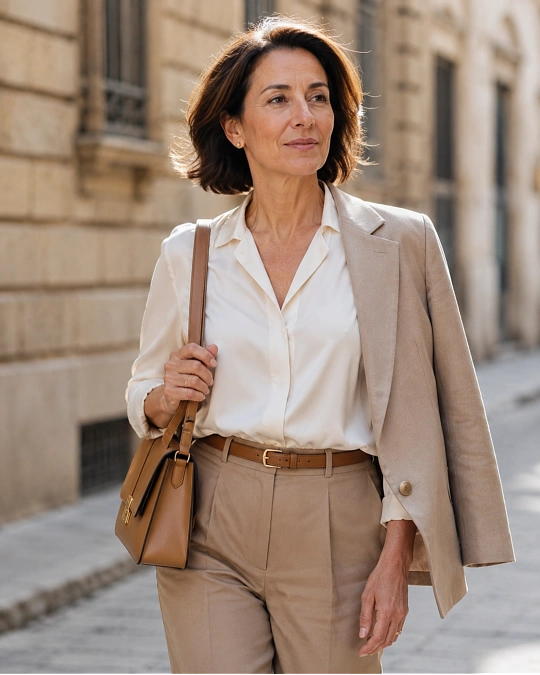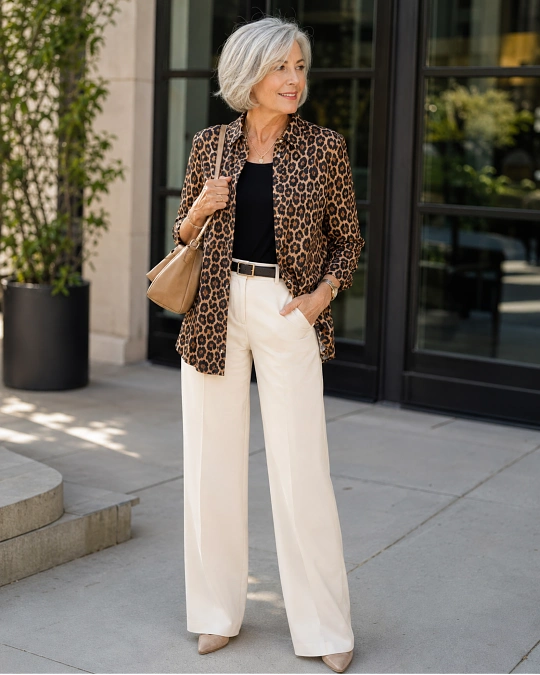
How to Wear Color Over 50 When You’ve Lived in Black and Navy Your Whole Life
Black and navy are easy wardrobe anchors. They are dependable, simple to combine, and familiar enough that getting dressed rarely requires much thought. But after years of wearing dark neutrals, adding color can feel surprisingly unfamiliar.
You do not have to replace your favorite black trousers or navy jackets to make your wardrobe more colorful. A much easier approach is to keep the pieces you already love and introduce one new shade at a time.
Color can start with something as small as a scarf, cardigan, handbag, blouse, or pair of shoes. Once you find shades that feel natural, building colorful outfits becomes much less intimidating.
Black and Navy Feel Safe Because They Remove Decisions
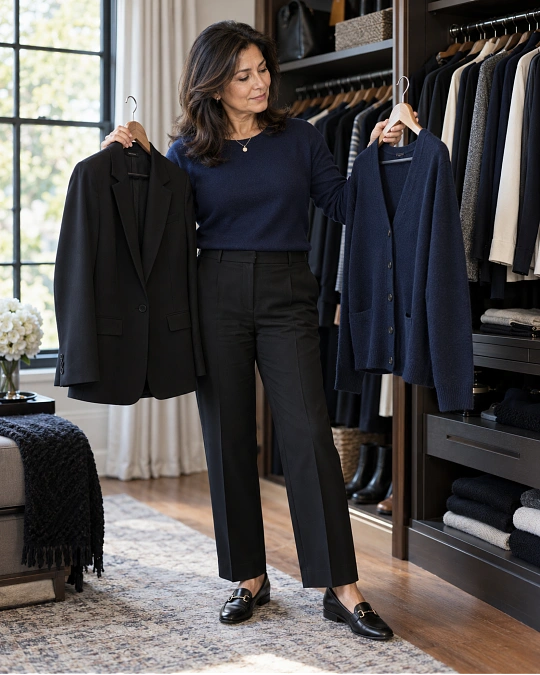
Image Credit: Sagely Chic
A wardrobe built around black and navy makes outfit planning wonderfully straightforward. Black trousers can work with countless tops, navy denim pairs with almost everything, and dark neutrals rarely compete with accessories.
Color can seem more complicated because it creates extra questions. Does this shade suit me? Is it too bright? What should I wear with it? Will I feel comfortable leaving the house in it?
The easiest solution is to stop thinking of color as a replacement for neutrals. Instead, treat it as another layer that works alongside the clothes you already trust.
Your black trousers, navy blazer, dark jeans, loafers, and simple knitwear can stay exactly where they are. A new color simply changes one part of the combination.
| Old Rule | What Works Better Now |
|---|---|
| Bright shades are only for special occasions | A colorful knit or shirt can easily become part of an everyday outfit |
| You must stop wearing black to make your wardrobe interesting | Keep black and introduce a softer or richer accent color |
| Every shade in an outfit must match perfectly | Choose colors that feel balanced together rather than identical |
| Color always has to make a bold statement | Deep teal, burgundy, sage, rust, and dusty blue can remain understated |
| You need to know your exact color season first | Start by noticing which shades make you feel comfortable and look refreshed |
You do not need to wear the brightest color available. The best starting point is simply a shade you genuinely want to wear more than once.
Start With Colors That Behave Almost Like Neutrals

Image Credit: Sagely Chic
If your wardrobe is mostly navy, black, gray, denim, cream, and camel, jumping immediately into extremely bright colors can feel like too big a change.
Instead, look for shades that have enough depth to work almost like neutrals. They add personality without overwhelming the rest of your outfit.
- Burgundy: easy with black, denim, charcoal, cream, and dark brown.
- Forest or olive green: works naturally with navy, beige, white, and denim.
- Deep teal: pairs comfortably with navy, gray, and jeans.
- Rust: works especially well with cream, brown, denim, and navy.
- Dusty blue: blends easily with charcoal, cream, and other blues.
- Plum: looks natural alongside black, gray, beige, and denim.
These colors can add variety without making the outfit feel dramatically different from what you normally wear.
For example, if you regularly wear a navy sweater with straight-leg jeans, replace the navy sweater with a muted teal version. The outfit formula stays familiar while the overall effect changes.
Color tip: If a shade feels too bold on a large garment, try it first in a smaller item such as a scarf, handbag, shoe, cardigan, or camisole.
Let Your Face Decide Where the Color Should Go

Image Credit: Sagely Chic
Not every color needs to be worn close to your face. This is useful when you love a particular shade but are unsure about how it looks as a top.
For example, mustard may feel too strong as a sweater but look wonderful as a handbag. A vivid green skirt can be easier to wear than the same shade in a blouse.
Natural daylight is particularly helpful when testing colors. Hold a few different shades near your face and pay attention to how your complexion and eyes appear rather than judging the clothing by itself.
A flattering shade may make your complexion appear clearer or bring attention to your eyes. Another color may emphasize shadows or redness.
You do not need a complicated color analysis system to notice these differences.
If you are unsure about a strong shade, create some distance between it and your face. Try colored trousers with a cream blouse, a vivid skirt with a navy sweater, or a colorful handbag with an otherwise neutral outfit.
This gives you the opportunity to enjoy the color without making it the main feature around your face.
Use One Colored Piece and Keep Everything Else Familiar
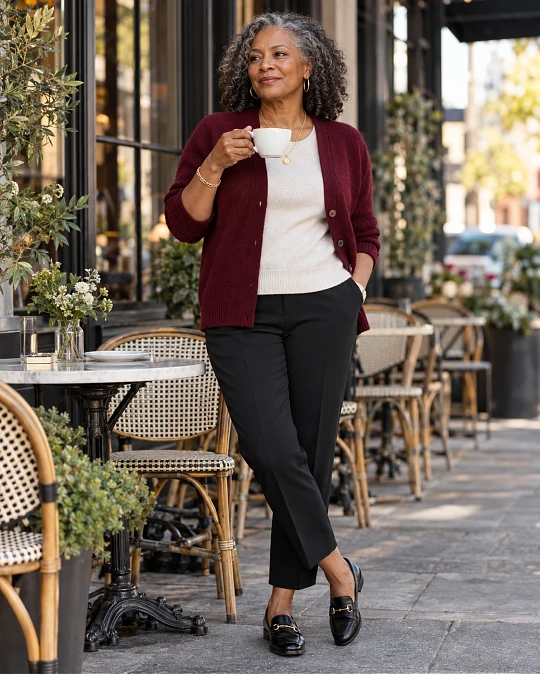
Image Credit: Sagely Chic
When you are getting comfortable with color, changing one element at a time can make the process much easier.
Choose one colorful garment and surround it with silhouettes and neutral shades you already enjoy. The outfit will still feel like your own style, only with a new focal point.
| Occasion | Easy Color Formula | Why It Works |
|---|---|---|
| Errands or coffee | Dark jeans + burgundy knit + simple sneakers | The dark denim keeps the richer color relaxed |
| Lunch with friends | Navy trousers + soft blue blouse + loafers | Related shades make the transition subtle |
| Smart casual | Black trousers + ivory top + forest green cardigan | The cardigan adds color without changing the foundation |
| Evening dinner | Black dress + deep teal jacket + simple metallic jewelry | One colorful layer gives black more dimension |
| Travel day | Navy jeans + gray tee + rust cardigan + comfortable flats | The dark base remains practical while the cardigan adds warmth |
Easy formula: familiar dark base + one colored piece + quiet accessories.
Once that combination feels normal, you can introduce a second shade. There is no need to make several changes at once.
Changing one element at a time also gives you a better idea of which colors genuinely belong in your wardrobe.
Fabric and Proportion Can Make Color Feel More Sophisticated
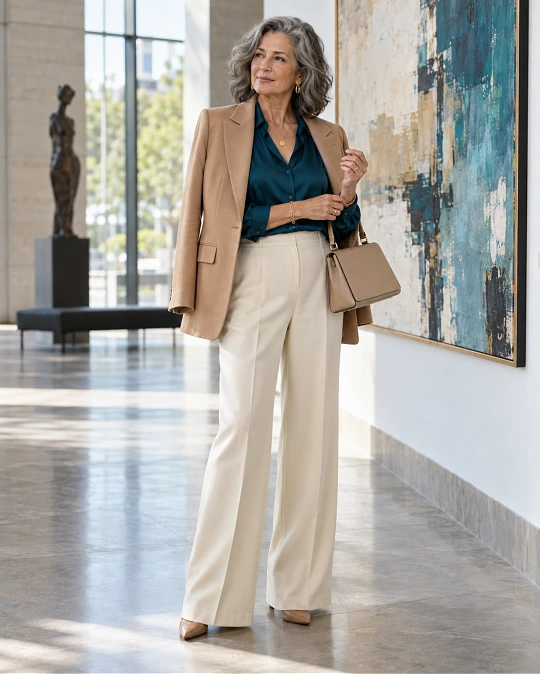
Image Credit: Sagely Chic
The color itself is only one part of an outfit. Fabric, shape, proportion, and styling can completely change how the same shade feels.
A relaxed sweatshirt in a strong pink will create a different impression from a fine raspberry knit or a softly tailored blouse. The color may be similar, but the garment changes the overall character.
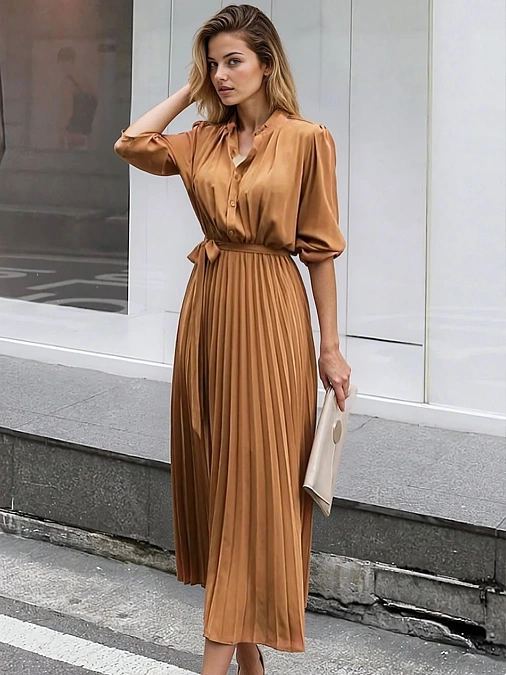
If your personal style leans understated, introduce color through materials you already enjoy. Fine knitwear, linen, cotton poplin, suede, satin, soft wool, and tailored jackets can all give stronger shades a more refined appearance.
Proportion matters too. A loose colorful blouse can look balanced with straight-leg trousers rather than another oversized piece.
| Instead of This | Try This |
|---|---|
| Bright top with several colorful accessories | Let the top provide the main color and keep accessories simple |
| Oversized colorful top with very loose bottoms | Use straighter or more structured trousers for balance |
| Bright color in an unfamiliar silhouette | Try the shade in a garment shape you already know suits you |
| Matching every accessory to the colorful garment | Repeat the color once or keep the accessories neutral |
| Wearing a trendy shade you dislike | Choose a softer, deeper, or related shade that feels more natural |
Current fashion trends can provide inspiration without dictating your entire wardrobe. You can borrow a color while keeping the silhouettes and styling choices that already feel like you.
Build a Small Color Palette Instead of Collecting Random Shades
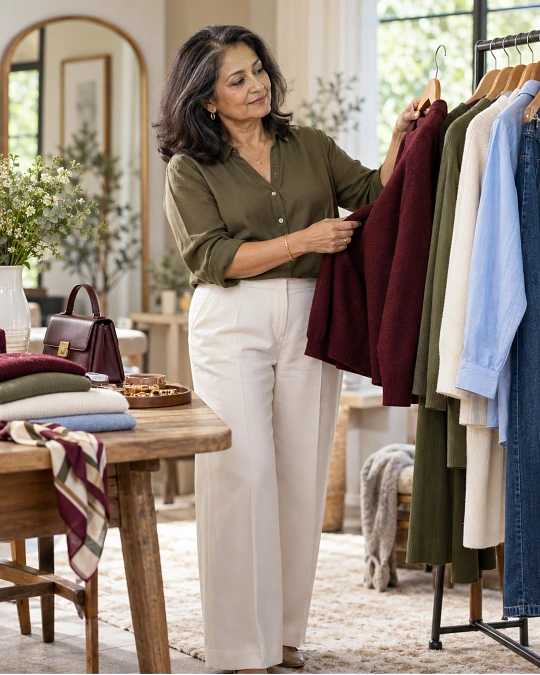
Image Credit: Sagely Chic
A colorful wardrobe becomes much easier to manage when the shades have some relationship to one another.
Rather than buying individual pieces simply because they look attractive on a hanger, choose two or three accent colors that work naturally with the neutrals already hanging in your closet.
For a wardrobe filled with navy, denim, ivory, and gray, dusty blue, berry, and forest green could create a useful accent palette.
If black, cream, camel, and chocolate brown dominate your closet, you might prefer burgundy, olive, rust, or a muted coral.
Repeating the same accent shades also increases the number of outfits you can create. A burgundy cardigan can work with several trousers, while a coordinating scarf or bag can connect multiple looks.
The result is a wardrobe that feels intentional without requiring every item to match perfectly.
Budget-friendly idea: Before buying anything new, check your existing scarves, handbags, jewelry, cardigans, blouses, and shoes. You may already have several colors that can become the foundation of your palette.
Try the Five-Minute Color Test Before Buying Anything
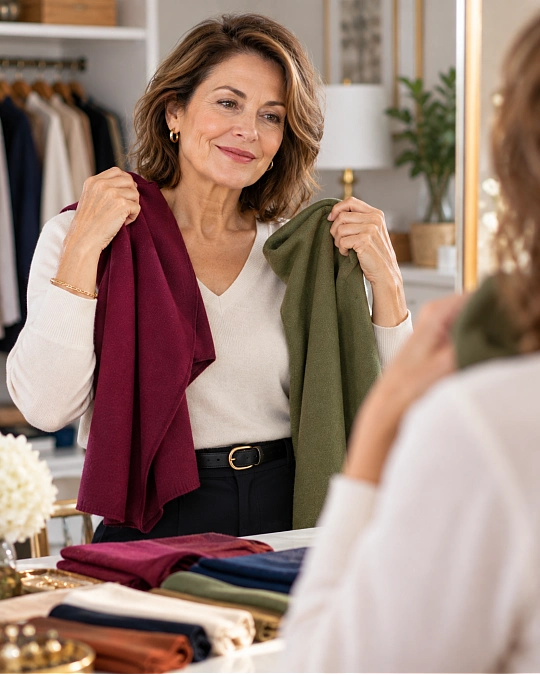
Image Credit: Sagely Chic
You can experiment with color without going shopping. Start with an outfit you already wear frequently, such as black trousers with a cream shirt or dark jeans with a navy sweater.
Then add one colorful item you already own.
It could be a scarf, cardigan, handbag, jacket, necklace, blouse, or pair of shoes. Look at the complete outfit rather than judging the colorful piece by itself.
Sometimes a color looks dramatic when held alone but feels completely natural once it is combined with familiar clothing.
If the shade still feels too strong, reduce the amount rather than giving up on it. A bright blouse can become a layer beneath a navy blazer. A colorful scarf can be replaced with a smaller accessory. Bright trousers can be exchanged for a handbag in the same shade.
The goal is not to wear as much color as possible. It is to discover the amount and placement that feel right for you.
Frequently Asked Questions
What colors look good on women over 50?
There is no single color that universally suits every woman over 50. Complexion, hair color, natural contrast, personal preference, and lighting can all affect how a shade appears.
Instead of choosing colors based on age, experiment with different versions of shades you already enjoy. Softer, deeper, or slightly muted versions can be useful starting points.
Can I still wear black after 50?
Yes. Black can remain one of the most practical and versatile colors in your wardrobe.
If an all-black outfit feels too heavy, add cream, camel, burgundy, denim, jewelry, texture, or a colorful jacket to create more visual variation.
How do I start wearing bright colors if I am used to neutrals?
Begin with one small change. A scarf, cardigan, handbag, blouse, shoe, or necklace can introduce color without requiring you to rebuild your wardrobe.
Once you become comfortable with one shade, you can gradually experiment with stronger colors or additional accent pieces.
Should women over 50 avoid very bright colors?
No. Age alone does not determine which colors you can wear.
If very saturated shades do not feel comfortable, try related versions that are softer or deeper. For example, raspberry can be an alternative to hot pink, while deep teal can provide color without the intensity of vivid turquoise.
How many colors should I have in my wardrobe?
You do not need a large collection of accent colors. Two or three shades that work with your existing neutrals can provide plenty of variety.
A smaller palette can also make shopping easier because you can quickly decide whether a new garment will work with pieces you already own.
Final Thoughts
Adding color after years of wearing black and navy does not have to mean changing your personal style. Your trusted neutrals can remain the foundation while a few carefully chosen shades bring more variety into your outfits.
Start with colors that feel almost neutral, test them away from your face if necessary, and use familiar silhouettes so the change feels manageable.
Most importantly, give yourself permission to experiment slowly. One cardigan, scarf, handbag, or pair of shoes can be enough to discover a new favorite color.
A colorful wardrobe does not need to be loud. It simply needs to contain shades that make getting dressed feel enjoyable while still looking and feeling like you.