The Best Colors for Warm Undertones Over 50 That Make You Glow
The right color can make an outfit feel instantly more harmonious. The wrong shade can have the opposite effect, making your complexion appear dull even when the clothing itself is beautiful.
For women over 50 with warm undertones, choosing clothing colors does not have to mean following a strict seasonal color chart. Small differences in warmth, depth, and intensity can make a noticeable difference.
The easiest approach is to notice which shades complement your natural coloring and then build a wardrobe around colors that are comfortable to wear and easy to combine.
Start With the Colors Closest to Your Face
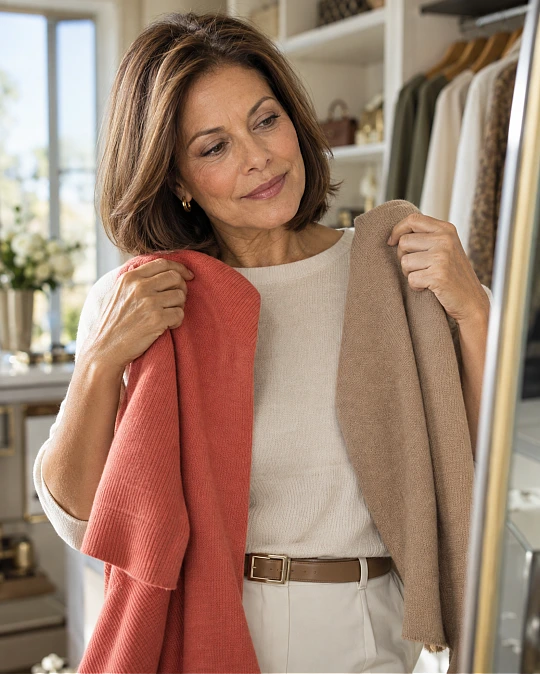
Image Credit: Sagely Chic
Warm undertones often work well with shades that contain golden, peachy, yellow, olive, or earthy qualities. However, being warm-toned does not mean every warm color will automatically look perfect.
Comparison is one of the easiest ways to find your best shades. Try holding two similar colors near your face in natural daylight, such as ivory beside bright white or coral beside a cooler pink.
Look at your complexion rather than simply judging which garment you prefer. Some colors may make your skin appear more even and bring attention to your eyes, while others may emphasize shadows or make your complexion appear less lively.
Hair color can also influence the overall effect. Gray, silver, brunette, blonde, red, or highlighted hair can change the amount of contrast around your face.
Because of this, your most flattering wardrobe colors can change over time even though your underlying undertone remains the same.
Try this: Choose five tops from your existing wardrobe and photograph yourself wearing each one beside a window. Comparing the photos together can make your most flattering shades easier to identify.
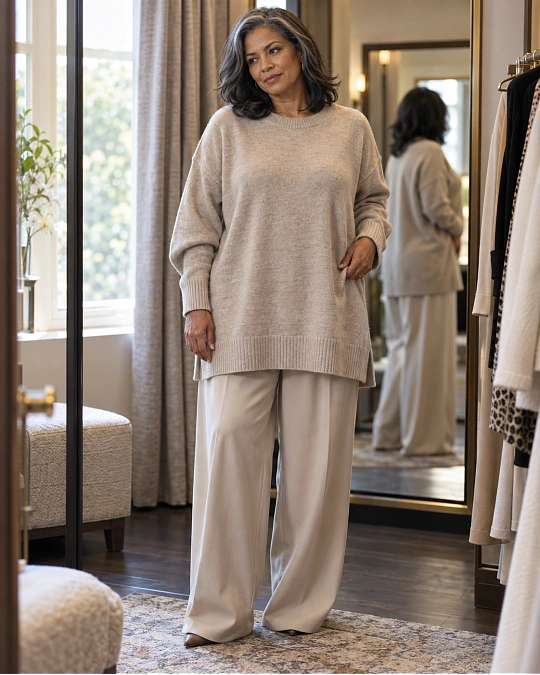
Warm Neutrals Make the Easiest Wardrobe Base
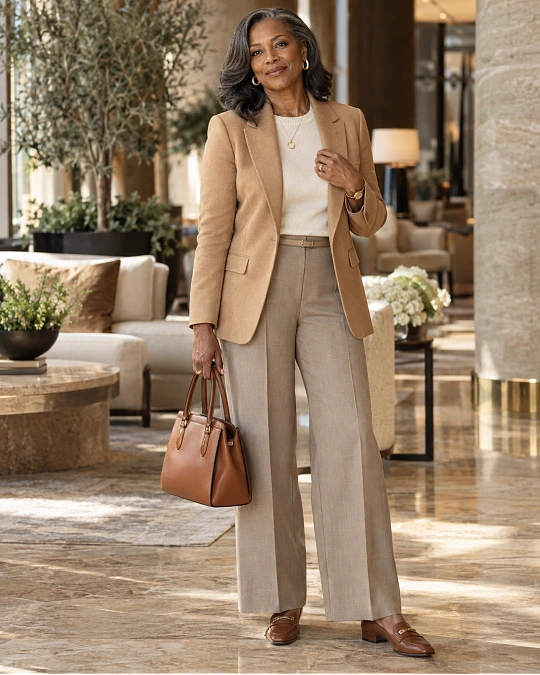
Image Credit: Sagely Chic
Warm neutrals are often the easiest place to begin when building a wardrobe around warm undertones. Cream, camel, chocolate, warm taupe, tan, and soft olive can provide a versatile foundation.
These shades are particularly useful because they combine easily with denim, prints, jewelry, brighter accent colors, and other neutrals.
If black feels too strong near your face, there is no need to remove it from your closet. Keep black trousers, boots, skirts, or handbags and use warmer shades for tops, jackets, or scarves.
| Piece or Color | What to Look For | Mixes Well With |
|---|---|---|
| Ivory | Creamy white instead of a blue-based white | Camel, denim, olive, rust |
| Camel | Balanced golden brown without excessive orange | Ivory, chocolate, teal |
| Warm taupe | Beige-brown with warmth rather than a cool gray cast | Olive, cream, coral |
| Chocolate | Deep brown with enough richness to act as a dark neutral | Peach, teal, rust |
| Soft olive | Muted green with yellow or brown undertones | Ivory, tan, warm navy |
These colors can be especially useful when creating a smaller wardrobe because they can be repeated across different outfits without looking exactly the same.
A camel jacket, ivory sweater, chocolate trousers, and olive overshirt can become the foundation for many combinations.
Fabric tip: Materials such as brushed cotton, soft knits, suede, linen blends, and matte wool can give earthy colors a rich appearance without making them look overly bright.
Rich Earth Tones Bring Warmth Without Feeling Too Bright
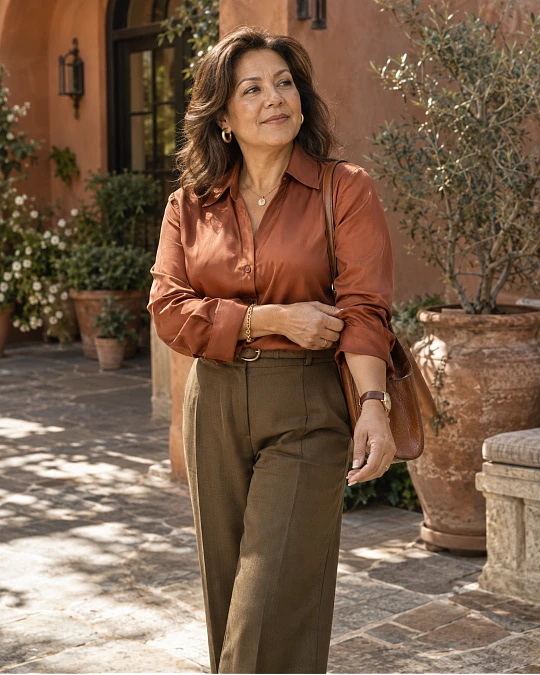
Image Credit: Sagely Chic
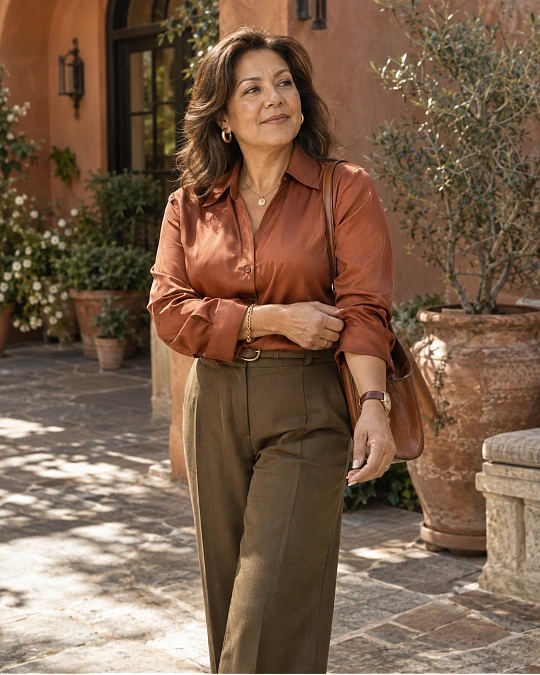
Rust, terracotta, cinnamon, paprika, ochre, and burnt orange are natural choices for a warm-toned wardrobe. Their earthy bases make them easier to wear than extremely bright versions of orange or yellow.
You also do not need to build an entire outfit around an earthy shade. One colorful garment can be enough to give a neutral outfit more personality.
Try a rust cardigan with an ivory top and dark jeans, or wear terracotta trousers with a cream sweater and tan shoes.
If mustard feels too intense as a sweater, experiment with the shade in a scarf, handbag, jacket, printed blouse, or other smaller accessory.
Some easy combinations include:
- Terracotta with ivory and cognac
- Rust with dark denim and camel
- Olive with cream and chocolate
- Paprika with warm navy and tan
- Cinnamon with soft beige and gold jewelry
The key is balance. A rich accent color can provide interest while the surrounding neutrals keep the outfit calm and wearable.
This approach is especially helpful if you want colorful outfits without moving too far away from a polished, understated wardrobe.
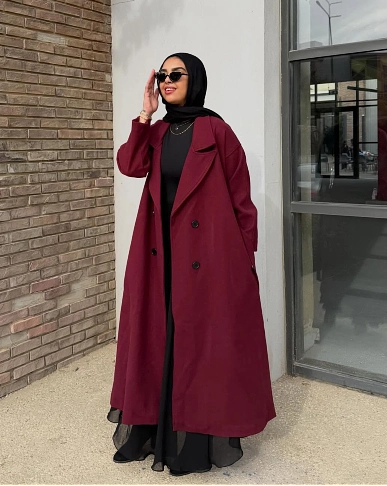
Choose Reds, Pinks, Greens, and Blues With a Warmer Base
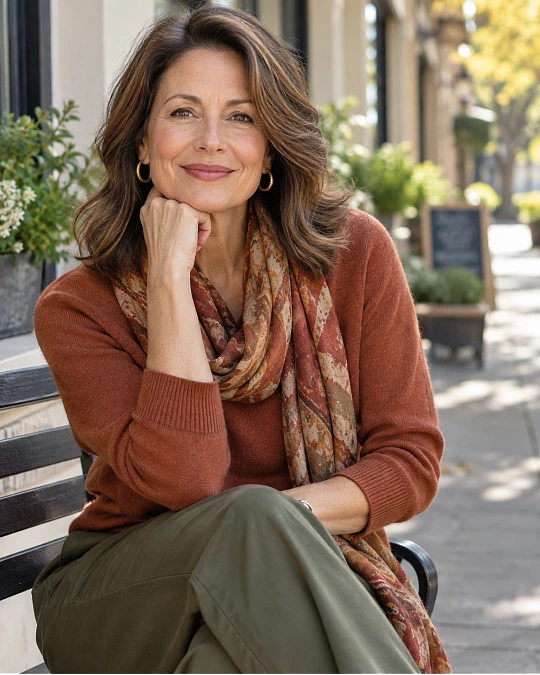
Image Credit: Sagely Chic
Having warm undertones does not mean limiting yourself to beige, brown, and cream. Many stronger colors can work beautifully when you choose the right version of the shade.
For red, tomato, brick, poppy, and warm berry shades can provide a different effect from blue-based reds.
For pink, consider peach, coral, salmon, or warm rose when icy pinks feel too cool.
Green is particularly versatile. Olive, moss, khaki, warm forest green, and other yellow-based greens can blend naturally with warm complexions.
Blue may require a little more experimentation. Teal, turquoise, petrol blue, peacock, and softer warm navy shades can provide color while remaining compatible with a warm palette.
Color note: Do not rely entirely on the name printed on a clothing label. Two garments both described as “navy” can have noticeably different undertones.
Place the color beside ivory, camel, or olive to see how naturally it fits with the rest of your wardrobe. If the combination looks harmonious rather than overly sharp, it may be easier to style.
If a Color Feels Too Cool, Change the Shade Instead of Giving It Up
Color advice should not leave you with a long list of shades that you are supposedly forbidden to wear. Most color families include versions that are warmer, softer, deeper, or more muted.
If a particular shade feels wrong, try adjusting the version rather than eliminating the entire color family.
| If This Feels Harsh | Try This Instead |
|---|---|
| Stark optic white | Ivory, cream, or soft ecru |
| Icy baby pink | Peach, salmon, or warm rose |
| Blue-red berry | Tomato, brick, or coral red |
| Cool charcoal | Chocolate, warm taupe, or brown-gray |
| Icy pastel blue | Teal, petrol, or muted turquoise |
| Cool purple | Aubergine or a reddish-based plum |
You can still wear a color that is technically cooler than your preferred palette. If it does not work near your face, move it farther away.
For example, cool gray trousers can work with an ivory blouse, while a lavender skirt can be paired with camel shoes and a warm cream knit.
This makes getting dressed more flexible. Instead of treating color as a strict list of rules, you can adjust the shade or placement until it feels right.
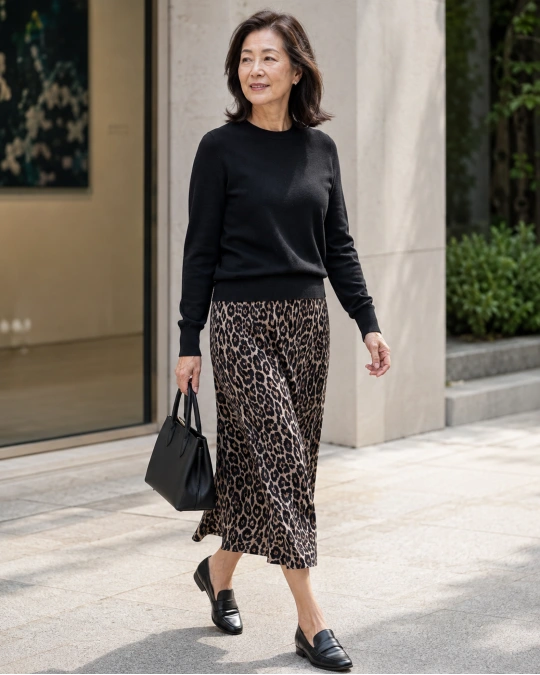
Use Jewelry, Prints, and Accessories to Connect the Palette
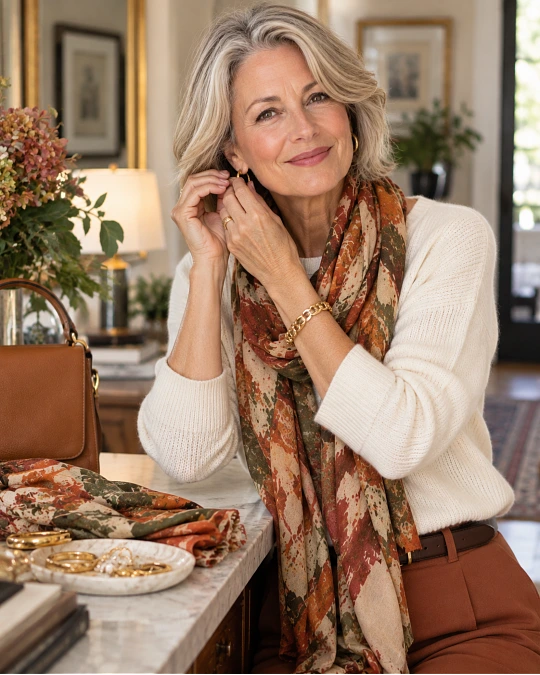
Image Credit: Sagely Chic
Sometimes an outfit has all the right pieces but still feels slightly disconnected. Accessories can be the small detail that brings everything together.
Gold, bronze, brass, copper, tortoiseshell, cognac leather, and warm tan can complement an earthy color palette particularly well. You can also mix metals if that better reflects your personal style.
Prints are another easy way to connect several colors. A scarf containing ivory, navy, rust, and olive can make those shades feel related when worn throughout the outfit.
When choosing a print to wear close to your face, pay particular attention to the background or dominant color. Smaller secondary shades usually have less visual impact.
Budget-friendly idea: Before buying another garment, experiment with a different scarf, pair of earrings, necklace, handbag, or jacket. A single warm accessory may completely change an outfit you already own.
This also gives you more ways to repeat simple wardrobe basics without making every outfit look identical.
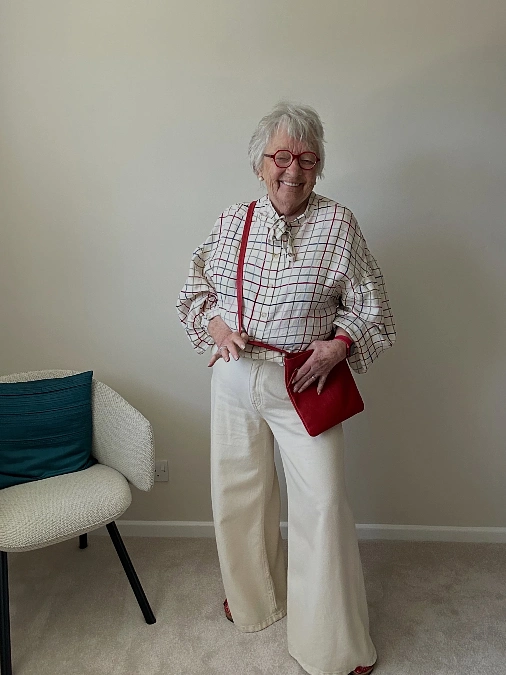
Build a Warm-Color Outfit Formula You Can Repeat
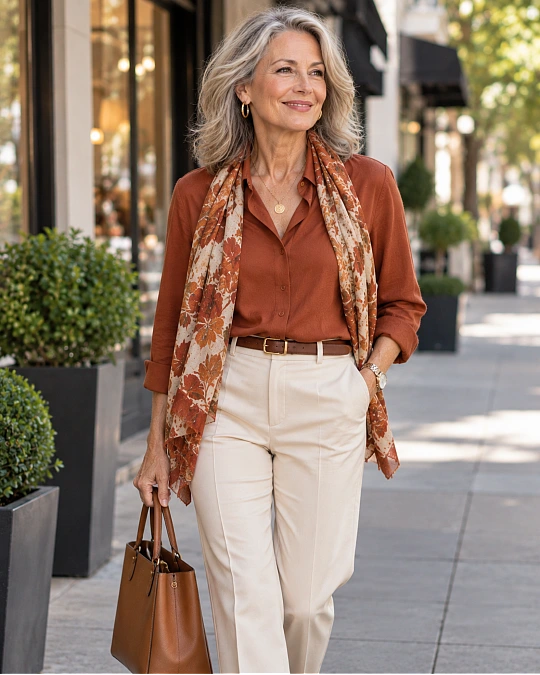
Image Credit: Sagely Chic
A good color palette should make getting dressed easier, not turn every morning into a color-matching exercise.
Start with one warm neutral, add a flattering supporting shade, and introduce a richer accent only when you want additional contrast.
| Occasion | Pieces | Why It Works |
|---|---|---|
| Everyday errands | Dark denim + ivory knit + camel jacket | The warm color stays near the face while denim keeps the outfit relaxed |
| Lunch with friends | Chocolate trousers + coral blouse + tan loafers | Coral adds freshness while brown grounds the combination |
| Smart casual | Warm navy trousers + cream top + olive jacket | The soft contrast creates interest without looking harsh |
| Travel day | Olive trousers + oatmeal knit + cognac shoes | Earthy colors combine easily and suit a practical outfit |
| Casual dinner | Dark denim + rust blouse + gold jewelry | Rust becomes the focal point while the other pieces stay simple |
A simple formula to remember is:
Warm neutral bottom + flattering near-face color + one connected accessory.
For example, chocolate trousers with an ivory blouse and cognac loafers create one dependable combination. Change the blouse to coral, teal, or warm rose and the same basic formula can produce a completely different outfit.
The goal is repeatability. When your colors work together naturally, you can create more outfits without constantly shopping for something new.
Final Thoughts
Finding flattering colors for warm undertones does not require following a rigid color chart. The most useful approach is to compare shades in natural light and pay attention to how they interact with your complexion, hair, and existing wardrobe.
Warm neutrals such as ivory, camel, chocolate, taupe, and olive can provide a strong foundation. From there, shades like rust, terracotta, coral, warm red, teal, and earthy green can add personality without overwhelming your look.
And if a particular color feels too cool, you do not necessarily need to give it up. Try a warmer version or move it farther away from your face.
Once you identify a handful of shades that genuinely work for you, getting dressed becomes simpler. Your wardrobe starts to feel connected, versatile, and much easier to enjoy.