How to Wear Animal Print Over 50 in Ways That Feel Fresh, Not Dated
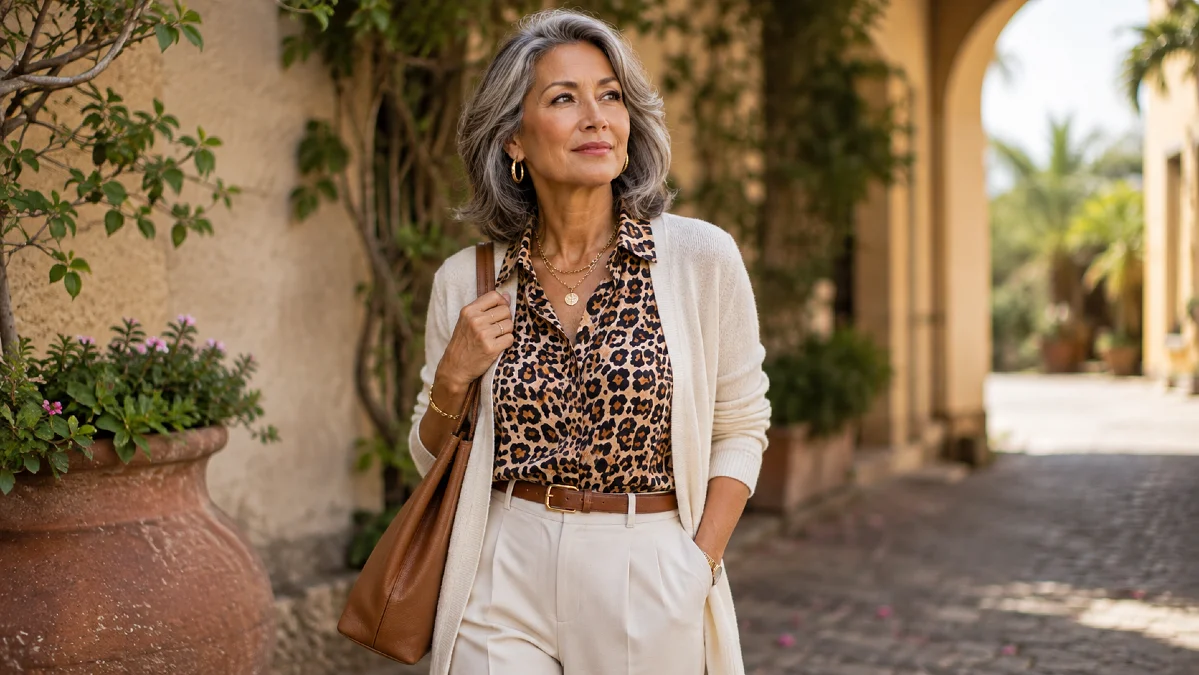
Animal prints have a way of making an outfit instantly noticeable, but that does not always make them easy to style. A leopard blouse can feel too bold, while a zebra skirt may look fantastic on its own but harder to combine with the clothes already in your closet.
For women over 50, the print itself is rarely the issue. The overall effect usually comes down to the scale of the pattern, the fabric, the silhouette, and the pieces surrounding it.
Animal print can still be a versatile part of a modern wardrobe. Instead of replacing everything you own, focus on proportion, texture, color, and simpler styling to make familiar prints feel current.
Animal Print Looks More Current When the Rest of the Outfit Stays Quiet
Animal print already has plenty of visual energy. Adding too many other statement elements can make an outfit feel crowded rather than polished.
Large jewelry, heavily embellished shoes, distressed denim, another print, and a bold animal-print top can all compete for attention at the same time.
A simpler approach is to let the animal print become the main point of interest. Surround it with clean silhouettes and solid colors so the outfit has enough visual breathing room.
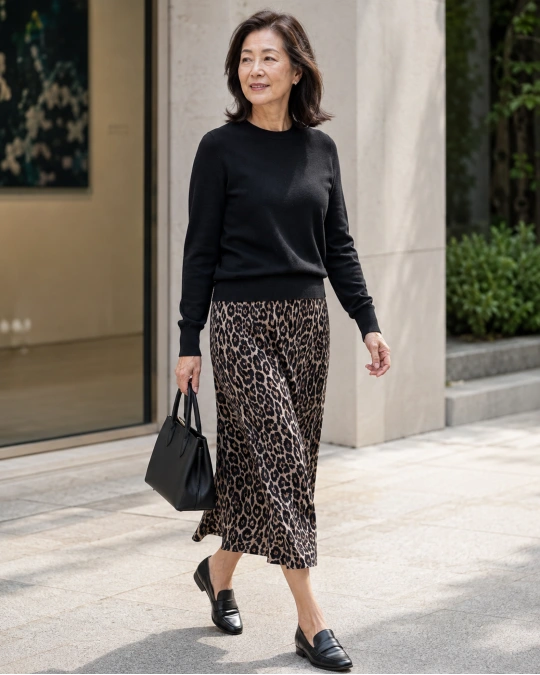
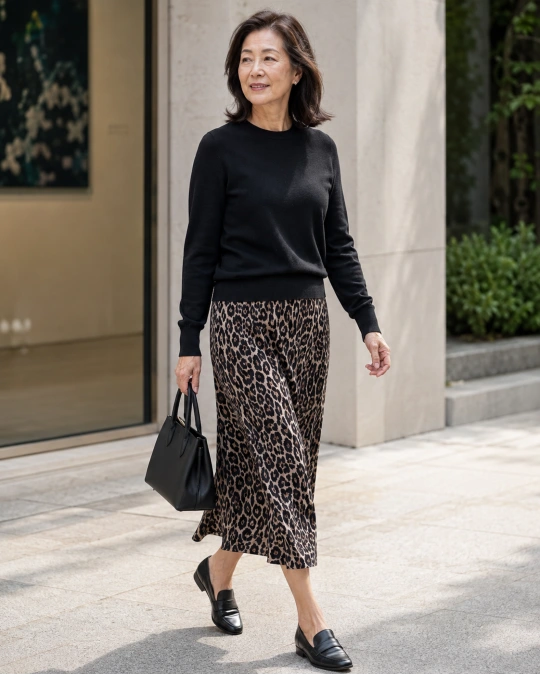
For example, leopard trousers can look effortless with a simple black crew-neck sweater and streamlined loafers. A snake-print blouse can feel much more relaxed with dark straight-leg jeans and an uncomplicated leather bag.
This creates a clear focal point instead of asking every piece to make a statement.
| If the Outfit Feels Dated | Try This Instead |
|---|---|
| Leopard blouse + chunky necklace + printed bag | Leopard blouse + delicate earrings + solid leather bag |
| Zebra skirt + heavily detailed top | Zebra skirt + smooth, simple knit |
| Animal-print trousers + embellished footwear | Animal-print trousers + clean loafers |
| Leopard dress + multiple statement accessories | Leopard dress + one noticeable accessory |
| Printed jacket + another busy printed blouse | Printed jacket + cream, black, or chocolate-colored top |
You are not taking the personality out of the outfit. You are simply allowing the animal print to have enough space to stand out on its own.
Choose Softer Prints When High Contrast Feels Too Strong
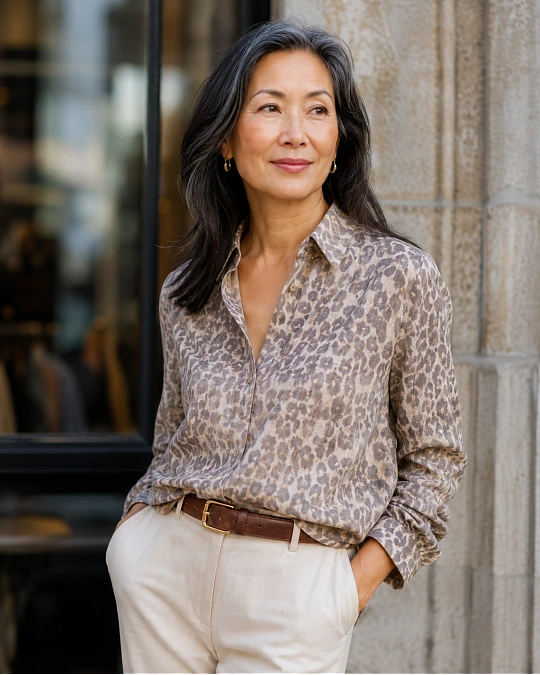
Animal prints can look dramatically different depending on their colors, contrast, and scale. You do not have to choose the sharpest or most traditional version of a print.
If strong leopard or zebra feels harsh, look for softer combinations such as cocoa and beige, taupe and cream, charcoal and gray, or muted olive and black.
The size of the markings matters too. Extremely small prints can sometimes create a busy effect, while oversized markings may dominate a small garment. A medium-scale design can offer a useful middle ground.
Color note: Animal print does not have to imitate an actual animal. Burgundy leopard, navy snake print, or an olive-based pattern can provide the same sense of pattern while fitting more naturally into a modern wardrobe.
| Print Detail | What to Look For | Why It Can Work |
|---|---|---|
| Leopard | Medium markings with softer edges | Creates interest without making the surface feel overly crowded. |
| Zebra | Cream and charcoal rather than extreme black and white | Produces a gentler contrast. |
| Snake | Muted or matte coloring | Keeps the pattern sophisticated rather than overly flashy. |
| Tiger | More open spacing between stripes | Allows more visual space between the markings. |
| Abstract animal print | A simple two- or three-color palette | Makes the print easier to combine with wardrobe basics. |
The most useful animal print is one that fits naturally into the rest of your closet instead of requiring you to build an entirely new outfit around it.
Let One Animal-Print Piece Anchor the Outfit
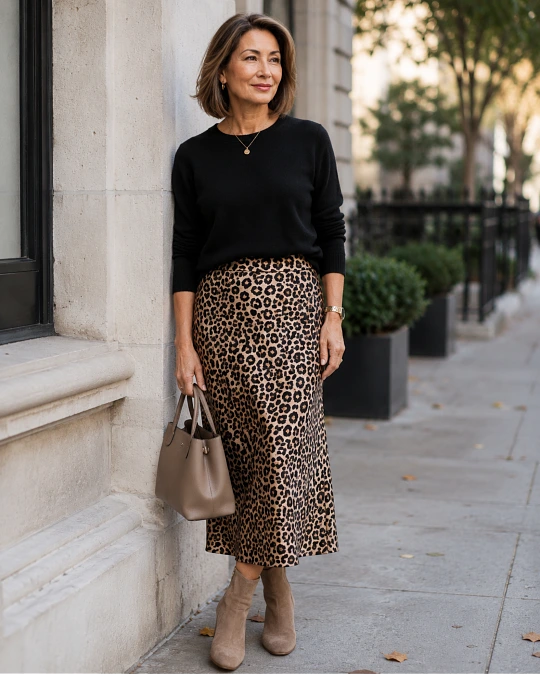
When you are unsure how to wear animal print, start with one printed item and build the rest of the outfit around it.
A leopard midi skirt can become the foundation for a simple look with a fine-knit sweater, ankle boots, and a structured handbag. The clean shapes keep the print from becoming overwhelming.
For everyday dressing, animal-print flats can add personality to straight-leg jeans, a white shirt, and a lightweight jacket without changing the entire character of the outfit.
A printed scarf is another easy option. Pair it with a camel sweater and dark trousers when you want the print close to your face without committing to an entire animal-print garment.
Fit note: Strong prints usually work especially well with uncomplicated silhouettes. Straight trousers, column skirts, relaxed shirts, clean blouses, and softly tailored jackets provide structure without competing with the pattern.
Modern Denim and Knits Keep Leopard and Zebra From Feeling Too Dressy
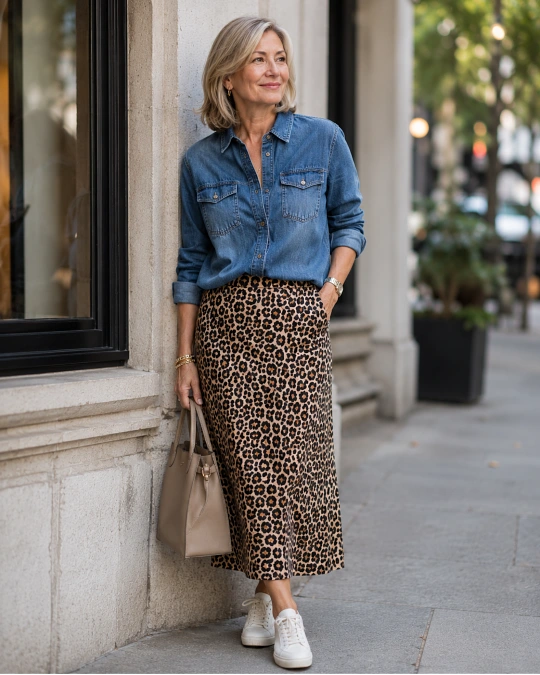
Sometimes an animal print feels dated not because the print itself is wrong, but because it is being worn with silhouettes and accessories associated with an older styling formula.
Changing the surrounding pieces can completely alter the result. Denim and knitwear are particularly useful because they add a relaxed, contemporary contrast.
- Wear a leopard blouse with straight or relaxed jeans instead of very tight denim.
- Pair a zebra midi skirt with a clean crew-neck sweater rather than a heavily decorated blouse.
- Try animal-print trousers with a cropped or hip-length cardigan for a softer silhouette.
- Combine an animal-print skirt with a relaxed denim shirt for an easy contrast.
- Layer a printed jacket over a simple black, cream, navy, or chocolate-colored outfit.
The goal is not to copy every new trend. Instead, modern proportions can help familiar prints work naturally with the clothing you already enjoy wearing.
Comfort upgrade: Make sure trousers and skirts have enough room through the hip and thigh. A bold print naturally attracts attention, so pulling, bunching, or twisting in the fabric can become especially noticeable.
Shoes and Accessories Decide How Bold the Print Feels
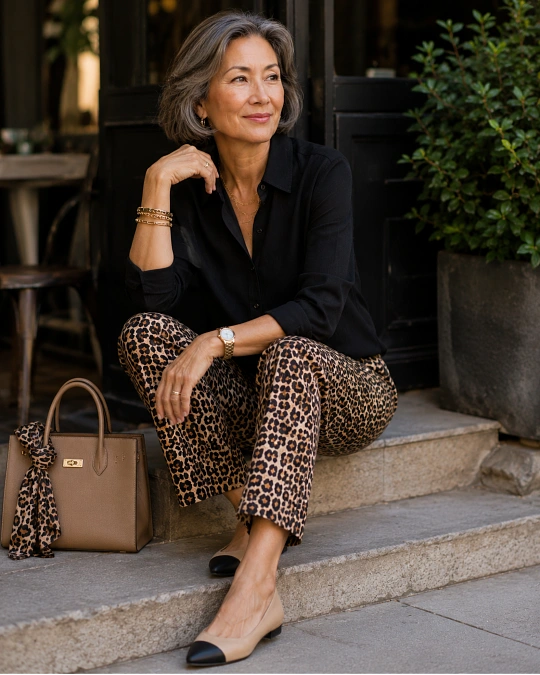
Accessories can either soften an animal-print outfit or make it much more dramatic. They help determine whether the print becomes the centerpiece or simply acts as an accent.
For an understated look, combine leopard with brown leather, camel, black, cream, dark denim, or subtle gold-tone jewelry. These shades often complement the colors found in animal prints without competing with them.
If you want more color, introduce just one strong shade. Burgundy, forest green, deep red, or rich blue can create contrast while keeping the overall outfit controlled.
Animal-print accessories are particularly useful if you are still experimenting. A belt, flat, scarf, or small handbag can bring pattern into a simple outfit without requiring a full printed garment.
| Occasion | Pieces | Why It Works |
|---|---|---|
| Errands | Straight jeans + cream knit + leopard flats | The print stays contained in a small accessory. |
| Lunch | Zebra midi skirt + black knit + loafers | Simple shapes balance the stronger pattern. |
| Casual office | Leopard blouse + dark trousers + simple pumps | Solid separates create a polished frame. |
| Dinner | Black dress + animal-print clutch + low heel | A single printed accent adds interest without taking over. |
| Travel | Dark jeans + soft cardigan + animal-print scarf | Comfortable basics keep the look practical while the scarf adds personality. |
This makes it easier to build everyday outfits for women over 50 because your basic wardrobe can support several different animal-print accessories and garments.
A Few Small Styling Changes Can Rescue an Older Animal Print
You do not automatically need to replace an animal-print piece simply because you have owned it for several years. Sometimes the garment is still perfectly wearable; the surrounding styling may just need an update.
If something feels dated, make one change at a time before deciding that the piece no longer works.
- If the outfit feels too fitted: introduce a relaxed shape such as straight jeans, wider trousers, or a softer jacket.
- If the print feels too strong: move it away from your face by choosing an animal-print skirt, shoe, belt, or handbag.
- If the outfit looks too dressy: add denim, knitwear, suede, or another matte texture.
- If everything feels too coordinated: stop trying to match every brown, black, or neutral shade exactly.
Fabric can make a difference too. Soft knits, matte woven fabrics, cotton blends, and fluid materials can make animal print feel more relaxed and wearable.
Highly shiny fabrics can increase the visual intensity of an already noticeable print. If you enjoy shine, consider keeping it to one smaller element instead of combining it with several other bold details.
The Animal-Print Formula That Works With Clothes You Already Own
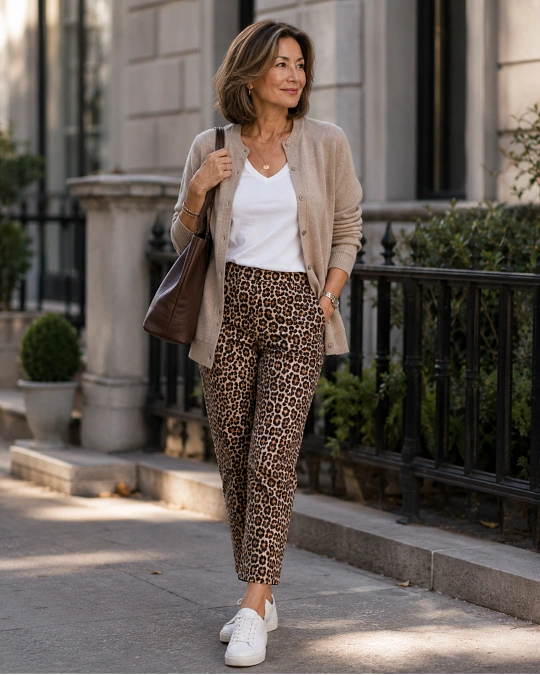
A simple formula can make animal print much easier to incorporate into everyday dressing.
Formula: One Animal-Print Piece + One Solid Wardrobe Basic + One Clean Finishing Layer.
Start with a printed piece you already enjoy. That could be a leopard skirt, snake-print trousers, zebra scarf, or animal-print blouse.
Pair it with a straightforward solid such as a black knit, cream blouse, dark jeans, or plain trousers. Then add a clean finishing layer, such as a denim jacket, cardigan, blazer, or simple coat.
For example, try a leopard skirt with a black sweater and denim jacket. Another option is snake-print trousers with a cream blouse and camel cardigan.
The formula works because each element has a clear role. The animal print provides visual interest, the solid piece creates calm, and the outer layer adds structure.
Your footwear can then change the mood. Sneakers make the outfit casual, loafers create a polished everyday look, and ankle boots can give the same combination a stronger finish for cooler weather.
Once you find a version that feels comfortable and natural, use it as a repeatable outfit formula. Change the colors, accessories, layers, and shoes instead of starting from scratch every time.
Frequently Asked Questions
Style Guide
Animal print can be surprisingly versatile when it is treated as one component of the outfit rather than something that has to dominate every detail. The most useful approach is to consider scale, color, texture, and proportion together.
The Animal Print Edit
A modern animal-print wardrobe does not need to contain dozens of printed pieces. One or two garments and a few accessories can give your existing basics plenty of flexibility.
Start with the print that feels most natural to you. If leopard is too strong, try a softer version or introduce the pattern through shoes or a scarf. If you prefer more contrast, a zebra or graphic animal print can become the focal point while the rest of the outfit remains simple.
The key is to wear the print in a way that feels like your style today. Clean silhouettes, thoughtful color combinations, and comfortable proportions can make animal print feel confident, polished, and easy to wear.