Image credit: Sagely Chic
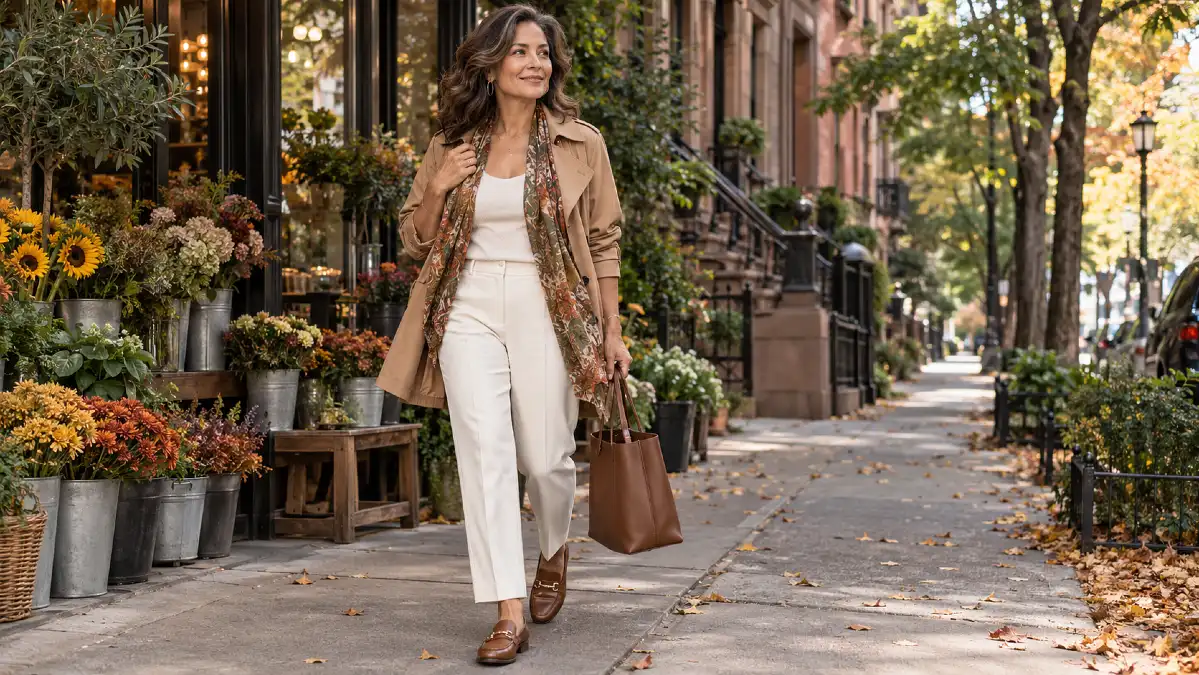
Moving from summer dressing into fall can be tricky when the weather has not completely cooled down. Mornings may feel crisp while afternoons are still warm, making heavy sweaters and coats feel like too much.
For women over 50, a comfortable seasonal transition does not require replacing an entire wardrobe. Small changes in layers, fabrics, colors, and footwear can make familiar summer pieces feel right for early fall.
A lightweight dress can work with a cardigan, linen trousers can pair with a fine knit, and sandals can gradually be replaced with loafers or other closed-toe shoes.
Keep Your Summer Base and Change What You Wear Around It
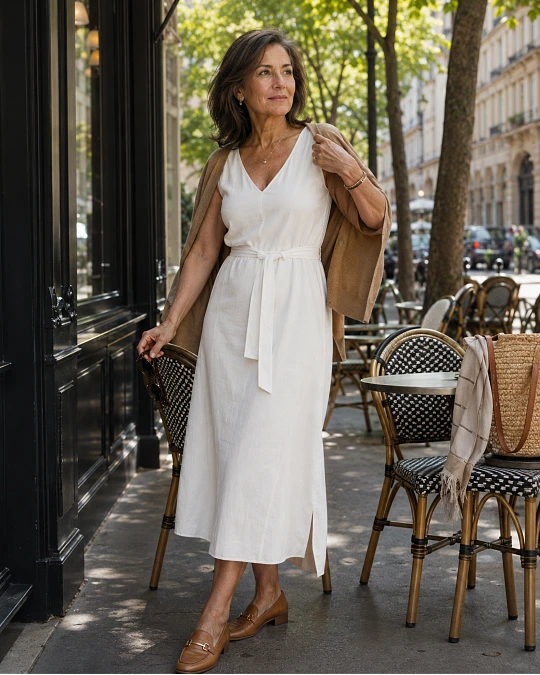
Image credit: Sagely Chic
The easiest way to begin a seasonal wardrobe transition is to keep wearing the summer clothes that already fit well and feel comfortable. Instead of putting everything away at once, change the layers and accessories around those pieces.
Simple staples such as cotton T-shirts, sleeveless blouses, midi skirts, straight-leg trousers, and lightweight dresses can remain useful well into early fall.
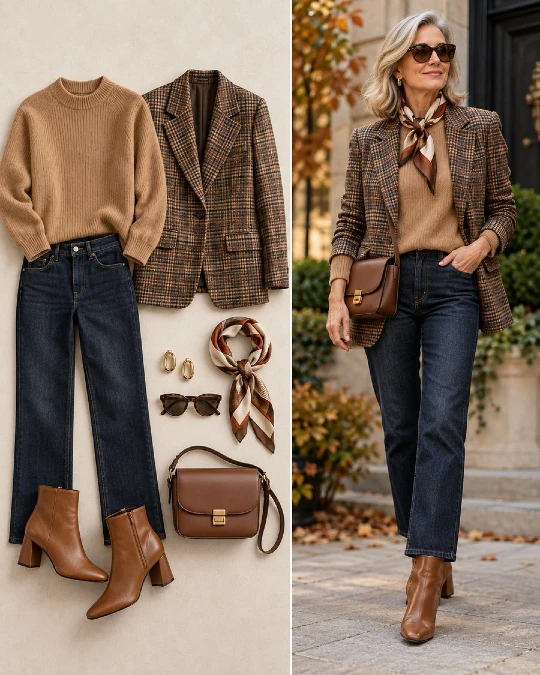
Adding a single seasonal layer can make a familiar outfit feel completely different. Try a soft blazer over a T-shirt, a cardigan with a sleeveless dress, or a lightweight jacket with trousers and a simple blouse.
Keeping the number of layers controlled also helps maintain a clean silhouette. One useful third piece is often enough when temperatures are still changing throughout the day.
Try combinations such as:
- Cotton T-shirt with straight-leg jeans and a lightweight jacket
- Sleeveless midi dress with a cropped cardigan and loafers
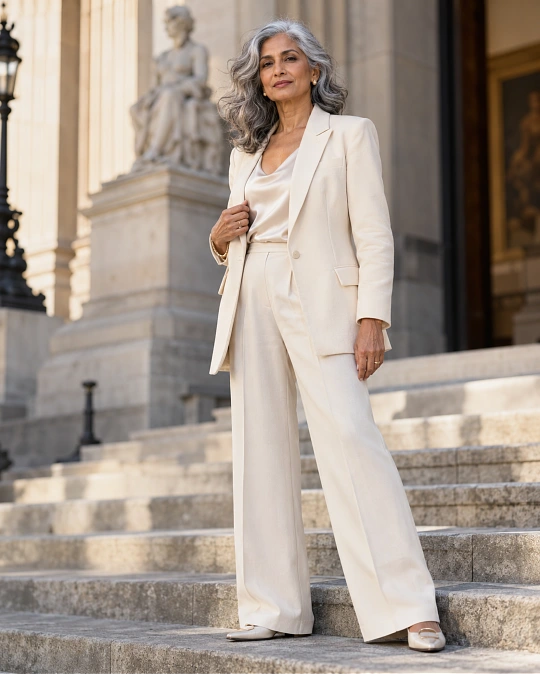
- White blouse with lightweight trousers and a soft blazer
- Midi skirt with a fine knit top and comfortable flats
Comfort upgrade: Choose early-fall layers that can easily be removed. This makes it much easier to handle warm afternoons without changing your entire outfit.
| Summer Base | Early Fall Addition | Why It Works |
|---|---|---|
| Cotton midi dress | Lightweight cardigan | Adds warmth while keeping the dress light and visible |
| White T-shirt | Soft blazer | Adds structure without creating unnecessary weight |
| Linen trousers | Fine knit top | Introduces fall texture while keeping the outfit comfortable |
| Midi skirt | Denim jacket | Adds casual structure to a softer bottom |
| Sleeveless blouse | Open cardigan | Provides extra coverage while remaining easy to remove |
Choose Lightweight Layers Before Reaching for Heavy Sweaters
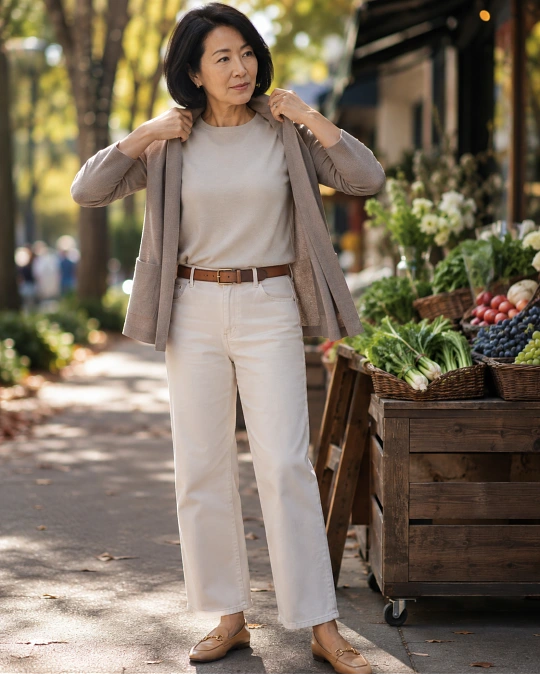
Image credit: Sagely Chic
Early fall does not always call for thick sweaters. Moving into heavy knitwear too quickly can leave you uncomfortable, especially when daytime temperatures remain warm.
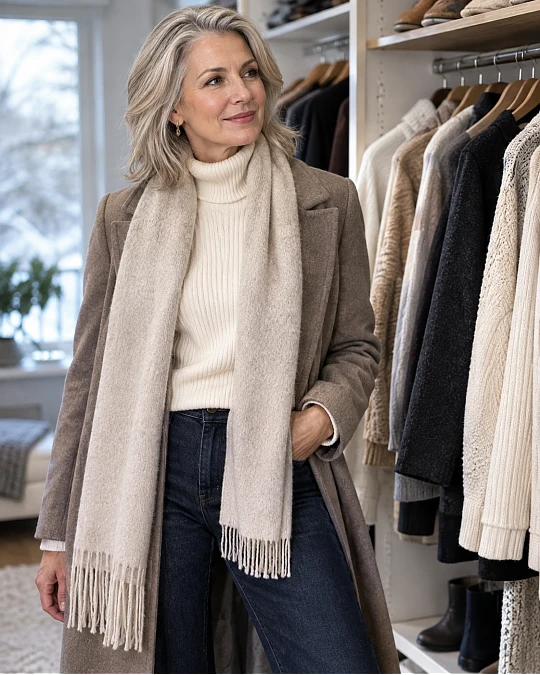
Instead, begin with lighter pieces such as fine-gauge sweaters, cotton cardigans, denim jackets, lightweight blazers, shirt jackets, and soft trench coats.
These pieces are particularly useful for outfits for women over 50 because they provide definition without making the outfit feel stiff or overloaded.
Proportion also matters. A shorter jacket can work nicely with straight-leg jeans or trousers, while a longer layer may pair better with a slimmer bottom.
You can also create contrast by combining one relaxed piece with another item that has more structure. This prevents the entire outfit from looking oversized.
Fit note: If a cardigan looks too loose when buttoned, try wearing it open. The vertical lines created at the front can make the outfit look more streamlined while keeping the relaxed feel.
Let Fabric Do More of the Seasonal Work
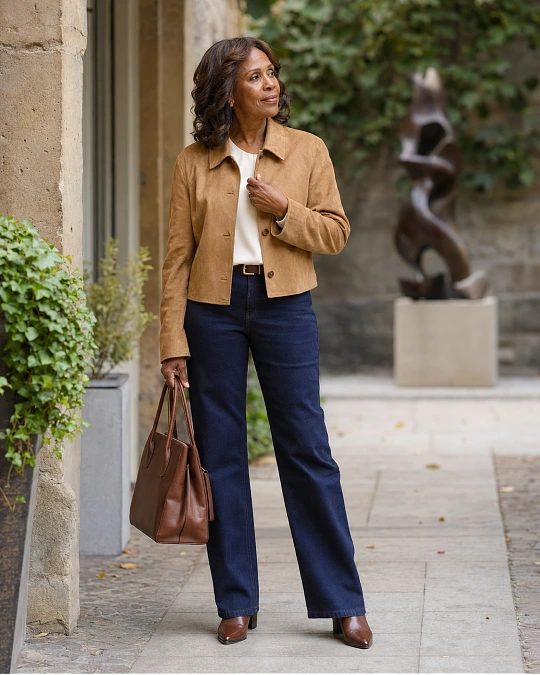
Image credit: Sagely Chic
Changing the texture of your clothing can make an outfit feel more autumn-ready without requiring heavy layers or dark colors.
Light denim, cotton twill, fine knits, brushed cotton, medium-weight jersey, and soft suede-like details can all add a little more visual depth than typical summer fabrics.
The goal is to gradually increase the texture and weight of your outfits rather than making a sudden jump from lightweight linen to thick winter wool.
For example, a linen shirt can still work on a warm September day. Pair it with darker denim and loafers, and the overall outfit immediately feels more suited to the changing season.
| Fabric or Texture | Look For | Why It Works in Early Fall |
|---|---|---|
| Fine knit | Smooth, lightweight weave | Adds warmth without making the outfit bulky |
| Lightweight denim | Soft structure | Gives summer pieces a stronger seasonal feel |
| Cotton twill | Flexible but slightly substantial | Works well for trousers and light jackets |
| Soft jersey | Medium-weight drape | Comfortable for dresses and everyday tops |
| Suede-like texture | Shoes, handbags, or small accents | Adds autumn texture without another clothing layer |
Fabric note: If you tend to feel warm easily, let shoes, bags, and accessories introduce the fall feeling before adding heavier clothing.
Shift Your Colors Without Giving Up the Shades You Love
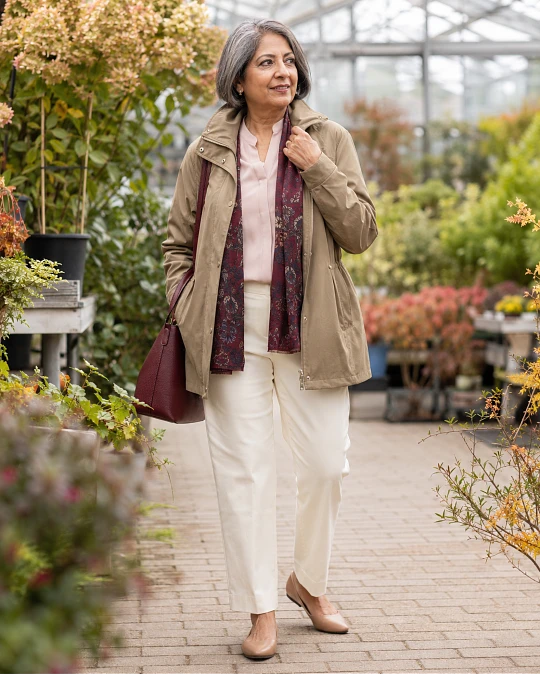
Image credit: Sagely Chic
You do not have to abandon every light or bright color when fall arrives. A few deeper shades can change the mood of your existing wardrobe without requiring a complete closet refresh.
White, cream, navy, camel, olive, charcoal, chocolate brown, burgundy, muted blue, and deep green can all help create a more seasonal palette.
For instance, white jeans can feel appropriate for early fall when combined with a camel sweater and brown loafers. A pale blue shirt can also look more autumnal when worn with dark denim and a navy jacket.
This approach is especially helpful if your capsule wardrobe over 50 already contains several neutral pieces. One deeper color can change the appearance of several outfits.
If earthy colors are not your preference, there is no need to force them into your wardrobe. Plum, deep teal, cool gray, navy, and cooler burgundy can create the same sense of seasonal depth.
Color note: Try adding one darker anchor rather than making the entire outfit dark. A pair of dark jeans, a deeper handbag, or an olive jacket may be enough.
Change Your Shoes Before You Change the Whole Outfit
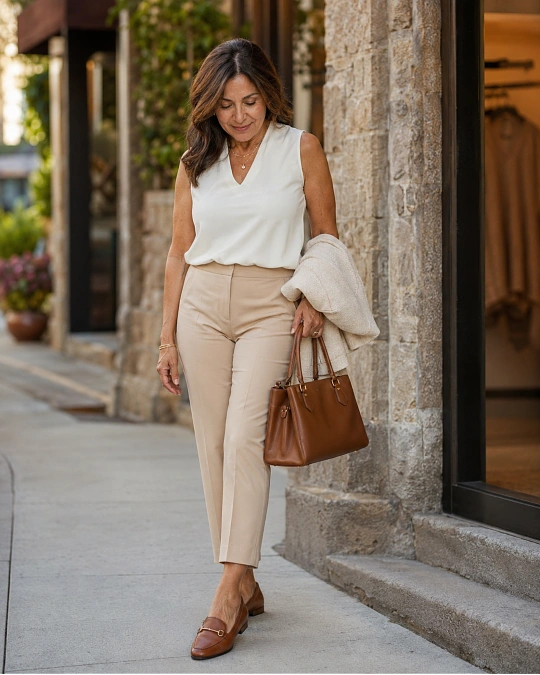
Image credit: Sagely Chic
Changing footwear is one of the simplest ways to make a summer outfit feel ready for fall.
You can continue wearing a cotton dress or lightweight blouse while moving away from sandals and toward loafers, ballet flats, clean sneakers, slingbacks, or ankle boots.
Because shoes visually ground an outfit, a closed-toe style can give lightweight clothing a more seasonal appearance without adding another layer.
Loafers work especially well with straight jeans, ankle-length trousers, and midi skirts. Clean sneakers are useful for casual days, errands, walking, and travel.
When temperatures begin to drop, ankle boots can take over. If a dress or skirt still looks too summery with boots, adding a cardigan or lightweight jacket can help balance the outfit.
| Instead of This | Try This | What Changes |
|---|---|---|
| Sandals with straight jeans | Loafers or ballet flats | Creates an instant autumn feel |
| Flip-flops with casual trousers | Clean sneakers | Keeps the outfit comfortable but more polished |
| Bare sandals with a midi dress | Slingbacks | Adds polish without excessive coverage |
| Heavy boots in mild weather | Loafers first | Introduces fall style without overheating |
Avoid the Styling Changes That Make Early Fall Feel Too Heavy
Transitional dressing should not make you feel as though you are already dressed for the coldest part of the year. When temperatures are still mild, keeping your outfits lighter usually creates a more comfortable result.
A few simple adjustments can make the difference:
- If thick sweaters feel bulky, choose a fine knit or lightweight cardigan.
- If an outfit becomes too dark, keep a cream, white, denim, or soft-colored piece close to your face.
- If several loose layers look shapeless, pair one relaxed item with something straighter or more structured.
- If boots feel too warm, start with loafers, flats, or closed-toe slingbacks.
There is also no need to follow strict seasonal rules. White trousers, dresses, and short sleeves can all remain part of your wardrobe when the weather allows.
The important thing is how you balance those pieces with the rest of the outfit.
Use One Transitional Outfit Formula on Busy Mornings
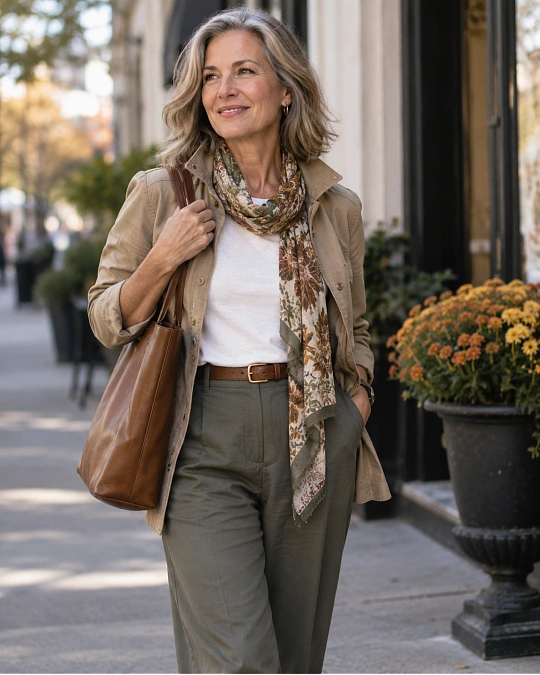
Image credit: Sagely Chic
Having a simple outfit formula can make the change from summer to fall much easier. Instead of creating a completely new outfit every morning, start with a familiar base and make one or two seasonal changes.
Formula: summer base + lightweight third piece + closed-toe shoe
Begin with something you already enjoy wearing, such as straight-leg jeans with a T-shirt, trousers with a blouse, or a simple midi dress. Add a cardigan, blazer, denim jacket, or lightweight trench, then finish with loafers, flats, sneakers, or ankle boots.
The summer base keeps the outfit comfortable, while the additional layer and footwear introduce the seasonal change.
You can use this approach for simple outfits for women over 50 without making every look feel repetitive.
For errands, try straight-leg jeans, a cotton T-shirt, a utility jacket, and sneakers. For lunch, switch to trousers, a blouse, a soft blazer, and loafers.
For an easy evening look, pair a midi dress with a cardigan and slingbacks. The formula stays consistent while the individual pieces change.
A personal outfit formula can also reduce unnecessary shopping because you become more familiar with the combinations that actually work for your lifestyle.
Frequently Asked Questions
When should I start wearing fall clothes?
Start when the weather makes them practical rather than relying only on the calendar. Begin with lightweight layers, deeper colors, and closed-toe footwear before moving into thick sweaters and coats.
A gradual change allows you to stay comfortable while getting more wear from your summer wardrobe.
Can women over 50 still wear summer dresses in fall?
Yes. Many summer dresses can easily continue into early fall when you change the surrounding pieces.
Try adding a cardigan, denim jacket, blazer, loafers, or ankle boots depending on the temperature. Simple dresses and versatile prints are particularly easy to style across seasons.
Can you wear white after summer?
Absolutely. White jeans, trousers, shirts, and knitwear can all work during fall.
Pair them with richer textures or deeper colors such as camel, navy, olive, chocolate, or burgundy to create a more seasonal combination.
What jacket is most useful for transitioning into fall?
A lightweight blazer, denim jacket, utility jacket, soft trench, or cardigan can all be useful transitional layers.
The best option depends on the clothes you wear most often. If you frequently wear jeans, a blazer or utility jacket may provide more combinations, while cardigans and shorter jackets can work especially well with dresses.
How can I look stylish in fall without buying a new wardrobe?
Start by changing how you combine the clothes you already own. Add a deeper-colored layer, replace sandals with loafers, pair summer tops with darker denim, or introduce fall texture through shoes and accessories.
Small changes can create polished outfits for women over 50 while allowing your existing wardrobe to do most of the work.