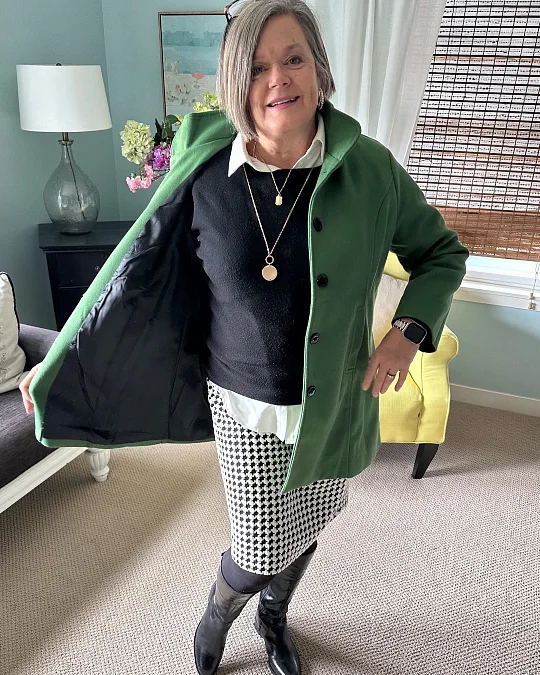
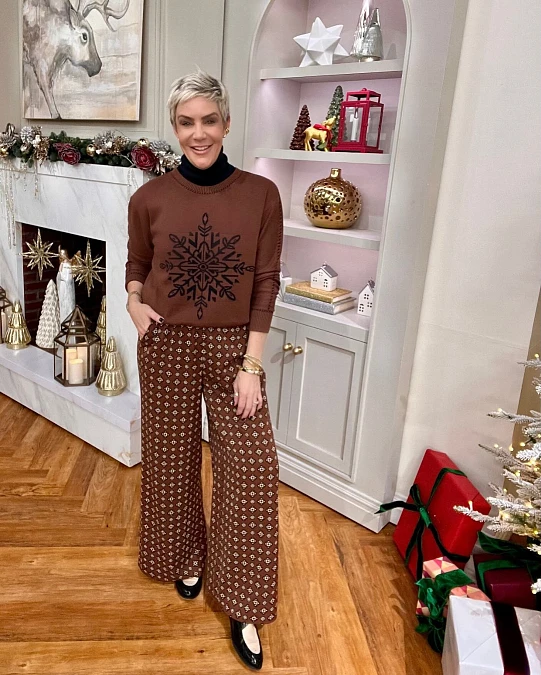
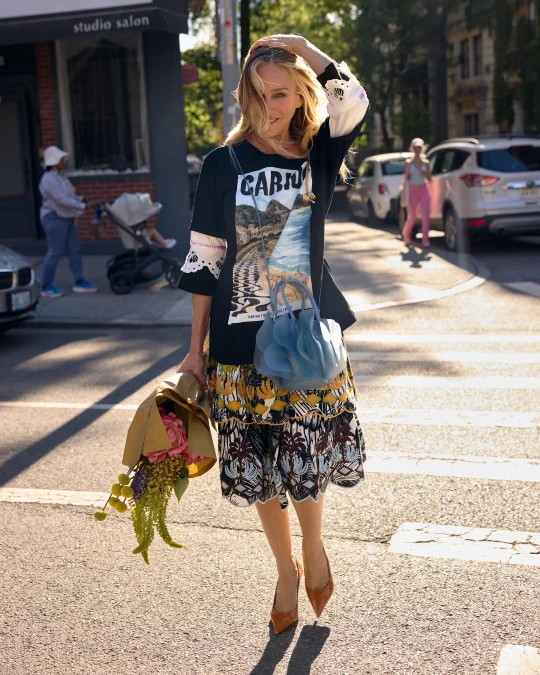
Winter outfits can be difficult when staying warm means adding layer after layer. Bulky sweaters, stiff coats, heavy boots, and thick fabrics can quickly make everyday dressing feel uncomfortable.
For women over 50, a better approach is to choose pieces that provide warmth without unnecessary volume. The right layers should feel comfortable, coordinate easily, and work for the way you actually spend your winter days.
The most useful winter wardrobe essentials for women over 50 are not necessarily the trendiest pieces. They are the clothes you can wear repeatedly, combine in different ways, and feel good in for several hours.
With a practical mix of fabrics, flattering proportions, dependable shoes, and versatile outerwear, you can create a winter wardrobe that feels warm, polished, and easy to manage.
Winter Essentials Should Earn Their Space in Your Closet
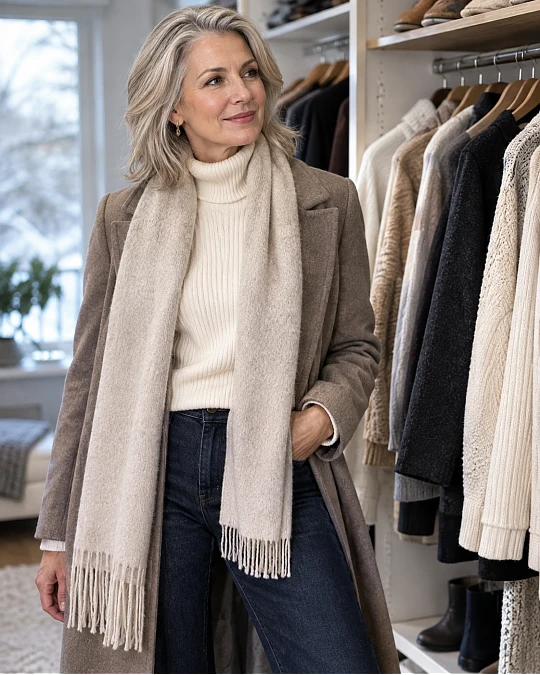
Image credit: Sagely Chic
A useful winter essential should do more than fill a hanger. It should solve a real dressing need and work with several other items in your closet.
For example, a lightweight merino sweater can be worn under a coat, paired with jeans, or layered over a button-down shirt. That makes it considerably more useful than a statement sweater that only works with one specific outfit.
Fit is especially important during winter because multiple layers naturally add volume. Clean shoulders, moderate proportions, and fabrics that fall smoothly can help an outfit look balanced.
Your lifestyle should also determine what belongs in your closet. A woman who works from home may prioritize soft knitwear, while someone who commutes may need a reliable coat and comfortable weather-resistant footwear.
Fabric choice also affects warmth, comfort, and layering. These are some practical options to consider:
| Winter Fabric | What to Look For and Why It Works |
|---|---|
| Merino wool | Fine, lightweight knits that provide warmth without excessive thickness |
| Cashmere or cashmere blends | Soft, lightweight warmth that works especially well for sweaters and scarves |
| Cotton jersey | Comfortable for indoor layering and relaxed everyday outfits |
| Wool blends | Useful for coats and trousers when you want warmth with a structured finish |
| Ponte knit | A comfortable, substantial fabric that works particularly well for trousers |
You do not need to purchase every fabric listed here. Focus on the materials that solve the problems you regularly experience during winter.
Start With Warm Base Layers That Do Not Add Bulk
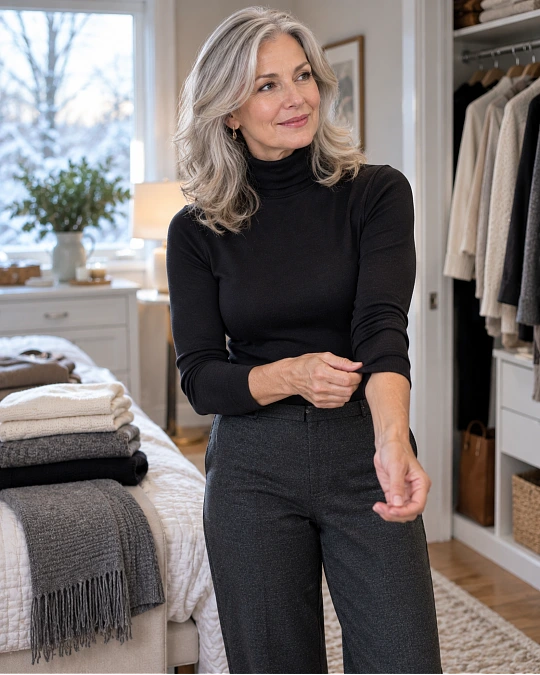
Image credit: Sagely Chic
A comfortable winter outfit often starts with a thin base layer rather than a thick sweater.
Fine merino tops, fitted long-sleeve shirts, soft ribbed knits, and lightweight mock-neck tops can provide warmth while leaving enough space for additional layers.
The base layer should follow your body without feeling restrictive. If it pulls across your shoulders, chest, or waist, adding another garment on top will usually make the problem more noticeable.
Necklines also affect versatility. Crew necks are easy to wear beneath sweaters, V-necks provide a more open look around the face, and mock necks add warmth without the folded bulk of some turtlenecks.
Try this: If your coats and sweaters always feel crowded, experiment with a thinner wool or cotton layer underneath. You may get better movement without sacrificing warmth.
Neutral shades such as charcoal, navy, cream, black, chocolate, and soft gray are easy to mix. However, a deep berry, teal, rust, or green base layer can bring more personality to simple winter outfits.
Build Around Trousers and Jeans That Work With Winter Shoes
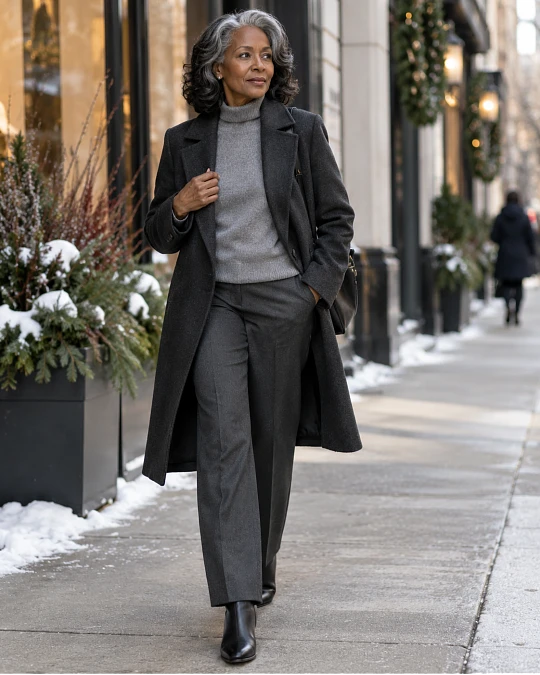
Image credit: Sagely Chic
Winter trousers and jeans need to work with your footwear as well as your tops and jackets. The way the hem falls over boots or shoes can change the entire proportion of an outfit.
Straight-leg jeans are a dependable choice because they generally provide enough room for ankle boots without creating excessive fabric around the lower leg.
A darker denim wash can create a more refined appearance with boots or loafers, while medium denim keeps everyday outfits relaxed.
For trousers, consider fabrics with enough weight to maintain their shape. Ponte, brushed twill, wool blends, and substantial stretch fabrics can be especially practical during colder months.
Pay close attention to length. A pair of trousers that looks perfect with flats may bunch or sit awkwardly when worn with ankle boots.
Before buying another pair, try the trousers with the winter footwear you wear most often. This simple check can prevent many wardrobe mistakes.
A slightly higher rise can also make the transition between a sweater, jacket, and waistband look cleaner, particularly if you prefer shorter jackets or partially tucked tops.
Choose Knitwear That Holds Shape Instead of Swallowing You
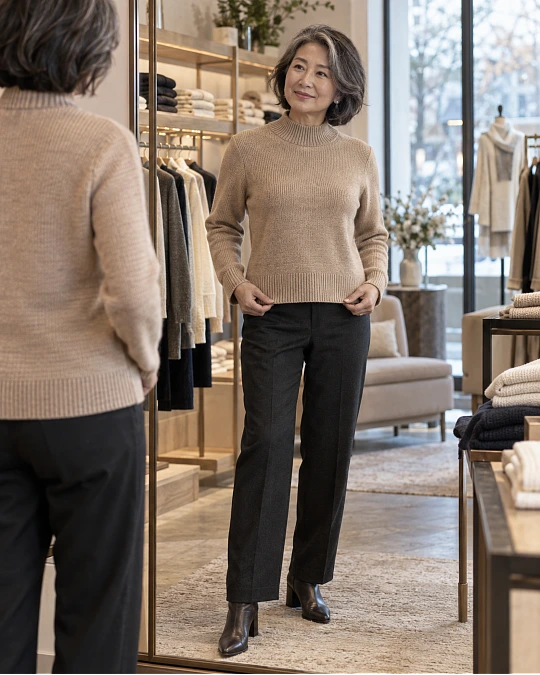
Image credit: Sagely Chic
Good knitwear is an important part of any winter wardrobe, but the thickest sweater is not automatically the warmest or most useful.
A sweater with a defined shoulder, controlled sleeve, and intentional hem can be easier to layer than an oversized knit that adds volume everywhere.
Relaxed sweaters can absolutely work. The key is to balance the volume elsewhere in the outfit.
For example, a roomy sweater can pair well with straight-leg trousers, while a more fitted knit gives you more freedom to wear wide-leg pants or a fuller skirt.
When shopping for winter knitwear, check the following:
- Shoulders: Look for seams that create intentional shape instead of excessive drooping.
- Sleeves: A little room is comfortable, but extremely wide sleeves can become difficult beneath coats.
- Hem: Hip-length and slightly shorter styles can be easier to combine with trousers.
- Texture: Smooth and fine-ribbed knits generally layer more easily than very chunky textures.
- Neckline: Choose a neckline that feels comfortable and leaves enough space for scarves or jewelry.
If an older sweater feels too shapeless, try styling it differently before replacing it. A small front tuck, a neatly rolled cuff, or a long pendant can create more definition.
Small styling adjustments can make simple winter outfits for women over 50 look more deliberate without requiring a larger wardrobe.
Let One Good Coat and Practical Shoes Carry Most Outfits
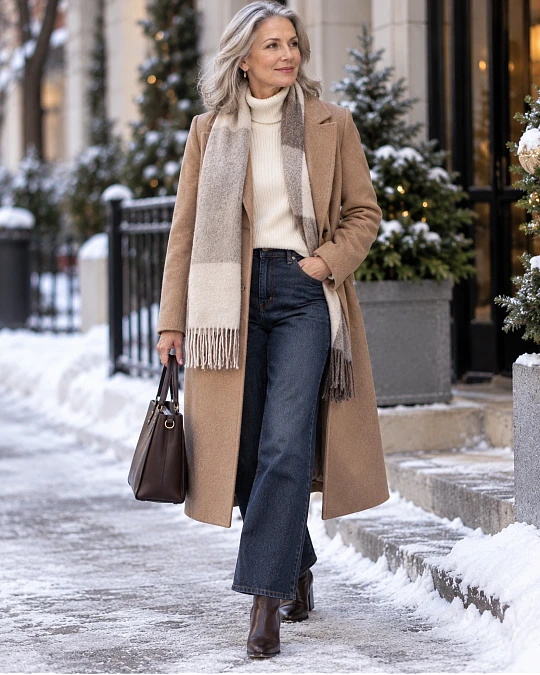
Image credit: Sagely Chic
Your coat is often the most visible part of a winter outfit, so proportion and fit deserve attention.
A knee-length wool coat can work with trousers, jeans, dresses, and skirts. A shorter structured jacket may be more practical for driving, errands, or less severe winter weather.
If your climate brings snow, rain, or strong wind, performance matters. A well-fitted puffer with a clean silhouette can look polished while providing practical warmth.
The same principle applies to shoes. Winter footwear should support the activities you actually do rather than forcing you to sacrifice comfort for appearance.
Ankle boots, supportive leather sneakers, weather-resistant boots, and sturdy loafers can all have a place depending on your climate and routine.
Changing your shoes and outer layer can also give the same basic outfit a completely different feel.
| Base Outfit | Casual Day | Smart Casual | Colder Weather |
|---|---|---|---|
| Straight jeans + merino sweater | Leather sneakers | Ankle boots + wool coat | Weatherproof boots + puffer |
| Black trousers + knit top | Loafers + cardigan | Ankle boots + structured coat | Flat boots + long wool coat |
| Knit dress | Clean sneakers | Knee-high boots | Tall boots + warm coat |
| Dark denim + button-down | Sneakers + quilted jacket | Loafers + blazer | Boots + wool coat |
This is why a compact winter wardrobe can provide plenty of outfit options. Shoes and outerwear can change the overall look without requiring an entirely new outfit underneath.
Build a Small Winter Capsule Around Your Real Week
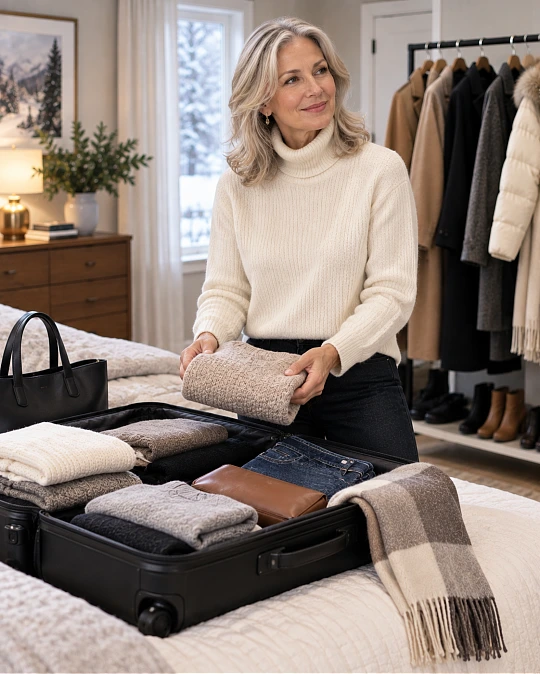
Image credit: Sagely Chic
A useful capsule wardrobe over 50 does not have to follow a specific number of pieces. It simply needs enough compatible clothing to handle your normal week.
Start by considering what your winter calendar actually looks like. Your wardrobe may need to cover errands, lunches, appointments, travel, work-from-home days, casual dinners, or social events.
Build around those situations instead of buying clothes based on an imaginary lifestyle.
A practical starting point might include dark jeans, comfortable trousers, several fine knits, a cardigan, a good coat, ankle boots, and an everyday shoe.
Once those basics work together, add personality through scarves, jewelry, color, texture, or one distinctive jacket.
| Occasion | Formula | Why It Works |
|---|---|---|
| Errands | Straight jeans + fine knit + short jacket + sneakers | Provides warmth and comfort without looking overly dressed |
| Lunch with friends | Trousers + V-neck sweater + ankle boots + wool coat | Simple proportions create a polished casual appearance |
| Travel day | Ponte trousers + soft knit + cardigan + supportive sneakers | Comfortable layers can adapt to changing temperatures |
| Casual evening | Dark jeans + mock neck + structured coat + boots | Simple pieces gain definition through structure and contrast |
One easy personal formula could be:
Formula: straight trousers or jeans + fine knit + structured outer layer + comfortable shoes
This combination works because the lower half stays streamlined, the knit controls bulk, and the outer layer provides structure.
You can change the sweater color, replace jeans with trousers, or switch sneakers for ankle boots while keeping the basic formula intact.
Buy Less by Fixing the Weakest Part of Your Winter Wardrobe
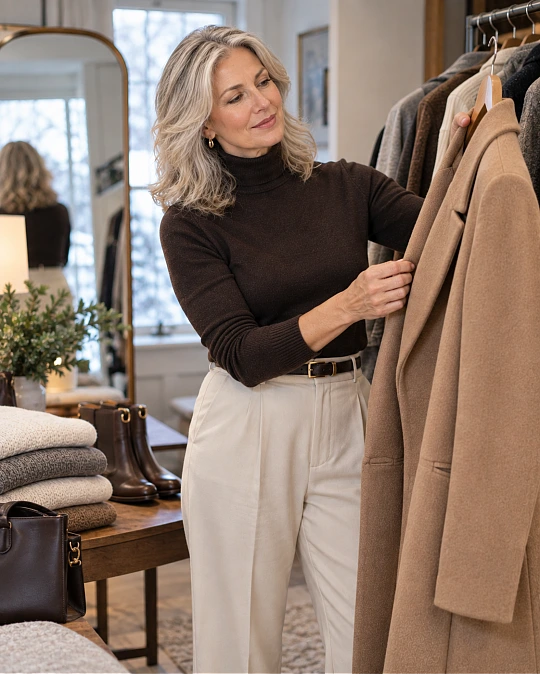
Image credit: Sagely Chic
Before shopping for more clothes, take a close look at what is already working in your closet.
Notice where your winter outfits usually fail. Perhaps your trousers are comfortable but your sweaters do not layer well. Maybe your coats are useful but your shoes are uncomfortable for everyday walking.
Start by correcting that specific weakness instead of adding random new pieces.
Cost per wear is also worth considering. A coat worn several times each week can provide much more practical value than a beautiful top that only works for occasional events.
The same thinking applies to boots, trousers, sweaters, and base layers.
Do not overlook tailoring either. Adjusting a trouser hem, shortening sleeves, replacing buttons, or making a small coat alteration can give an older garment a more current fit.
Winter dressing over 50 becomes simpler when your clothes support your real routine instead of making you create a completely new outfit every morning.
Frequently Asked Questions
What are the most important winter wardrobe essentials for women over 50?
A practical starting point includes lightweight base layers, comfortable jeans or trousers, versatile sweaters, dependable winter shoes, and a coat appropriate for your climate.
Once these foundation pieces work together, you can add dresses, skirts, accessories, stronger colors, and seasonal statement pieces according to your lifestyle.
How can I stay warm without looking bulky in winter?
Try several lightweight layers instead of depending on one extremely thick garment. Fine wool, smooth knits, thin base layers, and a properly fitted coat can provide warmth while keeping the silhouette more controlled.
It can also help to keep only one part of the outfit oversized. For example, pair a relaxed sweater with straighter trousers rather than adding volume to both the top and bottom.
Are oversized sweaters flattering after 50?
Oversized sweaters can work well if you like the relaxed look. The important part is creating some balance so the extra volume appears intentional.
Try pairing a roomy sweater with straight jeans, streamlined trousers, or another relatively clean silhouette on the lower half.
What winter colors look chic on women over 50?
There is no single color palette that every woman needs to follow. Navy, cream, charcoal, camel, chocolate, olive, burgundy, teal, and deep green are all versatile choices.
Brighter colors can work just as well. Choose shades that complement your existing wardrobe and make you feel comfortable wearing them repeatedly.
How many pieces do I need for a winter capsule wardrobe?
There is no universal number that works for every woman. Your capsule needs to cover your normal activities without leaving you constantly doing laundry or struggling to create combinations.
A smaller collection of compatible tops, bottoms, layers, coats, and shoes can be more useful than a much larger closet filled with pieces that do not work together.