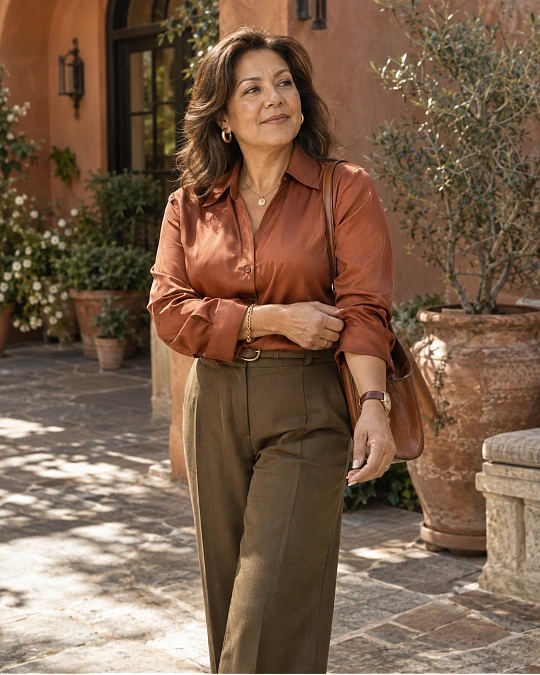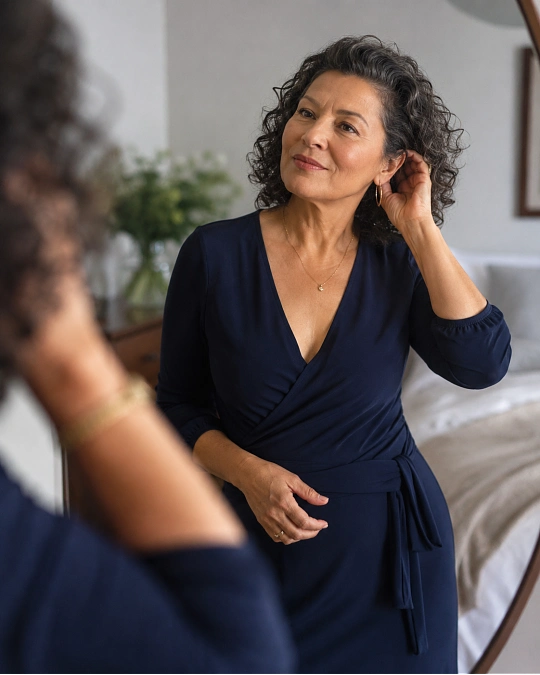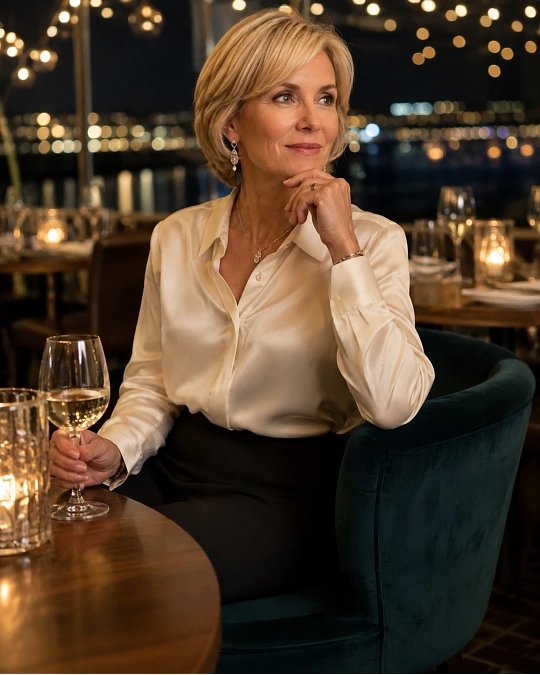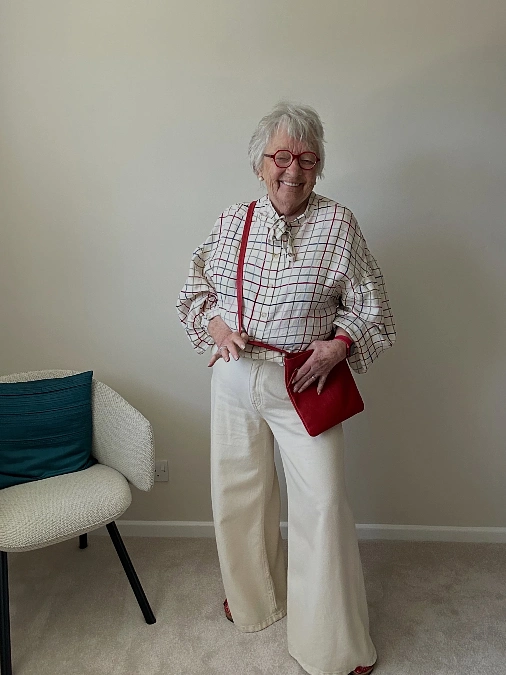
Image credit: Sagely Chic
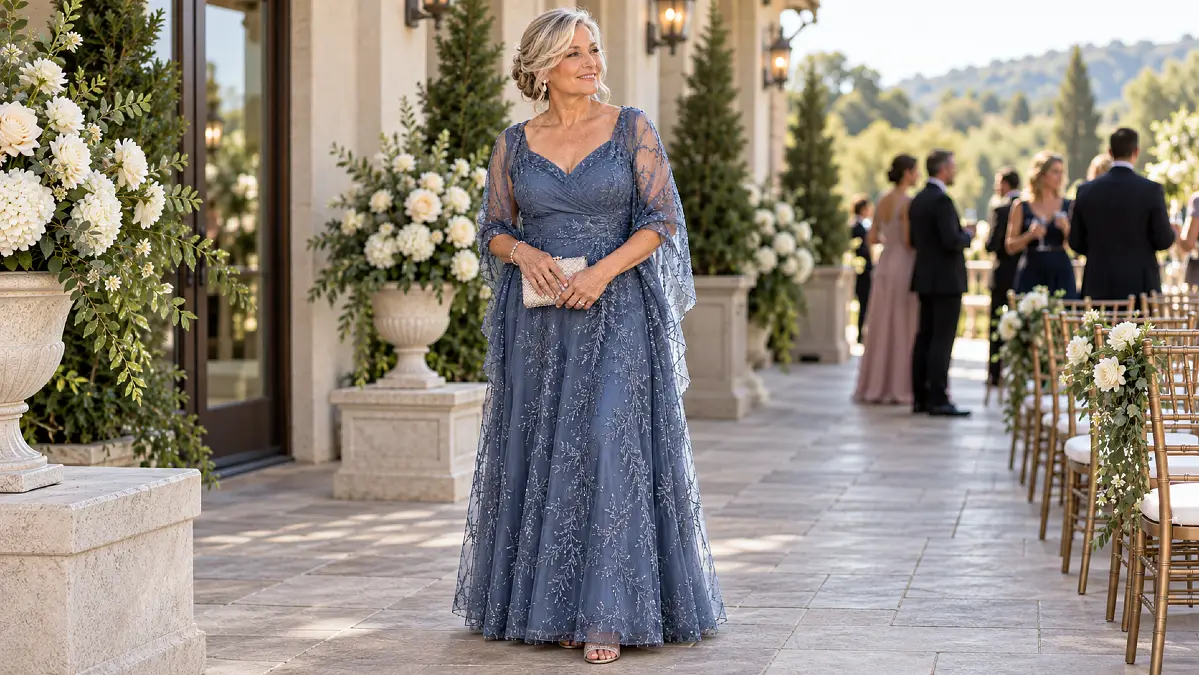
Figuring out what to wear as mother of the groom over 50 does not have to mean choosing the most elaborate dress in the store. The right outfit should feel appropriate for the wedding, comfortable throughout the celebration, and polished enough for all those family photographs.
There is also no reason to abandon your personal style just because the occasion is important. A dress, jumpsuit, or tailored trouser outfit can look beautifully dressed without feeling overly decorated or unlike something you would normally wear.
The most successful mother-of-the-groom outfits over 50 usually come down to a few practical details: the dress code, silhouette, fabric, color, shoes, accessories, and the way everything works together.
Once those pieces are considered, getting dressed becomes much easier. Instead of chasing a particular trend, you can build an outfit that feels comfortable, flattering, and right for the wedding you are attending.
Let the Wedding Set the Level of Formality
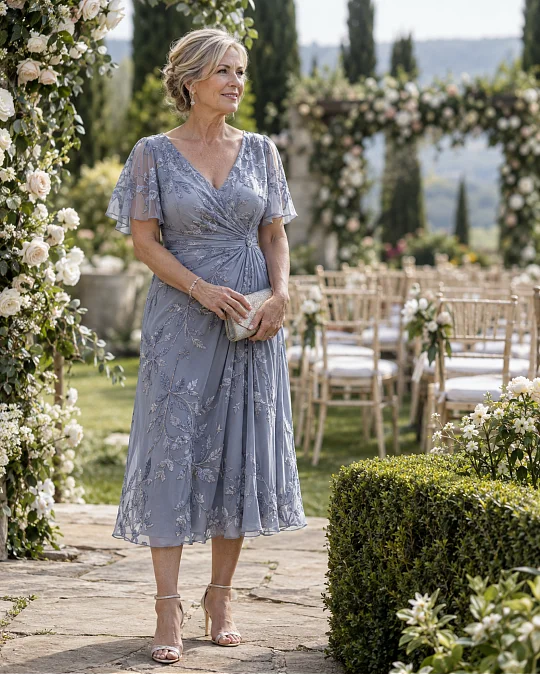
Image credit: Sagely Chic
Before choosing a color, neckline, or sleeve style, start with the wedding itself. The location, time, season, invitation wording, and overall atmosphere can tell you much more about what belongs in your outfit than a general list of mother-of-the-groom rules.
A formal evening celebration may call for a floor-length dress or sophisticated jumpsuit, while a daytime garden wedding may work better with a graceful midi. A restaurant reception can fall somewhere between the two.
The goal is to look like you belong at the event without feeling as though you are trying to outdress everyone else. When the outfit matches the setting, even a relatively simple look can appear beautifully intentional.
Use this table as a starting point when deciding how formal your outfit should be:
| Wedding Setting | Outfit Direction | Why It Works |
|---|---|---|
| Formal evening wedding | Floor-length gown or sleek column dress | Fits the elegance and scale of an evening celebration |
| Cocktail wedding | Midi dress, tea-length dress, or refined jumpsuit | Looks polished without becoming overly formal |
| Garden wedding | Flowing midi dress with elegant shoes | Works naturally with a daytime outdoor setting |
| Beach wedding | Lightweight maxi or relaxed flowing midi | Keeps the outfit graceful without heavy layers |
| Intimate restaurant wedding | Tailored dress or sophisticated trouser set | Feels elevated without looking overdressed |
If the invitation does not make the dress code clear, asking the couple is completely reasonable. A little information beforehand can prevent you from arriving in something that feels either too casual or far more formal than the rest of the celebration.
Choose a Silhouette That Lets the Fabric Fall Cleanly
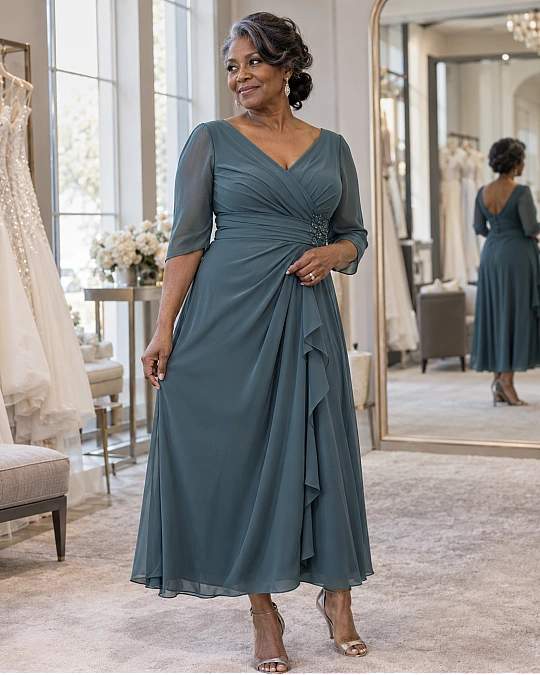
Image credit: Sagely Chic
When shopping for a special-occasion outfit, concentrate on how the garment actually sits on your body instead of becoming too focused on the size printed on the label.
Pay attention to the shoulder placement, bust area, waistline, hem, and the way the fabric moves when you walk. A well-proportioned garment can look much more polished than a more expensive dress that does not fit properly.
A gently defined waist can give a dress shape without making it restrictive. A-line silhouettes offer comfortable movement, while a column shape can create a sleek look when the fabric skims the body instead of clinging to it.
If you prefer more coverage through the arms, there are plenty of options beyond heavy long sleeves. Flutter sleeves, elbow-length sleeves, sheer sleeves, and lightweight jackets can all provide coverage while keeping the outfit elegant.
Fit note: Always sit down in the outfit before making your final decision. Check whether the waist pulls, the neckline shifts, the skirt rides up, or the sleeves become uncomfortable. A wedding outfit needs to work while sitting, walking, eating, posing, and moving around.
Fabric is equally important because it can completely change the way a silhouette looks and feels.
| Fabric or Detail | What to Look For | Why It Helps |
|---|---|---|
| Crepe | Moderate weight with a smooth drape | Creates a clean line without feeling overly stiff |
| Chiffon | Soft layers with controlled volume | Adds movement while keeping the outfit light |
| Satin | Quality fabric with a subtle sheen | Provides a dressy finish without excessive decoration |
| Lace | Elegant pattern with a neat lining | Adds texture while maintaining a refined appearance |
| Stretch woven fabric | Structured material with comfortable give | Makes long periods of sitting and movement easier |
| Sequins or beading | Focused embellishment instead of full coverage | Adds celebration-ready detail without overwhelming the outfit |
Good dressing over 50 is not about following a long list of restrictions. It is about understanding what makes clothing work. When the fabric, proportion, and silhouette are right, you often need fewer accessories and less decoration to create an elegant result.
Coordinate With the Wedding Colors Without Trying to Match Them
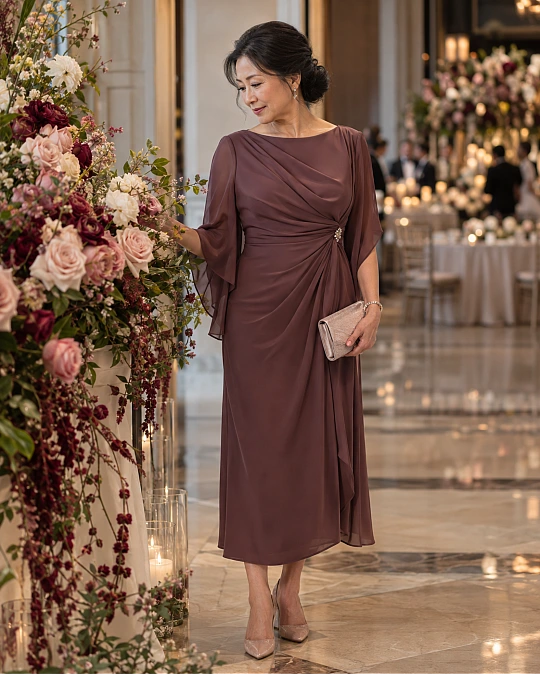
Image credit: Sagely Chic
Your outfit can complement the wedding palette without copying the bridesmaids. In fact, choosing a related shade with a little more depth or a slightly different undertone can make your look feel more individual.
For example, a wedding featuring dusty blue could inspire navy, slate, muted teal, or soft blue-gray. If the palette includes blush and burgundy, shades such as plum, muted berry, rosewood, or soft bronze can work beautifully without looking identical to the bridal party.
It can also be helpful to know what the mother of the bride is planning to wear. There is no requirement for the two mothers to dress alike, but similar levels of formality can make group photographs feel naturally balanced.
Your own coloring and preferences matter too. A shade can be fashionable and still not feel right on you. If you consistently feel confident in jewel tones, sophisticated neutrals, soft pastels, or muted metallics, use those preferences as your starting point.
Black can be an elegant choice for many evening weddings, provided it suits the event and the couple has not requested another color direction. Very pale shades such as white, ivory, and cream deserve a little more consideration because they can photograph similarly to bridal colors. When in doubt, check with the couple first.
Shoes and Layers Matter More Than You Think
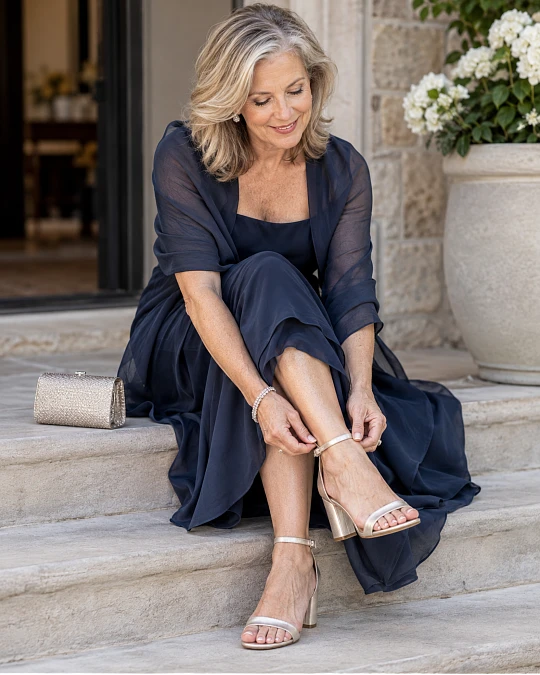
Image credit: Sagely Chic
A wedding outfit has to handle real life. You may spend part of the day standing for photographs, walking between locations, sitting through dinner, greeting relatives, and dancing long after the ceremony ends.
That is why shoes should be considered at the beginning of the outfit rather than added at the very end.
A low heel, block heel, elegant slingback, pointed flat, or polished wedge can look just as appropriate as a very high heel. Choose a pair that gives you enough support to move comfortably and confidently throughout the celebration.
Layers also deserve careful attention. A lightweight wrap can be useful at an air-conditioned reception, while a tailored cropped jacket or refined bolero can add warmth without hiding the shape of the dress.
For cooler weather, a longline evening coat can provide warmth while maintaining the formality of the outfit. The key is choosing a layer that works with the proportions of the dress rather than making the entire look feel bulky.
Shoe swap: If you love the extra height of a dressier heel for photographs, bring a second pair of polished flats or lower heels for later. Make sure both pairs work with the hem so the change looks deliberate rather than like an emergency solution.
Let Accessories Support the Dress Instead of Competing With It
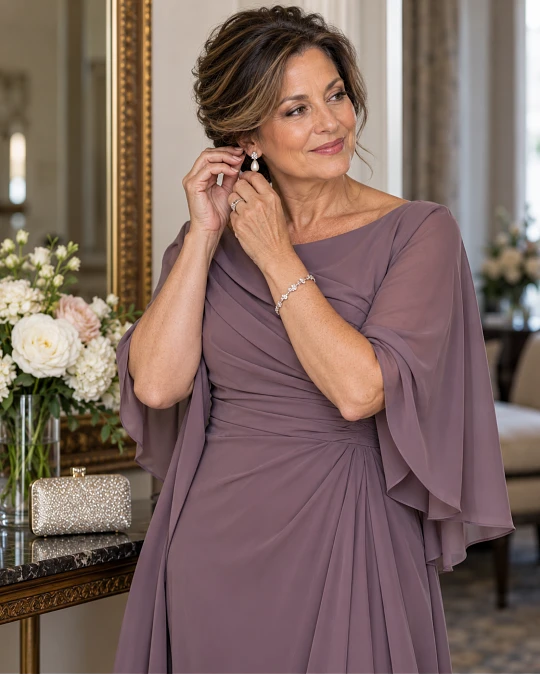
Image credit: Sagely Chic
Special occasions can make it tempting to add everything at once: statement jewelry, sparkle, an embellished clutch, dramatic shoes, and more elaborate makeup.
Usually, the outfit looks more refined when you choose one main point of interest and allow the other pieces to support it.
If your dress has a decorated neckline, simple earrings may be enough. A minimal dress, on the other hand, can provide a beautiful background for statement earrings, a sculptural necklace, or an interesting clutch.
Your handbag should be formal enough for the occasion but practical enough to hold what you actually need. A phone, lipstick, tissues, glasses, and a few personal essentials should fit without turning the bag into another major feature of the outfit.
Hair and makeup can follow the same principle. You do not have to create a completely different version of yourself for the wedding. A polished version of your usual hairstyle and makeup often feels more natural and photographs beautifully.
That approach makes it easier to create stylish outfits for women over 50 that look special while still feeling authentic.
Small Styling Choices Can Make the Outfit Feel Wrong
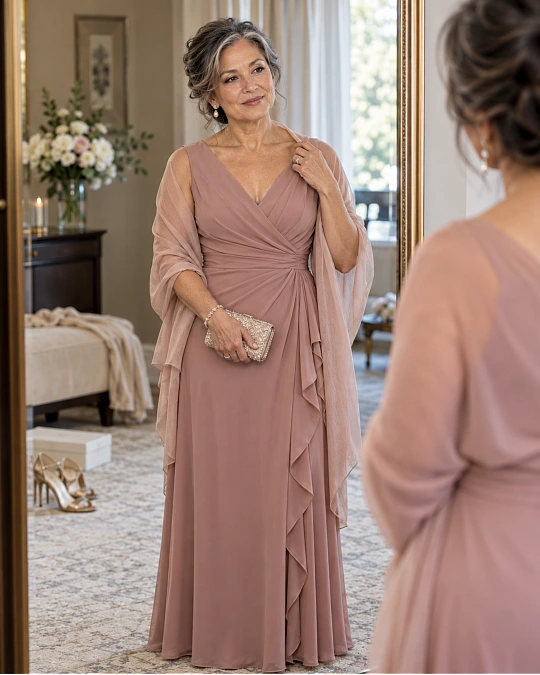
Image credit: Sagely Chic
Sometimes a dress is perfectly fine, but the surrounding pieces are throwing off the proportions. The shoe, jacket, jewelry, or hem can change the entire impression of an outfit.
For example, a substantial shoe may overpower a delicate chiffon dress, while a long jacket over a full midi skirt can make the lower half of the outfit appear heavier.
Before replacing the dress, try editing the styling around it.
- If the dress feels too plain: Add one noticeable detail such as polished earrings, a textured clutch, metallic shoes, or a graceful wrap.
- If the look feels too busy: Remove one decorative element. A heavily detailed dress may need little more than simple jewelry and clean shoes.
- If the proportions feel heavy: Examine the hemline, jacket length, and footwear before deciding that the dress itself is wrong.
- If the outfit feels dated: Simplify the accessories and try a cleaner shoe or a more streamlined cover-up.
This quick comparison can also help when you are doing the final edit before the wedding:
| Instead of Automatically Doing This | Try This Approach |
|---|---|
| Matching the bridesmaid color exactly | Choose a related shade with its own character |
| Wearing very high heels because the event is formal | Select a polished heel height that lets you walk comfortably |
| Adding jewelry to every part of the outfit | Choose one accessory as the main focal point |
| Covering the dress with a heavy jacket | Select a layer that follows the dress silhouette |
| Buying a smaller size for a tighter fit | Prioritize comfortable fit and tailor specific areas when needed |
Tailoring can make a surprisingly big difference. Adjusting the hem, refining the waist, correcting the shoulders, or changing sleeve length can make an off-the-rack garment feel much more personal and polished.
A Reliable Mother-of-the-Groom Formula
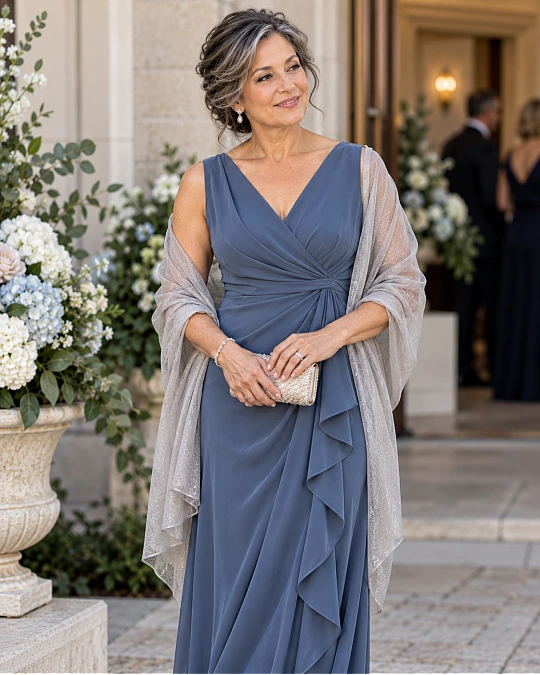
Image credit: Sagely Chic
If you are unsure where to begin, simplify the process instead of adding more options.
Formula: well-fitting dress or jumpsuit + comfortable polished shoes + one refined accessory + optional coordinating layer.
That combination is enough to create a complete wedding outfit without making the shopping process unnecessarily complicated.
For an evening celebration, you might choose a deep navy crepe gown with understated metallic shoes, elegant earrings, and a soft wrap.
For an afternoon wedding, a plum midi dress could work with sophisticated slingbacks, a compact clutch, and simple jewelry.
If the celebration is less traditional, a flowing wide-leg jumpsuit with a defined waist can offer the same polished effect as a dress. The fabric and finishing details should simply reflect the formality of the event.
The advantage of having a reliable formula is that you do not have to reinvent your style for every wedding. Once you understand which silhouettes, colors, and proportions make you feel comfortable, you can change the details for different seasons and venues.
That is often more useful than buying an outfit simply because it happens to be the latest mother-of-the-groom trend.
Frequently Asked Questions
What color should the mother of the groom wear?
Choose a color that works with the wedding palette while still feeling like your own style. Navy, plum, teal, berry, slate blue, muted rose, soft metallics, and elegant neutrals can all be possibilities depending on the season and dress code.
Before choosing white, ivory, cream, or another very pale shade, check with the couple. Some wedding palettes may make those colors less appropriate for family members.
Does the mother of the groom have to wear a long dress?
No. There is no universal requirement that the mother of the groom wear a floor-length dress.
Let the wedding determine the length. A formal evening celebration may suit a gown, while a cocktail, daytime, garden, or restaurant wedding may feel more natural with a midi or tea-length dress.
Should the mother of the groom match the mother of the bride?
They do not need identical outfits. What matters more is that both outfits make sense for the same wedding and have a reasonably similar level of formality.
Talking about general preferences such as dress length, color family, and formality before the wedding can make choosing outfits easier and help family photographs look naturally coordinated.
Can the mother of the groom wear pants?
Yes. An elegant jumpsuit, sophisticated trouser suit, or dressy two-piece can be an excellent alternative to a traditional dress.
Look for fluid trousers, quality fabric, clean tailoring, and a shape that defines the waist without feeling restrictive. Finish the outfit with dressy shoes and accessories appropriate for the wedding.
How dressy should the mother of the groom be?
Aim for an outfit that clearly reflects the importance of the occasion while matching the wedding’s setting and dress code.
You do not need excessive sparkle, complicated embellishment, or an uncomfortable gown to look special. A well-fitting silhouette, thoughtful color, comfortable shoes, and a few polished finishing details can create a beautiful mother-of-the-groom outfit over 50.