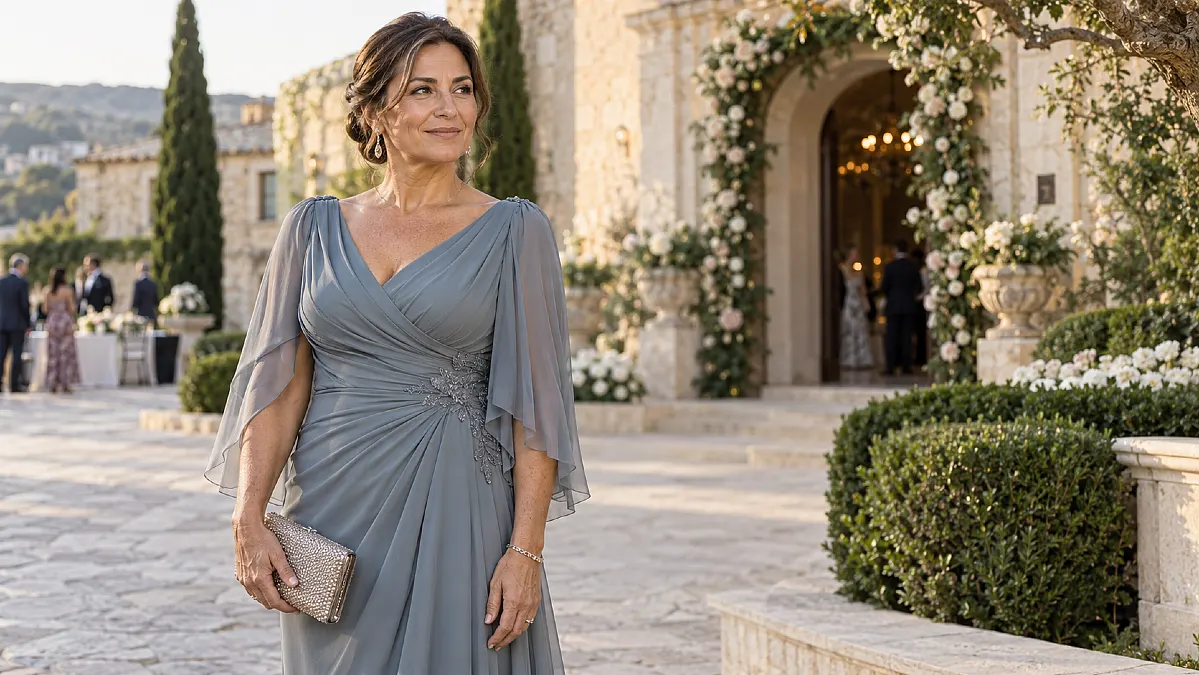
Image credit: Sagely Chic
Choosing what to wear as mother of the bride over 50 can feel like a bigger decision than an ordinary wedding guest outfit. You want to look beautiful in photographs, feel comfortable throughout the celebration, and make sure your outfit fits naturally into the wedding.
There is also no need to force yourself into a traditional mother-of-the-bride look if it does not feel like you. A dress that feels too fussy, restrictive, or formal can make a long wedding day much less enjoyable.
The best approach is to start with the wedding itself. Consider the venue, dress code, season, colors, and overall atmosphere, then choose a silhouette and fabric that suit your personal style.
Good dressing over 50 is not about hiding your body or following outdated rules. It is about finding clothing that fits well, feels comfortable, and gives you the right amount of polish for an important family celebration.
Let the Wedding Decide How Formal Your Outfit Should Be
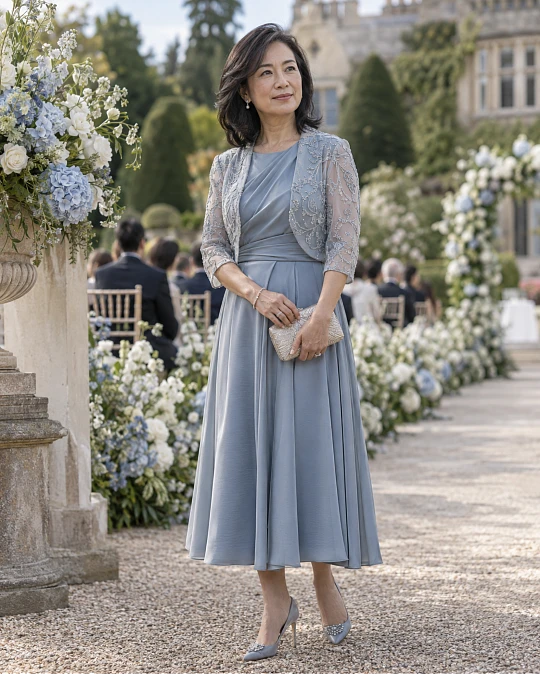
Image credit: Sagely Chic
Before thinking about necklines, sleeves, or colors, look at the wedding itself. Your outfit should feel appropriate for the setting rather than simply being labeled as a mother-of-the-bride dress.
Start with the dress code, then consider the venue, season, ceremony time, and overall level of formality. A formal evening celebration will naturally call for a different look from a relaxed garden wedding.
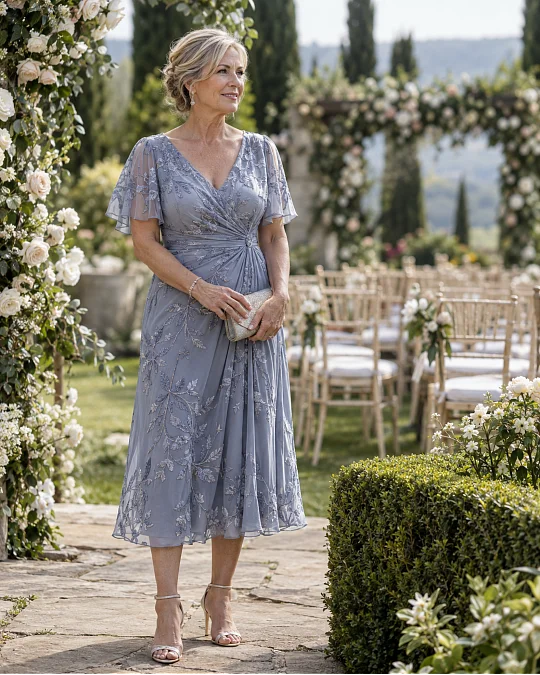
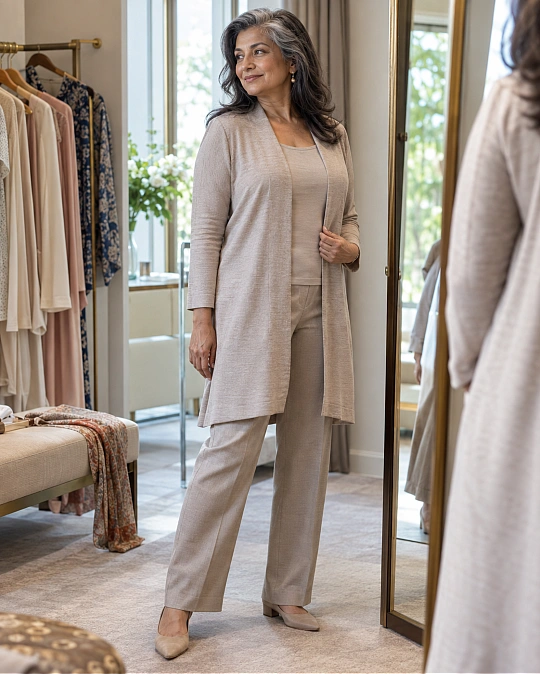
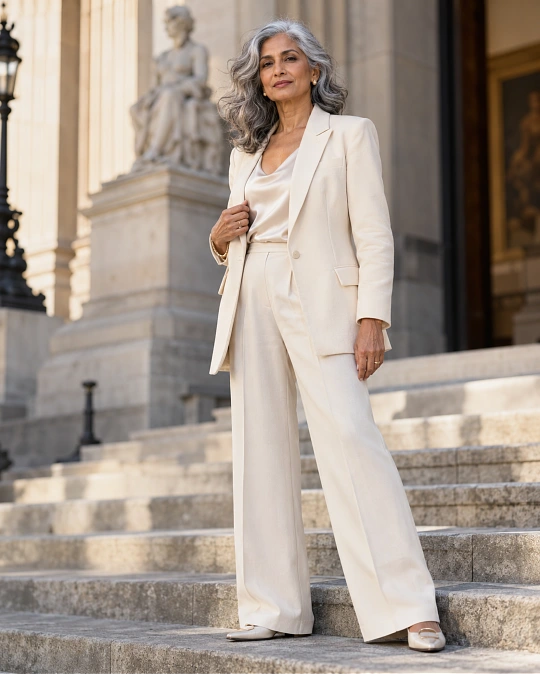
There is also plenty of flexibility. Depending on the event, mothers can wear gowns, midi dresses, elegant jumpsuits, trouser suits, or sophisticated separates.
A cathedral ceremony followed by a formal reception may call for a full-length gown or refined jumpsuit. A garden wedding can work beautifully with a flowing midi dress, while a smaller restaurant celebration may suit polished separates.
Use this guide as a starting point rather than a strict set of rules.
| Wedding Setting | A Good Starting Point | Why It Works |
|---|---|---|
| Black-tie evening | Floor-length gown or formal jumpsuit | Provides enough polish for a formal bridal party |
| Formal hotel or ballroom | Long dress, column gown, refined A-line | Looks elegant without requiring excessive decoration |
| Garden or vineyard | Midi dress, soft A-line, elegant floral | Feels polished while remaining easy to move in |
| Beach or destination | Fluid midi or maxi in breathable fabric | Keeps the outfit comfortable in a lighter setting |
| Intimate restaurant wedding | Midi dress, trouser suit, dressy separates | Feels special without looking overly formal |
If the invitation says cocktail, there is usually no reason to choose a sweeping evening gown. If the wedding is black tie, a casual daytime dress may not provide enough formality.
Try this: Ask yourself whether the outfit would still make sense if you were attending as an especially important guest rather than the mother of the bride. If it does, you are probably on the right track.
Choose a Silhouette You Can Move In for Eight Hours
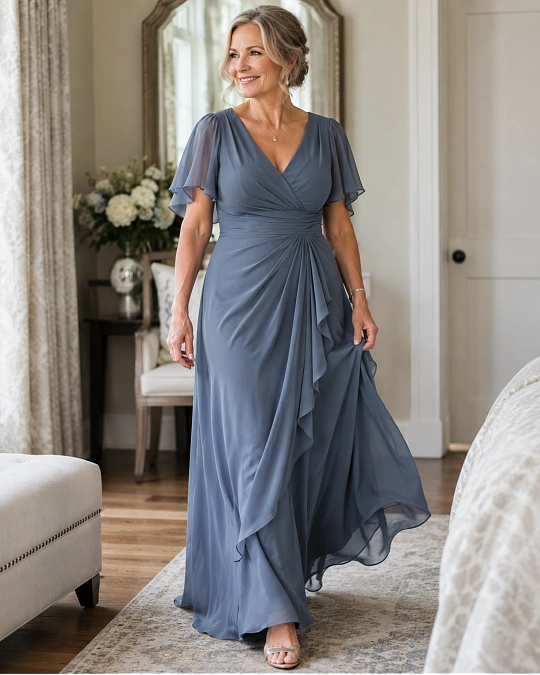
Image credit: Sagely Chic
The right mother-of-the-bride outfit needs to work beyond the fitting room. You may sit through the ceremony, walk up steps, greet guests, pose for photographs, sit at dinner, and dance later in the evening.
That makes movement and comfort just as important as appearance. Look for a silhouette that follows your body without constantly pulling or needing adjustment.
A-line dresses are popular because they provide definition through the upper body while giving the skirt room to move. A straight column dress can also look modern when the fabric skims instead of gripping.
A softly defined waist can create structure without feeling restrictive. The important thing is not where the waist is supposed to sit but where the garment feels comfortable and looks balanced on you.
Draping and ruching can add visual interest while allowing the fabric to move naturally. These details can also give a simple dress a more current occasionwear feel.
When trying on a potential outfit, do more than stand in front of the mirror:
- Sit down for several minutes and check whether the waist or neckline becomes uncomfortable.
- Raise your arms to make sure the sleeves and armholes do not pull.
- Walk at a normal pace and see how the hem moves.
- Bend slightly to check that the neckline stays secure.
- Take photographs from the front, side, and back.
If you are constantly smoothing or pulling at a dress during the fitting, it may become even more distracting after several hours at the wedding.
Fabric, Neckline, and Sleeves Can Change the Whole Look
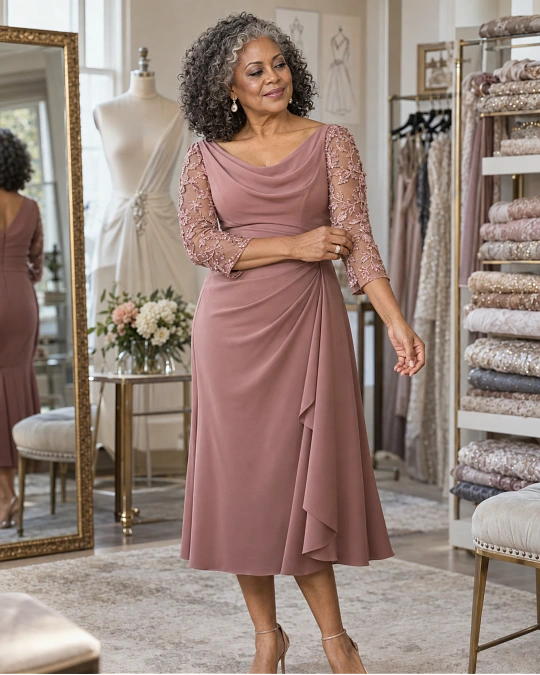
Image credit: Sagely Chic
A straightforward dress can look remarkably elegant when the fabric has the right weight and drape. On the other hand, an elaborate design can feel less polished when the material wrinkles, pulls, or clings in uncomfortable places.
For formal weddings, options such as crepe, satin, chiffon, georgette, lace, jacquard, and substantial jersey can all work well. The best choice depends on the season, venue, and construction of the garment.
Crepe can create smooth, clean lines. Chiffon adds softness and movement. Satin brings a subtle glow but needs good construction because it can reveal pulling and creasing.
A quality stretch jersey can be particularly useful for a long wedding day because it provides movement while still looking polished when the fabric has enough weight.
| Fabric or Detail | What to Look For |
|---|---|
| Crepe | Medium weight with enough structure to skim the body |
| Chiffon | A lined design with controlled volume |
| Satin | Good drape and seams that remain smooth |
| Lace | Clean placement and a modern lining |
| Stretch jersey | Substantial fabric with good recovery |
| Beading or sequins | A smooth lining around the arms and body |
Sleeves are entirely a matter of preference. Short sleeves, flutter sleeves, sheer sleeves, elbow-length sleeves, sleeveless designs, and one-shoulder styles can all look sophisticated.
A V-neck can create a longer visual line through the upper body. A bateau neckline offers more coverage and a refined appearance, while a soft scoop neckline is easy to accessorize.
If you want something with a contemporary touch, an asymmetric neckline or subtle off-the-shoulder shape can add interest without requiring heavy embellishment.
Coordinate With the Bridal Party Without Looking Like Another Bridesmaid
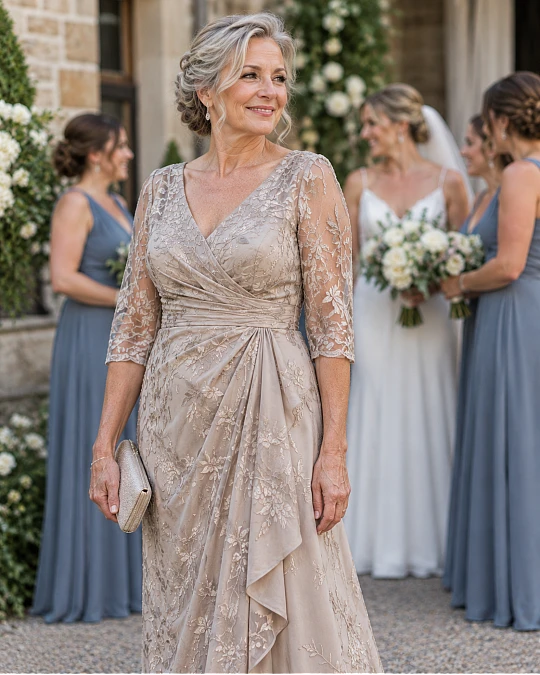
Image credit: Sagely Chic
The mother of the bride does not necessarily need to match the bridesmaids. In many weddings, coordinating colors while wearing a distinct outfit creates a more natural and sophisticated family photograph.
If the bridesmaids are wearing sage green, for example, you could consider navy, dusty blue, plum, deeper green, or another complementary shade.
Before settling on a color, ask the couple whether they have any preferences. Some weddings have a carefully planned palette, while others leave the choice completely open to the mothers.
White, ivory, and extremely pale shades that could appear bridal are worth discussing with the couple before wearing them. Black, meanwhile, can work beautifully, especially for a formal evening celebration.
Think about how the outfit will look in photographs as well as in the venue. Your color does not have to match the flowers or bridesmaids exactly; it simply needs to work comfortably beside them.
| If the Wedding Palette Includes | Consider for the Mother of the Bride |
|---|---|
| Sage, eucalyptus, soft greens | Navy, deep teal, dusty blue, plum |
| Blush, rose, champagne | Mauve, berry, navy, soft metallic shades |
| Burgundy, rust, autumn tones | Forest green, navy, aubergine, bronze |
| Blue bridesmaid dresses | Plum, silver-grey, navy, soft rose |
| Mostly neutrals | Jewel tones, muted metallics, deep blue or green |
Color note: Being part of the wedding party does not mean you have to choose the palest shade available. A rich, sophisticated color can be beautiful and photograph especially well.
Keep Jewelry, Shoes, and the Bag in Supporting Roles
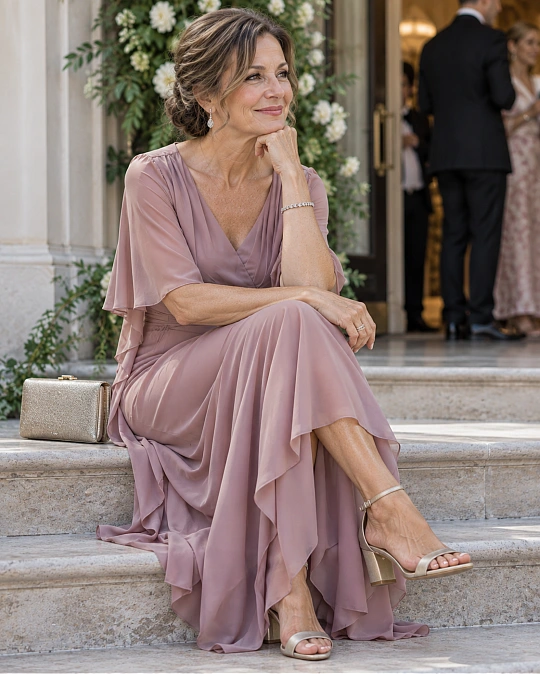
Image credit: Sagely Chic
Once the main outfit has enough presence, accessories should complement it rather than compete with it.
If your dress includes beading, lace, draping, or a distinctive neckline, simple earrings may be all you need. A clean column dress gives you more freedom to add a statement earring, bracelet, or elegant clutch.
A useful rule is to let one area carry most of the detail. You do not need noticeable jewelry at your ears, neck, wrists, and hands all at once.
Shoes deserve particular attention because a wedding day can be long. A block heel, slingback, elegant flat, lower heel, or stable kitten heel can look dressy while making standing and walking easier.
If you want additional height but dislike narrow heels, consider a wider heel shape. It can provide better stability on grass, stone paths, and busy reception floors.
Comfort upgrade: Wear your wedding shoes around the house before the event and test them with the actual hem length of your outfit.
Choose your bag with the practical details in mind as well. A compact clutch or small structured shoulder bag can hold essentials without becoming visually distracting in photographs.
Small Alterations Can Make an Ordinary Dress Look Custom
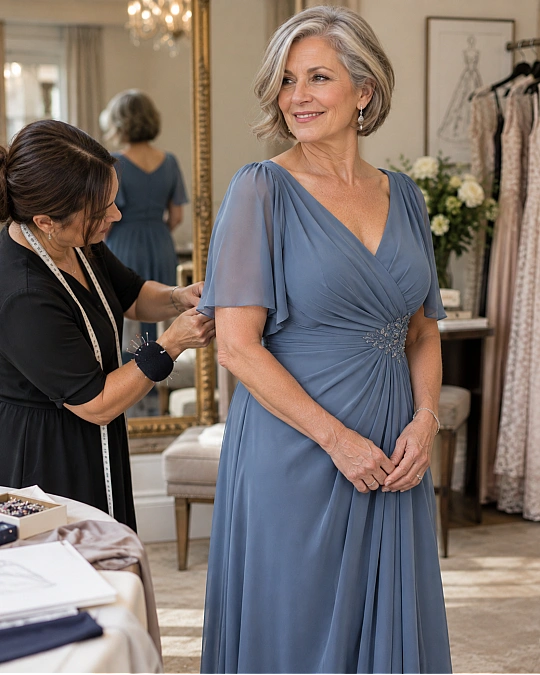
Image credit: Sagely Chic
A well-tailored dress can look more polished than a much more expensive dress that does not fit correctly.
Sometimes a garment feels wrong because the shoulder is slightly too wide, the waist sits in an awkward position, or the hem falls at an unhelpful point. These are often tailoring issues rather than problems with your body or the overall style.
Hem length is particularly important. For a floor-length gown, bring the shoes you plan to wear when the hem is adjusted. With a midi dress, try several lengths before deciding because a small change can significantly alter the proportions.
Sleeve length matters too. A bracelet-length sleeve can look intentional, while a sleeve that ends at an awkward point may make an otherwise beautiful garment feel unfinished.
| Instead of This | Try This |
|---|---|
| Tight waist that needs constant adjustment | Soft shaping or gentle draping |
| Very stiff jacket over a formal dress | Soft cropped jacket or elegant wrap |
| Heavy embellishment throughout the outfit | One embellished area with cleaner styling elsewhere |
| Floor-length gown for an outdoor garden wedding | Midi or lightweight maxi with easier movement |
| Thin high heel you rarely wear | Block heel, slingback, kitten heel, or dressy flat |
Schedule your final fitting early enough to make changes without rushing. Try the entire outfit together, including undergarments, shapewear if you wear it, shoes, jewelry, and your outer layer.
Seeing the complete outfit together will give you a much better idea of how everything works as a whole.
A Reliable Mother-of-the-Bride Formula When You Feel Overwhelmed
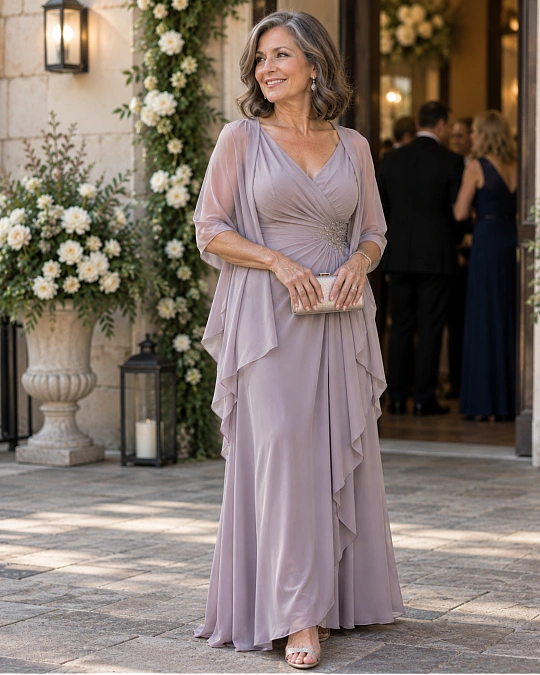
Image credit: Sagely Chic
When wedding shopping starts becoming overwhelming, it helps to stop searching for one magical “mother-of-the-bride dress” and instead work from a simple outfit formula.
Formula: beautifully fitted midi or long dress + one refined accessory + comfortable dress shoe
The dress provides the main silhouette, the accessory adds personality, and the shoes make the outfit practical for a long celebration.
For a formal evening wedding, that could mean a navy draped gown with sculptural earrings and a low metallic heel.
For a garden wedding, the same approach could become a soft floral midi with simple gold earrings and a block-heel slingback.
A dressy jumpsuit can follow the same formula. Look for fluid trousers, a well-constructed upper half, one noticeable accessory, and a shoe that keeps the hem at the right length.
This approach is also useful when building elegant outfits for women over 50 beyond the wedding. The clothing feels special because of its fit, fabric, and finishing details rather than because it follows a narrow idea of traditional mother-of-the-bride fashion.
Frequently Asked Questions
Does the mother of the bride have to wear a long dress?
No. The length of the dress should reflect the wedding’s formality rather than your role alone.
A floor-length gown can be appropriate for black-tie celebrations, while cocktail, garden, and semi-formal weddings can work beautifully with midi or tea-length dresses.
What color should the mother of the bride wear?
There is no single required color. Choose a shade that works with the wedding palette and complements the bridal party without needing to match it exactly.
If you are considering white, ivory, champagne, or another shade that could appear bridal, it is sensible to check with the couple first.
Can the mother of the bride wear a jumpsuit?
Yes. A sophisticated jumpsuit can be an excellent alternative to a dress for many wedding settings.
Choose a fluid trouser shape, a flattering and well-constructed top, quality fabric, and enough length to create a clean vertical line.
Should the mother of the bride match the mother of the groom?
Matching is not necessary. It can be helpful for both mothers to discuss the general level of formality, dress length, and color direction so that neither is surprised on the wedding day.
Coordinated choices can look lovely, but identical outfits are not required.
How can I look modern without choosing something too trendy?
Start with a timeless silhouette and introduce just one contemporary detail. That might be subtle draping, an asymmetric neckline, interesting sleeves, modern jewelry, or a refined metallic accent.
This keeps the outfit fresh while avoiding a look that depends on several short-lived trends at the same time.