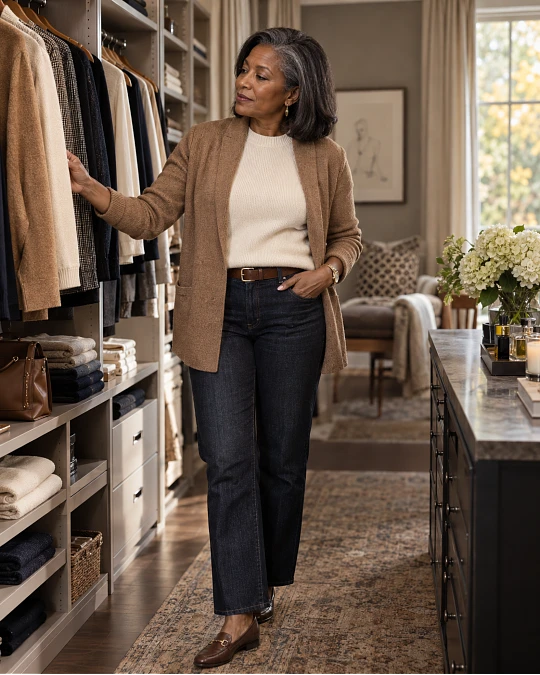
Image credit: Sagely Chic
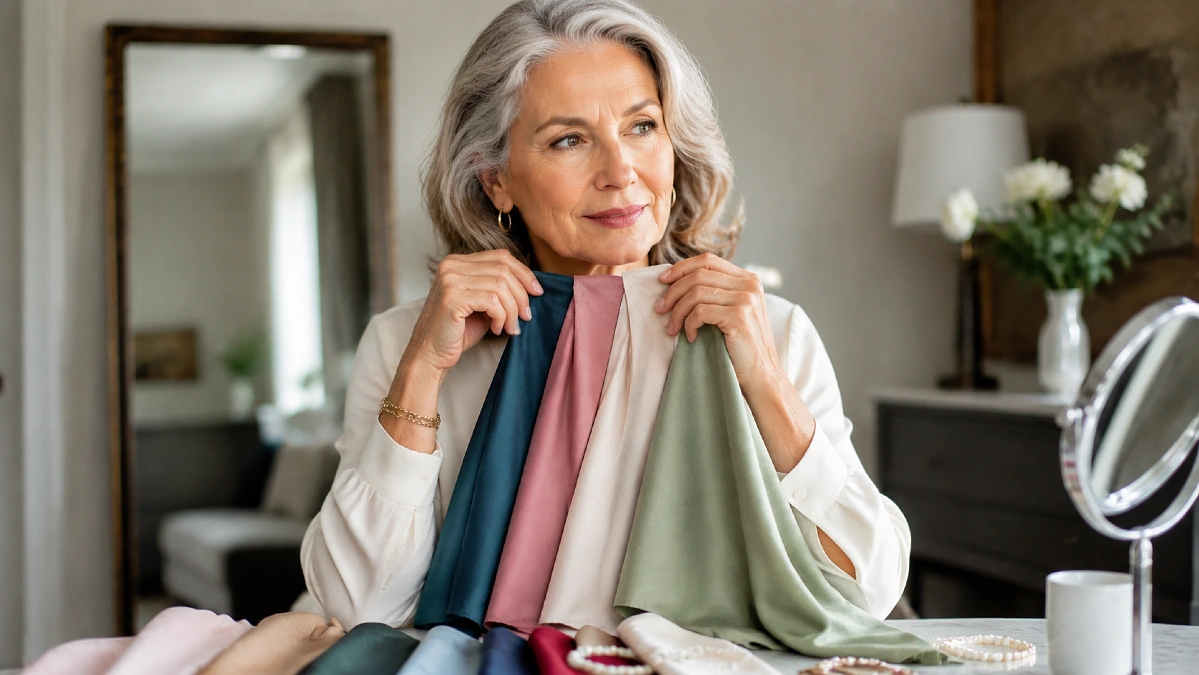
Choosing colors can feel different after 50 when shades that once looked perfect suddenly seem too strong, flat, or disconnected from your natural coloring.
That does not mean your personal style has changed for the worse. Changes in hair color, skin appearance, and overall contrast can influence how certain colors look around your face.
Learning more about your undertone can make choosing stylish outfits for women over 50 easier. A few simple comparisons can help you build a color palette that feels flattering, practical, and true to your personality.
Why Your Best Colors Can Change Over Time
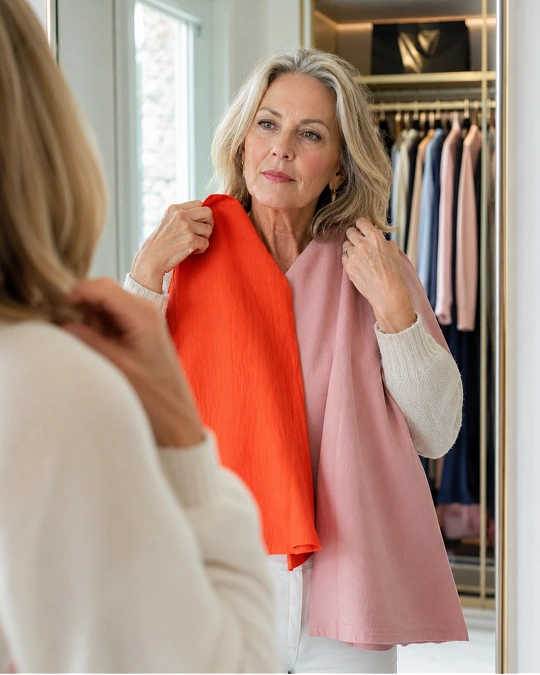
Image credit: Sagely Chic
Many women think finding their best colors means selecting a seasonal color palette and following a strict set of rules. In reality, color is much more personal than that.
As you get older, changes in your hair, skin, and overall coloring can affect how different shades appear near your face. A bright color that once added energy may now feel overpowering, while a softer shade may create a more balanced effect.
You do not necessarily need to replace your entire wardrobe. Small changes in color intensity, contrast, and fabric can make many of the clothes you already own feel more suitable.
Color can also affect how easy it feels to get dressed. When your clothing works naturally with your coloring, you may find yourself reaching for certain pieces more often because they simply feel right.
Understanding Undertone: The Key to Choosing Better Colors
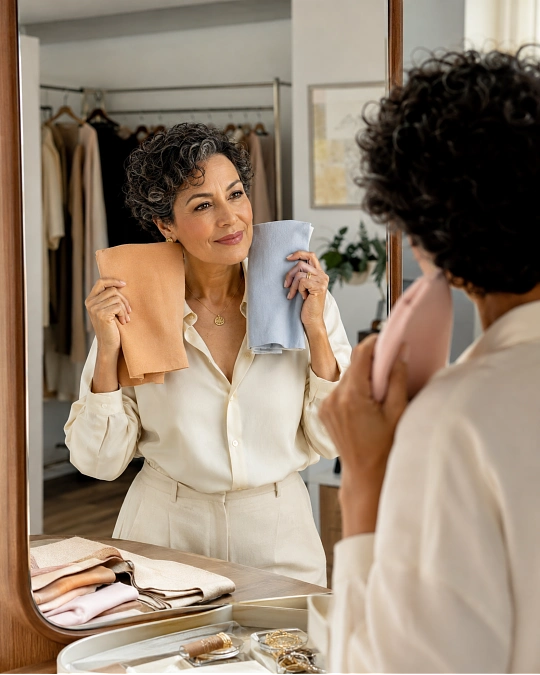
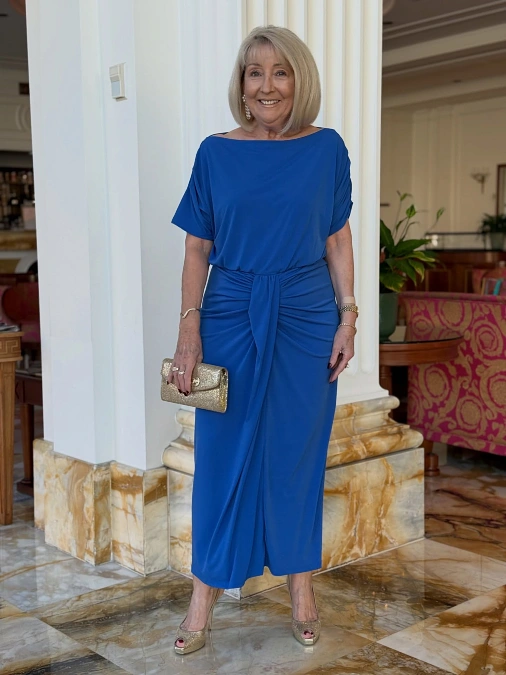
Image credit: Sagely Chic
Your undertone is the subtle color beneath the surface of your skin. It is commonly described as warm, cool, or neutral.
Undertone is different from your overall skin shade. Fair, medium, and deeper complexions can each have warm, cool, or neutral undertones.
The purpose of identifying your undertone is not to create a list of colors you are forbidden to wear. Instead, it can help you understand which shades tend to create more balance around your face.
As a starting point:
- Warm undertones: Often work beautifully with earthy colors such as camel, olive, cream, warm navy, peach, and rust.
- Cool undertones: Often pair well with jewel tones, crisp white, berry shades, blue-based reds, navy, and cooler grays.
- Neutral undertones: Usually have flexibility with both warm and cool colors, depending on the exact shade and intensity.
One of the easiest ways to explore your coloring is to hold different fabrics close to your face in natural daylight. Look for the shades that make your complexion appear more even and your features look naturally defined.
| Undertone Clue | What You May Notice | Colors to Test |
|---|---|---|
| Warm undertone | Golden, peach, or olive hints | Cream, camel, rust, olive |
| Cool undertone | Pink, rosy, or blue hints | Navy, berry, charcoal, sapphire |
| Neutral undertone | A balance between warm and cool qualities | Soft white, teal, blush, balanced neutrals |
The Simple Tests That Reveal Your Undertone
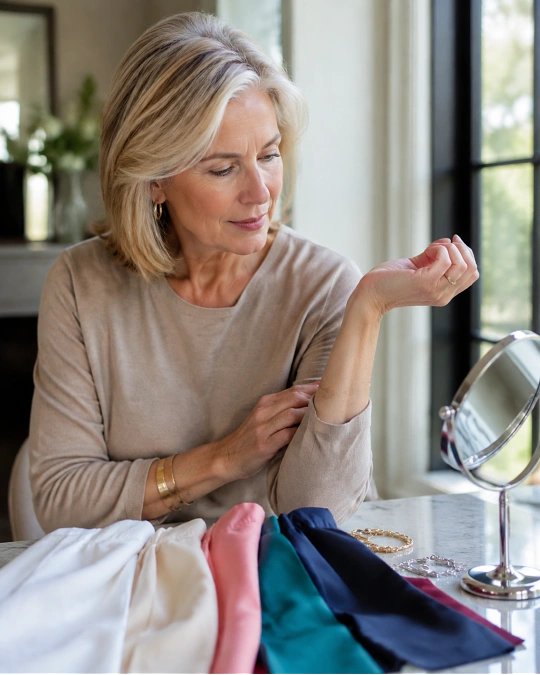
Image credit: Sagely Chic
You do not need an expensive color consultation to begin experimenting with your undertone. Your own closet and accessories can provide useful clues.
Try these simple comparisons:
- Look at the veins on your wrist in natural daylight. Blue or purple-looking veins may suggest cooler coloring, while greener tones can point toward warmth.
- Compare silver and gold jewelry against your skin. Notice which metal makes your complexion appear clearer and more refreshed.
- Hold bright white and cream fabric near your face. One may create a more harmonious effect than the other.
- Look back at photos of outfits you loved wearing. Repeated color choices can reveal patterns in the shades that naturally suit you.
Fit note: Color works much like clothing fit. The goal is not to change who you are but to create a combination that feels more balanced and comfortable.
| Test | Try This | Look For |
|---|---|---|
| Jewelry test | Wear silver and gold separately | Which metal makes your face appear brighter? |
| White test | Compare bright white and cream tops | Which shade creates a softer, more even complexion? |
| Fabric test | Hold scarves or shirts near your face | Look for less shadow and a more natural appearance |
| Makeup test | Compare warmer and cooler lipstick shades | Notice which tone looks more balanced with your coloring |
Building a Wardrobe Around Colors That Support You
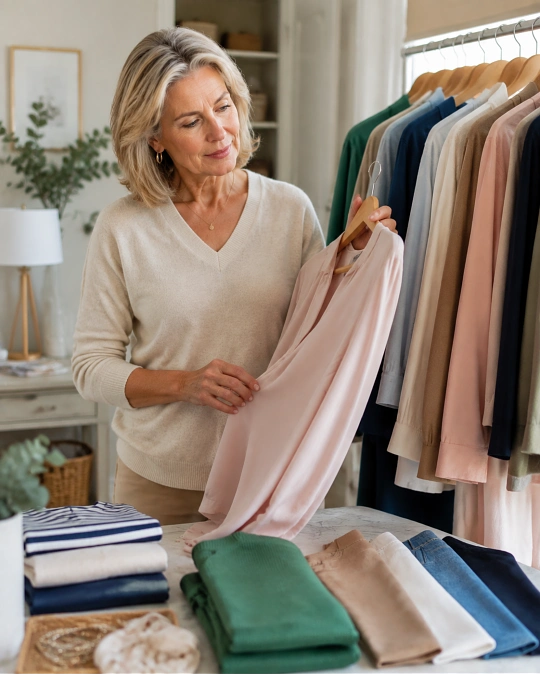
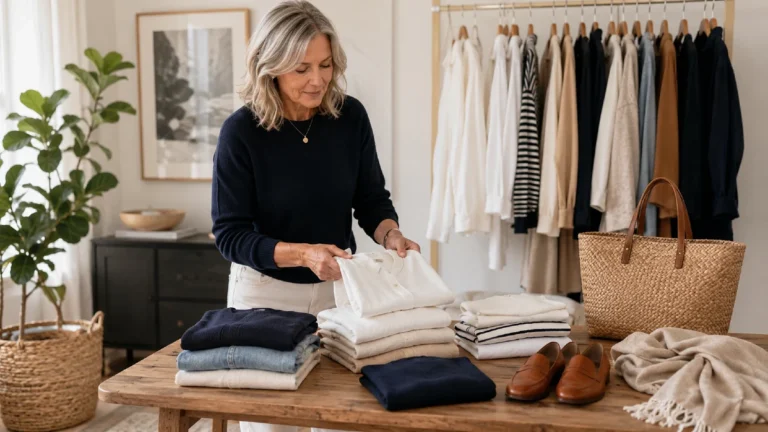
Image credit: Sagely Chic
Once you have a better understanding of your coloring, turn that information into a practical wardrobe rather than a complicated set of rules.
You do not need dozens of different colors. A smaller group of dependable shades can make it much easier to combine your clothes and decide what to wear.
This is where a capsule wardrobe over 50 can be especially helpful. Instead of buying pieces in random colors, choose shades that naturally work together.
Start with:
- Two or three dependable neutral colors for trousers, skirts, jackets, and other foundation pieces.
- Several tops in shades that flatter you around the face.
- One or two accent colors that bring personality to your outfits.
- Accessories that repeat or complement your favorite clothing colors.
The colors closest to your face generally have the strongest visual impact. A blouse, sweater, scarf, or jacket can change the entire feel of an outfit.
Budget-friendly swap: Before replacing a color you dislike on yourself, try moving it farther away from your face. A cardigan, jacket, scarf, or necklace can create separation between the shade and your complexion.
How Fabric and Texture Affect Color After 50
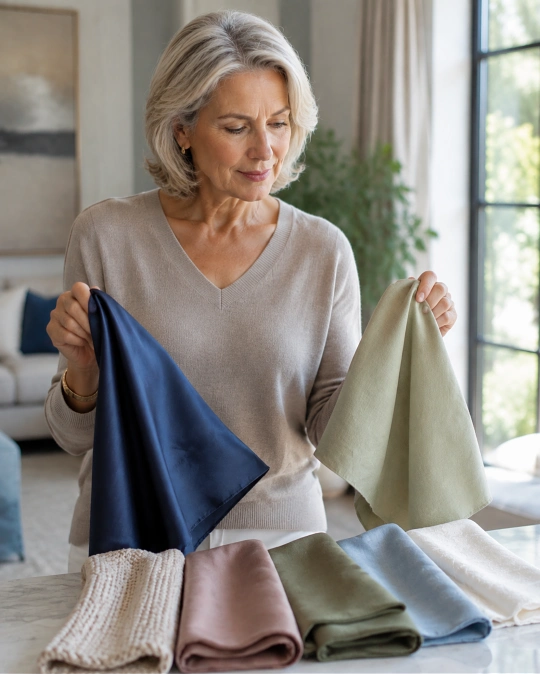
Image credit: Sagely Chic
The color itself is only part of the equation. The surface and texture of the fabric can change how strongly a shade reflects light.
Matte materials such as cotton and linen usually give colors a softer appearance, while shiny fabrics can make certain shades appear more intense around the face.
This can be useful when putting together a polished wardrobe. A rich color in a soft fabric may feel understated and elegant, while that same shade in a highly reflective material may appear much stronger.
| Fabric Choice | Color Effect | Styling Tip |
|---|---|---|
| Soft cotton | Creates a relaxed, gentle color appearance | Great for everyday tops |
| Linen blends | Give colors a natural, slightly relaxed quality | Useful for casual layers |
| Silk or satin | Adds shine and can increase color intensity | Use stronger shades thoughtfully |
| Knit fabrics | Can soften the appearance of bold colors | Useful for sweaters and cardigans |
A flattering color does not have to be bright or dramatic. Some of the most polished outfits rely on quiet shades that support your features without competing with them.
Creating Easy Color Formulas for Everyday Dressing
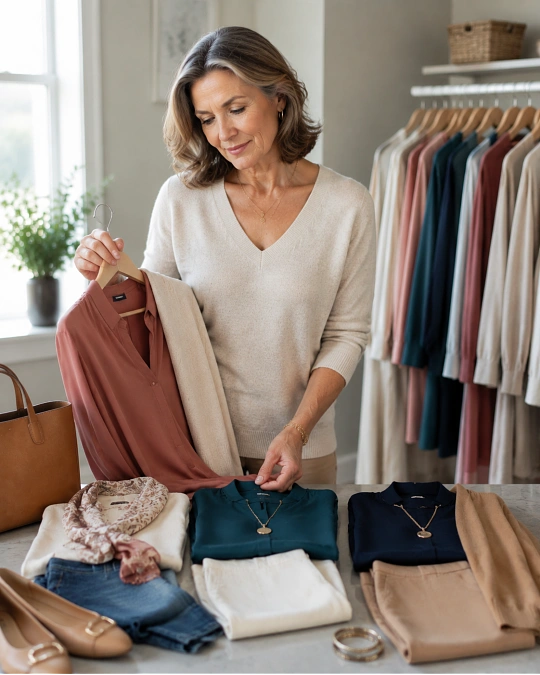
Image credit: Sagely Chic
The real benefit of understanding your undertone is making everyday dressing easier.
Instead of asking yourself what color you should wear every morning, create a few combinations that you already know work.
Formula: flattering neutral + comfortable layer + one personal color
For a warm palette, you might pair a cream sweater with olive trousers and gold accessories. For cooler coloring, a charcoal cardigan with a berry blouse and dark denim can create attractive contrast.
These formulas keep outfits simple while leaving room for personality.
| Occasion | Pieces | Why It Works |
|---|---|---|
| Coffee with friends | Soft sweater + straight-leg jeans + coordinating scarf | Comfortable while still looking intentional |
| Work or meetings | Blazer + neutral trousers + colored blouse | Professional without looking overly plain |
| Travel day | Knit layer + relaxed pants + comfortable shoes | Easy movement with a polished finish |
| Weekend errands | Casual top + denim + accent accessory | Simple, practical, and pulled together |
Common Color Mistakes and How to Adjust Them
Finding your best colors should involve experimentation rather than strict restrictions. Small adjustments can completely change how a color works for you.
| Common Approach | Better Adjustment |
|---|---|
| Wearing only black because it feels safe | Introduce softer neutrals or a flattering accent color near your face |
| Choosing trendy colors without testing them | Try the shade in a scarf or top before committing to a larger purchase |
| Only wearing colors that worked when you were younger | Explore similar shades in softer, deeper, or more current versions |
| Buying an entire outfit in one color | Combine your favorite shades with dependable neutral basics |
A color may still suit you even if the original version no longer feels quite right. You may simply prefer a different intensity.
For example, bright pink could become soft rose, strong black could become charcoal, and bright white could become cream. The goal is not to remove color or personality from your wardrobe.
It is about finding versions of colors that feel connected to how you look and dress today.
How to Find Your Personal Color Style Without Overthinking It
Your best colors should make getting dressed easier, not turn your wardrobe into another complicated rulebook.
Start by noticing what you naturally reach for. The clothes you repeatedly wear often reveal more about your personal color preferences than a formal color chart.
Ask yourself:
- Which tops make your face look refreshed when you see yourself in the mirror?
- Which colors receive compliments or simply feel most like you?
- Which shades can you wear across several seasons?
- Which pieces do you avoid because something about the color feels slightly wrong?
Over time, these answers can help you create your own personal color story.
This is particularly useful when building everyday outfits for women over 50. Instead of having a wardrobe full of unrelated purchases, your clothing starts to work together more naturally.
Frequently Asked Questions
How do I know if I have a warm or cool undertone after 50?
Compare different colors, metals, and neutral shades against your face in natural light. The colors that make your complexion appear more balanced and refreshed can provide useful clues about whether your coloring leans warm, cool, or neutral.
Can my undertone change as I get older?
Your underlying undertone generally remains relatively consistent, but changes in hair color, skin appearance, and overall contrast can affect which shades look most harmonious on you.
Should women over 50 avoid certain colors?
No color needs to be completely off limits. If a particular shade feels too strong, try a softer version, move it away from your face, or balance it with a color that works well for your complexion.
Do I need a whole new wardrobe after finding my undertone?
No. Start with the clothes you already own and experiment with them in different combinations. You can gradually add new shades as you discover which colors you enjoy wearing most.
Are neutral colors better after 50?
Neutrals are useful because they are easy to combine, but they do not have to make up your entire wardrobe. Accent colors that complement your natural coloring can add personality and keep outfits from feeling flat.