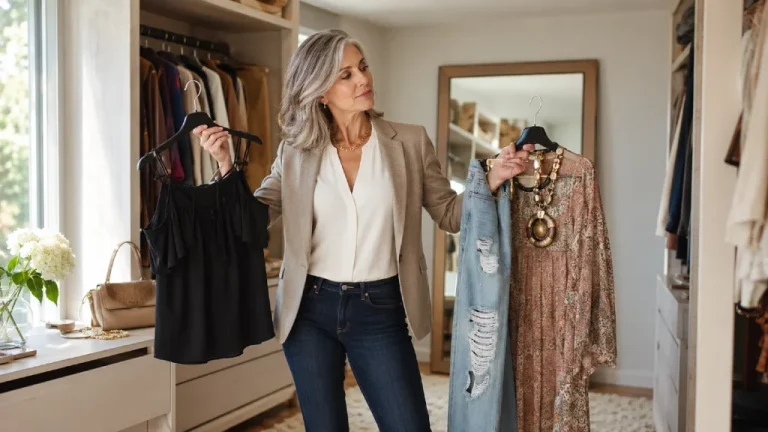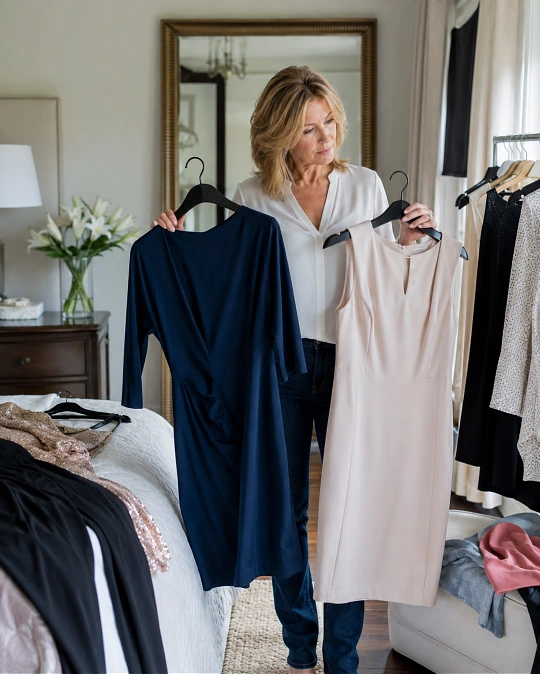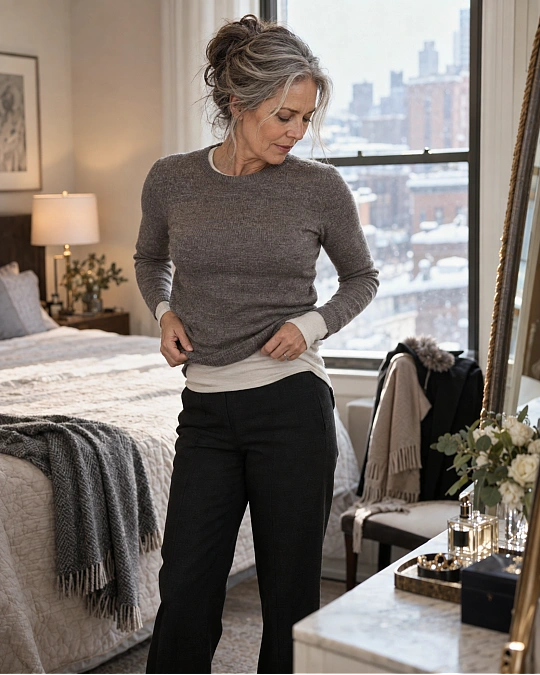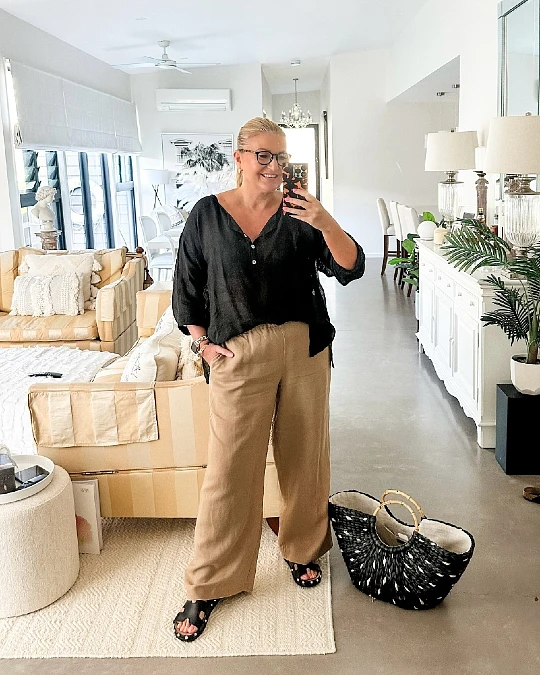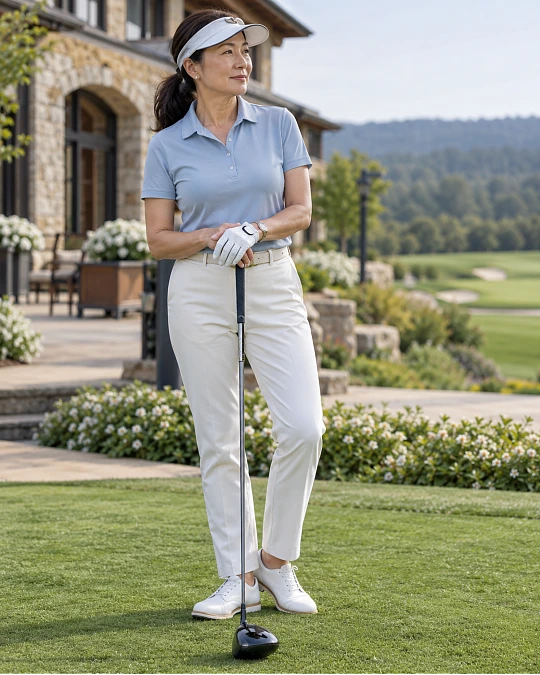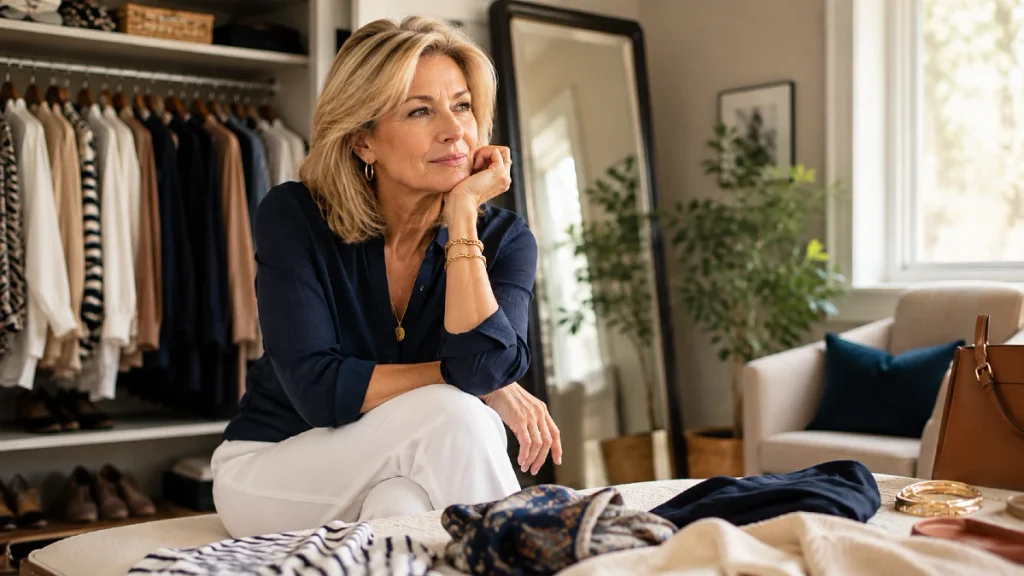
Sometimes your wardrobe can feel unfamiliar even when nothing has technically changed. The clothes that once made getting dressed easy may no longer feel comfortable, flattering, or suited to the way you live today.
For many women over 50, rediscovering personal style is less about buying new clothes and more about understanding what works now. Your routine, comfort preferences, body proportions, and lifestyle may have changed, and your wardrobe needs room to change with them.
Finding style confidence over 50 does not require following every trend or replacing your entire closet. It starts with recognizing the pieces that make you feel comfortable, polished, and like yourself.
Your Style Is Still There, but Your Life May Have Changed
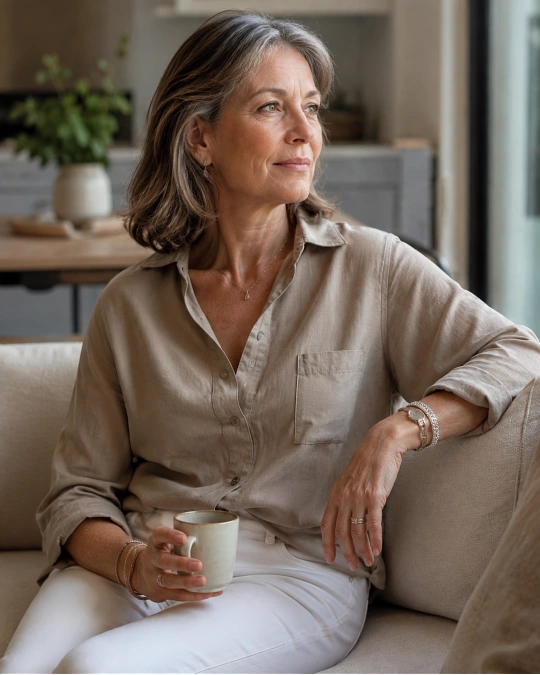
Personal style usually does not disappear all at once. Instead, your wardrobe can slowly stop matching your everyday life.
Your work schedule may be different. You may spend more time traveling, working from home, meeting friends for lunch, or choosing comfortable shoes for days when you are on your feet. When your routine changes, the clothes that once made sense may stop being practical.
That does not mean you have lost your sense of style. It simply means your old wardrobe formula may need an update.
Rather than trying to dress exactly as you did years ago or copying every new trend, start by looking at what feels right for your life today.
| Old Rule | What Works Better Now |
|---|---|
| Keep wearing whatever worked in the past | Pay attention to the shapes and fits that feel comfortable today |
| Dress younger to look current | Use modern proportions, colors, footwear, and styling details |
| Save your favorite clothes for special occasions | Bring your best practical pieces into everyday outfits |
| Follow every trend to stay fashionable | Select only trends that work with your personal style |
| Buy more whenever the wardrobe feels boring | Experiment with different combinations of pieces you already own |
This change in perspective can make getting dressed feel much simpler. Instead of trying to recreate who you used to be, you can create a wardrobe that reflects who you are now.
Start With Clothes That Feel Right on Your Body Now
Fit is one of the most useful places to begin when rebuilding your personal style.
A beautiful jacket will not become a favorite if the shoulders pull or the sleeves feel restrictive. Likewise, trousers may look great on the hanger but remain unworn if the waistband becomes uncomfortable after several hours.
Good fit does not mean wearing tight clothing or trying to achieve a particular body shape. It means finding the balance between structure and ease that makes you feel comfortable.
Think about where you like definition and where you prefer more room. Relaxed trousers can work beautifully with a neater top, while a loose blouse can be balanced with straighter jeans or trousers.
Fabric also makes a noticeable difference in how clothing feels throughout the day.
| Fabric or Fit Detail | What to Look For and Why |
|---|---|
| Stretch trousers | Look for comfortable stretch with enough recovery to maintain the shape |
| Knit tops | Choose fabrics with enough weight to skim the body rather than cling |
| Button-down shirts | Allow comfortable movement through the shoulders and bust |
| Blazers | Look for a clean shoulder line with enough room for a light layer |
| Jeans | Choose a rise and waistband that remain comfortable throughout the day |
Fit note: Pay attention to clothing that you constantly pull, smooth, tug, or adjust. Those repeated actions can be a sign that the garment is not working for your everyday wardrobe.
You may not need to replace everything. Simple alterations such as shortening sleeves, adjusting trouser length, or slightly reshaping a jacket can sometimes make an otherwise useful garment much easier to wear.
Pay Attention to the Outfits You Already Reach For
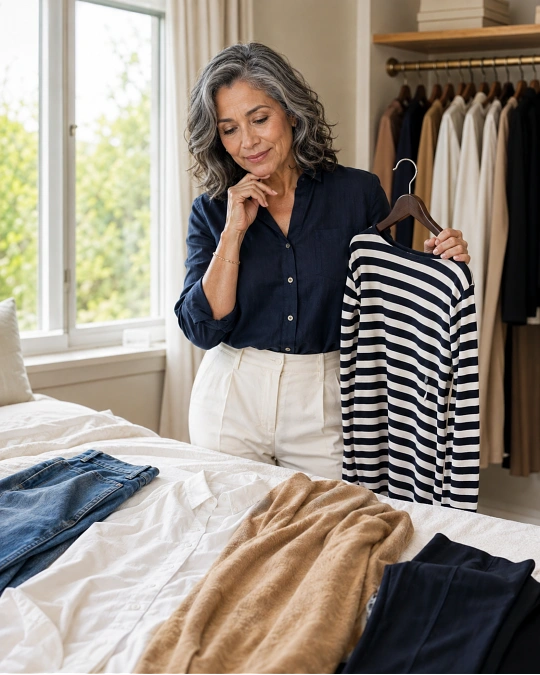
Your existing wardrobe can reveal your personal style more clearly than a shopping trip.
Think about what you automatically reach for when you are short on time. Those outfits often contain clues about the colors, silhouettes, fabrics, shoes, and layers that already make you feel good.
Instead of judging each outfit as fashionable or unfashionable, look for patterns.
- Do you repeatedly choose straight-leg jeans over other silhouettes?
- Do open necklines, crew necks, or collared shirts make you feel most comfortable?
- Do you prefer mostly neutral outfits with one noticeable color?
- Do loafers feel more natural to you than sneakers?
- Do you reach for structured jackets or softer cardigans?
- Do you like having one clearly defined part of an outfit?
These small preferences create what can be thought of as your personal style language.
Perhaps your ideal everyday combination is relaxed trousers, a simple knit, comfortable flats, and one structured layer. Someone else may feel more like herself in dark denim, a soft blouse, a cropped jacket, and ankle boots.
There is no requirement for both wardrobes to look alike. The most useful formula is the one that feels natural enough for you to repeat.
Try this: Take a few photos of outfits you genuinely enjoyed wearing recently. Instead of focusing on whether they look exciting, study the proportions, colors, and pieces you naturally combined.
Build a Personal Uniform From Three Reliable Pieces
A personal uniform does not mean wearing exactly the same outfit every day. It simply gives you a dependable starting point when you do not want to make dozens of styling decisions.
Choose two or three pieces that consistently work together and use them as the foundation for different outfits.
For example, straight-leg jeans, a relaxed shirt, and loafers can become several different casual outfits for women over 50. Change the jacket, jewelry, handbag, or color combination and the outfit can take on a completely different feel.
The same idea works for slightly dressier occasions. Fluid trousers, a fine-gauge knit, and a structured jacket can work for lunch, appointments, or a smart-casual setting.
| Occasion | Easy Outfit Formula | Why It Works |
|---|---|---|
| Errands | Straight jeans + knit top + clean sneakers | A comfortable base with simple proportions |
| Lunch out | Fluid trousers + tucked blouse + loafers | Relaxed movement balanced with definition |
| Smart casual | Dark jeans + simple top + blazer | The jacket adds structure to casual pieces |
| Travel day | Pull-on trousers + soft knit + light jacket | Comfortable for movement while still looking polished |
| Dinner | Midi skirt + fitted knit + low boot or flat | A fluid bottom works well with a cleaner top |
Once you understand your reliable outfit formula, shopping becomes more focused.
Instead of asking only, “Do I like this piece?” ask, “Can I use this with the clothes I already know work for me?”
That question can help reduce impulse purchases and make it easier to build a wardrobe where more pieces actually get worn.
Add Modern Details Without Chasing Every Trend
You do not have to completely change your wardrobe every season to look current.
Sometimes a single updated detail is enough. A newer trouser shape, a modern flat, a cleaner sneaker, a slightly different jacket length, or a structured handbag can refresh familiar clothes.
Proportion is especially helpful when updating an existing wardrobe.
If you choose wider trousers, try pairing them with a top that finishes closer to the body or can be partially tucked. If your shirt is oversized, a cleaner pair of trousers or jeans can provide balance.
Color can also make familiar basics feel new.
Navy, cream, camel, chocolate brown, olive, deep green, soft blue, and muted red can all bring additional interest to a wardrobe built around neutrals.
Color note: You do not need to stop wearing black if black is one of your favorite colors. If it feels too strong near your face, try adding a lighter neckline, scarf, jewelry, jacket, or top.
This is one of the easiest ways to build style confidence over 50. Instead of wearing a trend simply because it is popular, you can select the modern detail that genuinely fits your wardrobe.
Edit the Pieces That Keep Making You Feel “Off”
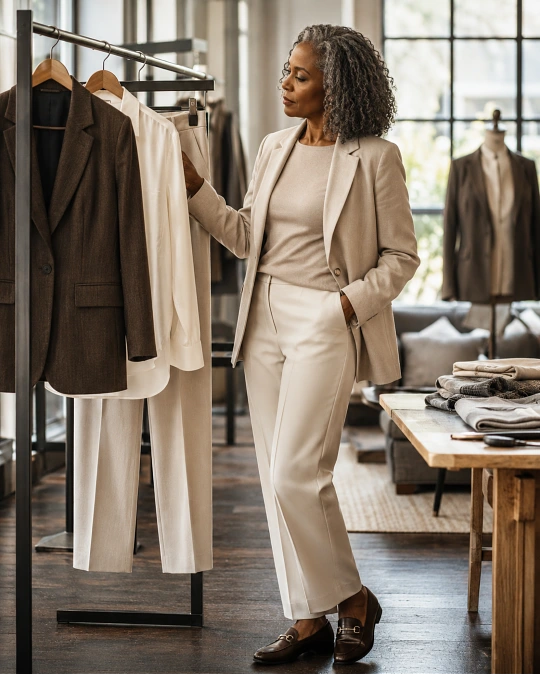
A full closet does not automatically make getting dressed easier.
When a wardrobe contains many pieces that are uncomfortable, difficult to combine, or connected to an earlier stage of your life, choosing an outfit can become unnecessarily complicated.
You do not need to make dramatic changes all at once.
Start with garments that repeatedly create frustration. Perhaps a blouse requires too much adjustment, or a jacket looks attractive on the hanger but feels uncomfortable whenever you wear it.
Instead of forcing yourself to keep wearing these pieces, move them into a temporary holding area. Spend a few weeks using the clothing that fits well and works easily together.
This can reveal which garments are genuinely useful and which ones are simply taking up space.
Your wardrobe essentials for women over 50 may turn out to be much simpler than expected: comfortable jeans, dependable trousers, easy knits, useful shirts, one or two jackets, practical shoes, and a handful of pieces that add personality.
That simple foundation can become the starting point for a capsule wardrobe over 50 without forcing you into a rigid list of required items.
Let Accessories Show More Personality Than Your Basics
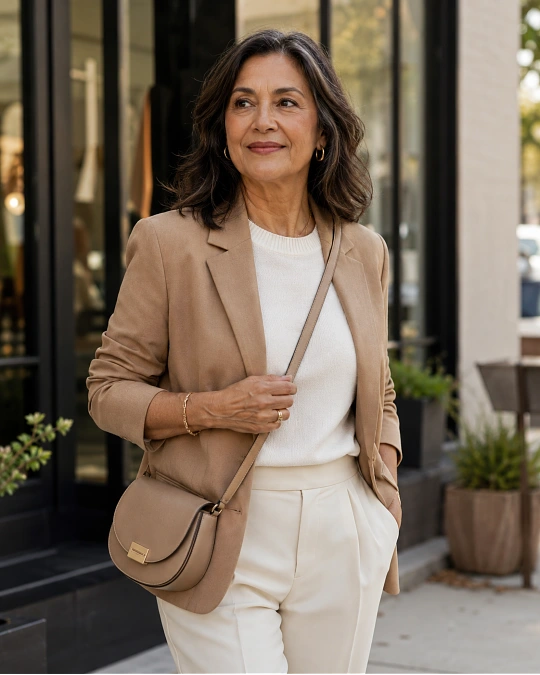
Personal style does not have to come from dramatic clothing.
If you prefer simple outfits for women over 50, accessories can provide much of the personality. A basic shirt and trousers can look completely different with distinctive earrings, a scarf, a watch, a textured handbag, or an interesting belt.
Shoes can also change the character of an outfit while allowing you to keep the clothing itself simple.
Sneakers can make trousers feel relaxed. Loafers can make the same outfit look more polished, while a low ankle boot can give it a slightly different direction.
The same principle applies to glasses, jewelry, handbags, scarves, and belts.
You do not need a dramatic statement accessory. Your signature detail might simply be gold hoops, colorful flats, a crossbody bag, a favorite watch, or sleeves that you consistently roll in the same way.
Repeated details are often what make a wardrobe feel personal and recognizable.
Give Yourself a 20-Minute Style Reset Today
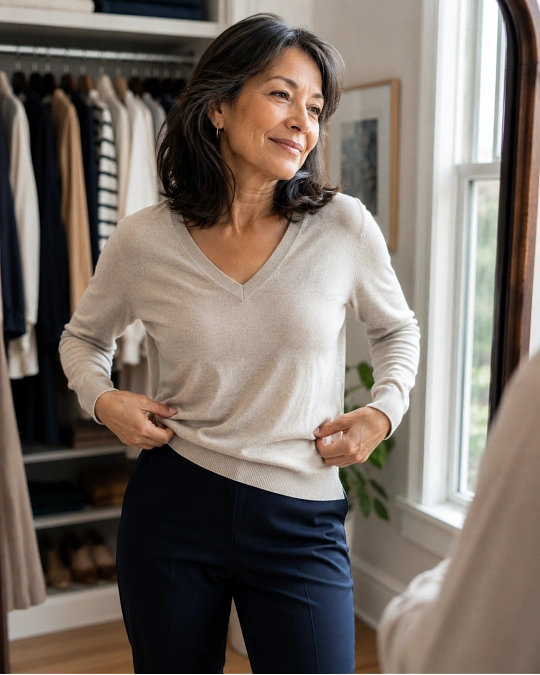
You do not need to spend an entire weekend reorganizing your closet to start rediscovering your style.
Choose one pair of trousers or jeans that you already enjoy wearing. Then select three tops, one layer, and two pairs of shoes from your current wardrobe.
Try the combinations on instead of evaluating everything while it is hanging in the closet.
Experiment with small changes. Tuck the shirt, roll the sleeves, switch the shoes, add the jacket, remove the layer, or change the accessory.
These small adjustments can teach you a great deal about proportions and styling without requiring a shopping trip.
When you find a combination that feels particularly good, write down the formula.
Formula: favorite jeans or trousers + comfortable simple top + one structured or interesting layer + shoes you can actually live in.
During the following week, repeat the structure using different colors, accessories, and layers.
Personal style becomes much easier when you no longer expect yourself to invent a completely new outfit every morning.
Frequently Asked Questions
How can I find my personal style after 50?
Begin with the clothes you already wear most often. Look for repeated patterns in your favorite shapes, colors, fabrics, shoes, and layers.
Those patterns can help you identify a personal style formula that makes everyday dressing easier instead of adding more rules.
How can a woman over 50 look stylish without looking too trendy?
Use current trends selectively rather than rebuilding your entire wardrobe around them.
A modern trouser shape, updated flat, cleaner jacket, or fresh color can make familiar clothes feel current while keeping your overall style comfortable and personal.
What clothes should I get rid of after 50?
There is no universal list of clothing that every woman should remove at a certain age.
Consider setting aside garments that regularly feel uncomfortable, fit poorly, require constant adjustment, or no longer suit your everyday lifestyle. Keep the pieces that help you create outfits you genuinely enjoy wearing.
How do I stop looking frumpy after 50?
Start with proportion instead of trying to make every piece tighter.
If one item is relaxed or oversized, consider adding definition elsewhere. Appropriate trouser length, a clean shoulder line, structured footwear, and fabrics that maintain their shape can also help an outfit look more intentional.
Can I rebuild my style without buying a new wardrobe?
Absolutely. Your current wardrobe is often the best place to begin.
Create several outfits from your most-worn pieces and pay attention to what works. Once you understand what is actually missing, you can make future purchases more carefully instead of shopping simply because the closet feels uninspiring.
Conclusion
Finding your style again does not mean trying to dress like your younger self or following every new trend. Personal style after 50 can be much simpler when your clothes reflect your current lifestyle, comfort needs, proportions, and personality.
Give yourself permission to edit your wardrobe, repeat outfits, experiment with proportions, and change your mind about what works. These small steps can gradually rebuild style confidence over 50.
Start this week with one outfit you already enjoy. Change just one element—a shoe, layer, accessory, color, or styling detail—and notice how different the same clothing can feel.