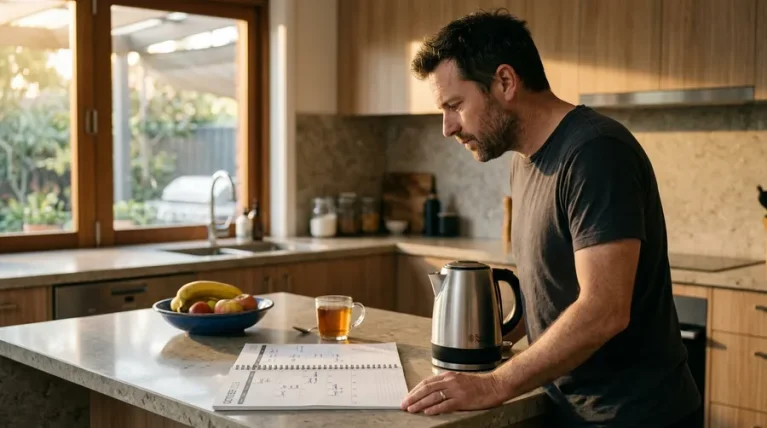
Image credit: Sagely Chic
Staying mentally engaged as you get older is less about finding one magical brain exercise and more about the everyday habits you repeat consistently.
Learning new things, staying physically active, getting enough sleep, maintaining social connections, and making time for focused thinking can all become useful parts of a healthy routine.
The goal is not to guarantee that someone will avoid every form of age-related cognitive change. Instead, these habits can help keep your mind active while supporting the broader lifestyle factors associated with healthy aging.
Daily Cognitive Routine at a Glance
| Focus | Practical Target |
|---|---|
| ⏱️ Time Investment | About 30 minutes of intentional activity |
| 🎯 Difficulty | Moderate and adjustable |
| 🧠 Primary Focus | Learning, attention, memory, and mental flexibility |
The Foundation of Lifelong Cognitive Resilience

Image credit: Sagely Chic
It is easy to assume that keeping your mind active later in life means avoiding difficult tasks and choosing comfort whenever possible.
In reality, your brain continues to respond to the activities and experiences you give it. Learning, problem-solving, physical movement, conversation, and focused attention can all provide useful mental stimulation.
That does not mean every difficult puzzle will prevent cognitive decline. Cognitive health is influenced by many factors, including age, genetics, cardiovascular health, sleep, education, social engagement, and medical conditions.
A more practical goal is to keep giving your mind opportunities to learn, adapt, remember, and pay attention.
💡 PRO TIP
Build Cognitive Reserve Early
Focus on consistency rather than intensity. A few minutes of meaningful learning or focused activity that you repeat regularly can be easier to maintain than an ambitious routine you quickly abandon.
1. Embracing Novel Motor Challenges

Image credit: Sagely Chic
Think about how automatically you perform familiar tasks each morning. Brushing your teeth, making coffee, getting dressed, and tying your shoes may require almost no conscious attention.
Occasionally introducing a safe variation can make an ordinary routine more engaging. You might practice a simple task with your non-dominant hand, learn a new craft, try a different exercise, or practice a new movement pattern.
The goal is not to make everyday activities unnecessarily difficult. It is to give your brain occasional experiences that require attention, coordination, and learning.
Start with something simple and safe. For example, spend a couple of minutes using your non-dominant hand for a familiar task while remaining fully attentive to what you are doing.
💡 Tip: Choose one small motor challenge and practice it for a few minutes rather than changing your entire morning routine.
Motor Novelty Impact
| Area | Practical Approach |
|---|---|
| 🧠 Attention | Focus closely on an unfamiliar movement |
| ⏱️ Duration | Start with a few minutes |
| 📈 Progress | Repeat regularly and increase difficulty gradually |
2. The Cumulative Power of Sleep Architecture

Image credit: Sagely Chic
A tired mind does not perform at its best. Poor sleep can make concentration, memory, mood, and everyday decision-making more difficult.
Rather than treating sleep as leftover time after everything else is finished, make it part of your regular health routine.
A consistent bedtime, a comfortable sleep environment, regular daytime activity, and a relaxing wind-down routine can all help support better sleep habits.
If you regularly struggle with sleep despite making reasonable changes, it may be worth discussing the problem with a healthcare professional, particularly if loud snoring, breathing interruptions, persistent insomnia, or excessive daytime sleepiness are involved.
⚠️ COMMON MISTAKE
Do Not Treat Sleep as Optional
Try to protect a consistent sleep schedule and reduce stimulating activities close to bedtime. Your brain needs adequate rest to function well the following day.
3. Engaging in Complex Linguistic Tasks

Image credit: Sagely Chic
Language-based activities give your brain another opportunity to work with information. Crosswords, reading, writing, word games, learning vocabulary, and memorizing short passages can all make your mind actively retrieve and organize information.
The important part is engaging with the material rather than simply consuming it passively.
If a crossword clue is difficult, spend some time working through possible answers before immediately checking the solution. If you are reading, pause occasionally and explain the main idea to yourself.
You can also rotate activities so that your brain encounters different types of challenges throughout the week.
Best Linguistic Exercises
- ✍️ Crosswords and word puzzles
- 📖 Reading and summarizing challenging material
- 🗣️ Learning vocabulary in another language
- 📝 Writing short journal entries or personal reflections
- 🎭 Memorizing poetry, passages, or song lyrics
4. Challenging Assumptions Through Active Listening

Image credit: Sagely Chic
Conversation can become a surprisingly useful mental exercise when you genuinely listen instead of preparing your response while someone else is speaking.
When another person expresses an opinion that differs from yours, try to understand how they arrived at it before deciding whether you agree.
You do not have to accept an argument simply because you listened carefully. The mental exercise comes from considering information without immediately dismissing it.
Ask questions such as, “What makes you see it that way?” or “What experience led you to that conclusion?”
This approach can make conversations more interesting while encouraging curiosity, perspective-taking, and mental flexibility.
🧠 Your Daily Cognitive Routine
1. Morning Movement
Take a comfortable walk or another form of movement that suits your abilities and helps you start the day actively.
2. Unfamiliar Practice
Spend a few minutes learning or practicing something that is not completely automatic for you.
3. Deep Focus
Read, write, study, or solve a challenging puzzle without checking your phone every few minutes.
4. Evening Wind-Down
Give yourself a quiet period before bed and reduce unnecessary screen stimulation if it interferes with your ability to relax.
5. The Mechanics of Strategic Reframing
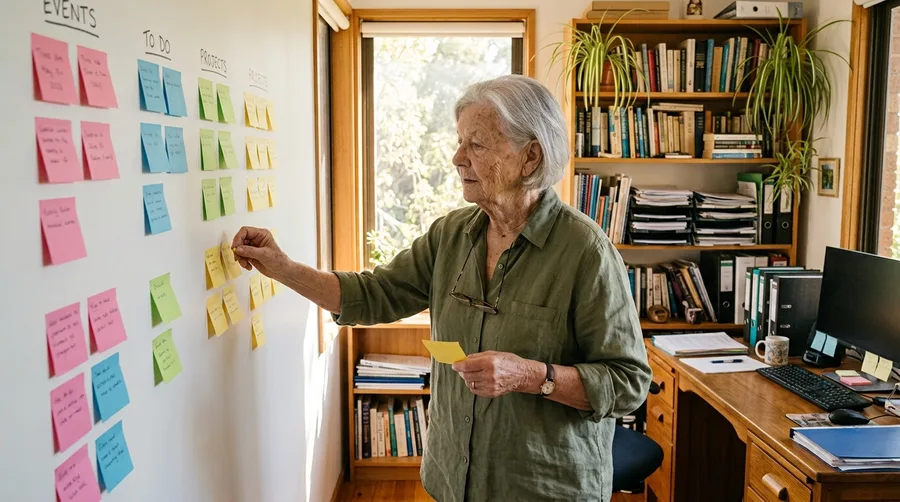
Image credit: Sagely Chic
When something goes wrong, the first reaction is often frustration. A delayed appointment, broken appliance, missed deadline, or unexpected change can quickly turn into a story about everything going badly.
Reframing gives you another option. Instead of immediately asking who is responsible, first identify what actually happened and what can be done next.
For example, if an appointment is delayed, start with the practical fact: “The appointment was moved to tomorrow.” Then decide what action makes sense.
This does not mean pretending that frustrating situations are positive. It means separating the facts from the emotional story surrounding them.
That distinction can make problem-solving easier and reduce unnecessary mental energy spent replaying situations you cannot change.
Cognitive Maintenance Audit
| Habit | Practical Target |
|---|---|
| ✓ 🧩 Daily Novelty Practice | Include at least one unfamiliar or challenging activity |
| ✓ 💤 Consistent Sleep Schedule | Keep bedtime and wake time reasonably consistent |
| ✓ 🗣️ Active Linguistic Work | Read, write, study, or work with language regularly |
| ✓ 🧠 Mental Flexibility | Question assumptions and consider different explanations |
6. Consistent Daily Movement and Blood Flow

Image credit: Sagely Chic
Physical activity and brain health are closely connected. Regular movement supports cardiovascular health and can also contribute to better mood, sleep, mobility, and overall function.
You do not need an intense workout routine to become more active. Walking, strength training, cycling, swimming, dancing, stretching, or other suitable activities can all become part of an active lifestyle.
If thirty minutes feels overwhelming, start with ten minutes. The important thing is to create a routine that fits your current abilities and can be repeated consistently.
If you have a medical condition, significant mobility limitations, or concerns about starting exercise, ask a qualified healthcare professional what type and intensity of activity are appropriate for you.
When you find yourself thinking that you are too busy to move, make the first step smaller. Walk around the block, take the stairs when appropriate, or spend a few minutes doing gentle movement at home.
Cardiovascular Impact on Cognition
| Movement Type | Potential Role |
|---|---|
| Brisk Walking | Supports cardiovascular fitness and regular activity |
| Strength Training | Supports muscle strength and everyday function |
| Stretching | Can support flexibility and comfortable movement |
7. Evaluating Daily Mental Self-Tests

Image credit: Sagely Chic
A predictable routine is not automatically bad for your brain. In fact, familiar routines can make everyday life easier by reducing the number of small decisions you have to make.
The useful question is whether your routine leaves any room for learning and problem-solving.
Look back over the previous few weeks. Have you learned anything new? Solved an unfamiliar problem? Taken a new route? Started a new book? Tried a different recipe or activity?
If everything has become completely automatic, introduce one small variation each week.
Take a different route to the grocery store, learn a few words in another language, try a new recipe, or tackle a puzzle that is slightly harder than your normal choice.
The goal is not constant novelty. It is maintaining a healthy balance between useful routine and occasional challenge.
8. Recognizing the Value of Routine Simplicity

Image credit: Sagely Chic
Too many decisions can make a day feel unnecessarily complicated. Choosing what to wear, which task to start, when to exercise, and what to do with every spare minute can create a surprising amount of mental clutter.
Simple routines can remove some of that friction.
You might prepare your clothes the night before, keep frequently used items in predictable places, or choose one important task to complete before opening social media or checking a long list of messages.
Simplicity does not mean making your life boring. It means reducing avoidable decisions so that you have more attention available for the things that genuinely require thought.
Tonight, choose one small part of tomorrow morning to organize in advance. Then start the day with that single task instead of immediately reacting to every new demand.
9. A Quiet Morning Scene of Intentional Focus

Image credit: Sagely Chic
Attention is constantly being pulled in different directions by phones, notifications, television, email, and social media.
Creating a short period of uninterrupted focus can be a useful way to practice concentration.
Sit somewhere comfortable in the morning and spend ten minutes reading a physical book, writing, planning your day, or working on another activity that requires sustained attention.
Keep your phone in another room if notifications make it difficult to concentrate.
You do not need an hour of perfect focus. Start with ten uninterrupted minutes and gradually increase the amount of time if it feels comfortable.
10. The Consistent Findings of Longitudinal Research

Image credit: Sagely Chic
Cognitive aging is influenced by many factors, so there is no single routine that guarantees someone will remain mentally sharp into their eighties.
What does make sense is maintaining a lifestyle that continues to challenge and engage you in different ways.
Imagine an older adult learning the rules of a new card game at a community center. They are listening, remembering instructions, making decisions, interacting with another person, and adapting when the game does not go as expected.
That kind of activity combines several useful forms of engagement at once.
Learning does not have to mean formal education. It can mean joining a discussion group, taking a class, learning a craft, trying a new recipe, playing a strategy game, volunteering, or developing a new hobby.
Social connection also matters. Regular interaction gives you opportunities to communicate, listen, remember details about other people, solve problems, and respond to changing situations.
Instead of thinking only about “preserving” your brain, think about continuing to use it in meaningful ways.
Choose one activity this week that is slightly outside your normal routine and requires you to learn something new.
Frequently Asked Questions
Can brain training apps really prevent cognitive decline?
Brain-training games can improve performance on the specific tasks being practiced, but that does not mean they can guarantee prevention of broader cognitive decline. A varied routine that includes physical activity, learning, social engagement, adequate sleep, and mentally challenging activities is a more practical approach.
How much sleep is necessary to maintain cognitive sharpness?
Sleep needs vary, but most adults need roughly seven to nine hours per night. Consistently poor sleep can affect attention, memory, mood, and daytime functioning. If sleep problems persist, discuss them with a healthcare professional.
Is it ever too late to start building cognitive reserve?
It is never too late to become more mentally and physically active. Older adults can continue learning new skills and developing new routines. The best approach is to choose activities that are safe, interesting, and realistic enough to maintain.
Does physical exercise directly impact brain health?
Regular physical activity is associated with several aspects of brain and cardiovascular health. It can support blood flow, physical function, sleep, mood, and overall well-being. The type and intensity should match your health and fitness level.
Starting Your Daily Cognitive Routine
You do not need to adopt all ten habits at once.
Choose one activity that feels realistic for tomorrow. You could take a walk, read for ten uninterrupted minutes, learn a few new words, practice a new skill, or have a conversation where you deliberately listen without preparing your response.
Once that habit feels natural, add another.
The goal is not to turn every day into a mental performance test. It is to build a life that keeps your body moving, your attention engaged, your relationships active, and your curiosity alive.
Take Your First Cognitive Step Today
Review the routine above and choose one habit to test this week.
Keep it small enough that you can repeat it. A short walk, a few pages of challenging reading, a new skill, or an uninterrupted conversation can be a meaningful starting point.
Long-term mental well-being is not about finding one perfect activity. It is about continuing to participate in life with curiosity, movement, connection, and purpose.