How to Find Your Color Season After 50 (Even If You Have Grey Hair)
Finding clothes that make you feel naturally polished can become more confusing when your hair turns grey or silver. Colors that once felt perfect may suddenly seem too strong, too dull, or simply different against your face.
That does not mean your old wardrobe rules have completely stopped working. Your coloring may simply need a fresh look at temperature, contrast, depth, and clarity. Grey hair is one part of the picture, but it does not automatically determine your color season.
Instead of trying to fit yourself into one strict category, use color analysis as a practical way to understand which shades make your complexion look balanced and your eyes look clearer.
Key Takeaways:
- Grey hair does not automatically mean you have cool undertones.
- Look at undertone, contrast, clarity, and depth together.
- Compare similar shades in natural daylight rather than judging colors individually.
- Your best palette can include colors from more than one traditional season.
- Keep less flattering colors away from your face instead of removing them from your wardrobe.

Why Your Best Colors Can Feel Different After 50

Your skin undertone generally remains fairly consistent, but the overall contrast of your appearance can change over time. Silver or white hair may create a softer relationship between your hair, skin, eyes, and brows.
As that contrast changes, colors that once looked perfectly balanced can sometimes feel more intense or heavier than you remember. Other shades that seemed too quiet years ago may suddenly look much more natural.
For example, someone who previously loved dark chocolate and warm rust may discover that camel, terracotta, or softer brown feels more harmonious now. Someone who relied heavily on black might find charcoal, navy, or berry tones easier near the face after going silver.
The goal is not to find colors that promise to make you look younger. Instead, look for shades that make your complexion appear even, your eyes noticeable, and your overall outfit connected.
Start With Undertone, Not Hair Color
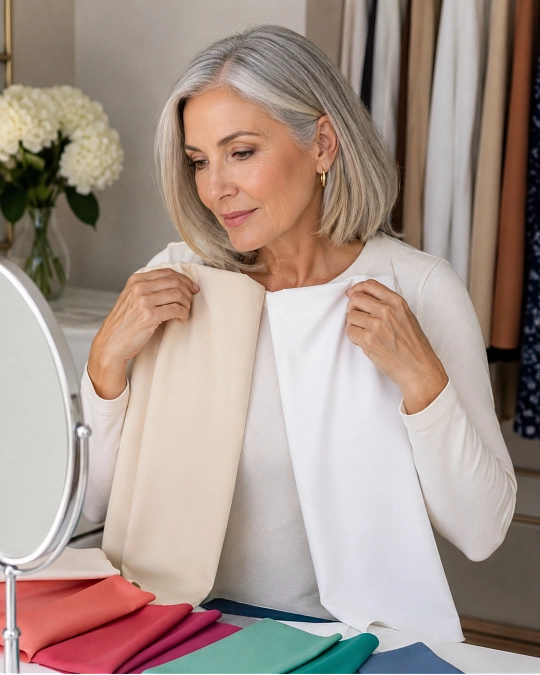
One common mistake is assuming that silver or grey hair automatically means you should wear cool colors. Hair color is only one part of your overall coloring.
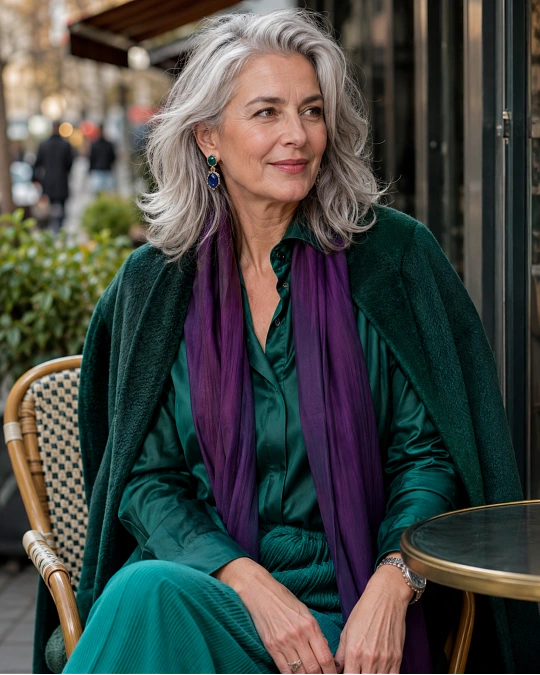
Your skin undertone is another important clue. Some people naturally look balanced in warmer shades such as cream, camel, olive, peach, warm teal, tomato red, and golden brown. Others respond better to crisp white, cool grey, blue-based red, raspberry, plum, or icy pink.
Neutral undertones may work comfortably with selections from both groups.
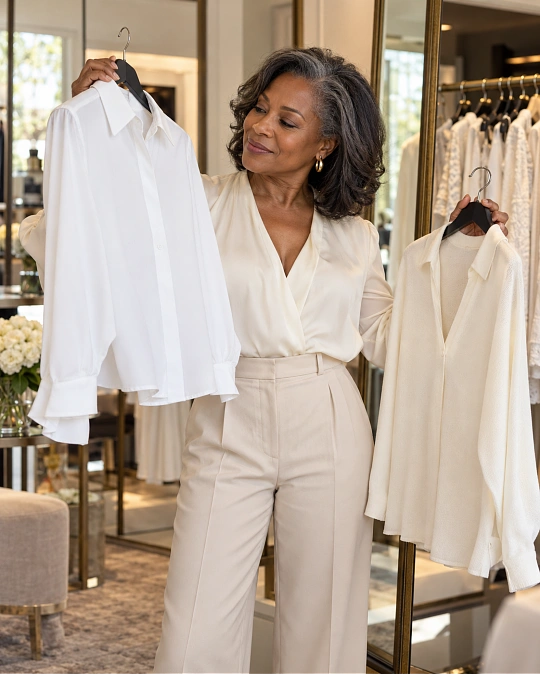
Instead of testing one random color, compare related shades. Hold cream next to bright white, coral beside raspberry, camel beside cool grey, or olive beside a blue-green.
Watch your face rather than focusing on the clothing. A supportive color may make your eyes appear clearer and your skin look more even without requiring stronger makeup.
| Color Family | Warmer Choice | Cooler Choice |
|---|---|---|
| Light Neutral | Ivory or cream | Crisp white |
| Mid Neutral | Camel | Cool grey |
| Green | Olive | Pine or blue-green |
| Pink-Red | Coral or tomato | Raspberry or cranberry |
| Brown-Purple | Cinnamon | Plum |
Color Tip: Test colors beside your face in natural daylight whenever possible. Warm indoor bulbs can shift the appearance of clothing and make cool shades appear warmer than they actually are.
Look at Contrast Before Choosing a Season
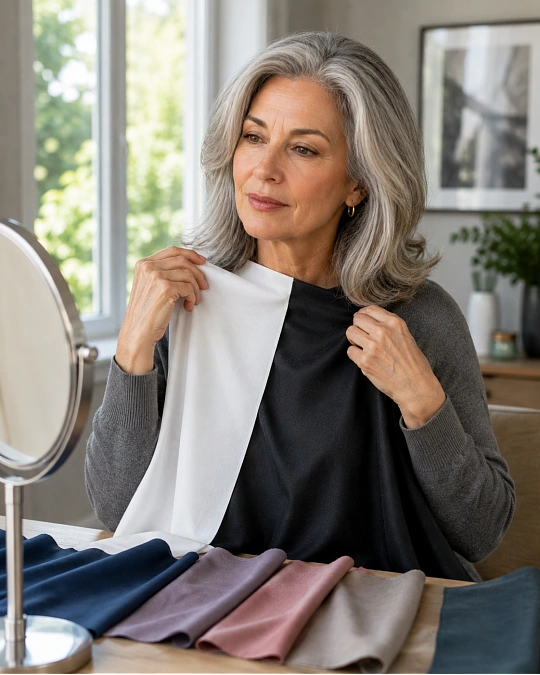
Color temperature is useful, but contrast can provide another important clue. Contrast describes how different your hair, skin, brows, and eyes appear from one another.
Someone with bright silver hair, defined brows, and clear eyes may still have fairly strong contrast. Someone with soft grey hair, lighter brows, and gently blended features may have a lower-contrast appearance.
Two people can therefore have similar undertones while looking best in very different combinations.
Higher contrast can often support combinations such as navy with white, charcoal with berry, or black with icy pink. Softer coloring may feel more balanced with dusty rose and soft navy, mushroom and blue-grey, or pewter and muted lavender.
A simple home test is to take a photo of yourself in natural light and convert it to black and white. You are not evaluating your appearance. You are simply looking at how much difference exists between your hair, skin, eyes, and brows.
| How Your Coloring Reads | Colors to Test Near Your Face | Use More Carefully |
|---|---|---|
| Soft and blended | Dusty blue, sage, mushroom, muted berry | Very sharp black-and-white combinations |
| Medium contrast | Navy, teal, rose, soft white | Extremely pale head-to-toe neutrals |
| Clear contrast | Cobalt, cranberry, charcoal, crisp white | Very muddy or heavily muted shades |
| Light overall | Pearl grey, light navy, soft aqua | Large areas of very dark brown or black |
These are starting points rather than restrictions. If you love a color that feels slightly severe near your face, place it farther away by wearing it as trousers, a skirt, shoes, handbag, or part of a print.
Decide Whether You Look Better in Clear or Soft Colors
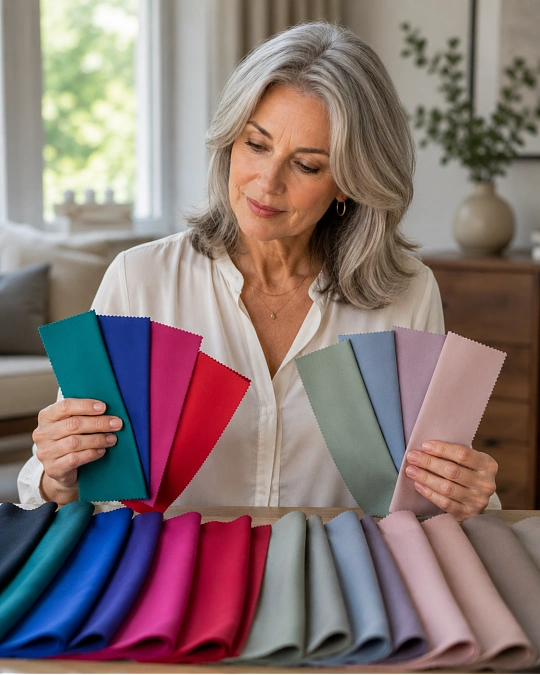
Another helpful test is to compare clear colors with softer, muted versions.
Clear shades have stronger visual intensity. Examples include cobalt, emerald, bright coral, vivid turquoise, and clear raspberry.
Soft shades have a more muted quality. Think sage, smoky blue, dusty rose, muted teal, mushroom, mauve, and soft plum.
Grey hair can sometimes make softer colors look especially harmonious, but there is no universal rule. Bright silver hair combined with clear eyes and stronger facial contrast may work beautifully with saturated colors.
Pay attention to what happens to your face during the comparison. If you notice the garment before you notice your features, the shade may be too intense. If your face seems dull or gets lost beside the fabric, the color may be too muted.
The most useful shade usually supports your features instead of competing with them.
Use Depth to Narrow Down Your Color Season
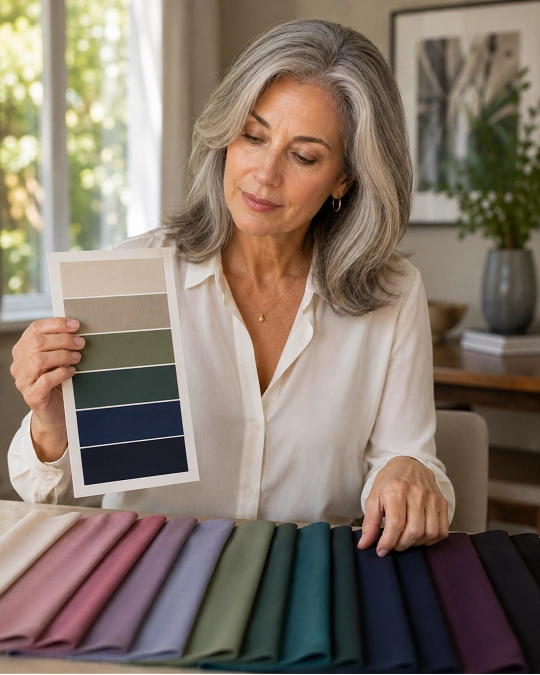
Once you have considered temperature and contrast, look at depth. Ask yourself whether light, medium, or deep shades create the most balanced effect around your face.
This can be particularly useful after your hair becomes significantly lighter. Very dark colors that once provided a beautiful contrast may begin to feel visually heavy.
Rather than replacing every dark garment with a pastel, try medium-depth shades first. Navy, medium teal, burgundy, forest green, denim blue, aubergine, and charcoal can provide definition without creating as much weight as the deepest shades.
Fit Tip: The cut of a garment can affect how strong a color appears. A dark high-neck sweater places much more visual weight beside your face than the same shade used in an open-neck blouse or lightweight cardigan.
Necklines can therefore make it easier to continue wearing colors you already love. V-necks, scoop necks, open collars, and softly structured jackets create some space between a strong color and your face.
This small styling change can make your wardrobe feel much more flexible. You do not have to discard darker colors simply because your hair has become lighter.
Find Your Likely Season Without Getting Trapped by Labels
Traditional color analysis uses four broad seasonal groups: Spring, Summer, Autumn, and Winter. Modern systems often divide these further into categories such as Soft Summer, Deep Autumn, Bright Spring, and similar subgroups.
These labels can be helpful for organizing ideas, but the label itself is less important than the color characteristics behind it.
Spring palettes are generally warmer and clearer. Summer palettes are often cooler and softer. Autumn shades tend to be warm, earthy, muted, or deep. Winter palettes commonly feature cooler, clearer, and higher-contrast colors.
Grey hair can occur alongside any of these patterns.
For example, a warm-toned woman with silver hair may still look naturally balanced in Autumn or Spring colors. Someone whose silver hair blends beautifully with cool blue, plum, and charcoal may find that Summer or Winter shades are more useful.
Use this guide as a starting point rather than treating it as a final answer:
| If You Look Best In | You May Lean Toward | Colors to Test |
|---|---|---|
| Warm, fresh, clear shades | Spring | Warm turquoise, coral, cream, leaf green |
| Cool, gentle, muted shades | Summer | Dusty blue, mauve, soft navy, berry |
| Warm, earthy, softened shades | Autumn | Olive, rust, teal, camel, warm burgundy |
| Cool, clear, stronger shades | Winter | Cobalt, cranberry, charcoal, icy pink |
You may naturally sit between categories. That is not a problem. A wardrobe can easily be built around mostly Summer colors with a few Winter shades, or warm Autumn colors that are lighter and softer than a traditional Autumn palette.
The goal is to understand the characteristics that suit you rather than force every outfit into one named box.
Build a Personal Color Formula You Can Actually Wear
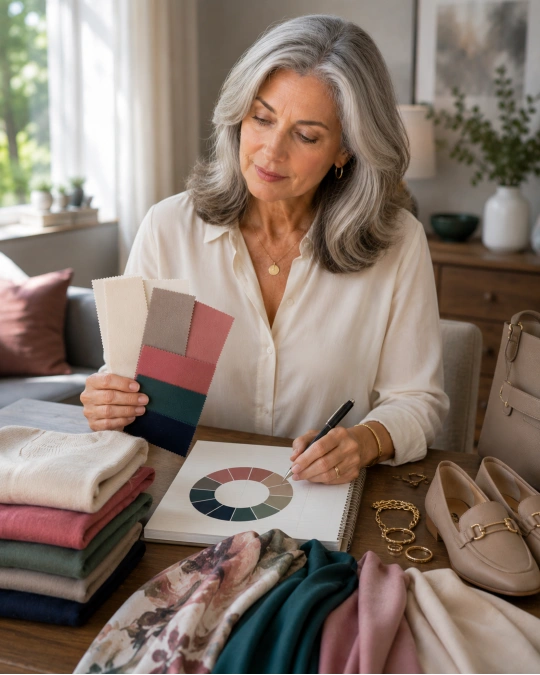
Once you have a better idea of your temperature, contrast, clarity, and depth, turn those observations into a small wardrobe palette.
You do not need dozens of approved colors. Start with two dependable neutrals, three everyday colors, and one accent shade that brings extra interest.
Formula: reliable neutral + everyday color + face-brightening accent.
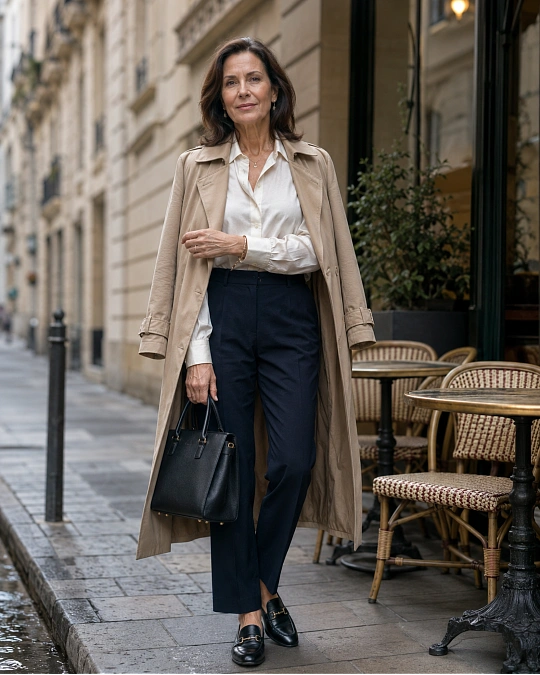
For example, soft navy trousers with an ivory sweater and a warm teal scarf can create an easy combination. Another option might be charcoal jeans, a dusty blue blouse, and berry-colored earrings.
A compact palette makes it easier to create stylish outfits because more pieces naturally coordinate with one another.
A simple starter palette could include:
- Two neutrals: Navy and ivory, charcoal and soft white, camel and cream, or mushroom and denim.
- Three core colors: Shades you genuinely enjoy wearing in tops, dresses, jackets, and knitwear.
- One accent: Berry, turquoise, coral, cobalt, plum, red, or another shade that gives your wardrobe personality.
- One metal direction: Silver, gold, mixed metals, or whichever looks most natural with your coloring.
You also do not have to remove every garment that falls outside your personal palette. Less supportive colors can still work beautifully in trousers, skirts, shoes, handbags, and prints.
Keeping those pieces in your wardrobe also means you can continue getting plenty of wear from clothes you already own.
What Can Throw Off a DIY Color Test
Testing colors at home can be useful, but a few simple mistakes can make the results confusing.
- Warm artificial lighting: Test near a window in natural daylight instead of relying on yellow bathroom or bedroom lighting.
- Focusing on your hair: Watch how your skin and eyes respond instead of deciding based only on whether the color matches your grey hair.
- Heavy makeup: Strong foundation, bronzer, blush, or lipstick can change how a color appears against your face.
- Testing only one shade: Compare related colors so you can see a meaningful difference between warm and cool or clear and soft options.
You are looking for repeated patterns rather than one dramatic result. Several small comparisons will usually give you more useful information than trying to find one supposedly perfect color immediately.
Frequently Asked Questions
Does grey hair mean I am a cool color season?
No. Grey hair does not automatically determine your undertone or season. Your skin, eyes, natural contrast, and the way different shades interact with your face all matter.
A woman with warm undertones can have silver hair and still look wonderful in cream, camel, olive, coral, or warm teal.
Can your color season change as you get older?
Your underlying coloring does not necessarily change completely with age, but the colors that feel most balanced can change as your hair, skin, and overall contrast become softer.
You may discover that a slightly lighter, softer, or less severe version of a familiar color works better than the shade you preferred years ago.
What colors look good with grey hair?
Grey hair can work with a wide range of shades, including navy, teal, berry, plum, blue, green, soft pink, ivory, and charcoal.
Instead of asking which colors work with grey hair in general, compare versions of those colors against your own face. The important factors are whether the shade is warm or cool, clear or muted, and light or deep enough for your coloring.
Is black flattering with grey hair?
Black can absolutely remain part of your wardrobe. The question is how much contrast you naturally carry.
If black feels too severe near your face, try charcoal or navy, or soften the transition with an open neckline, scarf, necklace, or lighter jacket.
How can I find my color season at home?
Start with natural daylight and minimal makeup. Compare pairs such as cream and white, camel and grey, coral and raspberry, or muted blue and clear cobalt.
Look for the shade that makes your complexion appear more even and your eyes look clearer. Repeat the process with several colors before deciding which seasonal characteristics seem to fit you.