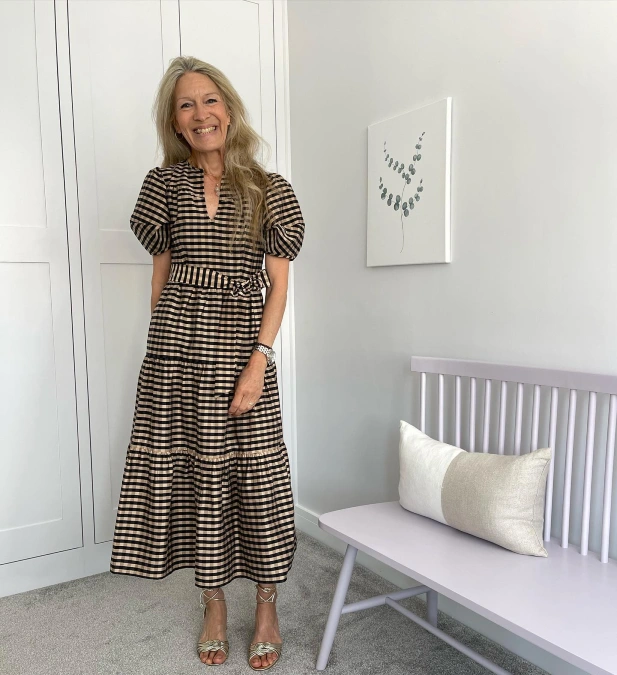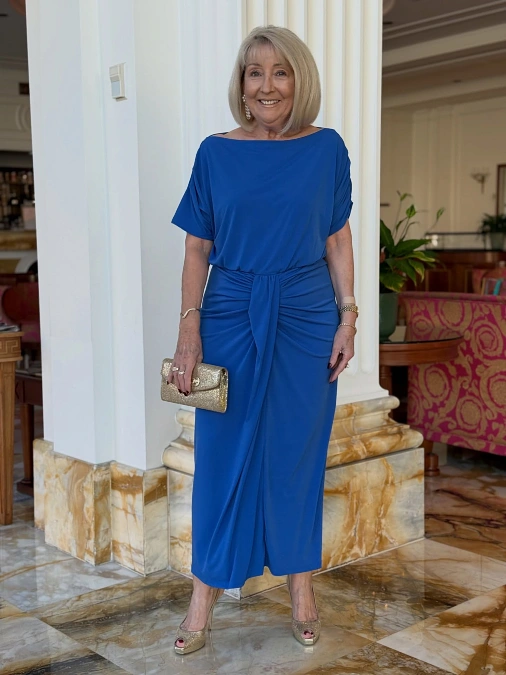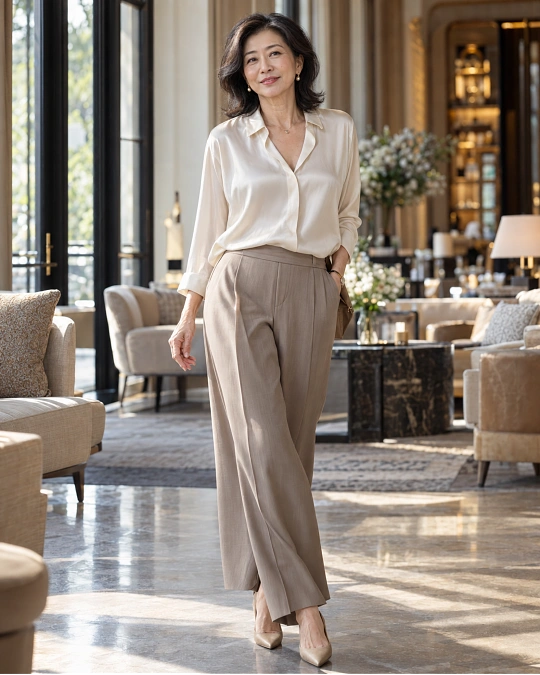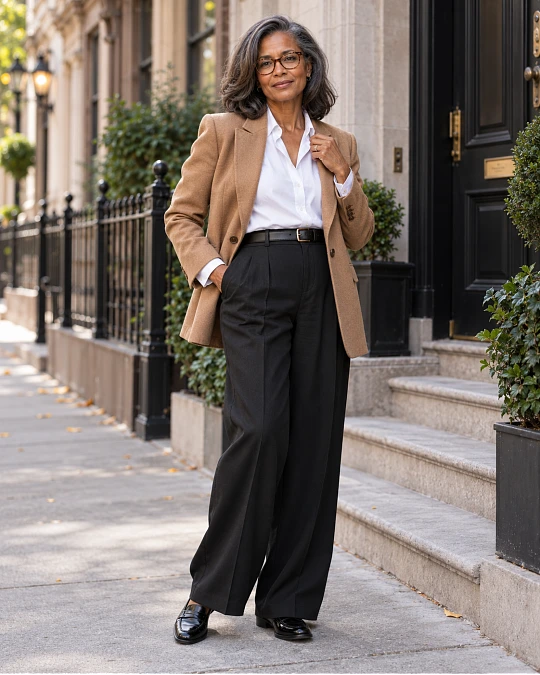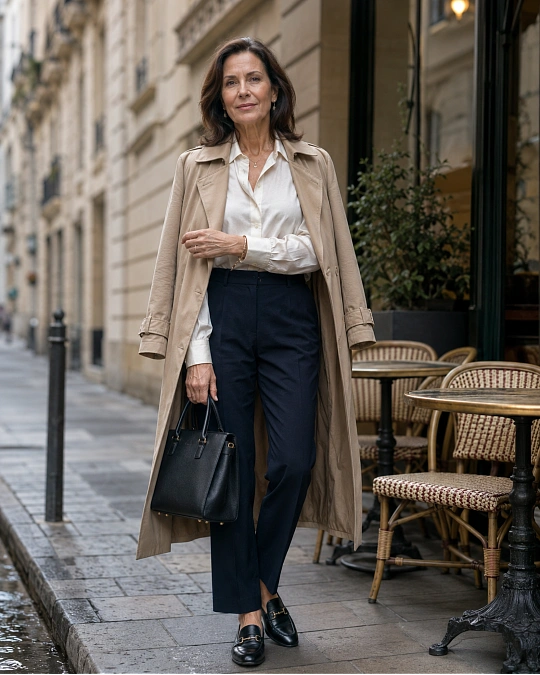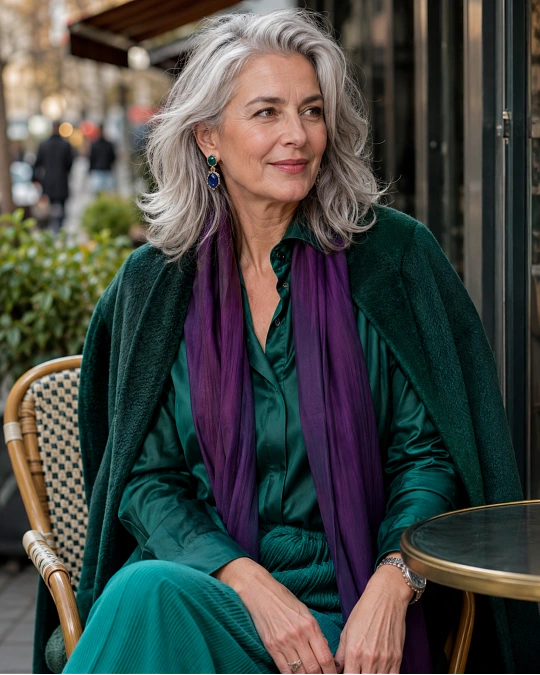
The Best Colors to Wear With Grey Hair After 50
Going grey can change more than your hair color. Once silver, white, salt-and-pepper, or charcoal tones become part of your natural look, familiar clothing colors can appear completely different around your face.
A shade that used to make you feel polished may suddenly seem flat, while another color you rarely wore can bring much more definition to your complexion. That does not mean you need to replace your wardrobe or follow a complicated color system.
The key is understanding how contrast, depth, warmth, and color placement work with your current appearance. Once you notice those details, choosing clothes after 50 becomes much more straightforward.
Key Takeaways:
- Grey hair can change the amount of contrast around your face.
- Jewel tones often provide useful definition without complicated styling.
- Deep neutrals such as navy, charcoal, and chocolate can be softer alternatives to black.
- Warm colors can still work beautifully with silver or grey hair.
- Less flattering colors can often be moved away from the face rather than removed completely.

Why Grey Hair Changes the Way Colors Look

When your hair loses some of its original pigment, the visual relationship between your hair, skin, eyes, and clothing can shift. This is why a pale beige sweater or light grey top may suddenly look less interesting than it once did.
Grey hair can have many different appearances. It may be bright silver, soft pewter, icy white, deep charcoal, or a combination of several shades. Your skin and eye color still matter, so there is no single wardrobe palette that works for everyone with grey hair.
One of the most useful things to watch is contrast. Clothing with enough difference from your complexion and hair can give your face definition instead of allowing everything to blend together.
| If This Happens | Try These Alternatives |
|---|---|
| Pale beige makes your complexion look dull | Camel, warm taupe, mushroom, or deeper oatmeal |
| Light grey disappears into your hair | Charcoal, navy, slate blue, or graphite |
| Black feels overly strong | Ink navy, deep plum, espresso, or soft charcoal |
| Very pale colors feel faded | Clear lavender, aqua, dusty coral, or stronger versions of the same family |
| A bright shade dominates your appearance | Move it into a scarf, blouse, shoe, handbag, or lower-half piece |
You do not need to eliminate pale or soft shades from your wardrobe. The goal is simply to create enough separation between your clothing, complexion, and hair for your features to remain visible.
Jewel Tones Are Especially Strong With Silver and Grey Hair
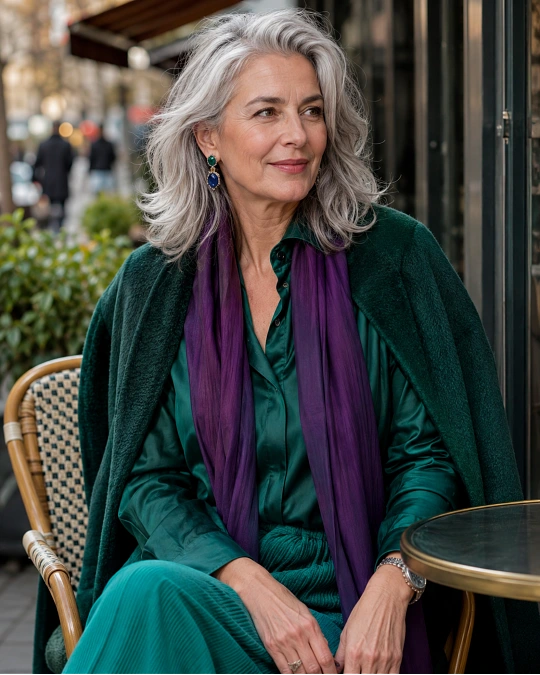
Rich colors can be particularly useful when you have silver or grey hair because they provide definition without requiring an elaborate outfit.
Think sapphire, emerald, raspberry, burgundy, plum, teal, and deep violet. These shades have enough depth to create a frame around the face while still looking polished and wearable.
A sapphire sweater with straight-leg trousers, for example, can create more definition around silver hair than a very pale blue-grey knit.
You also do not need several strong colors in the same outfit. One saturated piece surrounded by familiar neutrals is often enough to make the look feel intentional.
Try combinations such as:
- Emerald blouse with dark jeans and loafers
- Raspberry sweater with charcoal trousers and simple flats
- Deep teal shirt with cream jeans and tan accessories
- Plum cardigan with a white tee and navy trousers
Color Tip: If jewel tones feel too intense, look for softened versions. Petrol blue, muted teal, dusty berry, and aubergine can provide similar depth with a quieter effect.
The Best Neutrals Have More Depth Than You Might Expect
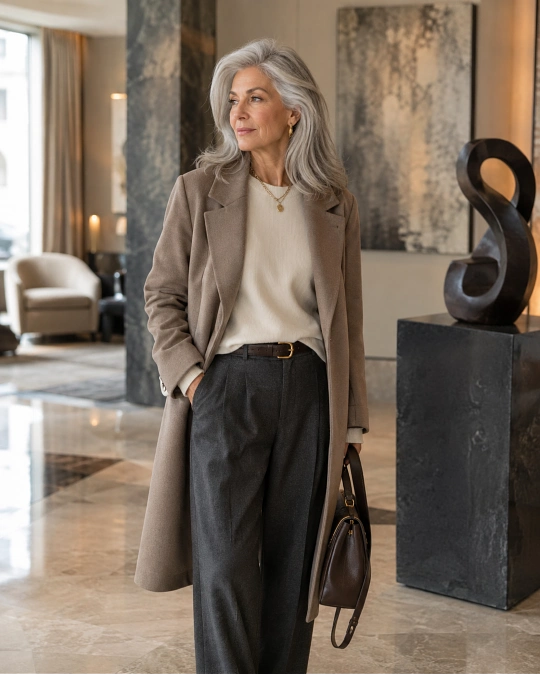
Neutrals are the foundation of many wardrobes, but grey hair can change which versions feel most useful near your face.
Soft white may create more freshness than a heavily yellowed ivory. Navy can provide structure without the severity that some people experience with black. Charcoal is another useful option because it relates naturally to grey hair while still creating enough visual depth.
Camel, chocolate brown, mushroom, taupe, and stone can also work beautifully. What matters is whether the particular shade gives you enough contrast against your skin and hair.
Texture can help as well. A neutral outfit does not have to look plain when different fabrics and depths create subtle variation.
| Neutral | Look For | Why It Can Work |
|---|---|---|
| Navy | Deep, clean navy rather than a faded blue | Creates definition without the hardness of black |
| Charcoal | Medium to deep graphite | Connects naturally with silver and grey hair |
| Soft White | Clean white with only a gentle warmth | Can brighten the area around the face |
| Camel | Rich tan rather than very pale beige | Adds warmth and visible contrast |
| Chocolate | Deep, rich brown | Offers a softer alternative to black |
| Mushroom | Balanced grey-brown | Pairs easily with denim, cream, navy, and burgundy |
Quick Test: Hold the garment just below your chin in daylight. If you notice your eyes and complexion looking clearer before you notice the clothing itself, the shade may be a useful neutral for you.
Clear Blues, Greens, and Purples Can Brighten the Face
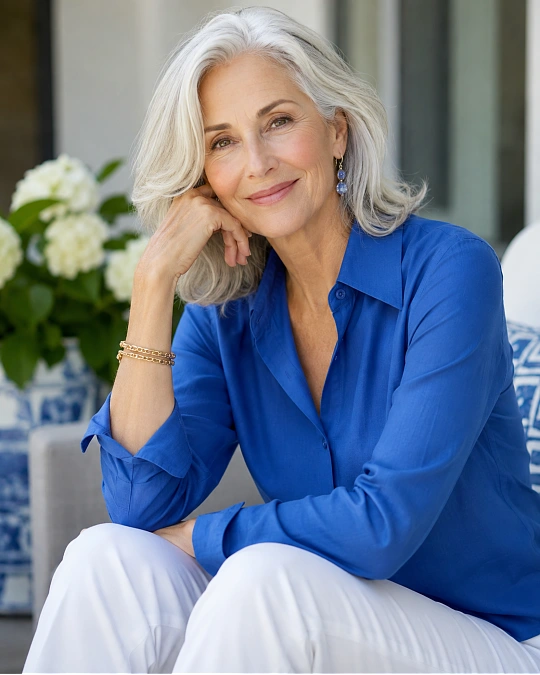
Blue is an especially flexible color family because it offers so many different depths and levels of intensity.
Cobalt can create a crisp contrast against bright silver hair. Denim blue is easy for everyday outfits, while navy provides a deeper and more structured effect. If you prefer something lighter, cornflower blue can offer color without overwhelming a softer appearance.
Green provides similar flexibility. Forest green feels grounded, emerald looks more saturated, and blue-green teal can be an excellent middle option when traditional green feels too strong.
Purple is worth exploring too. Lavender, orchid, aubergine, and plum can all bring color into an outfit while maintaining a refined appearance.
Rather than concentrating only on the color name, notice how clean or muddy the shade looks against your face. Clearer colors can sometimes provide more definition than heavily faded versions.
Try This: Choose three tops from the same general color family and stand near a window. Test each one separately without considering the garment’s price, size, or style.
Pay attention to which color makes your eyes look clearer and which one seems to emphasize shadows or unevenness in your complexion. This simple comparison can be more useful than blindly following a seasonal color chart.
Pink, Red, and Berry Tones Can Add Warmth Without Looking Fussy
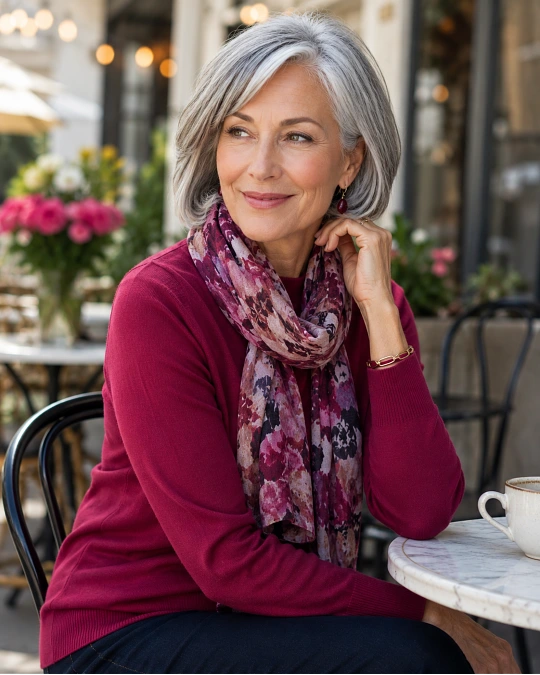
Having grey hair does not mean you need to limit yourself to cool shades. Warm or warm-leaning colors can still look beautifully balanced depending on your natural coloring.
Berry, raspberry, rose, brick red, wine, and softer coral can bring energy to the face without requiring an extremely bright outfit.
If a vivid orange-red feels too intense, a deeper tomato or brick red may be easier to wear. Similarly, if pale blush disappears against your complexion, a dusty rose or richer berry can provide more definition.
Accessories offer an easy way to experiment. A berry scarf, coral handbag, rose earrings, or red shoes can introduce a new color without requiring you to commit to a complete outfit.
If a berry sweater feels too bold, try a berry scarf beneath a navy coat. If coral near your face feels lively but a coral blouse seems like too much, move the color into your shoes or handbag.
This flexibility is especially helpful when building a practical wardrobe after 50. Strong colors can be added without changing the entire neutral foundation.
Be More Selective With Beige, Grey, and Very Pale Pastels
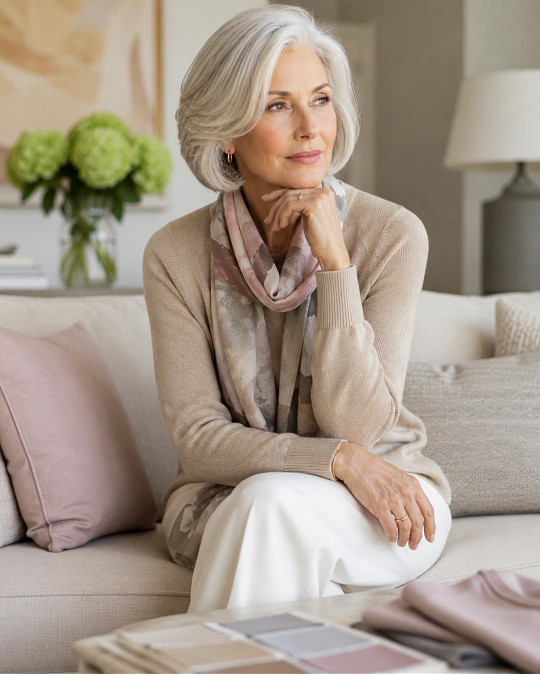
Some shades can feel difficult not because they are inherently unflattering, but because they create too little separation between your hair, skin, and clothing.
Pale beige, faded taupe, light grey, and very weak pastels can sometimes make the upper part of an outfit look visually flat. This effect is more noticeable when the hair is already light.
That does not mean these shades have to disappear from your wardrobe. They often work better when another color provides a frame.
For example, a beige coat can look more defined over a navy turtleneck. A pale grey sweater can gain energy from a berry scarf, while a soft pastel blouse can feel more polished beneath a darker jacket.
| Instead of Thinking | Try Thinking |
|---|---|
| Beige should be avoided with grey hair. | Use navy, berry, chocolate, or another deeper shade to create contrast. |
| Black is always the strongest neutral. | Compare black with navy, charcoal, plum, and espresso. |
| Pastels automatically make you look washed out. | Try clearer pastels or add a darker frame near the face. |
| Grey hair requires cool colors. | Test both warm and cool shades against your own complexion. |
| A former favorite color no longer works. | Experiment with a lighter, deeper, clearer, or softer version. |
This approach gives you much more freedom. Instead of banning colors, you can change their depth, placement, or combination.
A Simple Color Formula to Use When Getting Dressed
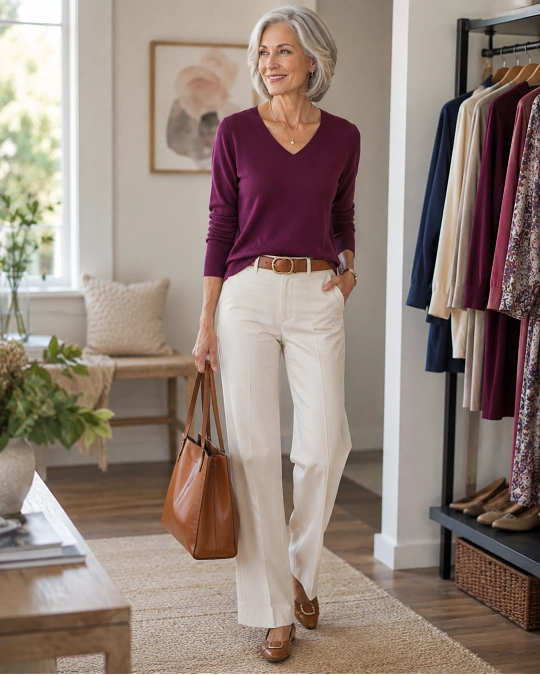
A repeatable color formula can make everyday dressing easier, especially when you do not want to spend a lot of time deciding what works together.
Formula: strong neutral + face-brightening color + quiet finishing shade.
For example, combine navy trousers with a raspberry sweater and burgundy loafers. Another option is cream jeans with a teal blouse and camel flats.
For a more understated combination, try charcoal trousers, a soft white shirt, and a plum cardigan.
The neutral anchors the outfit, while the stronger color near your face creates definition around grey or silver hair.
You can use the same idea for casual outfits. Straight-leg jeans with a cobalt sweater and clean white sneakers can feel relaxed while still looking intentional.
The goal is not to wear as much color as possible. It is to place enough color in the right areas to create balance.
Frequently Asked Questions
Color & Style Guide
Flattering Colors for Grey Hair
Use your existing wardrobe as your testing ground. Compare similar colors in natural light and pay attention to how your complexion and eyes respond. This will help you identify useful shades without having to follow rigid rules.
The Best Palette Is the One That Makes You Look Like Yourself
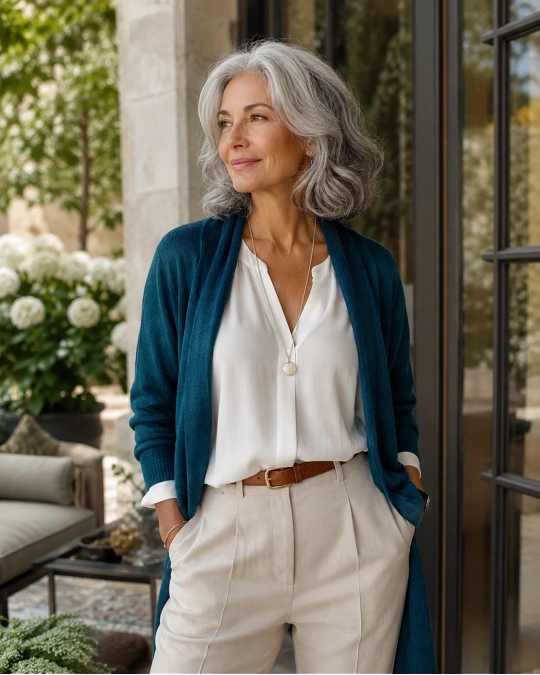
Grey hair does not require an entirely new wardrobe. It simply gives you a reason to reconsider the balance between your hair, complexion, and clothing colors.
The most useful approach to dressing over 50 is not following a long list of forbidden shades. Instead, pay attention to contrast, depth, warmth, and where each color sits in relation to your face.
Start with clothes you already own. Choose three different colors and compare them near a window in daylight. The most helpful shade is often the one that makes you notice your face, eyes, and overall presence before you notice the garment.
Once you identify a few reliable colors, repeat them in sweaters, blouses, scarves, jackets, accessories, and everyday outfits. A small group of colors that consistently works for you can make your entire wardrobe easier to style.