Scarf Styling for Women Over 50 That Goes Beyond the Standard Neck Knot
A scarf can completely change the feel of a simple outfit. The right fabric, placement, and amount of drape can add color and personality without making the look feel overly formal.
If you usually wear scarves in the same small knot around your neck, there are plenty of other possibilities to try. A scarf can sit beneath a blazer, fall loosely over a sweater, wrap around a bag, or work almost like a lightweight layer.
The easiest way to make scarf styling feel current is to pay attention to proportion. Consider the size of the scarf, the weight of the fabric, the neckline you are wearing, and where you want the eye to travel.
Why the Classic Neck Knot Can Feel Too Formal Now
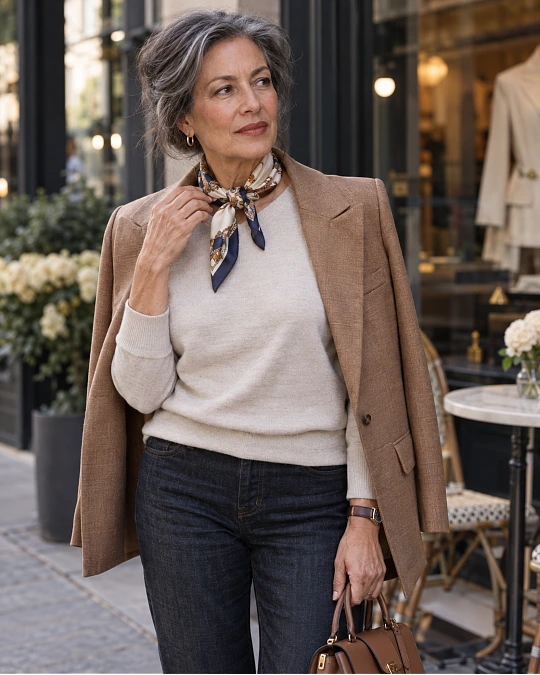
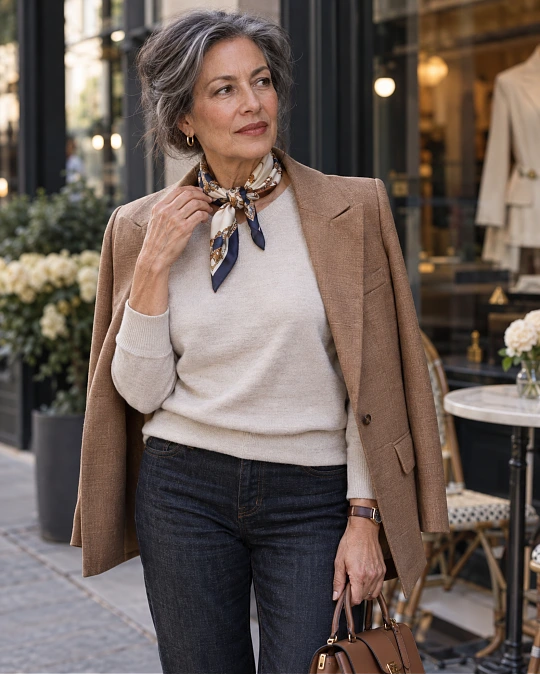
A small scarf tied closely around the neck can look polished with the right outfit. However, when the knot sits tightly beneath the chin, it can sometimes make a relaxed modern outfit appear more formal than intended.
Today’s everyday clothing often has more generous proportions. Think relaxed jeans, wide-leg trousers, longer cardigans, oversized shirts, and softly structured jackets.
These silhouettes often benefit from an accessory that has room to move. Letting a scarf hang freely can introduce a vertical or diagonal line that works with the clothing instead of creating a small, concentrated detail at the neckline.
There is no reason to stop wearing a traditional neck knot if you enjoy it. Simply treat it as one styling option rather than the only way to wear a scarf.
Start With Scarf Scale and Fabric Before You Style It
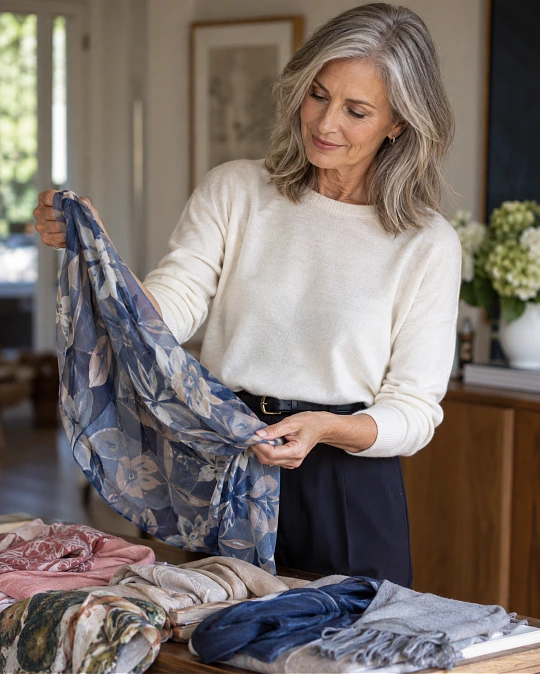
The fabric of a scarf often determines how successful the final styling will be. A lightweight silk square behaves very differently from a long modal scarf or a thick wool wrap.
Small scarves are useful when you want a neat accent with very little volume. Longer rectangular styles offer more options because they can be left open, draped over the shoulders, or tucked underneath outerwear.
Before putting a scarf on, scrunch or fold it in your hands. Notice whether it feels soft and flexible or stiff and bulky. That simple test can tell you a lot about how it will sit around your clothing.
Use this guide when deciding which type of scarf works best for your outfit.
| Scarf Type | What to Look For | Why It Works |
|---|---|---|
| Soft silk square | Lightweight fabric with an easy drape | Adds a polished accent without much bulk |
| Long silk rectangle | Enough length to fall below the bust | Creates an elegant vertical line |
| Modal or viscose scarf | Soft, flexible fabric with light-to-medium weight | Comfortable for everyday outfits |
| Fine wool scarf | Thin weave instead of chunky construction | Adds warmth without excessive volume |
| Cotton scarf | Soft or gently washed finish | Pairs naturally with denim, linen, and casual clothing |
Fabric note: If you find yourself constantly repositioning your scarf, the problem may be the material rather than the styling technique. Fabrics with natural movement usually sit more comfortably with less adjustment.
Let the Scarf Fall Vertically to Create Length and Ease
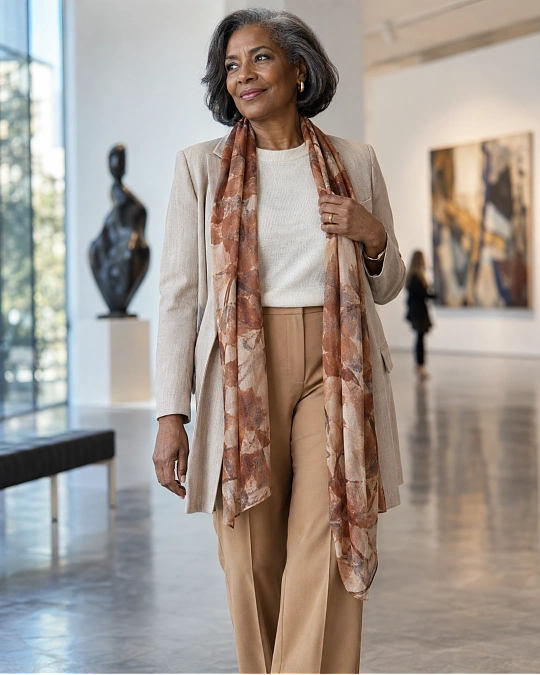
One of the easiest ways to change your scarf styling is to skip the knot altogether.
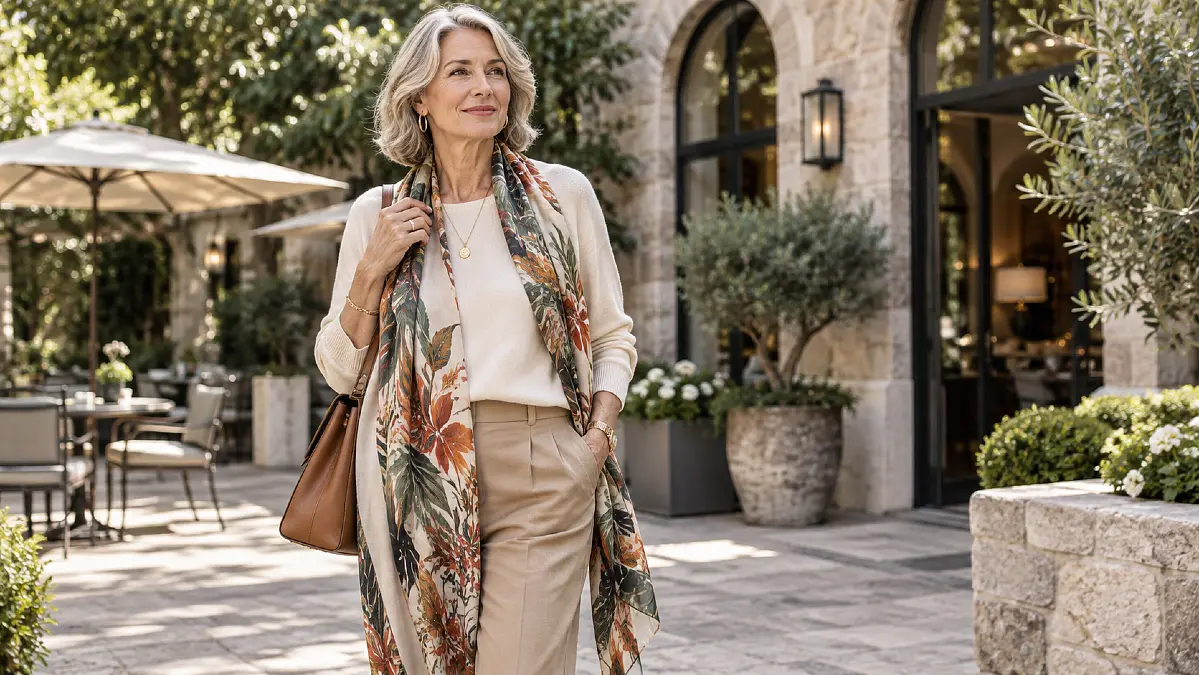
Place a long scarf behind your neck and allow both ends to fall naturally toward the front. The two hanging ends create vertical lines that can visually break up a sweater, jacket, dress, or button-down shirt.
This approach can be especially useful when your outfit already has a relaxed or roomy shape. A loose sweater and straight trousers, for example, can gain more definition from a long scarf without adding anything restrictive.
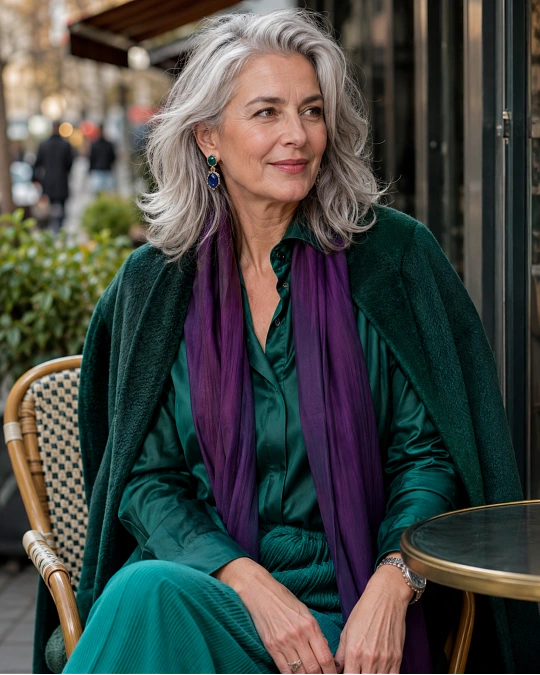
For a slightly more relaxed effect, throw one end over a shoulder. The resulting diagonal line creates movement while avoiding a tight cluster of fabric around the face.
When wearing a blazer or coat, try putting the scarf underneath the lapels. A little color or pattern showing through the opening can look cleaner than wrapping a large amount of fabric around the outside of the collar.
Try this: Get dressed completely before adding your scarf. Put it on loosely and look at the overall silhouette before deciding whether it actually needs a knot or additional folds.
Move the Scarf Off the Neck With Shoulder, Belt, and Bag Styling
Your scarf does not have to stay around your neck. Moving it somewhere else can be an easy way to introduce color or pattern without adding more detail near your face.
- Over one shoulder: Place a medium or larger scarf across one shoulder and let the ends fall naturally over a sweater, dress, or coat.
- Under a belt: Drape a lightweight scarf around your shoulders and secure it gently with a slim or medium-width belt.
- Around a bag handle: Tie a small silk scarf around the handle of a simple handbag for a subtle color accent.
- Across the shoulders: Open a large scarf and wear it as a soft wrap over a sleeveless dress or lightweight knit.
The belted option can work particularly well when an outfit is built around one color. For example, a navy knit and navy trousers can become more interesting when a patterned scarf is added and lightly secured at the waist.
Putting a scarf on your handbag creates a completely different effect. Because the pattern sits farther away from the neckline, it can work nicely with statement earrings, a patterned blouse, or a noticeable necklace.
Match the Scarf to Necklines, Jackets, and Sweaters
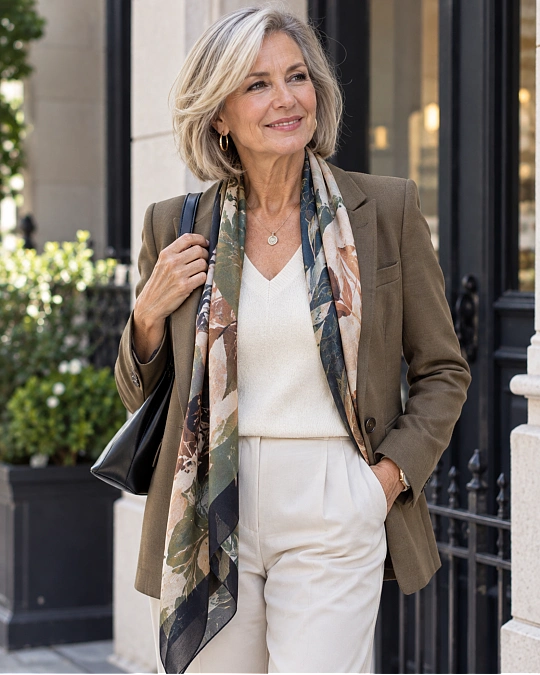
Choosing a scarf becomes much easier when you consider the neckline of the clothing underneath it. Rather than covering the neckline completely, look for a scarf arrangement that works with the shape already there.
A V-neck naturally creates an open vertical line. A long scarf worn loosely can follow that same direction without filling the entire opening.
Crewneck sweaters give you several possibilities. A small silk scarf can sit around the outside of the neckline, while a longer scarf can be allowed to hang down the front.
With a button-down shirt, leave a button or two open and tuck a lightweight scarf inside the collar. This creates softness without wrapping the fabric tightly around the neck.
Blazers generally look cleaner when a scarf is positioned underneath the lapels. A trench coat or simple wool coat, on the other hand, can accommodate a longer scarf worn outside the coat.
Comfort upgrade: If heavy scarves make your jacket or coat feel crowded around the shoulders, try silk, fine wool, modal, or another lightweight fabric. A scarf does not have to be thick to make an outfit interesting.
Use Color and Print to Connect a Simple Outfit
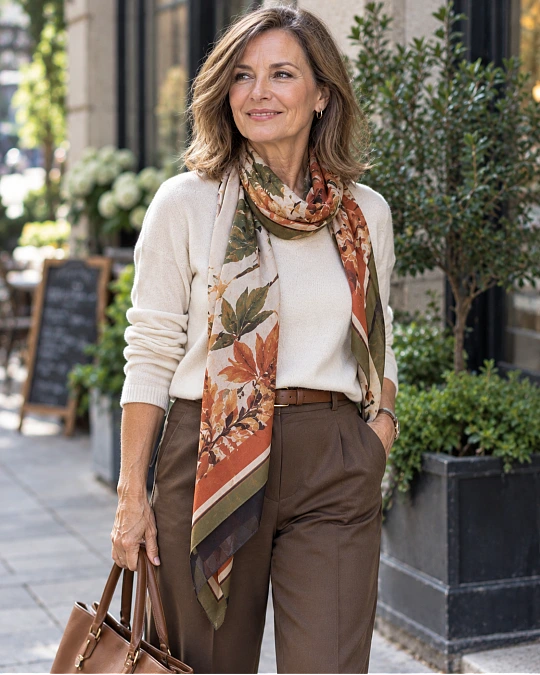
A scarf can be particularly useful when a basic outfit needs a little more color or visual interest. Instead of choosing a completely unrelated print, look for a scarf that repeats a shade already found somewhere in your outfit.
It does not need to match perfectly. A scarf containing soft blue can work beautifully with navy clothing, while olive, rust, cream, or burgundy can connect naturally with brown accessories.
This is one of the easiest ways to refresh wardrobe staples. The same jeans, knit, or blazer can look noticeably different simply by changing the scarf.
For women building stylish outfits over 50, this approach is also practical because one versatile accessory can create several different combinations from clothing you already own.
| Base Outfit | Scarf Change | Where It Works |
|---|---|---|
| White shirt + dark jeans | Patterned silk square | Lunch or casual dinner |
| Fine knit + trousers | Long tonal scarf | Work, appointments, or travel |
| Simple midi dress | Soft patterned wrap | Dinner or an evening occasion |
| Blazer + T-shirt + jeans | Slim silk rectangle | Smart-casual plans |
| Coat + knit + trousers | Fine wool scarf | Cool-weather outings |
Color note: If large prints feel intimidating, start with a scarf containing two or three related shades. It will still add dimension without taking over the entire outfit.
Fix the Styling Habits That Make Scarves Feel Dated
A scarf itself is rarely the reason an outfit feels old-fashioned. More often, the effect comes from combining a particular knot, fabric, print, and collection of accessories in one place.
You do not need to replace your scarf collection to change the overall impression. Small adjustments to how you fold, place, and combine the pieces can make a significant difference.
Use these swaps when a scarf outfit does not look quite right in the mirror.
| If This Feels Off | Try This Instead |
|---|---|
| A tight knot directly beneath the chin feels too formal | Loosen it or let one end hang lower |
| A large scarf overwhelms a small neckline | Choose a slimmer shape or lighter fabric |
| A patterned scarf competes with a printed blouse | Wear the scarf with a solid-colored top |
| A chunky necklace and scarf compete for attention | Let one accessory become the main detail |
| Perfectly even scarf ends look overly arranged | Allow one side to hang slightly longer |
Another thing to consider is how many traditionally polished pieces you are wearing at once. A silk scarf, pearl necklace, structured handbag, tailored blazer, and dressy shoes can collectively create a much more formal impression.
If the outfit feels too dressed up, keep the scarf and relax another element. Straight jeans, loafers, a soft cardigan, or a simple knit can create a more balanced combination.
The goal is not to make every accessory look casual. Mixing refined details with relaxed pieces often creates a more natural and current result.
A Scarf Formula You Can Repeat All Week
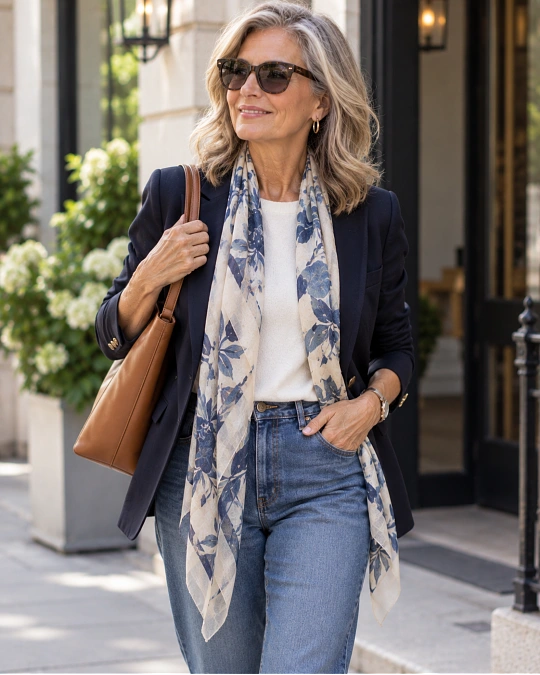
You do not need to learn a different scarf technique for every outfit. A simple formula can give you plenty of variety while keeping the styling process easy.
Formula: simple base + relaxed layer + softly draped scarf
For example, start with straight-leg jeans and a fine knit. Add a blazer and let a long silk scarf hang freely underneath the lapels. You can then change the jeans for trousers, replace the blazer with a cardigan, or swap the knit for a button-down shirt.
During warmer weather, try ankle-length trousers with a linen shirt and lightweight scarf. When temperatures drop, keep the same basic structure and switch to a fine wool scarf beneath a coat.
The scarf should support the outfit rather than become the only thing people notice. When the colors, proportions, and textures work together, even a very simple scarf arrangement can make an outfit look thoughtfully styled.
Frequently Asked Questions
How should women over 50 wear a scarf without looking dated?
Start by making the styling less rigid. Instead of wrapping the scarf tightly, try a loose drape, uneven ends, an open vertical fall, or a placement underneath your blazer lapels.
Pairing a scarf with relaxed modern basics can also change its overall appearance. Straight jeans, simple knits, wide-leg trousers, and uncomplicated jackets can keep the accessory feeling fresh.
What scarf style is most flattering with a round neckline?
A long scarf worn open can create a vertical line beneath a round neckline. If you prefer something smaller, a lightweight silk square can sit around the outside of the collar without creating too much volume.
Pay attention to scale as well. A very large scarf may overwhelm a small neckline, while a lightweight narrow scarf can provide detail without crowding the upper body.
Can you wear scarves with necklaces?
Yes. The easiest approach is to make sure the two accessories do not compete for exactly the same space.
A fine chain can work beautifully with a loose scarf, while a large statement necklace may look better when the scarf is moved farther away from the neckline or tied to a handbag.
How do you style a scarf with a blazer?
A long scarf can be placed underneath the blazer lapels and allowed to fall vertically. This keeps the shape of the jacket visible while adding color and texture underneath.
For a smaller silk scarf, try wearing it inside an open shirt collar beneath the blazer. Both options give you the decorative effect of a scarf without covering the jacket.
Are large scarves still stylish?
Large scarves can work very well when their fabric has enough softness and movement. Wear one as a shoulder wrap, drape it over a coat, or secure it lightly over a dress or fine knit.
If the scarf seems to overpower your clothing, try using a thinner material or leaving more of the outfit visible. The goal is to create balance rather than maximize the amount of fabric.