How to Wear Statement Jewelry Over 50 Without Going Overboard

Statement jewelry can completely change a simple outfit, but finding the right balance is what makes a bold accessory feel polished rather than overwhelming. A striking necklace, dramatic earrings, or substantial bracelet can look beautiful on its own yet feel very different once everything is worn together.
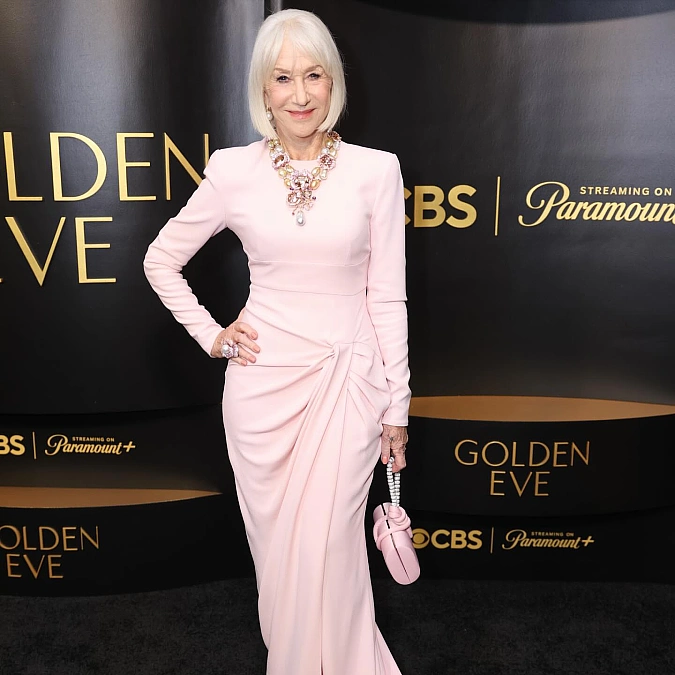
For women over 50, the goal does not have to be wearing smaller or more conservative jewelry. Instead, it is about giving your favorite statement piece enough space to stand out while keeping the rest of the outfit visually balanced.
The right combination of scale, color, neckline, clothing texture, and supporting accessories can make bold jewelry feel effortless. You can have plenty of personality in your look without every element competing for attention.
Let One Piece Be the Visual Leader

The simplest way to style statement jewelry is to decide which accessory should attract attention first. Once you have chosen that piece, let the rest of your jewelry play a supporting role.
For example, dramatic earrings can become the main feature while a necklace remains delicate. A wide cuff can make enough impact on its own without needing several other bracelets competing beside it.
This does not mean you have to wear only one piece of jewelry. Smaller, quieter accessories can actually make the statement piece look more intentional.
A bold pendant can work with tiny hoops and a simple watch. Large earrings can be paired with a fine necklace. The difference in scale creates visual hierarchy instead of making every accessory equally prominent.
Use this guide when deciding what should take center stage:
| If Your Statement Piece Is… | Keep These Quieter | Why It Works |
|---|---|---|
| Large chandelier earrings | Necklace and hair accessories | Keeps attention around the face without creating too much competition |
| Chunky necklace | Earrings and neckline details | Provides a cleaner background for the necklace |
| Wide cuff bracelet | Other bracelets and rings | Allows the wrist accessory to remain the focal point |
| Oversized cocktail ring | Bracelets on the same hand | Keeps attention on the ring instead of creating visual clutter |
| Layered bold necklaces | Earrings | Prevents excessive detail around the face and neckline |
The goal is not to make your outfit minimalist. It is to create a clear visual order. When one element leads and the others support it, even a dramatic accessory can feel sophisticated.
Pay Attention to the Space Around Your Jewelry

Bold jewelry usually looks better when there is enough visual space around it. This is especially noticeable with necklaces because the neckline becomes part of the overall frame.
A substantial necklace can look especially effective against a simple crew neck, scoop neck, open shirt collar, or uncomplicated V-neck. A cleaner neckline allows the jewelry’s shape to remain visible.
Detailed collars, ruffles, bows, lace, embroidery, and other decorative elements can compete with a large necklace. If you love a detailed blouse, consider making earrings or a bracelet the statement instead.
Fit note: Pay attention to where a necklace finishes. A pendant that sits naturally within an open neckline often looks more connected to the outfit than one that lands awkwardly across the edge of the fabric.
The same idea applies to jewelry scale. If delicate pieces disappear against your clothing or features, you may enjoy a larger design. If heavy jewelry feels uncomfortable, look for pieces with more visual size but lightweight construction.
There is no need to choose jewelry according to an age-based rule. The more useful question is whether the scale feels balanced with you and the clothing you are wearing.
Use Simple Clothes as the Best Backdrop

One of the easiest ways to wear statement jewelry is to pair it with wardrobe basics. Simple clothing gives an eye-catching accessory enough room to make an impact.
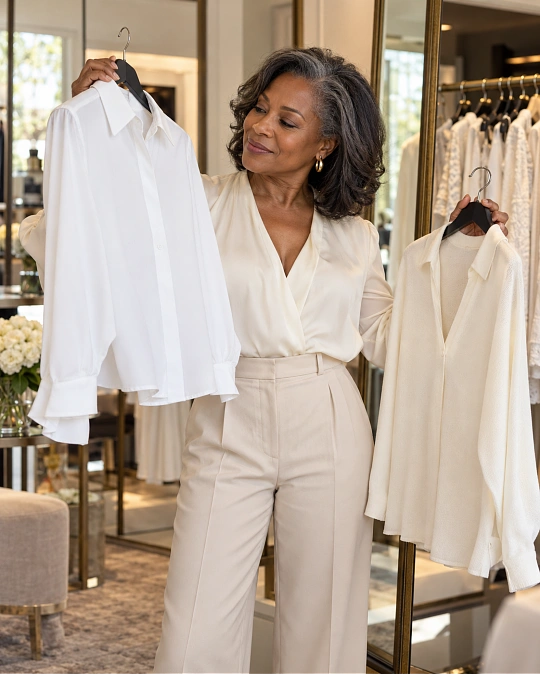
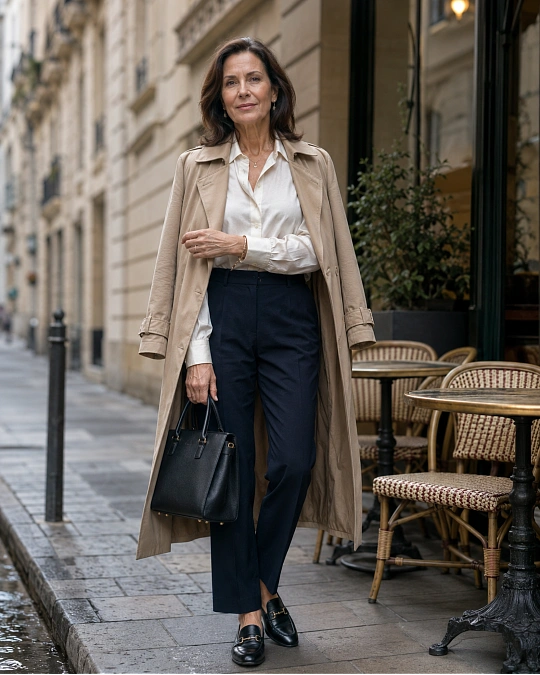
A white shirt, plain knit, dark dress, simple blazer, or straightforward pair of jeans can all become more interesting when you add one distinctive piece of jewelry.
The same black dress can feel completely different with sculptural gold earrings than it does with a colorful pendant. Likewise, jeans and a white shirt can become more polished with a substantial cuff or expressive earrings.
This makes statement jewelry particularly useful when you are building a practical capsule wardrobe. Instead of needing many different outfits, you can change the accessories to create a different mood.
Try these combinations as easy starting points:
- A crisp shirt + straight-leg jeans + large earrings
- A fine knit + tailored trousers + sculptural necklace
- A simple midi dress + cuff bracelet + small studs
- A blazer + plain T-shirt + pendant necklace
- A monochrome outfit + one colorful jewelry piece
Simple clothing does not have to look boring. A strong accessory can provide the personality while keeping the overall outfit easy to wear.
Match the Weight of the Jewelry to the Weight of the Outfit

Jewelry has visual weight, and so does clothing. A thick bracelet or substantial necklace naturally has more presence than a fine chain, just as a chunky sweater carries more visual weight than a lightweight blouse.
Looking at both together can help you decide which accessories will feel balanced. Heavier fabrics can often support bolder jewelry, while delicate clothing may benefit from statement pieces with a lighter appearance.
Use the following guide when you are unsure where to start:
| Clothing or Fabric | Jewelry Direction | Why |
|---|---|---|
| Fine knit or soft blouse | Medium-scale pendant or earrings | Adds interest without overwhelming the softer fabric |
| Crisp cotton shirt | Bold earrings or sculptural necklace | Clean structure provides a strong background for the accessory |
| Chunky sweater | Substantial earrings or cuff | More delicate pieces can disappear beside heavier texture |
| Tailored blazer | Graphic brooch, cuff, or geometric earrings | Sharp clothing lines pair naturally with defined shapes |
| Floaty dress | Organic shapes or lighter statement pieces | Maintains the softness and movement of the outfit |
You do not need to make every element match perfectly. Think about whether the jewelry feels like it belongs with the texture and structure of your clothing rather than appearing too small or excessively heavy.
Color Can Make Bold Jewelry Easier to Wear

Statement jewelry does not have to rely on bright colors. A piece can make an impact through its size, shape, texture, finish, or shine.
If colorful jewelry feels intimidating, begin with shades already found in your closet. Gold, silver, black, cream, brown, deep green, and warm amber can all provide visual interest while remaining relatively easy to coordinate.
Monochromatic outfits are especially useful when you want to experiment with a more noticeable accessory. Cream clothing can highlight warm metallics, navy can provide a strong background for turquoise, and black can make a rich red accessory stand out.
If your outfit already contains a print, consider choosing jewelry that picks up one of its existing colors. This creates a connection without adding another unrelated shade.
Color note: Your jewelry does not have to match your clothing exactly. Repeating a similar color temperature can often create a more relaxed result.
Warm shades such as rust, olive, brown, and cream can work beautifully with warm metals, while navy, charcoal, black, and cooler blues can provide a crisp backdrop for silver-toned pieces.
These are simply starting points. If you like the contrast of silver with warm clothing, there is no reason to avoid it.
Keep Prints and Statement Jewelry in Conversation

You do not have to avoid statement jewelry whenever you wear a print. The important thing is to consider how much visual activity both elements are creating.
A large, complicated print already gives the outfit plenty of movement. Pairing it with equally intricate jewelry can make the whole look feel crowded.
With a smaller or more repetitive print, however, a substantial necklace or pair of earrings may work beautifully.
If an outfit looks too busy when you see it in the mirror, change one element instead of starting over. Often, simplifying the jewelry is enough.
| Old Rule | A More Useful Approach |
|---|---|
| Never wear statement jewelry with prints | Use a simpler jewelry shape beside a busy print |
| Bold earrings mean no other jewelry | Add small, understated pieces that do not compete |
| Women over 50 should only wear delicate jewelry | Choose a scale that works with your features and clothing |
| All jewelry metals must match | Mix metals intentionally and repeat one of them elsewhere |
| Large jewelry is only appropriate for evening | Use a statement piece with simple daytime basics |
The goal is to create balance rather than follow a long list of restrictions. Your jewelry can be expressive while the rest of the outfit provides enough visual breathing room.
What Can Make Statement Jewelry Feel Like Too Much
An outfit can feel overloaded when several pieces are competing to be the main attraction. Fortunately, the solution is often a small adjustment rather than removing statement jewelry altogether.
- Several oversized pieces together: Keep your favorite statement item and reduce the scale of the other accessories.
- A detailed neckline with a chunky necklace: Move the statement to your earrings, cuff, or ring instead.
- Bold jewelry with a very busy print: Choose a cleaner jewelry silhouette or repeat one color from the print.
- Too many shiny elements: Balance glossy jewelry with matte fabrics such as cotton, denim, linen blends, or soft knits.
Comfort should also be part of your decision. Earrings that become painful or necklaces that require constant adjustment will probably stay in your jewelry box no matter how beautiful they are.
Comfort upgrade: If you like the appearance of large jewelry but not the weight, look for lightweight materials such as resin, wood, hollow metal, or fabric-covered designs.
A Simple Statement Jewelry Formula to Keep

When you are unsure whether your outfit needs more accessories or fewer, use a simple three-part formula.
Formula: simple base + one strong jewelry piece + one quiet supporting accessory
For example, try dark trousers with a cream knit, sculptural earrings, and a slim watch. The clothing creates a simple foundation, the earrings provide personality, and the watch adds a subtle finishing detail.
Another option could be straight-leg jeans, a white shirt, a bold pendant, and small studs. The same principle works even when you change the colors and clothing styles.
This approach makes statement jewelry easier to incorporate into everyday dressing. Once you know which combinations feel balanced, you can repeat the formula with different pieces throughout the week.
Frequently Asked Questions
Can women over 50 wear large statement earrings?
Yes. Large earrings can be an effective way to add personality to a simple outfit. If the earrings have substantial size, keeping the neckline and other jewelry relatively quiet can help maintain balance.
Should statement jewelry match my outfit?
It does not need to match exactly. Look for connections through color, metal, texture, or overall style instead. Repeating one shade from your clothing can be enough to make a bold accessory feel connected to the outfit.
Can I wear a statement necklace with glasses?
Yes. Glasses add another detail around the face, so consider the total amount of visual activity in that area. If your frames are bold, a statement necklace with a simpler silhouette may create a more balanced result.
How do I wear statement jewelry casually?
Pair it with uncomplicated everyday clothing. Large hoops with jeans and a knit, a substantial cuff with a white shirt, or a bold pendant over a simple T-shirt can add polish without making the outfit feel formal.
Is it okay to mix gold and silver jewelry?
Yes. Gold and silver can be worn together when the combination looks intentional. Repeating both metals elsewhere through a watch, ring, bracelet, or mixed-metal piece can help connect the different finishes.