How to Choose the Right Handbag When You Are Over 50
Choosing a handbag is about more than finding something attractive enough to carry your essentials. The right bag should also work with the proportions of your outfit, feel comfortable throughout the day, and fit naturally into the way you actually live.
For women over 50, there is no need to follow a separate set of handbag rules. Instead, focus on practical details such as scale, shape, strap placement, weight, color, and structure.
A well-chosen handbag can make everyday clothing feel more finished without making the outfit look overly coordinated. The key is finding a style that complements both your wardrobe and your routine.
The Best Handbag Is the One That Supports Your Outfit
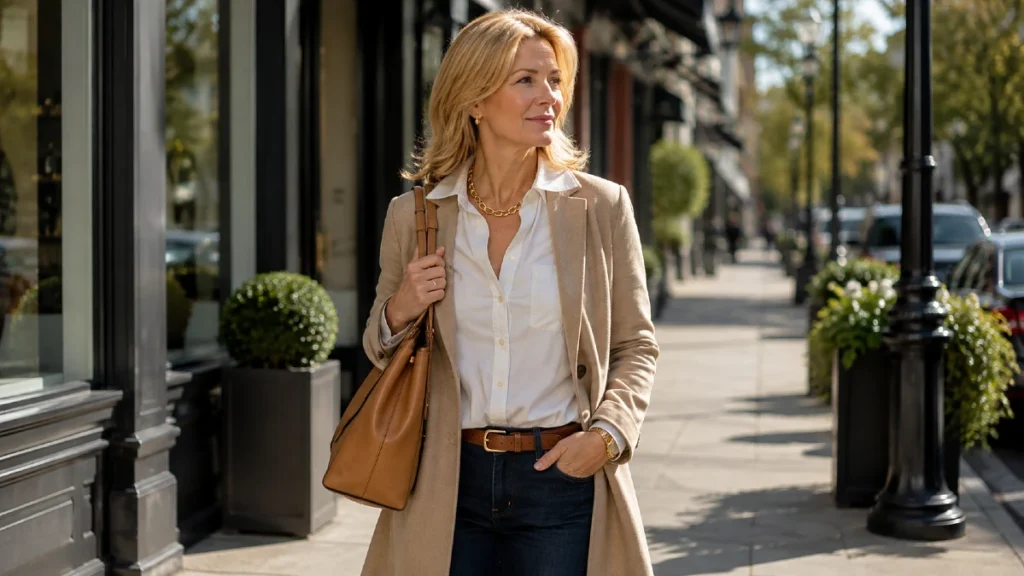
Your handbag is one of the larger accessories in an outfit, so its presence can change the overall balance of what you are wearing. Shape, size, and where the bag sits on your body all contribute to the finished look.
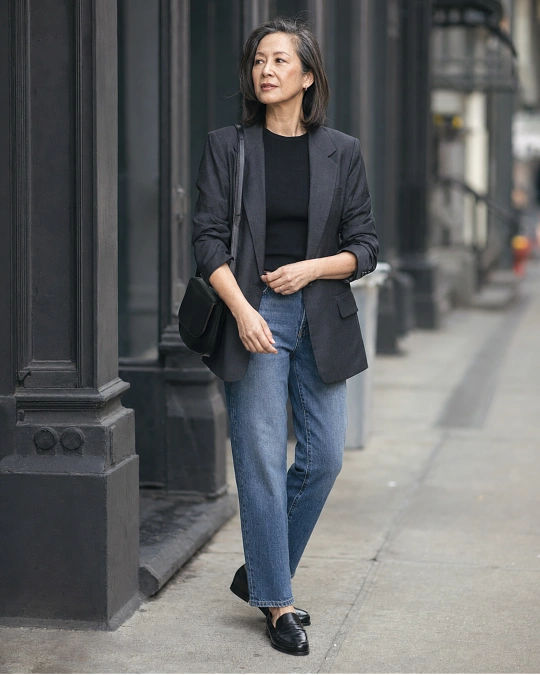
A relaxed tote can reinforce a casual outfit, while a structured shoulder bag can bring definition to softer clothing. A compact crossbody, meanwhile, keeps the silhouette lighter and works particularly well when you want to stay hands-free.
There is no single handbag shape that works for every woman. Think about the clothing you wear most often and choose a bag that complements its level of structure.
For example, flowing clothing can benefit from a bag with a little definition. On the other hand, an outfit built around tailored pieces may look more relaxed when paired with a softer leather or fabric handbag.
Try this: Put on your complete outfit and then add the handbag. If your eyes immediately go to the bag instead of the outfit, consider whether its size, color, or decorative details are taking too much attention.
Get the Size and Proportion Right First
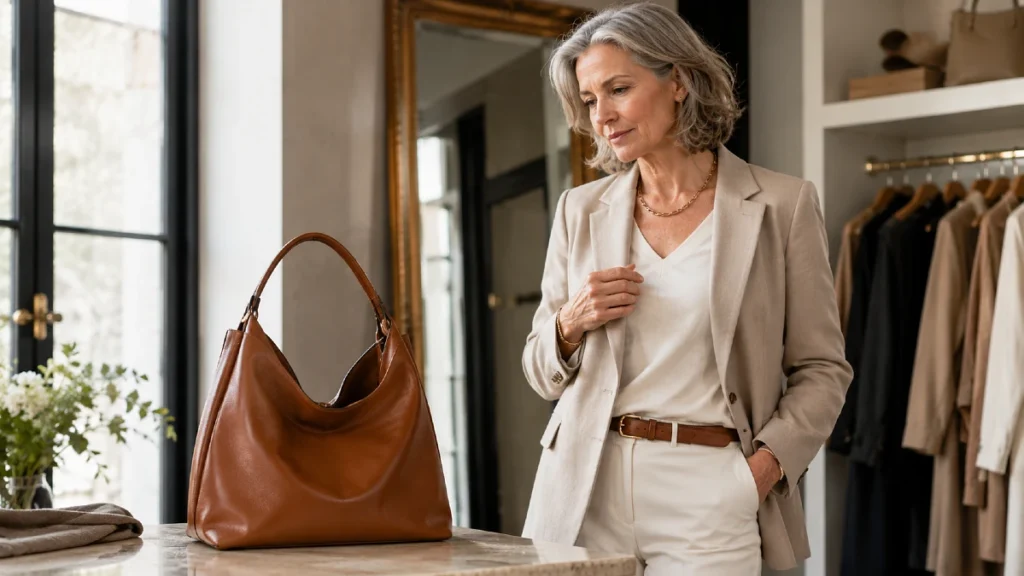
Handbag size should not be dictated by outdated ideas about body shape or age. A better approach is to consider the volume of your clothing, the size of the accessories you already wear, and what you need to carry.
A very small bag may disappear beside a substantial coat, while a huge tote can feel visually heavy when worn with delicate knitwear and slim trousers.
Instead of asking which size you are “supposed” to carry, look at the entire outfit. The handbag should feel like a natural part of the overall proportion.
| Bag Style | What to Look For | Why It Works |
|---|---|---|
| Small crossbody | Neat shape, adjustable strap, enough space for essentials | Keeps casual and lightweight outfits feeling uncluttered |
| Medium shoulder bag | Some definition without being overly rigid, comfortable strap | Easy to wear with a wide range of everyday clothing |
| Structured top-handle | Moderate size, restrained hardware, optional shoulder strap | Adds definition to softer outfits |
| Soft tote | Flexible material, reliable closure, sturdy handles | Useful for errands, travel, and layered looks |
| Medium hobo bag | Controlled softness rather than excessive volume | Brings ease to tailored or streamlined outfits |
A medium handbag is often a useful place to start because it can move between casual and polished outfits. The same general size can work with denim, trousers, dresses, and seasonal outerwear.
Fit note: Notice where your handbag rests against your body. The end of a shoulder or crossbody strap can create a visual stopping point, so changing the strap length can noticeably improve the proportions of an outfit.
Strap Length and Weight Matter More Than They Seem
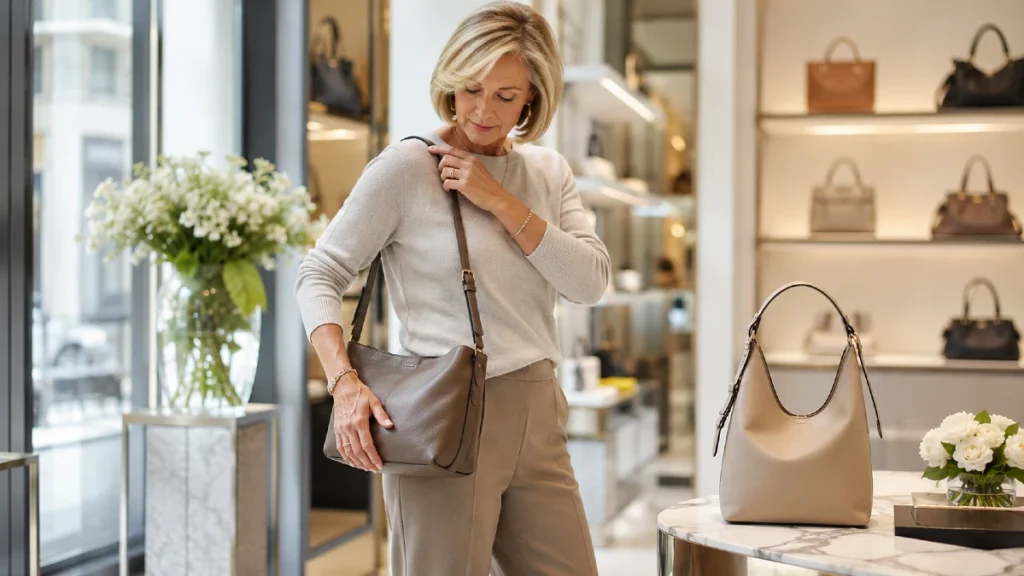
A handbag can look beautiful but still be frustrating if the strap constantly slips, digs into your shoulder, or leaves you struggling to reach the contents. Comfort should be considered before you buy, not after you have committed to the bag.
If you prefer shoulder bags, make sure the strap leaves enough room when you are wearing a jacket or coat. A strap that feels perfect over a thin top may become restrictive once you add winter layers.
Crossbody styles are particularly practical for travel, shopping, walking, and busy days because they leave your hands available. An adjustable strap is especially useful because you can position the bag where it feels most comfortable.
Do not overlook the weight of the handbag itself. Heavy chains, oversized buckles, thick hardware, and dense materials can add considerable weight before you have placed anything inside.
Comfort upgrade: If possible, test a handbag with the items you normally carry. Add your phone, wallet, keys, glasses, cosmetics, and other daily essentials before deciding whether the weight and strap feel right.
You can absolutely choose a stylish handbag without sacrificing comfort. Lighter construction, practical hardware, and wider straps can make a significant difference.
Choose Materials and Colors That Work With Your Real Wardrobe
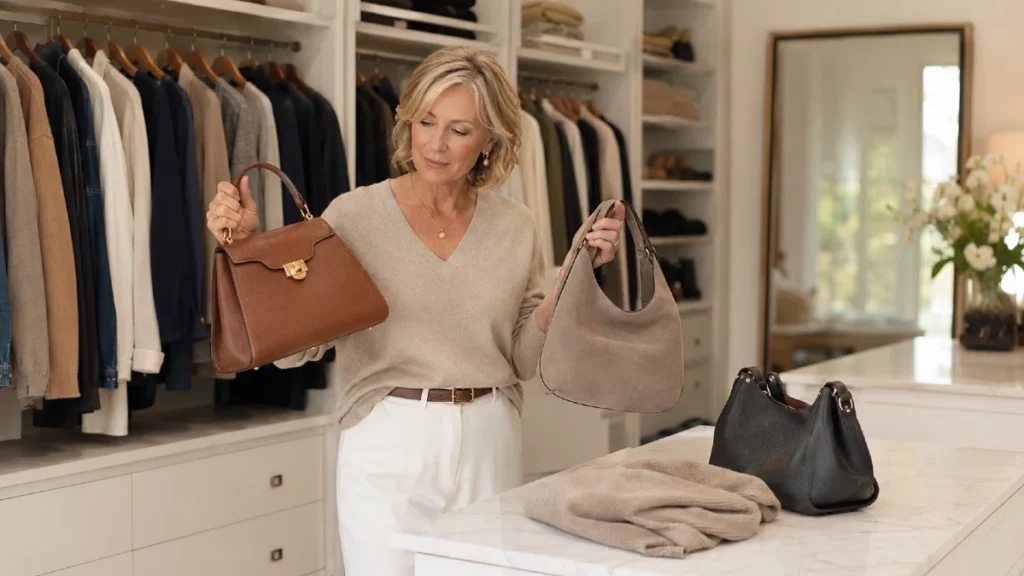
Black is a classic handbag color, but that does not automatically make it the most useful option for every wardrobe. Your best everyday color is the one that connects easily with the clothes and shoes you already own.
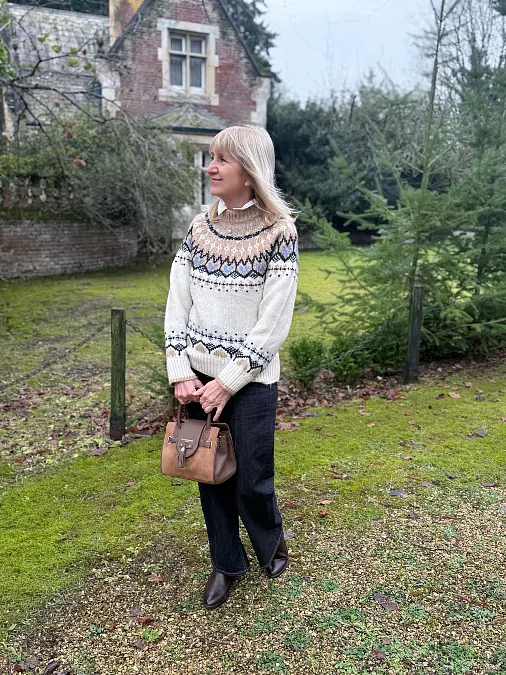
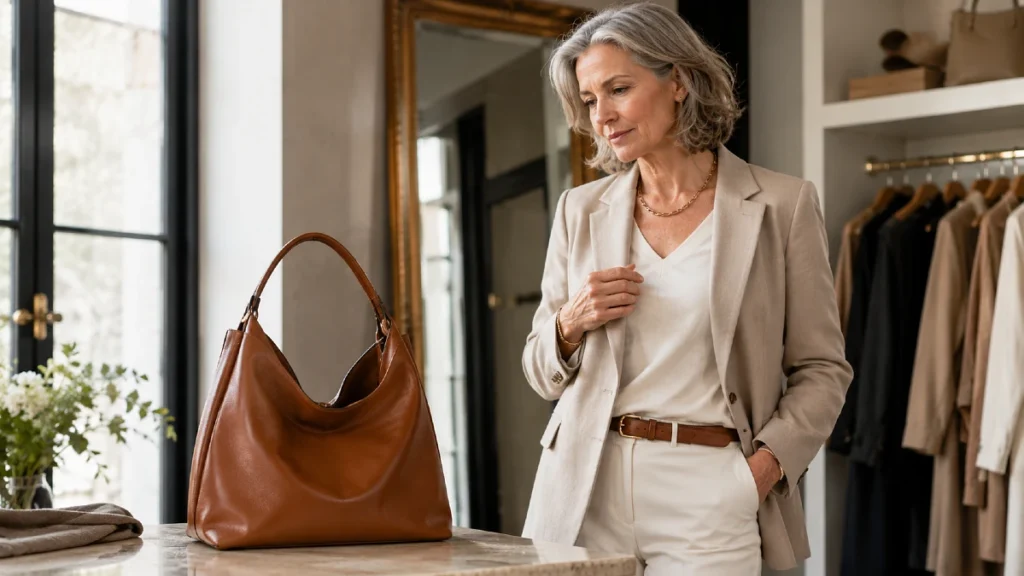
If your closet features plenty of denim, navy, cream, camel, olive, and gray, a cognac or rich brown handbag may blend beautifully into your existing outfits. If you mostly wear black, charcoal, white, burgundy, and cooler shades, black or taupe may be easier to use.
Thinking this way can turn a handbag into a practical part of a capsule wardrobe over 50 rather than an accessory that looks attractive in the store but rarely gets used.
Material matters too. Leather can provide structure and durability, suede adds softness and texture, while nylon and coated materials can be convenient when you need something lighter or more weather-resistant.
You also do not need to use exactly the same material throughout the year. Changing textures with the seasons can refresh familiar outfits without requiring an entirely new wardrobe.
| Base Bag | Warmer-Weather Swap | Cooler-Weather Swap |
|---|---|---|
| Black leather shoulder bag | Cream or tan leather | Burgundy or chocolate leather |
| Structured tote | Light canvas or woven tote | Soft dark leather tote |
| Small crossbody | Muted beige or another soft neutral | Deep brown, navy, or oxblood |
| Neutral handbag | Raffia or another lightweight texture | Suede or pebbled leather |
Color note: Your handbag does not have to match your shoes exactly. Repeating a related color family often creates a more natural outfit than trying to make every accessory identical.
For instance, cognac footwear can be paired with a brown handbag, while black shoes can work beautifully with a burgundy bag if another dark or burgundy element appears elsewhere in the outfit.
Let Your Lifestyle Decide How Structured the Bag Should Be
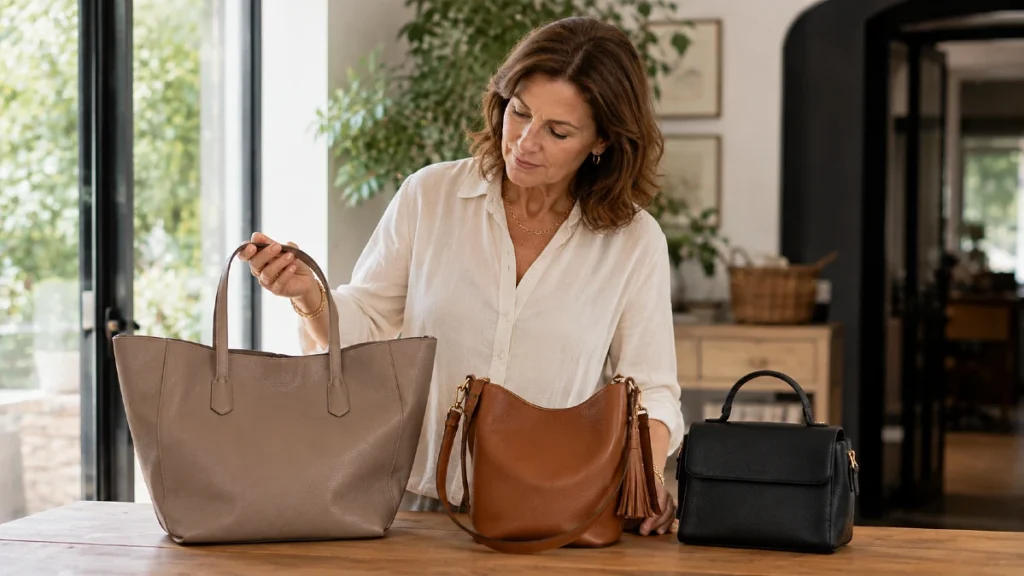
A handbag needs to work in real life, not simply look attractive when sitting on a shelf. The best shape for you will depend heavily on how and where you use it.
For everyday errands, coffee dates, lunches, or casual afternoons, a medium shoulder bag or crossbody can provide enough room without feeling cumbersome. An easy-to-access opening and useful interior pockets can make everyday use much simpler.
Work and appointments may call for a little more structure. A clean tote, top-handle design, or streamlined shoulder bag can complement blazers, trousers, dresses, and polished knitwear.
Travel has different requirements. Secure closures, comfortable straps, lighter construction, and useful compartments may be more important than maintaining a perfectly rigid silhouette.
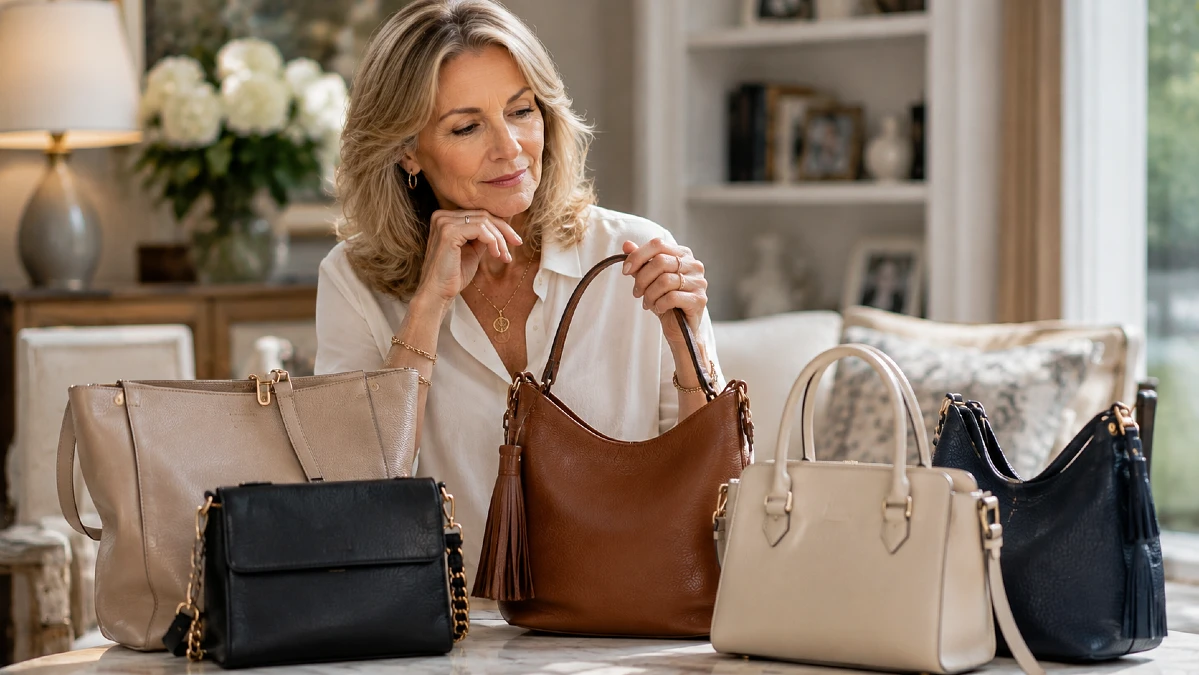
There is no reason one handbag has to solve every situation. Having a small selection of bags designed for different parts of your life can actually make getting dressed easier.
A few well-chosen options are often more useful than a large collection of handbags that all perform the same job.
An Easy Three-Bag Handbag Wardrobe
You can cover many everyday situations with three basic categories:
- A medium everyday shoulder or crossbody bag in a versatile neutral
- A larger tote for travel, shopping, and days when you need extra space
- A smaller polished handbag for dinners, celebrations, and dressier occasions
This approach also helps you get more use from each purchase. Rather than choosing bags simply because they look interesting on their own, each handbag has a clear purpose in your wardrobe.
Details Can Make a Handbag Feel Current or Dated
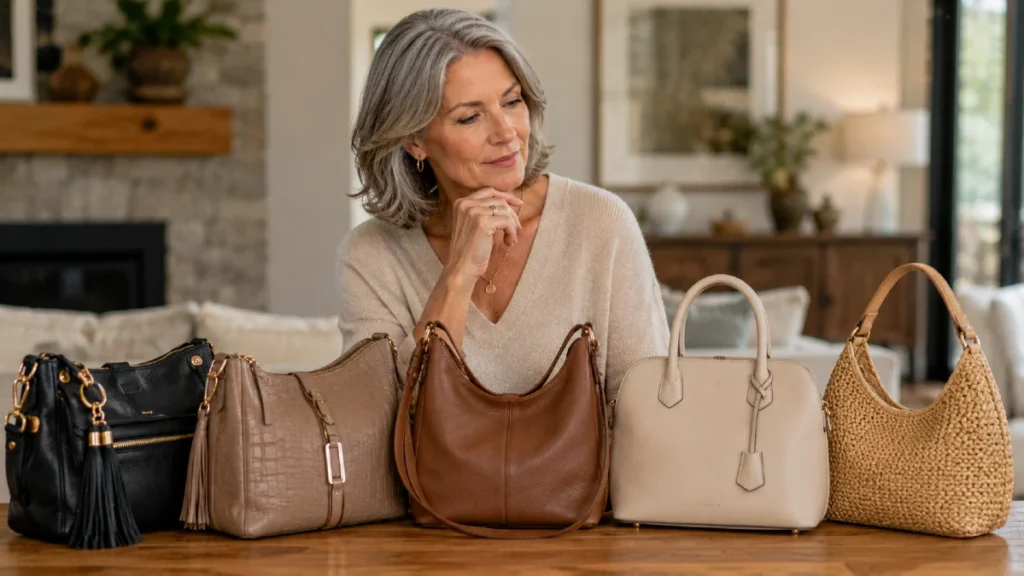
You do not need to follow every handbag trend to create a contemporary outfit. Often, the smallest design details have more impact than whether a bag belongs to the latest trend cycle.
Excessive hardware, huge logos, numerous decorative zippers, oversized tassels, or complicated color combinations can cause a handbag to become the main focus of a simple outfit. If that is your personal style, there is nothing wrong with making the bag the statement piece.
More streamlined designs, however, tend to be easier to combine with stylish outfits for women over 50. They leave space for jewelry, scarves, interesting shoes, prints, and different clothing textures.
A classic handbag does not have to be stiff or overly formal, either. Rounded silhouettes, softer leather, wider straps, woven finishes, and controlled slouch can give a familiar style a more relaxed feel.
Here are a few common handbag problems and simple ways to adjust them:
| If This Bothers You | Try This Instead |
|---|---|
| The handbag looks bulky beside your outfit | Try a medium-sized bag with a simpler profile |
| The crossbody sits awkwardly across your clothing | Adjust the strap until the bag rests at a more natural point |
| The handbag makes casual clothing look too formal | Choose softer leather or a relaxed shoulder silhouette |
| A neutral handbag leaves the outfit looking flat | Introduce texture through suede, woven material, or understated hardware |
| The bag becomes uncomfortable after wearing it for a while | Look for lighter construction and a wider, more comfortable strap |
These adjustments do not require you to change your personal style. Sometimes a small change in size, texture, strap placement, or structure is all an outfit needs.
A Simple Handbag Formula to Keep
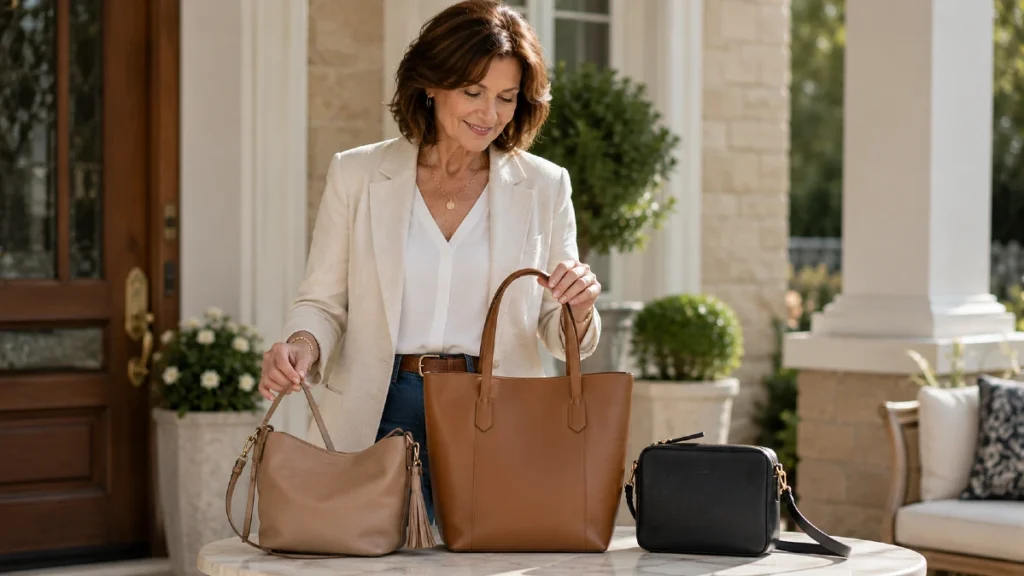
When you are standing in front of your closet unsure which handbag to use, start by considering how polished or relaxed the rest of your outfit looks.
Formula: simple clothing + one defined handbag + comfortable shoes
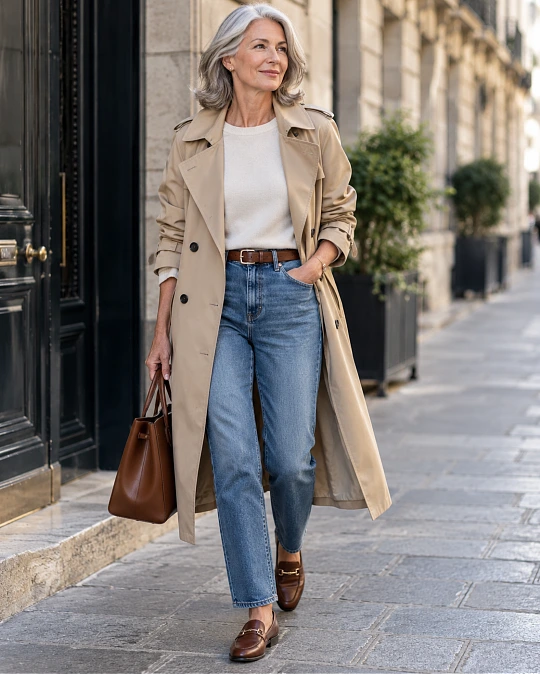
For a casual example, pair straight-leg jeans with a fine-knit sweater, a medium leather shoulder bag, and loafers. The handbag adds enough definition to keep the relaxed clothing looking intentional.
For a slightly dressier combination, try tailored trousers with a soft blouse or knit, a medium structured handbag, and flats or low heels. The colors and materials can change while the basic balance stays the same.
This kind of personal formula can make dressing over 50 much simpler. Once you understand the proportions and combinations that feel right to you, you can build outfits without starting from scratch every morning.
Frequently Asked Questions
What handbag color goes with the most outfits?
Black is highly versatile, but it is not necessarily the most useful neutral for every wardrobe. Brown, cognac, taupe, navy, cream, and burgundy can all work extremely well depending on the colors you wear most.
Take a look at your most frequently worn shoes, coats, trousers, and jackets. The handbag color that naturally connects with several of those pieces is likely to give you the most use.
Should women over 50 carry large or small handbags?
Both sizes can work. The better choice depends on your clothing proportions, how much you need to carry, and how comfortable the handbag feels throughout the day.
A medium handbag can be particularly versatile because it transitions easily between casual outfits, tailored clothing, dresses, and outerwear.
Are crossbody bags stylish for women over 50?
Yes. A well-proportioned crossbody can be both practical and polished, making it a useful option for everyday dressing.
Adjustable straps, quality-looking materials, and a moderate size can make a crossbody easier to incorporate into casual and smart-casual outfits.
Does a handbag need to match your shoes?
No. Your handbag and shoes can coordinate without being exact matches.
A cognac handbag can complement tan, cream, brown, or navy footwear, for example. Repeating similar tones throughout an outfit often creates a cohesive effect without making everything look overly matched.
How many handbags do you really need?
There is no universal number. For many wardrobes, three useful categories can provide plenty of variety: an everyday handbag, a larger tote, and a smaller polished option.
If you already own a larger collection, pay attention to the bags you reach for repeatedly. Those choices can tell you a lot about the sizes, shapes, colors, and strap styles that genuinely fit your lifestyle.
Conclusion
Choosing a handbag after 50 does not have to involve complicated age-based fashion rules. Start with what works for your clothing, your proportions, your comfort, and the way you spend your days.
The right combination of size, strap length, weight, color, material, and structure can make a simple outfit feel complete without making it look overdone.