A wardrobe can be packed with clothes and still make getting dressed feel harder than it should. Some pieces stop feeling comfortable, others no longer fit the way you want, and trend-driven purchases can quickly become things you rarely reach for.
For women over 50, building a useful wardrobe is less about buying more and more about choosing pieces that work with your current lifestyle. The best wardrobe essentials for women over 50 should feel comfortable, coordinate easily, and make everyday dressing simpler.
You do not need to replace your entire closet or dress in neutral colors from head to toe. A practical wardrobe can include color, personality, relaxed pieces, polished staples, and current trends.
The goal is simple: have enough reliable pieces that getting dressed does not become a daily puzzle.
A True Closet Essential Has to Earn Its Hanger
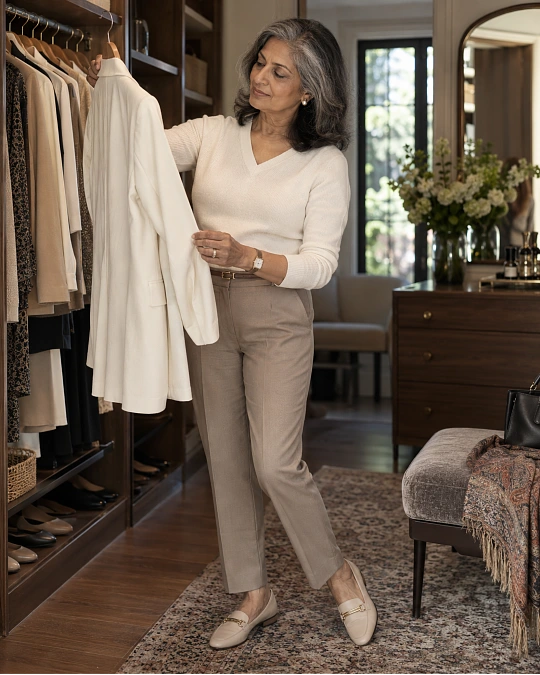
Image credit: Sagely Chic. Use only if you have permission to reuse this image.
A closet essential should earn its place through actual wear. It should be comfortable, easy to combine with other clothing, and useful for the kinds of days you regularly have.
Something can look beautiful on the hanger without being particularly practical. If it only works with one specific outfit or requires constant adjusting, it may not be as valuable as it first appears.
The strongest wardrobe essentials for women over 50 generally have several things going for them: they fit well now, they can be styled in different ways, and they match the owner’s everyday routine.
Your wardrobe should reflect your life. Someone who works from home may need more polished casual pieces, while someone with frequent office meetings may need more tailoring. Travel, climate, hobbies, walking habits, and social activities should all influence what you buy.
Use this simple framework before adding another item to your closet.
| Closet Essential | What to Look For | It Should Mix Easily With |
|---|---|---|
| Everyday top | Comfortable neckline, good shoulder placement, and fabric that keeps its shape | Jeans, trousers, skirts, jackets |
| Dark or medium-wash jeans | A comfortable waist and hip fit with a clean leg shape | Knits, shirts, blazers, sneakers |
| Polished trousers | A comfortable rise with fabric that drapes without clinging | Tees, sweaters, blouses, loafers |
| Useful jacket | Enough room to layer comfortably underneath | Dresses, denim, trousers, skirts |
| Simple dress | An easy shoulder and waist fit with a practical neckline | Flats, boots, sandals, jackets |
| Walking-friendly shoes | Secure fit, supportive sole, and a color that works with your wardrobe | Most everyday outfits |
The individual items can vary from person to person. What matters is that each piece has a clear purpose.
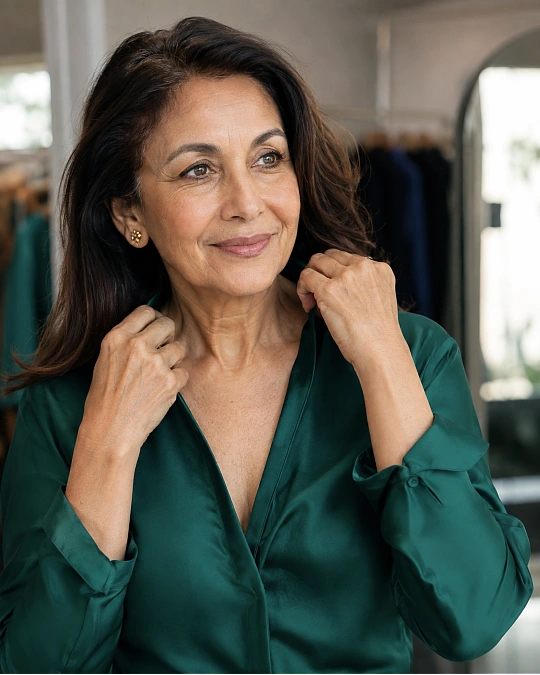
Your Best Tops Should Frame the Face Without Constant Adjusting
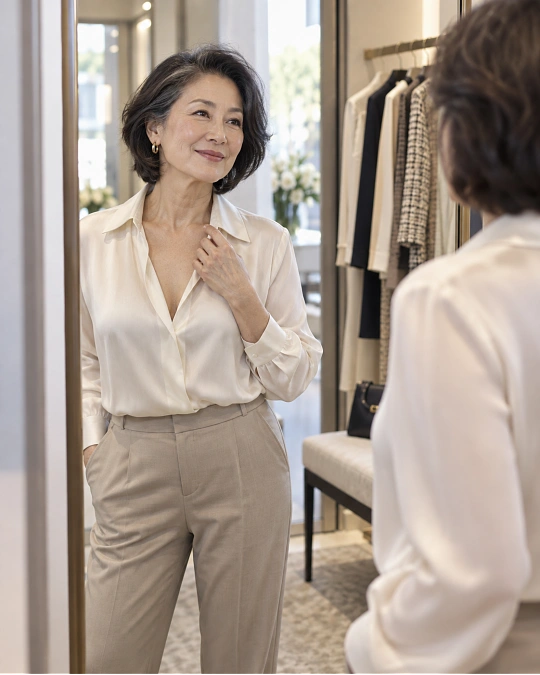
Image credit: Sagely Chic. Use only if you have permission to reuse this image.
Your everyday tops should make getting dressed easier, not create another list of things to fix throughout the day.
Look for necklines that feel comfortable and give the face some visual space. Depending on your personal preference, that could mean a crew neck, open collar, soft V-neck, scoop neckline, or boat neck.
Proportion also makes a difference. A relaxed top can look balanced with straighter or slimmer trousers, while a cleaner fitted top can work nicely with a fuller pair of pants or skirt.
Pay attention to fabric as well. Cotton blends, fine knits, linen blends, modal, poplin, and fabrics with a modest amount of stretch can all be useful depending on the season and the amount of structure you prefer.
A classic button-front shirt does not have to be bright white. Ivory, light blue, navy, muted pink, olive, and subtle stripes can be just as versatile.
Fit note: Check the shoulders first when trying on a shirt or knit. When the shoulder area sits correctly, the rest of the garment often looks more intentional even when the overall fit is relaxed.
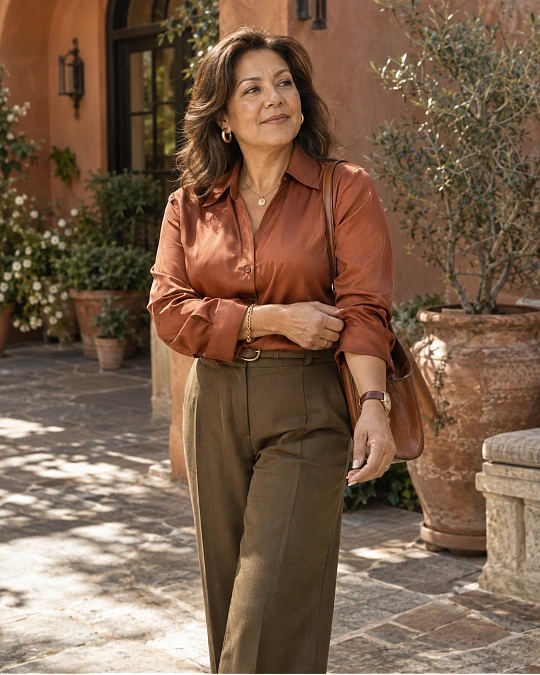
Jeans and Trousers Should Follow Your Shape Instead of Fighting It
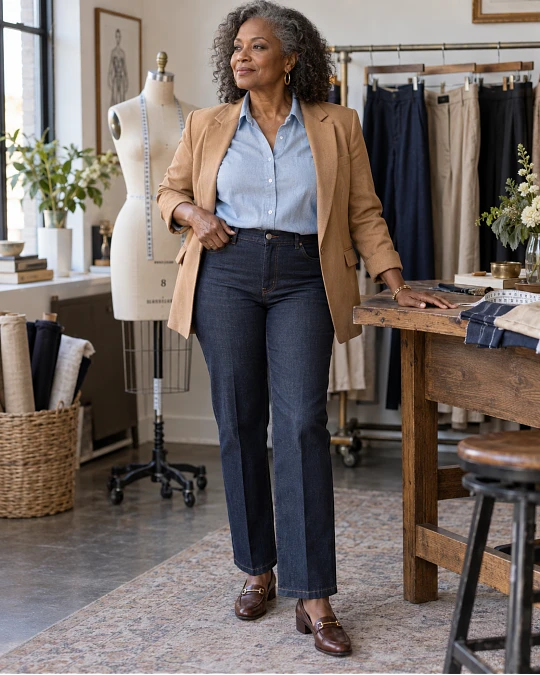
Image credit: Sagely Chic. Use only if you have permission to reuse this image.
The right bottoms can completely change how easy the rest of your wardrobe feels.
Many women find a top they love and then struggle to find trousers that feel right through the waist, hips, thighs, or hem. Instead of focusing only on the size label, pay attention to the rise, fabric, stretch, and overall leg shape.
Straight-leg denim remains a flexible option because it works with many different tops and shoes. Wider legs can also be very wearable when the waistband fits securely and the fabric falls naturally.
For dressier outfits, choose trousers that skim the body rather than cling tightly. Depending on your shape and preferred style, a flat front or soft pleat can both create a polished result.
Think of the following as a starting point rather than strict rules.
| Bottom or Fabric | What to Look For and Why |
|---|---|
| Straight-leg denim | Enough room through the knee for a smooth, comfortable leg line |
| Wide-leg trousers | Fluid fabric combined with a waistband that gives the silhouette definition |
| Stretch denim | Enough recovery to move comfortably without becoming overly loose |
| Ponte trousers | Medium-weight fabric that provides structure while remaining comfortable |
| Linen-blend trousers | A little added structure if you prefer less wrinkling than pure linen |
Do more than stand in front of a fitting-room mirror. Sit down, walk around, bend your knees, and check how the waistband feels from different positions.
Clothing should remain comfortable while you move through your day, not just look good for thirty seconds while standing still.
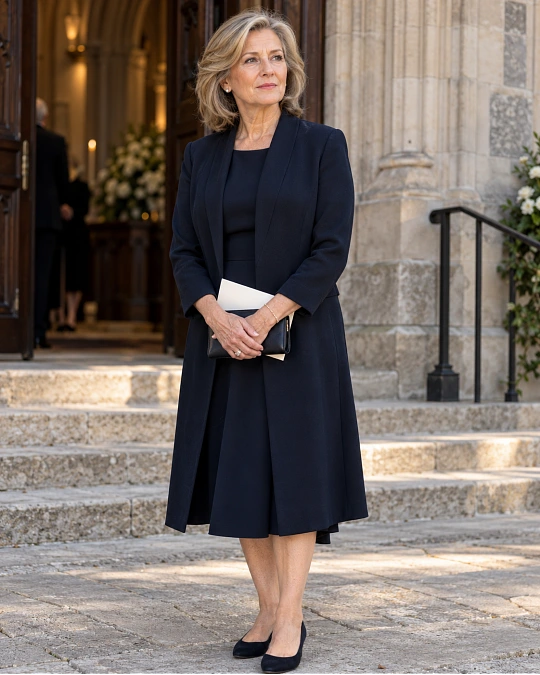
The Right Jacket Can Make a Basic Outfit Look Finished
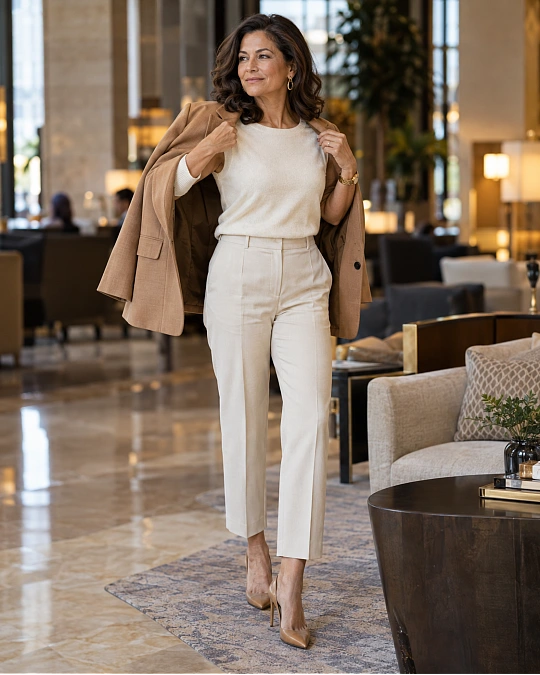
Image credit: Sagely Chic. Use only if you have permission to reuse this image.
A useful third layer can turn an ordinary combination into an outfit that feels complete.
Blazers, cardigans, denim jackets, utility jackets, and lightweight trenches can all add shape and dimension. They can also make simple jeans and a top feel much more intentional.
There is no need to collect every jacket style available. A small selection that suits your lifestyle will usually provide more value than a crowded rail of pieces you rarely wear.
- A softly tailored blazer can dress up jeans, trousers, dresses, and simple tops.
- A neat cardigan is useful when you want warmth without a structured jacket.
- A denim or utility jacket can make dresses and tailored trousers feel more relaxed.
- A lightweight trench or longer coat is practical for changing temperatures and transitional seasons.
Length is another detail worth considering. A shorter jacket can create definition with wide-leg trousers or fuller skirts, while a longer jacket can create a streamlined vertical effect with straighter silhouettes.
Comfort upgrade: If traditional blazers feel too restrictive, try softer tailoring, stretch fabrics, or unlined construction. You can still get the polished effect without sacrificing movement.
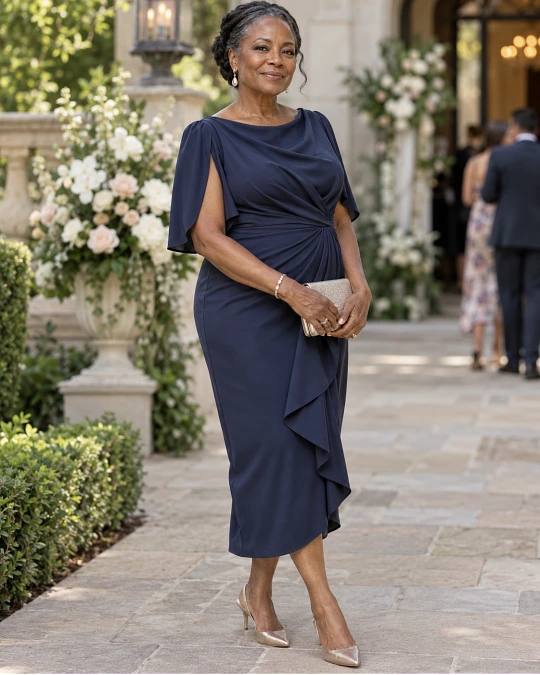
Keep at Least One Dress and Skirt That Require Very Little Styling
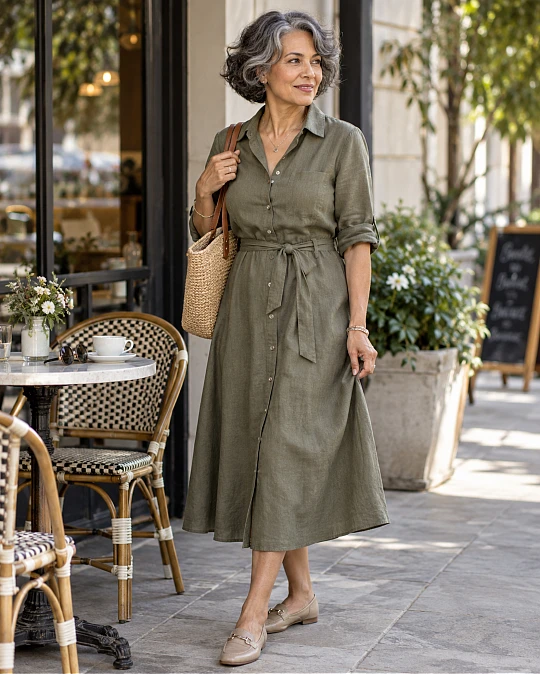
Image credit: Sagely Chic. Use only if you have permission to reuse this image.
A good dress can solve half of an outfit in seconds. That makes it especially useful on days when you want to look put together without spending much time deciding what goes together.
Choose something you can realistically wear rather than keeping it untouched for a future occasion. A versatile dress might work for lunch, dinner, family gatherings, travel, work, or an ordinary day out depending on how you accessorize it.
Shirt dresses, simple midi dresses, soft knit styles, and easy A-line silhouettes can all be worth considering. Prioritize movement, comfort, and a neckline that works with the undergarments you normally wear.
Skirts can provide the same flexibility. A straight midi, fluid A-line, or softly pleated style can turn a basic sweater or T-shirt into an entirely different outfit.
If skirts never seem quite right, look at the shoes before deciding that the skirt itself is the problem.
A midi skirt can sometimes feel visually heavy when paired with a very bulky shoe. A streamlined sneaker, loafer, pointed flat, ankle boot, or refined sandal can alter the proportions considerably.
Shoe swap: To make a dress feel more casual, try clean sneakers and a denim jacket. For a more polished appearance, switch to loafers or a low block heel and add a structured layer.
Comfortable Shoes Still Need to Work With Your Hemlines
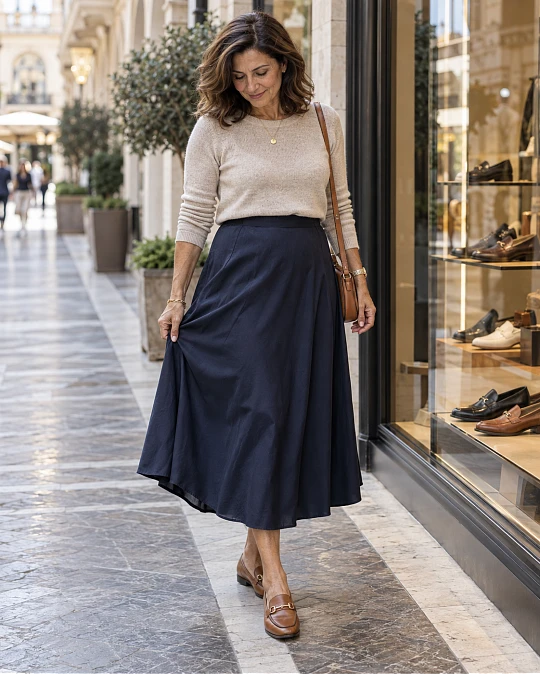
Image credit: Sagely Chic. Use only if you have permission to reuse this image.
The shoes you choose can determine whether an outfit actually gets worn.
A beautiful pair that slips, pinches, hurts, or feels unstable on uneven surfaces may spend most of its life sitting in the closet.
A practical wardrobe usually benefits from a mixture of casual, polished, and seasonal footwear rather than several pairs that perform exactly the same job.
Clean sneakers can cover travel, errands, casual lunches, and everyday outfits. Loafers and polished flats provide a smarter option without requiring a high heel.
Ankle boots can work across jeans, trousers, skirts, and dresses when the weather turns cooler. In warmer months, a refined flat sandal or low wedge may provide more useful mileage.
Do not assume black is automatically your most versatile shoe color.
Depending on the colors already in your closet, tan, taupe, cream, chocolate brown, navy, burgundy, or metallic finishes may coordinate just as easily.
The aim is not to buy footwear for every individual outfit. It is to have enough useful shapes that your favorite clothes can be worn comfortably throughout the week.
Small Finishing Pieces Keep Basics From Feeling Boring
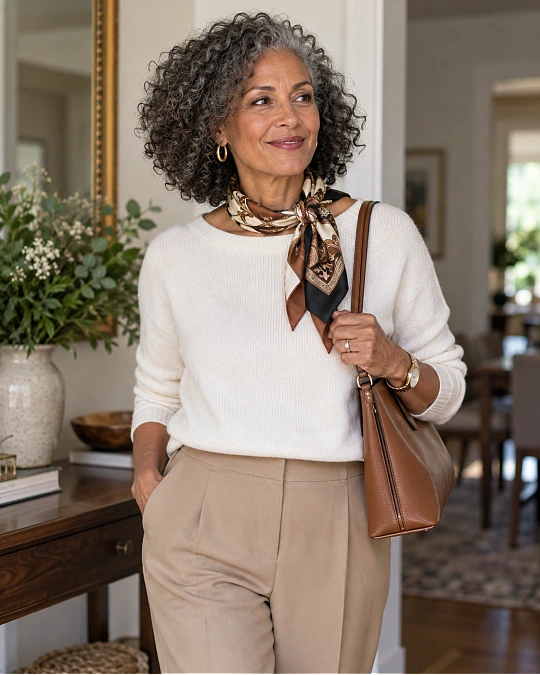
Image credit: Sagely Chic. Use only if you have permission to reuse this image.
A simple outfit can have plenty of personality. Accessories are one of the easiest ways to change the feel of familiar clothing without filling your closet with more garments.
Try finishing pieces such as scarves, belts, necklaces, watches, earrings, structured handbags, or distinctive shoes.
The most useful accessories are the ones that match your personality. If you prefer understated outfits, an interesting pair of earrings or a quality handbag may be enough. If you enjoy color, a bright scarf or colorful shoe can become the focal point.
Belts can also help define the waist or visually break up a longer silhouette, but they are optional. Wear one when it improves the outfit rather than treating it as a mandatory finishing step.
Jewelry works similarly. One noticeable piece can sometimes have more impact than several accessories competing for attention.
Color note: If individual pieces in your wardrobe feel disconnected, repeat one or two accent colors through accessories. Matching a handbag, scarf, shoe, or jewelry tone can make separate outfits feel more cohesive.
Build Your Closet Around Three Outfit Formulas You Can Repeat
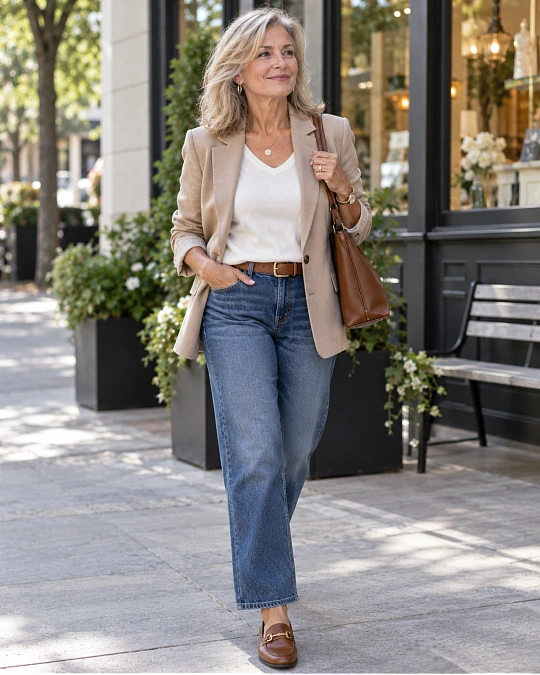
Image credit: Sagely Chic. Use only if you have permission to reuse this image.
A capsule wardrobe over 50 does not have to mean owning a tiny collection of neutral clothes.
The more useful idea is to identify combinations that consistently work for your lifestyle. Once you know those formulas, shopping becomes easier because you can identify what your existing wardrobe is missing.
Look at the outfits you already wear repeatedly. They can tell you more about your personal style than a collection of saved fashion photos.
You may naturally prefer straight jeans with a knit and jacket, wide trousers with a simple top, or dresses with comfortable shoes. Those preferences can become the foundation of your wardrobe.
Here are a few examples of how basic pieces can cover different types of days.
| Occasion | Easy Outfit Formula | Why It Works |
|---|---|---|
| Errands or travel | Straight jeans + knit top + utility jacket + sneakers | Easy to move in while providing useful layers |
| Lunch with friends | Fluid trousers + soft blouse + loafers + earrings | Comfortable pieces with enough structure for a polished finish |
| Smart casual event | Midi dress + blazer + low heel or refined flat | A simple base can be dressed up through the outer layer and shoes |
| Everyday polished | Dark jeans + fine knit + blazer + ankle boots | Familiar wardrobe basics gain a more finished appearance |
Start with the combination you already reach for most often.
Then identify what is preventing that outfit from working perfectly. Perhaps your jeans are uncomfortable, your jackets do not layer well, or your shoes are too casual for certain occasions.
That weak point is often a better place to spend your next clothing budget than buying another completely different outfit.
When new purchases have several existing pieces they can work with, they naturally get more wear. That can make your wardrobe feel more versatile without constantly making it bigger.
Frequently Asked Questions
How many clothes should a woman over 50 have?
There is no universal number that works for every woman. The right wardrobe size depends on your work, climate, social calendar, hobbies, travel, laundry routine, and personal preferences.
The goal is to have enough clothing for your actual life while keeping your most useful pieces visible and easy to combine.
What clothes make a woman over 50 look more polished?
Fit and proportion usually have a bigger effect than simply choosing more formal clothing.
Clean trouser hems, properly placed shoulders, well-maintained shoes, balanced proportions, and one structured element can make straightforward clothing look intentional.
That structured element might be a blazer, crisp shirt, tailored jacket, defined handbag, or another piece that gives the outfit some shape.
Should women over 50 stop wearing certain trends?
There is no universal list of trends that women must avoid because of age.
A more useful question is whether a trend fits your personal style, comfort level, lifestyle, and existing wardrobe. If a trend feels too much on its own, try incorporating one current element with familiar pieces you already enjoy wearing.
What colors should women over 50 keep in their closets?
Start with neutrals that you genuinely enjoy wearing rather than assuming black has to be the foundation of everything.
Navy, cream, camel, chocolate, olive, gray, denim blue, and soft white can all serve as useful bases. From there, add colors that you particularly enjoy near your face or throughout your outfits.
How do I know what clothing is worth spending more on?
Consider spending more selectively on pieces that you expect to wear frequently and where better fabric, construction, or fit makes a noticeable difference.
Shoes, jackets, trousers, outerwear, and an everyday bag can be worth prioritizing when they fit your lifestyle and will receive regular use.
The most expensive item is not automatically the most valuable. A reasonably priced piece that you wear several times a month can provide more practical value than an expensive garment that rarely leaves the closet.