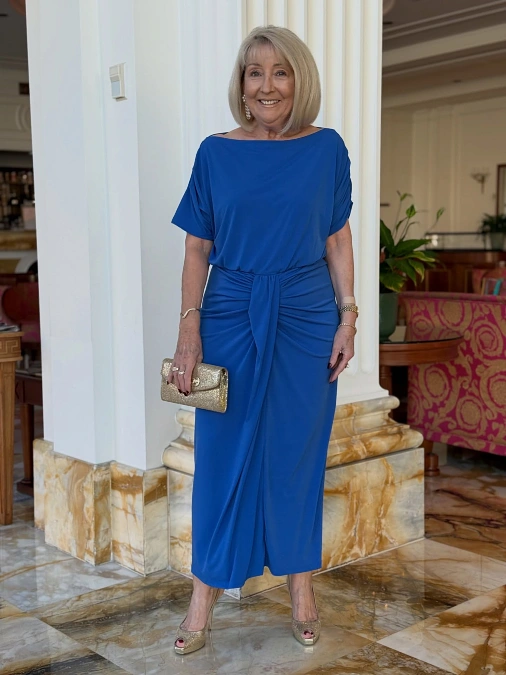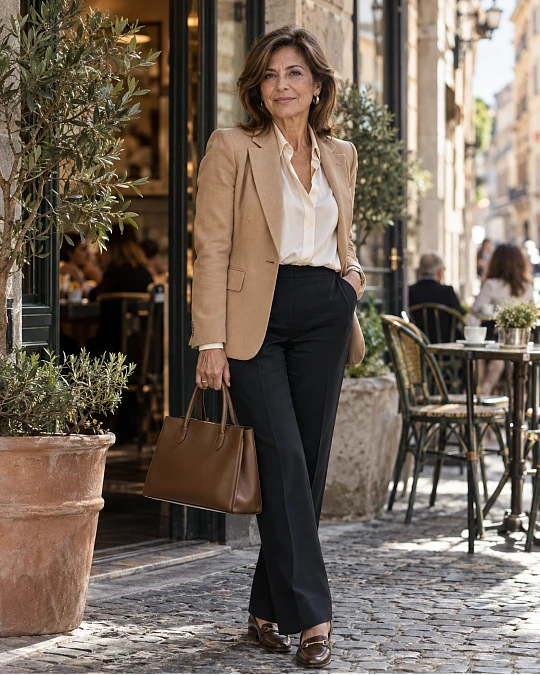
How to Dress Italian Style Over 50 (For Real Life, Not Just Vacation)
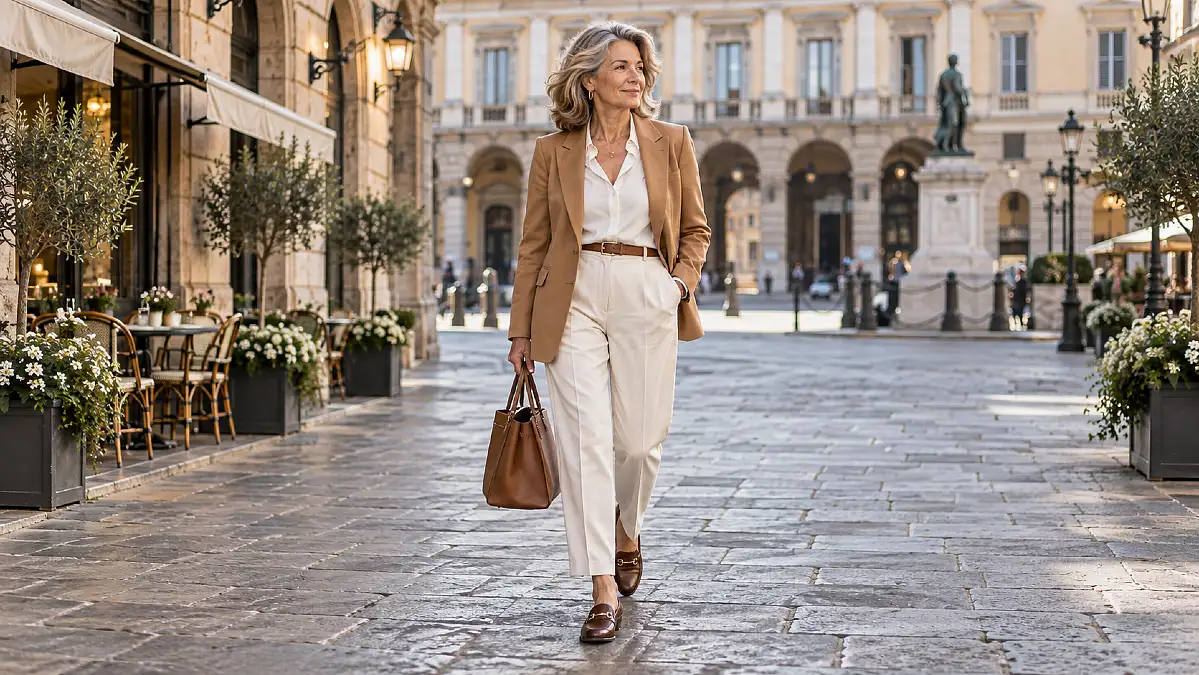
Italian-inspired fashion can look effortless when you see it in street-style photos, but recreating that feeling for everyday life takes a little more thought. A beautiful linen dress on vacation is easy. Getting dressed for work, errands, lunch, or a busy weekday is different.
For women over 50, Italian style does not have to mean buying an entirely new wardrobe. The most useful ideas are actually quite practical: relaxed tailoring, beautiful-looking basics, thoughtful color combinations, comfortable shoes, and accessories that add polish without taking over.
The goal is not to dress like a character from a fashion magazine. It is to take the elements that make Italian-inspired outfits feel confident and adapt them to your own lifestyle, comfort, and personality.
Italian Style Over 50 Starts With Restraint, Not More Clothes
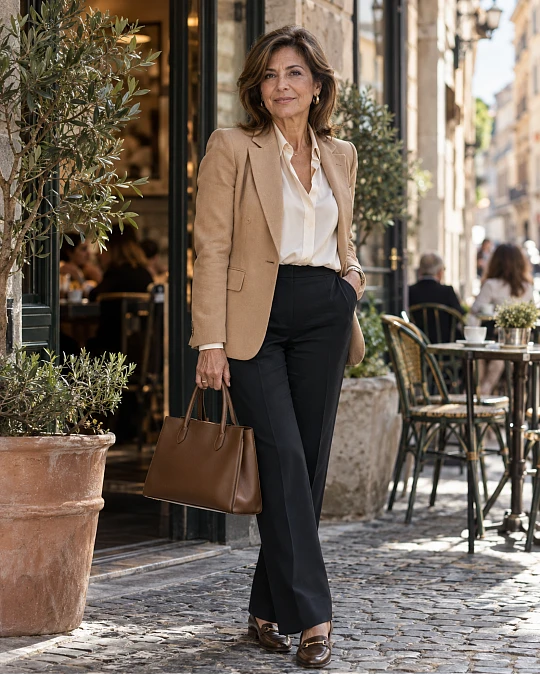
Italian-inspired dressing often includes classic pieces such as tailored trousers, leather accessories, loafers, elegant coats, and simple knitwear. But the real appeal comes from how calmly those pieces are combined.
Rather than making every item the star, choose one element to attract attention and let the rest support it.
A pair of straight trousers, dark jeans, a crisp shirt, a simple sweater, a blazer, or a midi dress can all become part of this style. What changes the overall effect is the way you put those pieces together.
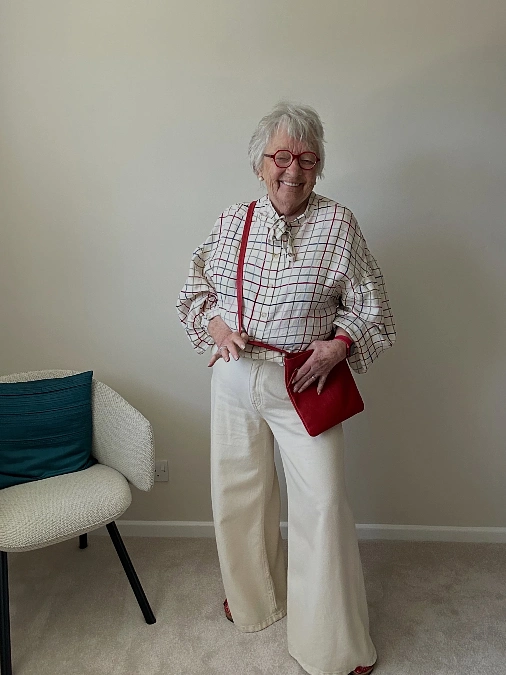
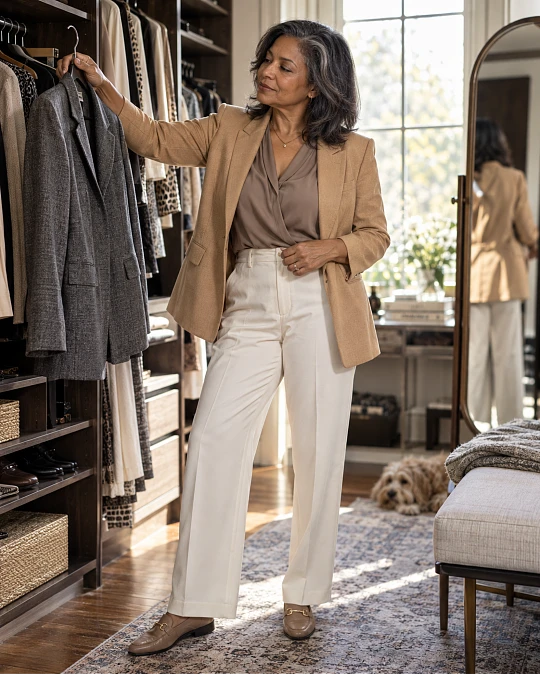
For example, a rich camel jacket can become the focal point of an otherwise simple outfit. You could also let red flats, sculptural earrings, or a beautiful handbag provide the visual interest.
There is no need to add several statement pieces at once.
This approach is especially useful when creating stylish outfits for women over 50 because it allows relatively simple clothes to look intentional. Good proportions and thoughtful styling often matter more than having a large wardrobe.
Try this: Before heading out, look at your entire outfit in the mirror. If several pieces are competing for attention, simplify one of them.
Relaxed Tailoring Makes Everyday Clothes Look More Intentional
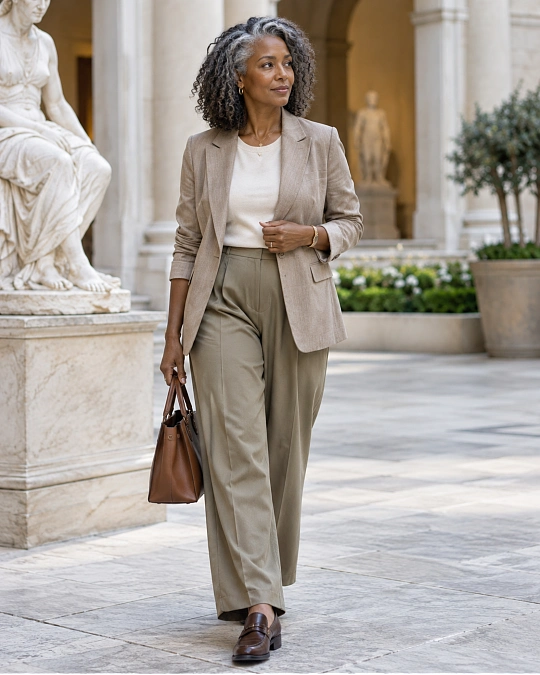
Italian-inspired style does not depend on squeezing the body into tightly fitted clothing. Shape can come from the cut of the garment, the way fabric falls, and the relationship between different pieces.
A relaxed blazer can give jeans and a basic knit a more finished appearance. Fluid trousers can look equally polished while allowing plenty of room to move.
When choosing trousers, pay attention to the waistband, hip area, rise, and leg shape. Straight, gently tapered, and relaxed wide-leg styles can all work when their proportions suit the rest of your outfit.
Jackets benefit from some structure too. A lightly defined shoulder can give a simple top more presence without making the outfit feel formal or stiff.
| Piece or Fabric | What to Look For |
|---|---|
| Straight trousers | A smooth fall from the hip without pulling, twisting, or excessive bunching |
| Relaxed blazer | Light structure through the shoulder with enough space for comfortable layering |
| Fine knit | Soft fabric that follows the body without clinging tightly |
| Cotton poplin shirt | Enough substance to hold its shape while remaining comfortable |
| Linen blend | Natural-looking texture with enough structure for everyday wear |
Fit note: If an outfit looks slightly untidy, check the shoulders, sleeve length, and trouser hem before deciding that the entire outfit needs replacing. A small adjustment can change the way a garment looks.
Use Proportion Instead of Trying to Make Everything Slim
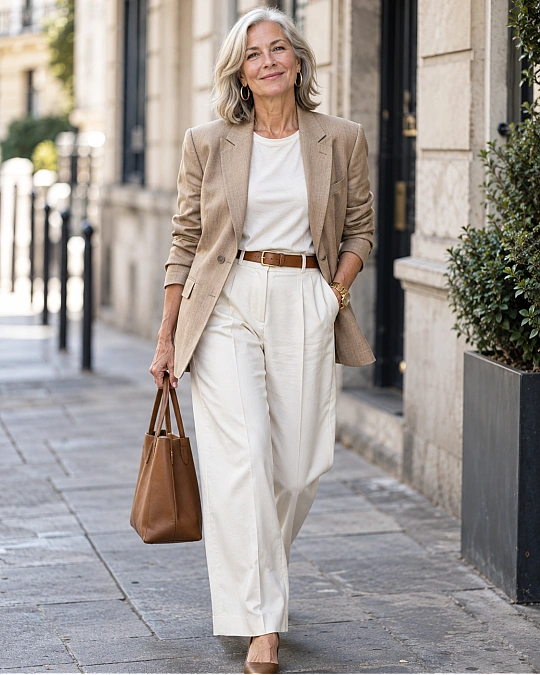
One of the easiest ways to make an outfit feel more sophisticated is to balance volume rather than trying to make every piece narrow.
A relaxed shirt can work beautifully with straight trousers. Wide-leg pants can look elegant with a tucked blouse or a shorter sweater.
When both halves of an outfit are loose, create a small point of definition. A visible waistband, pushed-up sleeves, an open jacket, or a more streamlined shoe can give the outfit some structure.
Try these combinations:
- Wide-leg trousers: Pair them with a tucked shirt, shorter knit, or more defined jacket.
- Oversized button-down: Balance the volume with straighter trousers or jeans.
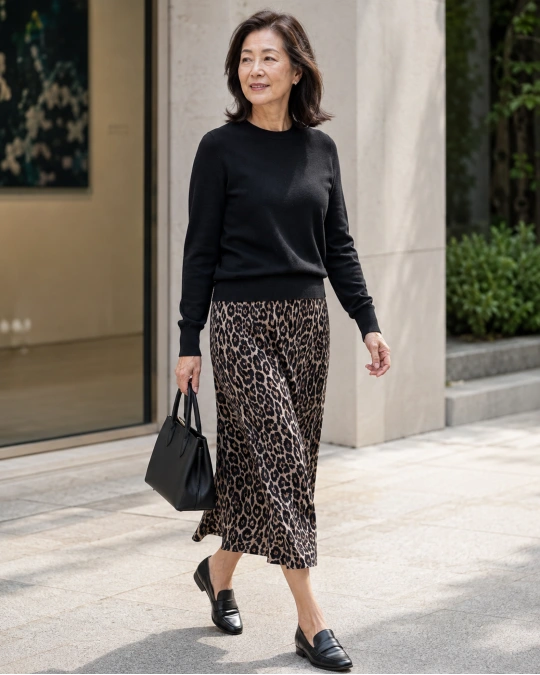
- Long midi skirt: Try a top that finishes closer to the waist rather than at the widest point of the hips.
- Relaxed blazer: Keep the underneath layers relatively simple so the jacket remains the main structural piece.
These are styling ideas rather than restrictions. You can wear loose, oversized, or relaxed clothes without losing elegance.
The purpose is simply to create a relationship between the pieces so the outfit feels considered rather than accidentally oversized.
Comfort upgrade: A partial tuck, open jacket, or rolled sleeve can introduce shape without requiring restrictive clothing.
Natural Fabrics and Rich Neutrals Make Simple Clothes Feel Better
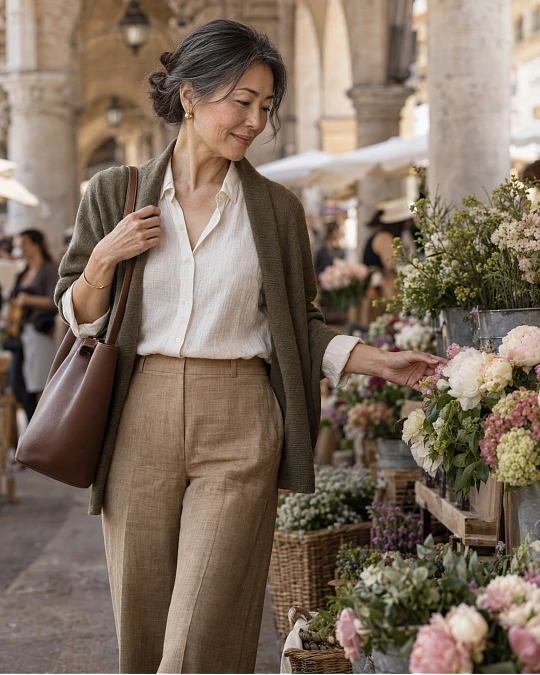
A sophisticated Italian-inspired wardrobe does not have to be built entirely around beige. What matters more is having colors that combine easily and fabrics that bring some visual texture to simple outfits.
Cream, navy, camel, chocolate brown, charcoal, olive, black, warm white, and classic denim are useful starting points.
Once those shades are working together, introduce a stronger color where you enjoy wearing it. Burgundy shoes, a red cardigan, a rich green jacket, or a blue sweater can add personality without changing the entire wardrobe.
Fabric is just as important as color. Cotton, linen blends, wool blends, denim, soft leather, silk, and substantial knits can give even straightforward outfits more depth.
You do not need the most expensive version of each material. A well-cut cotton shirt that you wear constantly can be more valuable to your wardrobe than a costly blouse that rarely leaves the closet.
Think about versatility when buying wardrobe essentials over 50. A navy blazer that works with jeans, trousers, and dresses earns its place. The same is true of a cream knit that can be worn beneath jackets or styled on its own.
Let Shoes, Bags, and Jewelry Finish the Outfit Quietly
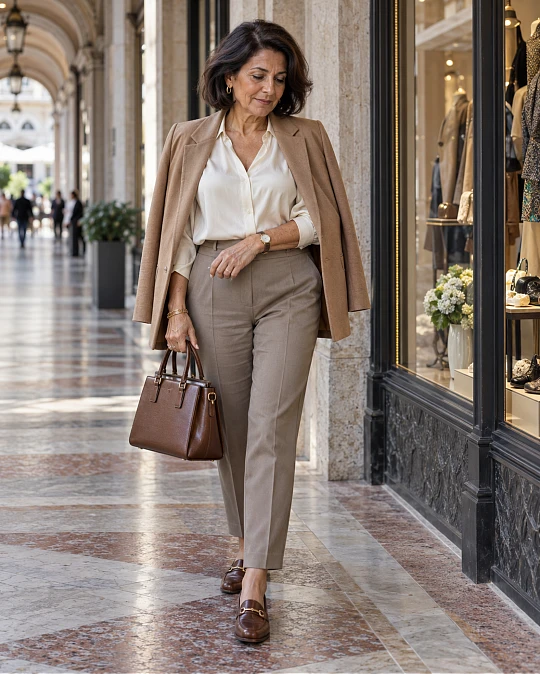
Accessories can give an everyday outfit that final touch, but restraint is useful here too.
You do not need to wear every classic accessory associated with Italian fashion at the same time. A scarf, statement earrings, dramatic sunglasses, bold shoes, and a structured bag can quickly become too much when combined.
Instead, choose one or two details that make sense with what you are wearing.
A slim belt can define jeans or trousers. Loafers can sharpen a casual outfit without making it formal. A simple pair of earrings can add interest around the face without competing with your clothing.
Shoes are particularly useful because changing them can alter the entire mood of an outfit.
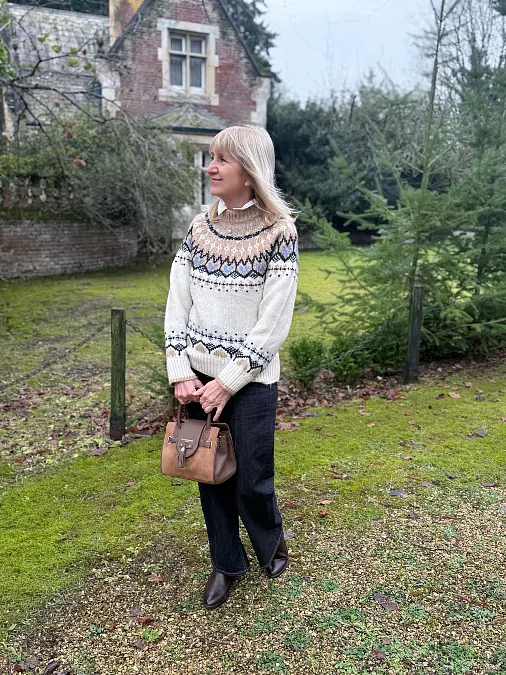
Dark jeans with streamlined sneakers create a relaxed look. Switch to loafers and the same jeans become more polished. A simple flat or low block heel can take the outfit toward dinner without requiring a complete change.
Your handbag does not need to perfectly match your shoes. A coordinated level of polish is usually enough. Choose a bag that suits what you actually carry and the way you live.
Skip the Old Rules That Make Italian Style Feel Like a Costume
The aim is not to recreate a head-to-toe Milan street-style photograph. Your clothes should make sense for your weather, schedule, comfort, and personality.
Some traditional fashion rules can actually make Italian-inspired dressing feel less natural. A more flexible approach makes the aesthetic much easier to wear in real life.
| Old Rule | A More Practical Approach |
|---|---|
| Italian style must revolve around black | Use the neutrals you genuinely enjoy, such as navy, cream, brown, olive, or charcoal |
| You need designer clothing | Pay attention first to fit, fabric, condition, and versatility |
| Every outfit should look dressed up | Combine one polished piece with casual staples, such as a blazer and jeans |
| Elegance requires fitted clothes | Create definition through tailoring, proportion, and thoughtful styling |
| Accessories should be dramatic | Let one bag, shoe, scarf, or jewelry piece provide the main accent |
If silk scarves do not feel natural to you, there is no reason to force yourself to wear them. The same goes for loafers, heels, or any other traditional style staple.
Choose comfortable flats if they work better for you. Wear streamlined sneakers when you need to walk. If beige makes you look washed out, choose navy, burgundy, olive, chocolate, or another shade that feels better near your face.
The Italian-inspired approach should give you more options, not create another list of rules.
Build Italian-Inspired Outfits Around One Strong Base
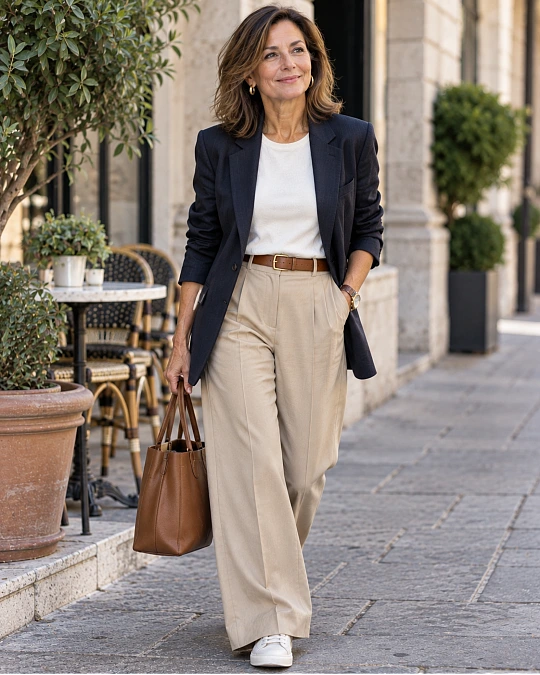
A personal outfit formula can make Italian-inspired dressing much easier to use every day.
Start with two or three pieces that already suit your lifestyle. From there, change the jacket, shoes, bag, or color depending on the occasion.
One useful combination is:
Straight trousers + fine knit + relaxed blazer
The trousers create a clean foundation, the knit keeps things comfortable, and the blazer adds structure. Loafers can make the outfit polished, while sneakers or flats can make it more casual.
Here are a few other combinations to keep in your rotation:
| Occasion | Outfit Formula | Why It Works |
|---|---|---|
| Errands or coffee | Straight jeans + fine knit + loafers | Everyday pieces feel more finished with a polished shoe |
| Lunch with friends | Fluid trousers + tucked shirt + leather flats | Relaxed volume is balanced by gentle waist definition |
| Casual workday | Dark trousers + knit top + relaxed blazer | Structured enough for work while remaining comfortable |
| Weekend dinner | Midi skirt + simple knit + ankle boots | A clean silhouette with enough texture for a dressed-up feel |
The benefit of these formulas is that you can repeat them without looking exactly the same.
Change navy for cream, loafers for sneakers, or a blazer for a shorter jacket. Add a scarf when the weather calls for it or switch to a lighter layer in warmer months.
That is the foundation of a practical capsule wardrobe over 50: pieces that cooperate with each other instead of requiring a completely new combination every time you get dressed.
Make the Italian Look Feel Like Your Style, Not Someone Else’s
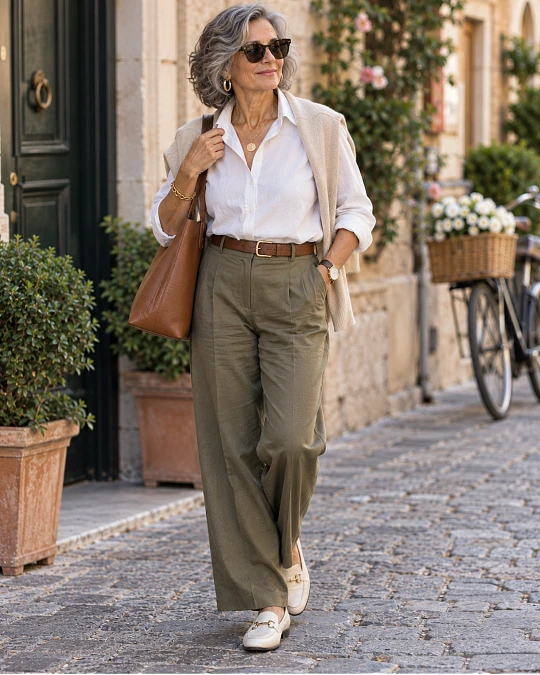
The best Italian-inspired wardrobe is one that still feels unmistakably like you.
If you love relaxed trousers but never wear blazers, try a structured cardigan instead. If trainers are more comfortable than loafers, build your outfits around clean sneakers.
The same applies to jewelry and color. You may prefer silver rather than gold, bold colors rather than neutrals, or simple accessories rather than classic leather pieces.
Keep those preferences. An aesthetic should provide inspiration, not require you to abandon the clothes you actually enjoy.
Instead, look at the Italian approach as a collection of useful styling ideas.
Maybe your wardrobe would benefit from better-tailored trousers. Perhaps your outfits need fewer competing prints. You might discover that a simple belt and neatly rolled sleeves make your existing clothes feel more polished.
Those small adjustments can be much more valuable than replacing your entire wardrobe.
Frequently Asked Questions
What does Italian style mean for women over 50?
Italian-inspired style is less about a particular age and more about the way clothing is put together. Relaxed tailoring, useful basics, balanced proportions, thoughtful colors, and a few well-chosen accessories are common elements.
You can apply those ideas to jeans, dresses, trousers, knitwear, skirts, and comfortable shoes you already own.
Do I need expensive clothes to dress Italian style?
No. Expensive clothing is not a requirement for creating an Italian-inspired wardrobe.
Start with fit, proportion, fabric, and condition. Well-maintained basics that work together can provide a strong foundation without requiring a designer-heavy shopping list.
What colors work best for an Italian-inspired wardrobe?
Black, navy, cream, camel, brown, charcoal, olive, and denim are versatile starting points because they can be combined in many different ways.
You can then bring in colors such as burgundy, red, forest green, cobalt, rust, or any shade that you particularly enjoy wearing.
Can I wear sneakers with Italian-style outfits?
Yes. Clean, streamlined sneakers can work with jeans, trousers, midi skirts, and simple dresses.
For a more polished result, balance the casual footwear with one structured element such as a blazer, tailored trousers, crisp shirt, or refined handbag.
How can I dress Italian style without looking overdressed?
Combine one polished item with familiar everyday clothing. A blazer with jeans, tailored trousers with a knit, or loafers with a simple shirt can create the right balance.
Keeping accessories relatively simple also helps the outfit feel natural rather than costume-like.