How to Dress Old Money Over 50 Without Spending Old Money
Old money style is often associated with expensive coats, designer accessories, cashmere sweaters, and perfectly polished wardrobes. But the part that makes this aesthetic appealing has very little to do with how much an outfit costs.
The real difference usually comes from simple choices: clean silhouettes, thoughtful color combinations, fabrics with a good drape, well-maintained shoes, and accessories that do not overwhelm the outfit.
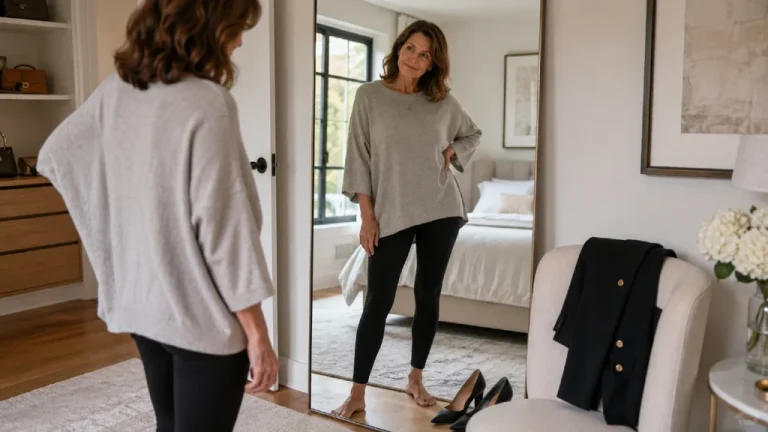
For women over 50, this approach can be especially practical. You can create elegant outfits from straightforward pieces such as trousers, jeans, knitwear, shirts, blazers, coats, and classic shoes.
You are not trying to look wealthy. You are creating outfits that feel calm, intentional, comfortable, and personal.
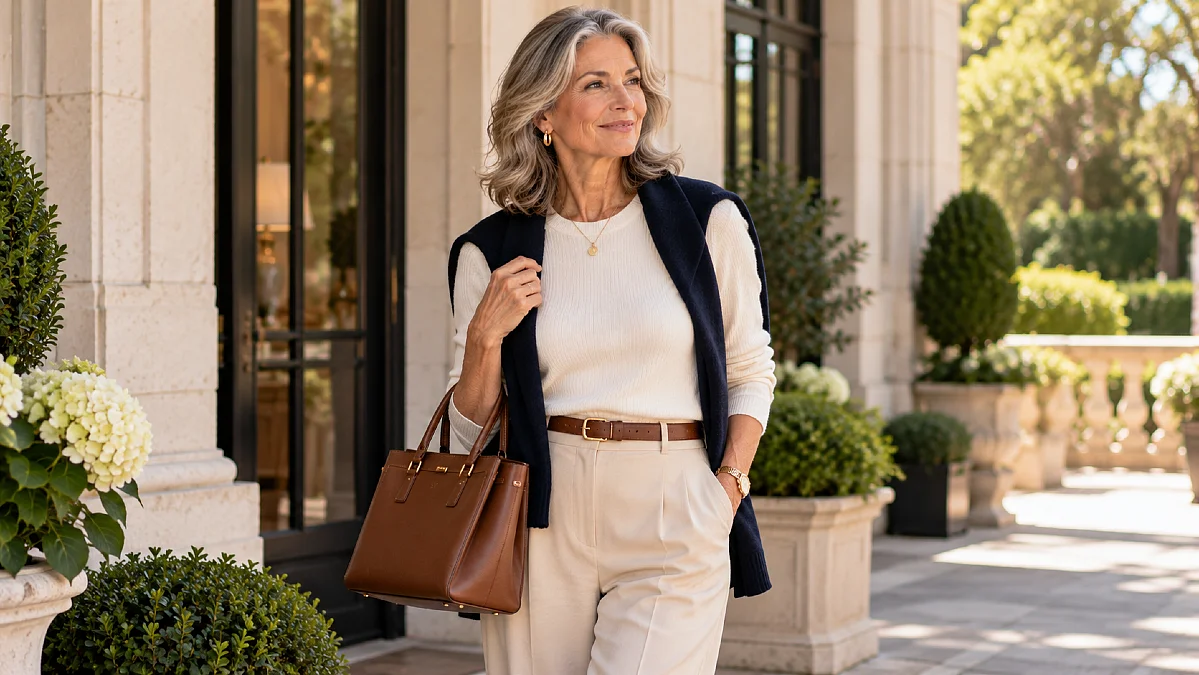
Image credit: Sagely Chic
Old Money Style Is Really About Restraint, Not Designer Labels
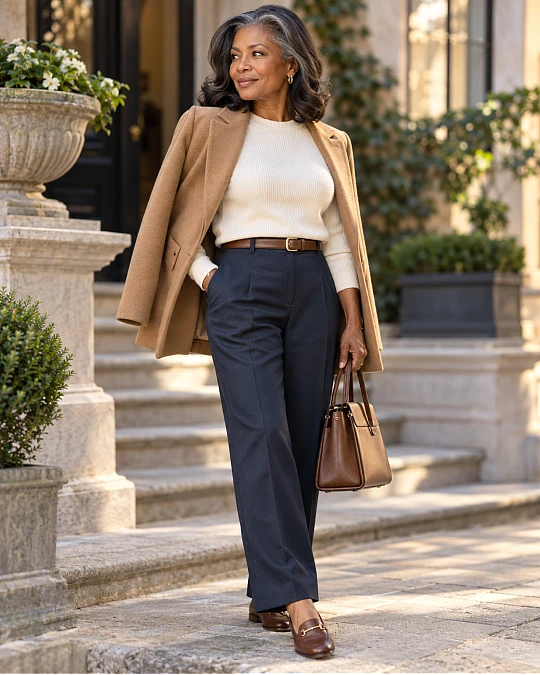
Image credit: Sagely Chic
The phrase “old money style” can bring to mind tailored coats, loafers, silk scarves, neutral colors, and traditional accessories. But simply collecting those pieces does not automatically create the look.
The more important idea is restraint.
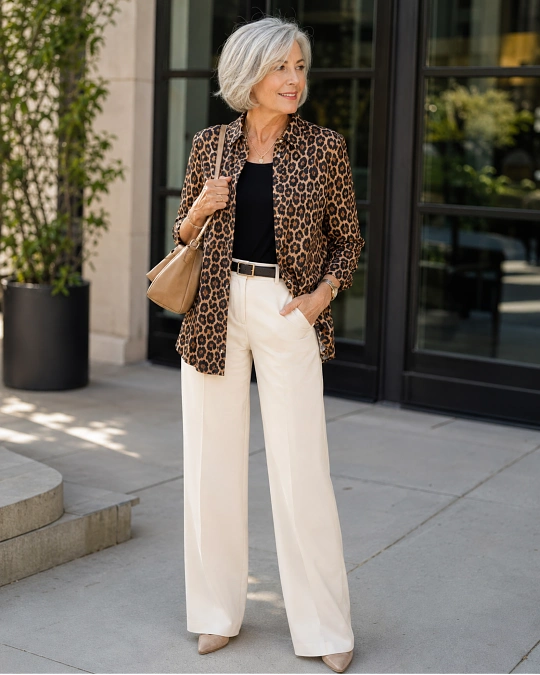
A polished outfit usually has a controlled color palette, balanced proportions, minimal branding, and only a few noticeable details. Everything has a reason for being there.
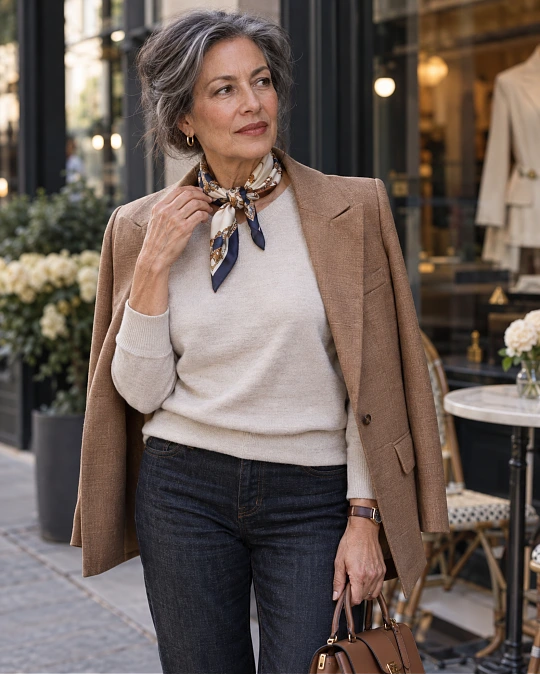
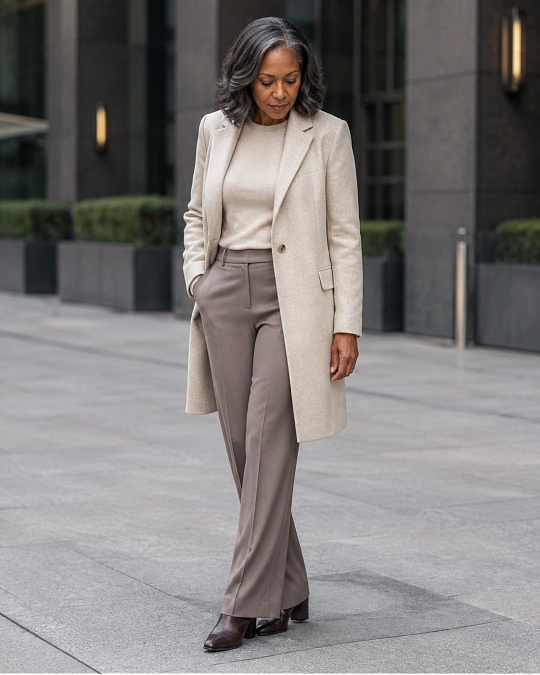
A simple cream sweater with navy trousers can look more refined than a much more expensive outfit covered in logos or decorative details.
That is useful when you are shopping on a realistic budget. Instead of asking whether something looks expensive, look at whether it fits properly, works with your existing wardrobe, and appears neat when you wear it.
Those qualities can make an inexpensive garment look considerably more polished.
Use the clothes you already own as your starting point
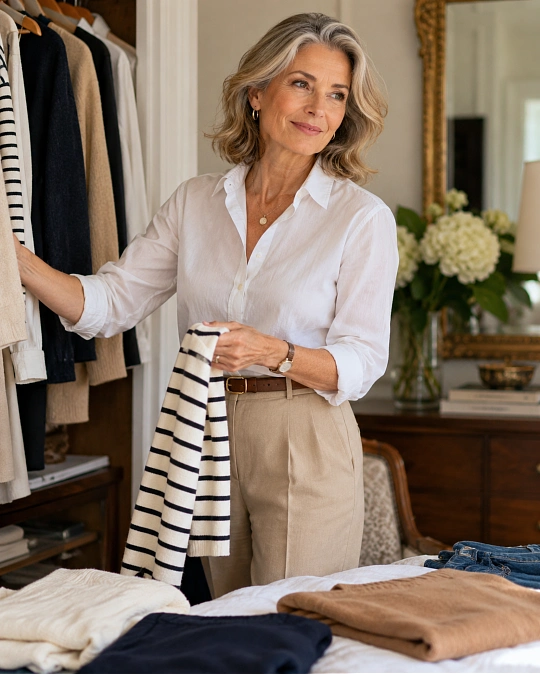
Image credit: Sagely Chic
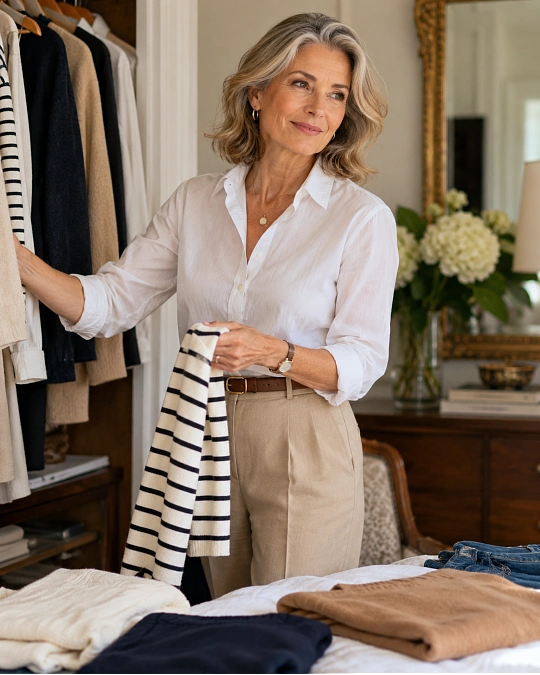
Before buying anything new, take another look at the pieces already hanging in your closet.
You may already have the foundation for this style without realizing it.
- Straight-leg or relaxed trousers
- Dark straight-leg jeans
- Crisp cotton or cotton-blend shirts
- Fine-knit sweaters
- Simple cardigans
- Cleanly structured blazers
- Trench coats or classic outerwear
- Loafers, ballet flats, ankle boots, or simple sneakers
You do not need every traditional item associated with old money dressing.
The goal is to create a group of pieces that can be combined easily without making the outfit visually complicated.
Fabric Makes a Bigger Difference Than the Name on the Label
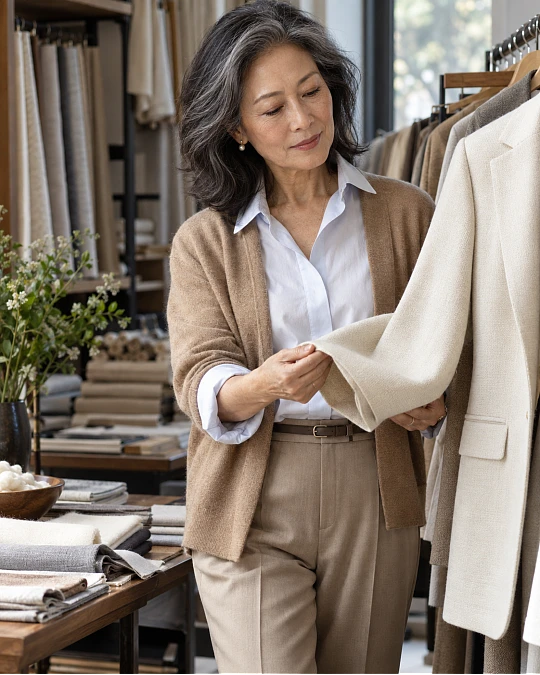
Image credit: Sagely Chic
The way fabric hangs and moves can have a major effect on how an outfit looks.
A reasonably priced cotton shirt can look beautifully polished when it has enough weight to hold its shape. Meanwhile, an expensive garment can disappoint if the material is overly thin, excessively shiny, or loses its shape easily.
Look beyond the label and examine the actual fabric.
Cotton poplin, substantial knits, linen blends, ponte, structured denim, twill, and wool blends can all work well because they provide enough body for a clean silhouette.
That does not mean synthetic fabrics should automatically be avoided. Modern blends can be practical, comfortable, and attractive. What matters is how the finished garment looks and performs.
| Fabric or Finish | What to Look For | Why It Works |
|---|---|---|
| Cotton poplin | Smooth texture with enough weight | Keeps shirts looking crisp and structured |
| Fine or medium knit | Dense construction without excessive stretching | Layers neatly beneath jackets and coats |
| Ponte | Firm stretch with good shape recovery | Creates a smooth line through trousers and dresses |
| Linen blend | Natural texture with moderate structure | Adds relaxed texture without looking overly casual |
| Denim | Medium-weight fabric and a clean wash | Gives casual outfits a more substantial foundation |
| Wool blend | Soft surface with enough body to drape properly | Works particularly well for jackets, trousers, and coats |
Fabric note: If possible, check garments in natural daylight. Some materials appear matte indoors but become noticeably shiny once they are outside.
Fit Should Look Relaxed, but Never Accidental
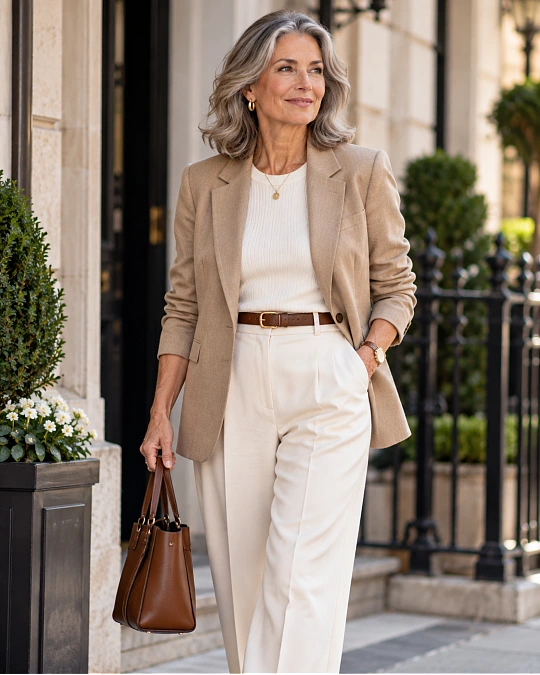
Image credit: Sagely Chic
Classic dressing does not require tight clothing, but it does benefit from clear proportions.
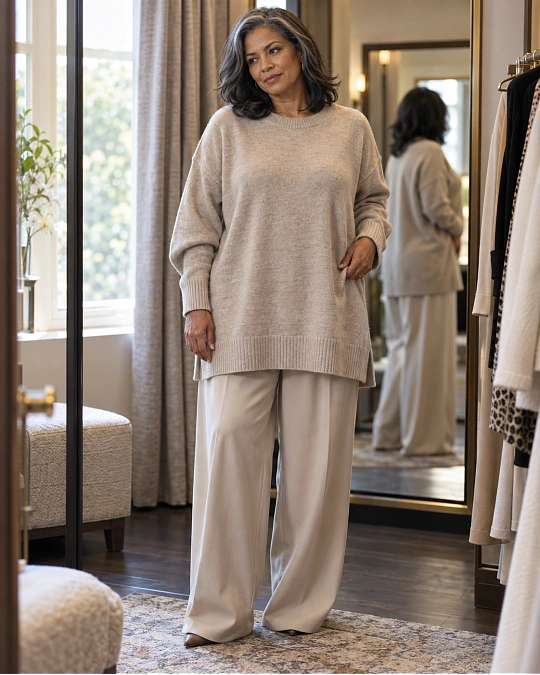
A relaxed trouser can still have a properly fitted waistband. A roomy blazer can have a deliberately placed shoulder. A sweater can skim the body without clinging.
The aim is controlled ease.
This becomes especially useful when your preferred silhouettes change over time. You do not need to force yourself into the same cuts you wore years ago.
Instead, pay attention to where garments sit on your body and how different lengths affect your overall proportions.
If your shirts bunch when tucked into trousers, experiment with a higher rise or a shorter shirt. If a long blazer makes your legs look visually shorter, try a jacket that finishes closer to the hip.
Small alterations can also make a major difference.
Shortening sleeves, adjusting a waistband, or getting trousers hemmed can sometimes improve the appearance of an inexpensive garment more than buying an entirely new outfit.
Build Your Palette Around Cream, Navy, Camel, Chocolate, and Black
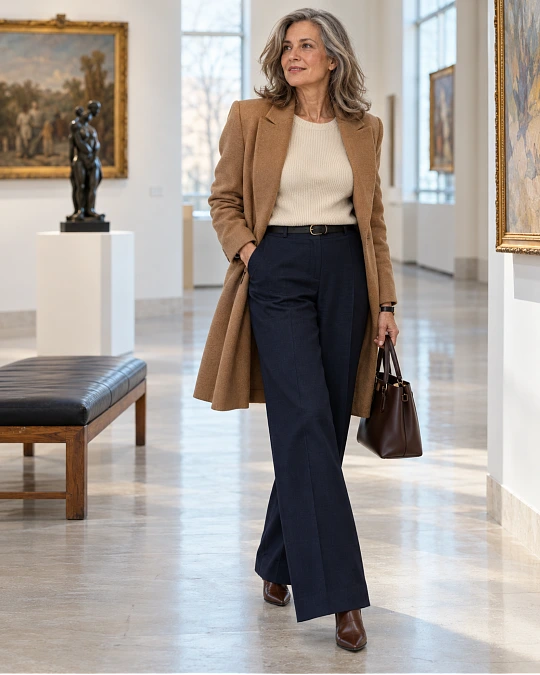
Image credit: Sagely Chic
A sophisticated wardrobe does not have to be completely beige.
The benefit of a restrained palette is simply that the pieces tend to work together easily.
Cream, navy, camel, chocolate brown, soft white, charcoal, olive, burgundy, black, pale blue, and muted gray can all become useful building blocks.
If certain classic neutrals do not flatter you, change them.
Use bright white instead of cream, cool taupe instead of camel, charcoal instead of brown, or deep teal instead of navy. The principle is to create colors that coordinate without making every item look identical.
Repeating one shade in small details can also make an outfit feel more organized.
For example, a brown belt with brown loafers can connect the outfit without requiring a perfectly matched bag and shoe.
| Base Piece | Casual Day | Lunch or Appointment | Dinner or Event |
|---|---|---|---|
| Navy trousers | White tee + cardigan | Blue shirt + loafers | Fine knit + simple earrings |
| Dark straight jeans | Knit + leather sneakers | Blazer + striped top | Silky blouse + pointed flats |
| Cream knit | Jeans + loafers | Camel trousers + belt | Black trousers + small bag |
| White shirt | Jeans + cardigan | Tailored trousers + flats | Dark skirt + delicate jewelry |
The foundation stays familiar while the finishing pieces change the mood.
That makes it easier to create polished outfits without owning a separate wardrobe for every type of occasion.
Quiet Accessories Make Simple Clothes Look More Considered
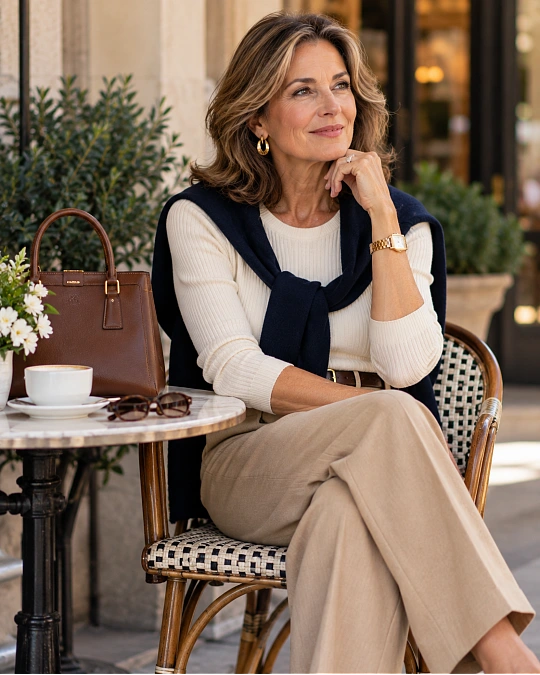
Image credit: Sagely Chic
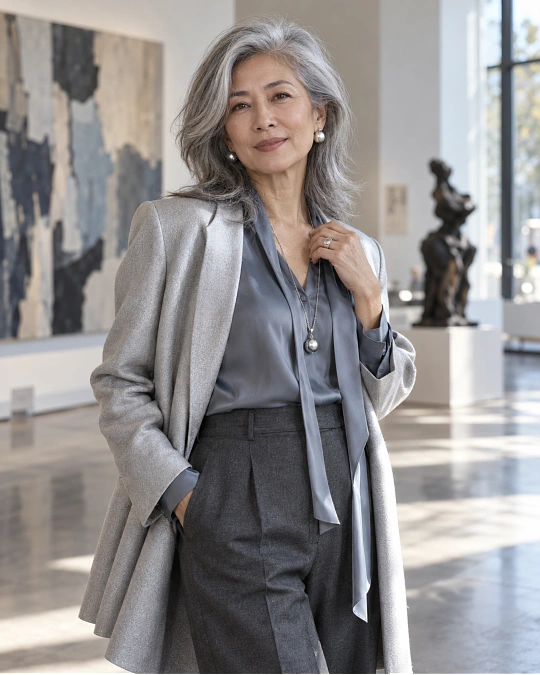
Accessories can finish an outfit, but they do not need to announce themselves.
A simple belt can define a pair of trousers. Small earrings can give a plain sweater a finished appearance. A structured handbag can add shape when the clothing is soft or relaxed.
You do not need to wear every classic accessory at once.
Choose one or two elements that make sense with the outfit.
Shoes deserve particular attention because even a well-styled outfit can look less polished when the footwear is visibly worn, overly decorated, or difficult to coordinate.
Look for clean shapes and colors you will actually wear. Black, dark brown, burgundy, navy, and tan can all work across a wide range of outfits.
And polished does not have to mean uncomfortable.
Comfort upgrade: If traditional loafers feel too stiff, consider soft leather styles, cushioned flats, supportive loafers, or clean low-profile sneakers. Practical footwear can still look refined.
Avoid the Details That Make the Look Feel Like a Costume
One of the easiest ways to make old money-inspired dressing feel unnatural is to emphasize every traditional stereotype at the same time.
You do not need a silk scarf, pearls, designer-style handbag, loafers, sunglasses, gold jewelry, and a blazer in one outfit.
Choose the details that fit your personality and leave the rest behind.
| Instead of This | Try This |
|---|---|
| Wearing several heritage-inspired accessories together | Select one classic accessory and keep the rest understated |
| Using obvious logos to suggest luxury | Focus on fit, fabric, condition, and coordination |
| Wearing oversized pieces throughout the outfit | Balance one relaxed garment with a cleaner silhouette |
| Following beige-heavy outfits that do not flatter you | Choose neutrals that work with your coloring |
| Saving your polished pieces for special occasions | Build them into your everyday wardrobe |
There is also no requirement for every outfit to look formal.
Dark jeans with a white tee, camel cardigan, and clean loafers can have the same restrained quality as tailored trousers and a blazer.
That makes the aesthetic much easier to wear for errands, travel, casual lunches, coffee dates, and ordinary weekends.
Use One Repeatable Formula Instead of Buying a Whole New Wardrobe
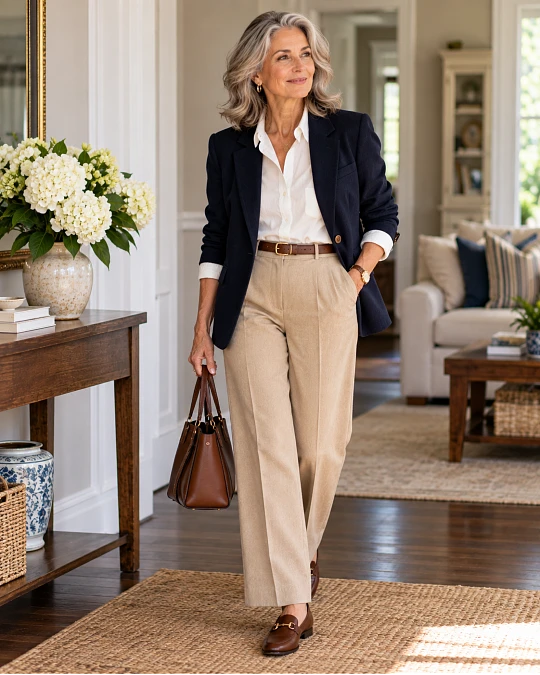
Image credit: Sagely Chic
You do not need a huge wardrobe to create consistent personal style.
A simple outfit formula can help you get dressed quickly while leaving enough room for variety.
Try this formula: clean base + structured layer + refined shoe + one quiet accessory.
For example, start with straight trousers and a fine knit, add a cardigan or relaxed blazer, then finish with loafers and simple earrings.
For a more casual version, replace the trousers with dark jeans and the loafers with clean leather sneakers.
For a dressier occasion, use tailored trousers, a fine-knit top, pointed flats, and a structured handbag.
The same basic formula can work across many situations because the individual pieces change while the overall structure stays familiar.
| Occasion | Easy Formula | Why It Works |
|---|---|---|
| Everyday errands | Dark jeans + striped knit + loafers + simple belt | Comfortable pieces still have a defined finish |
| Lunch with friends | Tailored trousers + fine knit + cardigan + flats | Soft layers balance the structured trousers |
| Smart casual event | Dark trousers + white shirt + blazer + low heel | Crisp contrast creates a clean silhouette |
| Travel day | Straight trousers + tee + trench + leather sneakers | Practical pieces remain coordinated and polished |
Once you find an outfit formula that feels natural, repeat it.
Changing the colors, fabrics, shoes, and accessories will give you plenty of variety without requiring a completely new wardrobe.
Spend More Carefully, Not Necessarily More Money
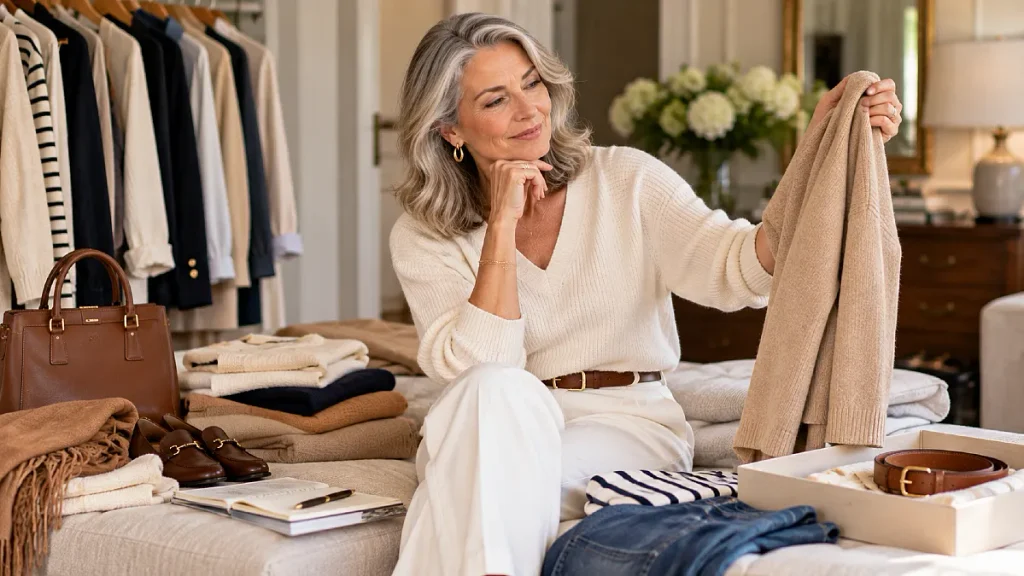
Image credit: Sagely Chic
A polished wardrobe is easier to build when you stop thinking of every purchase as a single outfit.
Before buying something, consider how many existing pieces it can work with.
A cardigan that only works with one pair of trousers may not get much use. Another cardigan that works with jeans, skirts, trousers, dresses, and layered outfits can become one of the hardest-working pieces in your closet.
Secondhand shopping can also be useful for classic wardrobe staples such as blazers, coats, leather belts, scarves, and quality knitwear.
However, inspect the condition carefully.
Check for stretched cuffs, pilling, damaged lining, missing buttons, worn shoe soles, stains, and fabric that has lost its original shape. A recognizable label cannot make a visibly tired garment look fresh.
Think about where your money matters most in your wardrobe.
If trousers are difficult for you to fit properly, spend more of your budget there and save on basic tops. If you rely on coats for much of the year, outerwear may deserve more attention than another occasion dress.
The goal is not to spend more.
It is to make every purchase useful enough to earn a regular place in your wardrobe.
Frequently Asked Questions
What does old money style look like for women over 50?
Old money-inspired dressing generally focuses on classic silhouettes, restrained colors, understated accessories, good-looking fabrics, and clothing that fits comfortably without appearing sloppy.
For women over 50, the most useful approach is to adapt these ideas to your own lifestyle, coloring, comfort preferences, and proportions rather than following a rigid uniform.
Can I dress old money on a small budget?
Yes. Start with the wardrobe you already have.
Simple color combinations, proper fit, clean shoes, well-maintained clothing, and thoughtful accessories can make a noticeable difference without requiring a large shopping budget.
When you do shop, prioritize pieces that work with several items already in your closet.
Do I need expensive fabrics to get the old money look?
No.
Expensive fibers are not essential. Cotton blends, ponte, substantial knits, linen blends, structured denim, and well-made synthetic fabrics can all work when they have a pleasing texture and hold their shape properly.
Can jeans work with old money style?
Absolutely. Jeans can become part of a classic wardrobe when you choose a clean silhouette and avoid excessive distressing.
Straight-leg, slim-straight, and gently wide-leg jeans can pair easily with crisp shirts, fine knits, loafers, trench coats, and simple blazers.
What colors work best for an old money wardrobe?
Navy, cream, camel, chocolate brown, charcoal, olive, burgundy, black, white, and pale blue are useful starting points because they can be combined in many different ways.
However, you do not need to wear colors that make you feel washed out. Choose versions of these shades that complement your coloring and personal taste.
Old Money Style Should Still Feel Like You
The most wearable version of old money style is not about pretending to have someone else’s lifestyle. It is about taking the useful elements of classic dressing and making them work for your own life.
Focus on clothes that fit well, colors that make getting dressed easier, fabrics that feel good, shoes you can actually walk in, and accessories that add something without taking over.
You can create a polished wardrobe without filling your closet with expensive labels.
Start with what you already own. Choose one simple color combination, improve the proportions, add one structured element, and finish with a clean pair of shoes.
That is often enough to make an everyday outfit feel considerably more intentional.