Feeling young at 75 is not necessarily about looking younger or pretending that age does not matter. For many people, it is more closely connected with curiosity, flexibility, meaningful relationships, movement, rest, and the willingness to keep learning.
These qualities are usually built through small choices repeated over time rather than one dramatic lifestyle change.
If you want to maintain a sense of energy and engagement as you get older, these 11 habits offer practical places to begin.
At a Glance
⏱️
Timeframe
Daily practice
🧠
Core Focus
Mental flexibility
🎯
Main Result
Lasting vitality

Image credit: Sagely Chic
The Mechanism Behind Mental Longevity

Image credit: Sagely Chic
Keeping your mind engaged as you age involves more than doing the occasional crossword puzzle or repeating the same familiar brain game.
Learning, asking questions, trying unfamiliar activities, and adapting to change can all provide opportunities for mental engagement. You may not feel especially skilled when you begin something new, and that is part of the experience.
The goal is not to make every day mentally exhausting. It is to avoid allowing comfort and repetition to become the only way you experience the world.
A small amount of novelty can be enough to make an ordinary day feel more interesting and keep you actively involved in what you are doing.
1. Embracing Cognitive Novelty Daily

Image credit: Sagely Chic
Familiar routines make life easier because you already know exactly what to expect. But doing everything the same way can also leave fewer opportunities to notice something new.
Try adding small changes to ordinary activities. Take a different walking route, rearrange a familiar task, try a new recipe, or use your non-dominant hand for a simple activity when it is safe to do so.
These little challenges do not need to be difficult. Their purpose is simply to encourage you to pay attention instead of moving through the day entirely on autopilot.
💡 Tip: Pick one small routine to change each Monday and keep it simple enough that you will actually do it.
💡 PRO TIP
Break the Autopilot Loop
Small, manageable changes can make familiar routines feel fresh without turning your day into a constant challenge.
2. Curating Social Circles with Intention

Image credit: Sagely Chic
Not every relationship gives you the same kind of energy. Some connections leave you feeling understood and encouraged, while others repeatedly leave you emotionally drained.
As people move through different stages of life, their social circles naturally change. A long history with someone does not automatically mean that every interaction has to remain exactly the same.
Pay attention to how you feel after spending time with different people. If a relationship consists almost entirely of complaints, criticism, or one-sided conversations, you can create more distance without turning the situation into unnecessary drama.
At the same time, someone going through a temporary difficult period may simply need extra support. The goal is not to abandon people when life becomes hard, but to recognize persistent one-sided patterns.
💡 Tip: Decline one draining invitation this week without over-explaining your decision.
Social Audit — At a Glance
👥 Frequency
Notice how often you interact with relationships that consistently leave you depleted.
⚡ Threshold
If the same one-sided pattern continues repeatedly, consider setting a clearer boundary.
🛡️ Exception
Allow room for lifelong relationships that are simply going through a temporary crisis.
Action Metric
Use a few hours each week for relationships and activities that feel genuinely mutual and meaningful.
3. Reframing Physical Limitations
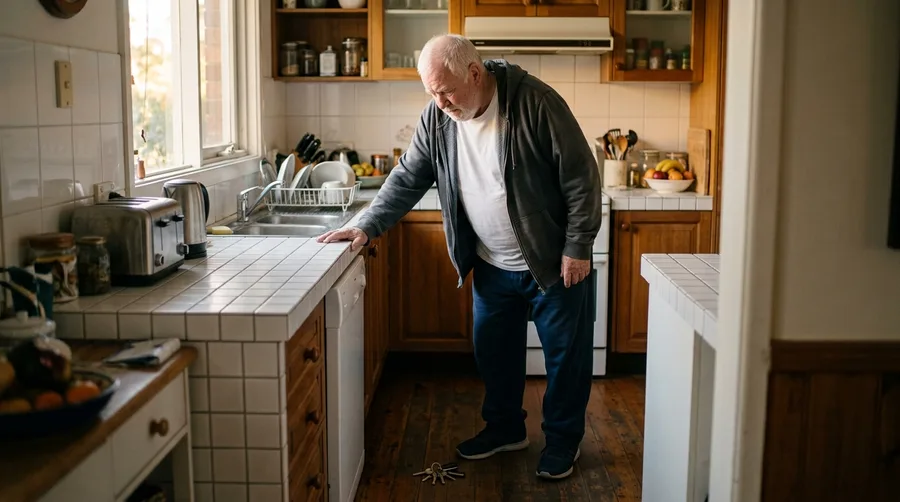
Image credit: Sagely Chic
You bend down to pick something up and notice that your back feels stiff. The first thought might be, “Everything is falling apart now.”
That kind of automatic language can shape how you interpret ordinary physical changes. A better approach is to describe what is actually happening without immediately turning one uncomfortable moment into a prediction about the future.
Instead of saying, “I am falling apart,” you might say, “My back feels stiff today, perhaps because I sat too long.” Then ask what practical adjustment would make sense.
That could mean taking a short walk, changing your sitting position, stretching gently, or giving yourself appropriate recovery time.
Of course, persistent or severe pain should not simply be reframed away. New or concerning symptoms deserve appropriate medical attention.
💡 Tip: Replace “I am too old for this” with “What adjustment does my body need today?”
Language Shifts
💬 Banned phrase: “Getting old”
🔄 Required window: Reframe the thought when you notice it
🌱 Skip this if: You have an injury or symptom that needs professional evaluation
4. Maintaining Physical Agility Through Play

Image credit: Sagely Chic
Exercise does not have to mean spending an hour on a treadmill or following a rigid gym routine.
Movement can also come from gardening, dancing, walking, stretching, playing with grandchildren, doing household projects, or enjoying an active hobby.
Balance and mobility activities can be particularly useful as part of an overall active lifestyle. If you have balance concerns or a medical condition, choose activities that are appropriate for you.
Try making movement enjoyable rather than treating it as another chore on your schedule.
💡 Tip: Add a simple balance or mobility exercise to a routine you already perform, provided it is safe for you.
🏃 Movement Progression
1
Step 1: Awareness
Notice how much time you spend sitting still during a typical day.
2
Step 2: Integration
Add short periods of walking, stretching, or gentle movement to everyday activities.
3
Step 3: Play
Choose active hobbies that you genuinely enjoy so movement feels like part of life rather than a punishment.
5. Prioritizing Deep, Uninterrupted Rest

Image credit: Sagely Chic
“I will catch up on everything tonight once the house finally settles down.”
Many people postpone bedtime because the evening feels like the only time they have for themselves. A little extra screen time can easily become an hour or more.
Protecting sleep is important because insufficient or poor-quality sleep can affect concentration, mood, energy, and everyday functioning.
Rather than treating bedtime as whatever happens after everything else is finished, create a consistent wind-down routine whenever possible.
Dim the lights, put away unnecessary screens, prepare for the next morning, and give your mind a chance to slow down.
💡 Tip: Try turning off screens about 45 minutes before bedtime if that fits comfortably into your schedule.
Rest Protocol Effectiveness
📱
Screen Curfew
Essential
Reducing evening screen use can make it easier to transition into a relaxing bedtime routine.
☕
Caffeine Cutoff
Very High
If caffeine interferes with your sleep, consider avoiding it later in the day. Individual sensitivity varies.
6. Cultivating Micro-Curiosity

Image credit: Sagely Chic
You do not have to understand everything immediately. Sometimes the simple act of asking a question can turn an ordinary moment into an opportunity to learn.
Instead of pretending you understand how something works, allow yourself to say, “How does that work?” or “Why does that happen?”
Curiosity does not require formal classes or complicated research. You can spend ten minutes learning about an unfamiliar word, an object in your home, a historical event, a plant in your garden, or a new technology.
💡 Tip: Investigate one question every week simply because you are genuinely curious about the answer.
7. Releasing Grudges and Chronic Resentment

Image credit: Sagely Chic
Holding onto an old slight can feel like protecting yourself, but repeatedly replaying the same event keeps your attention attached to something that has already happened.
Picture yourself lying awake at night while an argument from five years ago runs through your mind again. The other person may be nowhere near you, yet the memory can still influence your mood in the present.
Letting go does not mean saying that the original behavior was acceptable. It does not require reconciliation, forgiveness, or forgetting.
Sometimes letting go simply means deciding that the old event no longer gets unlimited access to your attention.
When the memory appears, acknowledge it and redirect yourself toward something in the present. If the situation still affects your life, consider what boundary or action would actually help today.
💡 Tip: Write down the grievance, identify what you can control now, and then put the paper away or recycle it as a symbolic reset.
8. Investing in Lifelong Skill Acquisition

Image credit: Sagely Chic
Starting a new hobby can be uncomfortable because beginners are not supposed to be good immediately.
You might want to learn watercolor painting, photography, gardening, a musical instrument, cooking, or another language, but hesitate because you dislike making mistakes.
People who continue learning throughout life give themselves permission to be beginners again.
Instead of judging your first attempts, focus on showing up consistently. Fifteen minutes of practice can be more useful than waiting for a large block of free time.
💡 Tip: Spend fifteen minutes each day practicing one new skill without expecting immediate mastery.
Mindset Comparison
25
Fixed Comfort Zone
Familiar routines can feel safe, but too much avoidance of new experiences may limit opportunities to learn.
VS
95
Active Learning Zone
Regular learning creates opportunities for curiosity, practice, adaptation, and personal growth.
9. Maintaining Purpose Beyond Yourself

Image credit: Sagely Chic
A fulfilling life usually contains more than personal comfort. Having something meaningful to contribute can give structure and direction to your week.
That does not mean you need to be constantly available to other people. There are seasons when protecting your energy and focusing on yourself is exactly what you need.
The key is finding a balance between healthy self-care and meaningful engagement with the world around you.
You might mentor someone, volunteer, help with a community project, care for animals, support a local organization, or share a skill with someone who wants to learn.
Choose something that feels meaningful without taking over your schedule.
💡 Tip: Commit a small, realistic amount of time each week to a cause or activity that matters to you.
Purpose Building Timeline
1
Week 1
Identify a Cause
Choose an area where your time, experience, or skills could be useful.
2
Month 1
Establish Rhythm
Build a manageable weekly commitment rather than taking on too much at once.
3
Month 3
Measure Impact
Notice whether the activity gives you a stronger sense of connection and purpose.
10. Laughing at Life’s Inevitable Absurdity

Image credit: Sagely Chic
Not every mistake deserves a serious response.
Plans fall apart, dinner burns, technology stops cooperating, and small misunderstandings happen. Spending hours criticizing yourself over every little mistake can turn a minor problem into an entire evening of stress.
When something harmless goes wrong, try stepping back before reacting. Sometimes a little humor can make an irritating moment easier to handle.
This does not mean ignoring serious problems or using humor to dismiss difficult emotions. It simply means allowing ordinary imperfections to remain ordinary.
💡 Tip: Find one genuine reason to laugh each day, whether it comes from a funny conversation, a favorite show, a playful activity, or an amusing everyday moment.
11. Cultivating Radical Emotional Honesty
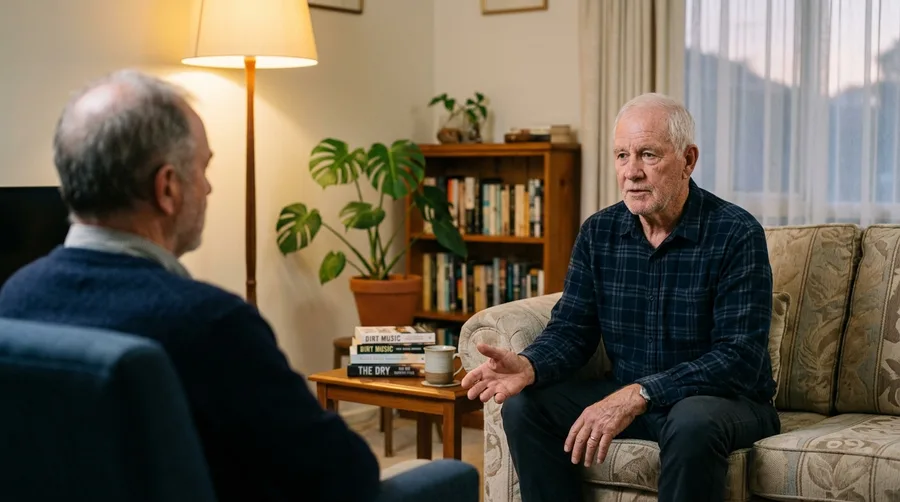
Image credit: Sagely Chic
Constantly hiding your preferences, frustrations, or needs can become exhausting over time.
You may agree to something you do not want, stay quiet when a boundary has been crossed, or say everything is fine when it clearly is not.
Emotional honesty does not mean saying every thought that enters your head. It means communicating important feelings and needs clearly, respectfully, and at an appropriate time.
Simple “I” statements can make these conversations easier. For example, “I need some quiet time this evening,” or “I would prefer to discuss this tomorrow when I have more energy.”
💡 Tip: Use direct “I” statements when expressing your needs instead of expecting other people to guess what you are feeling.
Frequently Asked Questions
Can these habits be adopted at any age?
Yes. People can continue learning, adapting routines, developing skills, improving relationships, and changing habits throughout adulthood. Starting later does not make a positive change pointless.
How long before these changes feel natural?
There is no universal timeline. Some habits can become easier within weeks, while others take longer. Consistency matters more than trying to change everything at once.
What is the single most important habit to start with?
There is no single habit that works equally well for everyone. A practical starting point is to choose one small behavior that addresses something you genuinely want to improve, such as adding movement, improving your sleep routine, learning something new, or setting a boundary.
Why does social connection matter so much for longevity?
Meaningful social relationships can provide companionship, emotional support, shared activities, and a sense of belonging. The quality of relationships matters, so building connections that feel mutual and supportive can be especially valuable.
Where To Begin Your Practice
Pick just one habit from this list and commit to practicing it for the next seven days.
You could change a familiar routine, ask one new question, take a short walk, protect your bedtime, practice a new skill, or make time for someone who brings genuine connection into your life.
The goal is not to transform everything overnight. One manageable habit can give you a starting point for building a more active, curious, and intentional daily routine.
Start Your Daily Routine
Review the micro-curiosity habit above and try it today.
Ask one question you have never asked before, learn something unfamiliar, or spend a few minutes exploring a subject that naturally catches your attention.
Feeling young at 75 is not about denying your age. It can be about staying curious, connected, active, adaptable, and willing to experience something new.