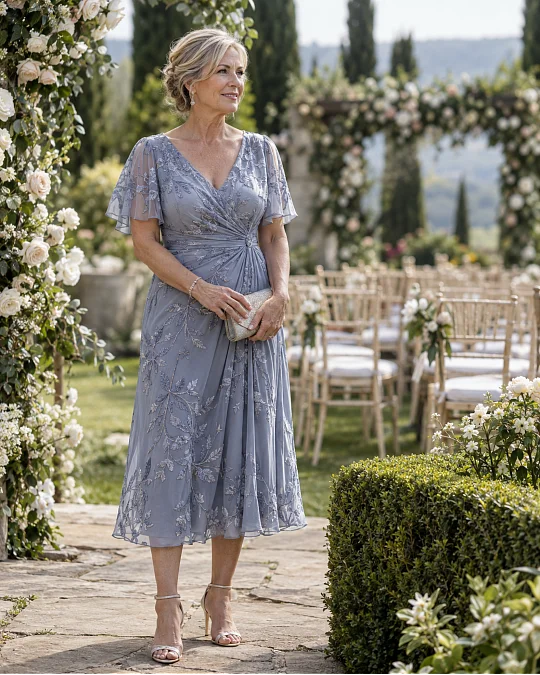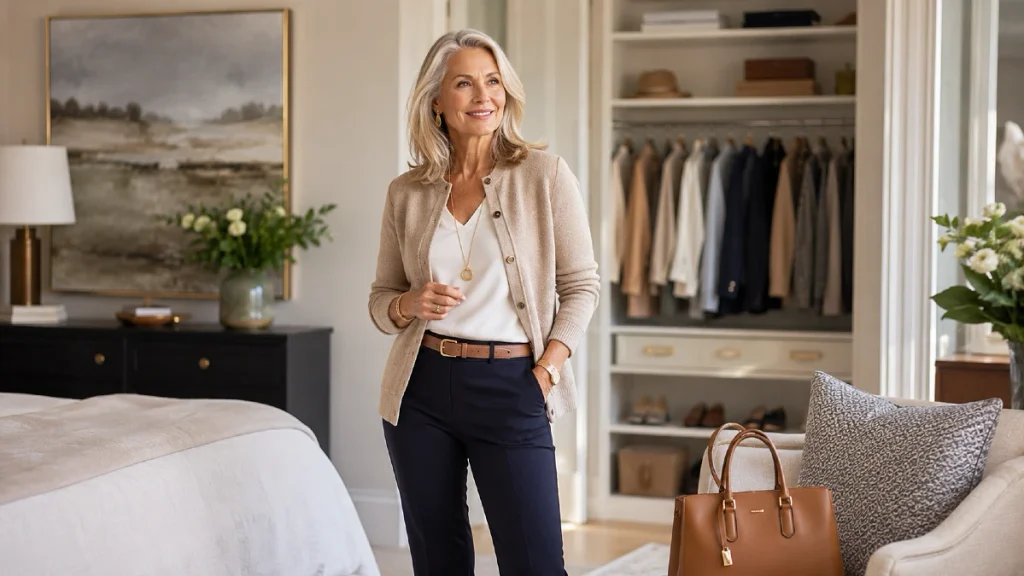
The hardest part of getting dressed after 50 is often not knowing what looks good. It is knowing where to begin when the clothes that once worked no longer feel quite right.
You can have a closet full of perfectly good pieces and still feel like you have nothing to wear. A waistband may feel different, a favorite top may no longer sit the way it used to, or an outfit that once felt polished may suddenly look dated.
That is where practical fashion tips for women over 50 can make a real difference. You do not need to throw everything away, follow every trend, or completely change your personal style.
Instead, focus on fit, proportion, fabric, simple outfit formulas, and clothes that work for the life you actually live. These small adjustments can make getting dressed easier and much more enjoyable.
You Have Not Lost Your Style, You Have Lost Your Starting Point
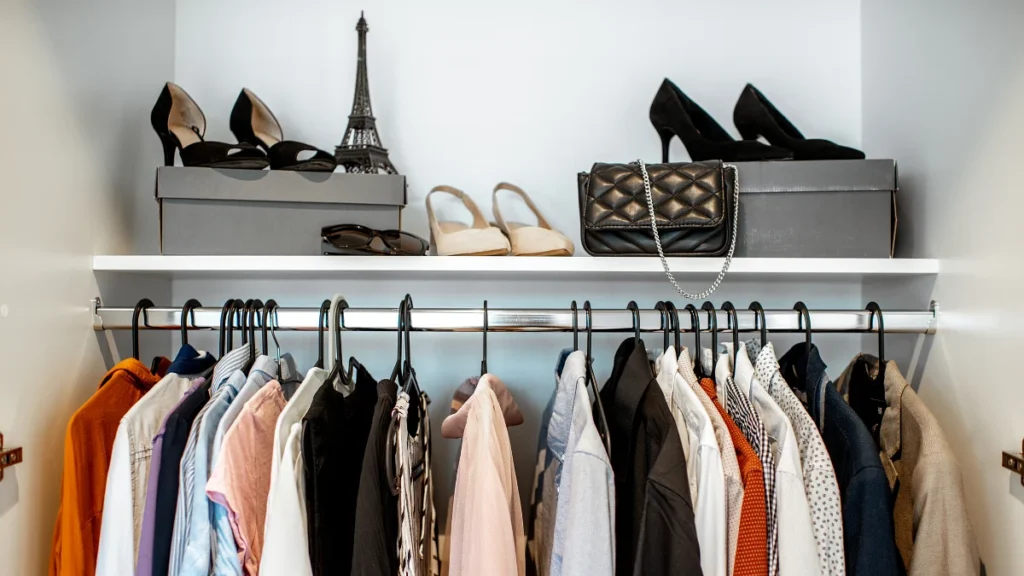
Style confidence can change when your old wardrobe no longer fits your current lifestyle, body, or preferences. That does not mean your sense of style disappeared.
It often means your clothes have not caught up with you.
A jacket that once created a beautiful shape may now feel restrictive. A long tunic that used to be your favorite may make an outfit feel heavier. Even a beautiful pair of shoes can become less useful if they are uncomfortable after several hours.
Instead of asking whether a piece is still “allowed,” ask whether it supports the woman you are today.
That shift makes fashion much more practical. Your wardrobe should work around your current needs rather than forcing you to dress according to rules from years ago.
Start by choosing three outfits from your closet that you genuinely enjoy wearing. Look for what they have in common. You may discover that you prefer certain necklines, trouser shapes, fabrics, colors, or jacket lengths.
Those patterns are valuable. They can become the foundation of your personal style.
1. Start With Fit Before You Think About Style
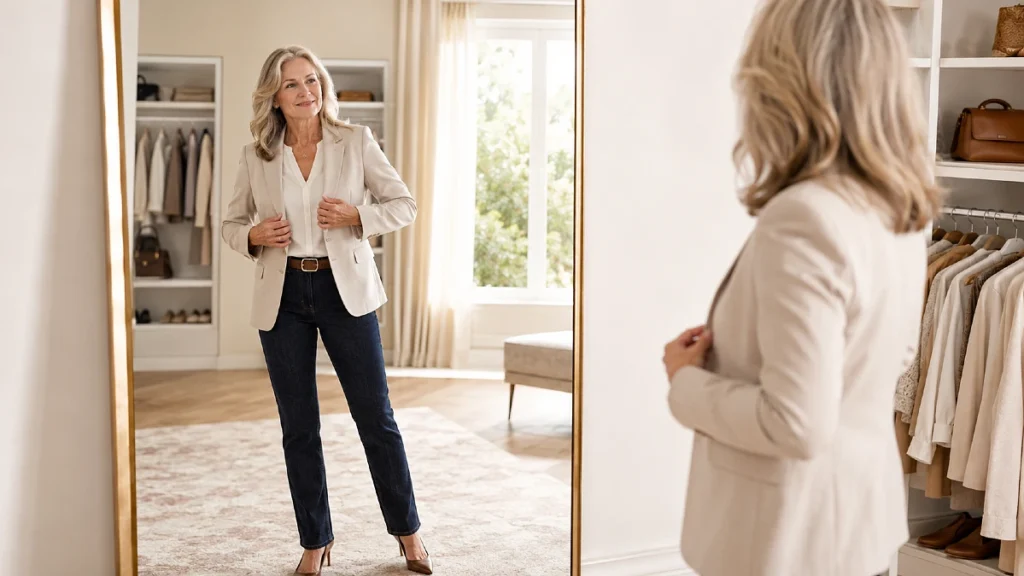
Fit is one of the most important details in any outfit. Even inexpensive basics can look polished when they sit correctly on the body.
A simple shirt, dark jeans, and loafers can look intentional when the shoulder seams sit properly, the waistband feels comfortable, and the trouser hem falls cleanly.
The opposite can happen when every garment is slightly wrong. A waistband that digs in, sleeves that are too wide, or a jacket that pulls across the chest can make the entire outfit feel uncomfortable.
Do not rely too heavily on the size printed on the label. Sizing varies between brands, fabrics, and cuts. The way a garment actually fits is more useful than the number inside it.
A good fit should allow you to sit, walk, reach, bend, and breathe without constantly adjusting your clothes.
| Fit Problem | Try This Instead |
|---|---|
| Pants pull across the hips | Try a higher rise or a straight-leg cut with comfortable stretch |
| Tops cling around the midsection | Choose a substantial knit, woven cotton, or relaxed button-front style |
| Blazers feel tight when closed | Wear them open or fit the shoulders first and tailor the waist if needed |
| Dresses feel shapeless | Add a soft belt, shorter jacket, or defined shoulder |
| Sleeves look bulky | Push them slightly up or have them tailored to show the wrist |
Fit note: A small amount of wrist, ankle, or neckline exposure can make an outfit feel lighter without requiring you to reveal more than you are comfortable showing.
Also pay attention to movement. Stand, sit, walk, and reach while trying on an outfit. If it only looks good while you are standing perfectly still, it may not be the right everyday piece.
Among all the fashion tips for women over 50, improving fit is one of the easiest places to start because it can make clothes you already own look considerably better.
2. Build a Personal Uniform You Can Trust
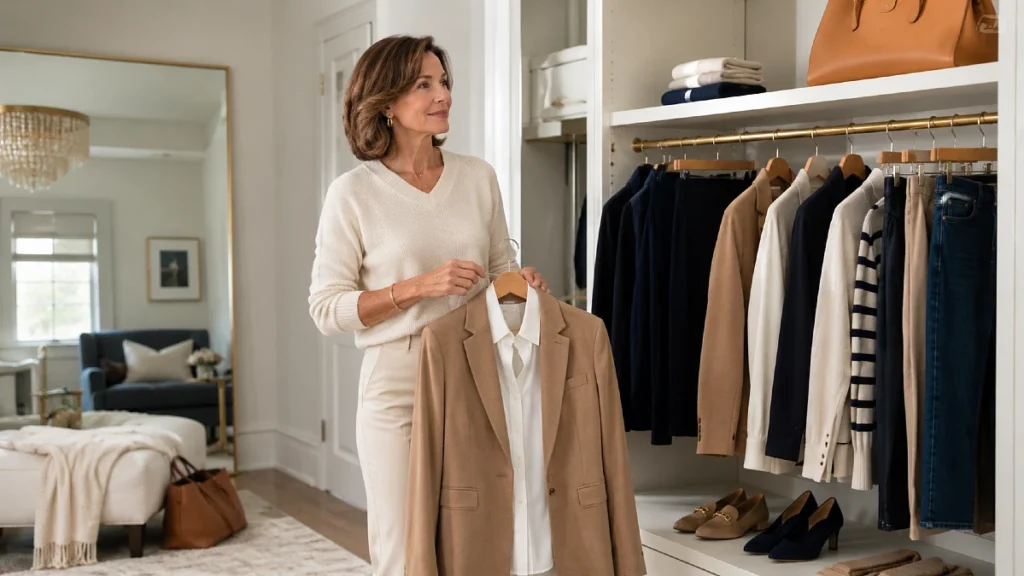
A personal uniform does not mean wearing exactly the same outfit every day. It means discovering a combination of shapes that consistently works for you.
Once you know your preferred formula, getting dressed becomes faster and shopping becomes more focused.
For one woman, that might mean straight-leg jeans, a soft knit, and a lightweight jacket. Another may feel best in wide-leg trousers, a tucked shirt, and a cropped cardigan.
There is no single correct formula. Your personal uniform should reflect your body, schedule, climate, and the activities you actually do.
| Occasion | Easy Outfit Formula | Why It Works |
|---|---|---|
| Errands | Straight jeans + knit top + lightweight jacket | Comfortable while the jacket adds definition |
| Lunch out | Pull-on trousers + blouse + loafers | Easy movement with a polished finish |
| Travel day | Relaxed trousers + long tee + open cardigan | Comfortable without looking unfinished |
| Casual dinner | Midi skirt + fine knit sweater + low block heel | Simple, feminine, and easy to repeat |
Formula: straight-leg pants + soft top + structured third piece.
The third piece could be a blazer, denim jacket, cardigan, utility jacket, vest, or lightweight coat. It gives the outfit an additional line and helps simple basics look more intentional.
Once you have a formula that works, change the colors and textures instead of reinventing the whole outfit. This creates variety without creating unnecessary wardrobe clutter.
3. Let Fabric Do More of the Work
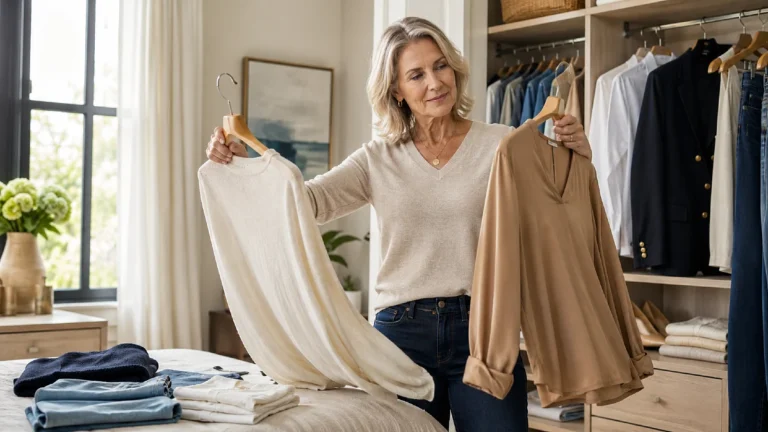
Fabric has a bigger influence on an outfit than many people realize. It affects how clothing drapes, how comfortable it feels, and how well it holds its shape throughout the day.
Very thin jersey can cling to areas you would rather not emphasize. Extremely stiff fabric can create unwanted bulk, while low-quality stretch material can lose its shape quickly.
Look for fabrics that have enough weight to skim the body while still allowing movement. The right fabric can make a simple garment look more refined without adding unnecessary detail.
| Piece or Fabric | What to Look For | Why It Works |
|---|---|---|
| Ponte knit pants | Smooth, midweight fabric with comfortable stretch | Maintains shape better than very thin leggings |
| Cotton button-down | Some structure without excessive stiffness | Frames the upper body without clinging |
| Dark denim | Straight or slim-straight cut with mild stretch | Provides shape while remaining comfortable |
| Fine knit sweater | Smooth finish with minimal bulk | Layers easily beneath jackets |
| Linen blend | Soft drape and enough opacity | Feels relaxed while maintaining a neat appearance |
Fabric note: Think about maintenance as well as appearance. If a fabric wrinkles immediately, pills quickly, or requires constant care, you may not reach for it often.
The best wardrobe pieces are usually the ones you can wear comfortably for several hours without worrying about how they look every few minutes.
Quality does not necessarily mean expensive. A well-chosen mid-priced garment with a useful fabric can often become more valuable than a costly statement piece that rarely leaves the closet.
4. Use Proportion Instead of Hiding
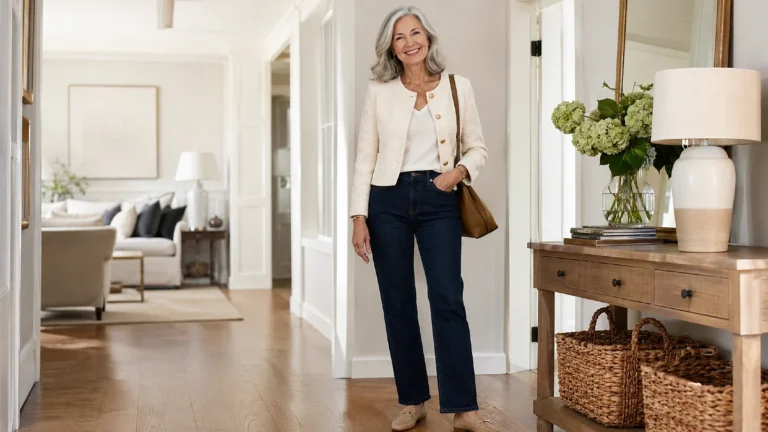
Many women are taught to hide certain parts of their bodies as they get older. That approach can make dressing feel restrictive and can sometimes create outfits that are heavier than necessary.
Proportion gives you another option.
If your top is long and loose, pair it with a straighter or slimmer bottom. If your trousers are wide, try a shorter sweater, a partial tuck, or a jacket that ends around the hip.
The goal is not to make your body look a particular way. It is simply to create visual balance between the different pieces you are wearing.
Try this experiment with an outfit you already own. Put on your usual top and trousers, then change only the length of the top.
Tuck it slightly, leave it untucked, use a soft front tuck, or add a shorter jacket. Notice how much the overall shape changes even though the individual garments remain the same.
The most flattering option is usually the one that gives the eye a clear sense of where one garment ends and another begins.
Color note: Similar shades can also create a long, calm visual line. A navy top with dark denim or a cream sweater with beige trousers can look especially clean and sophisticated.
Do not assume that one proportion works for every outfit. Experiment with lengths until you find combinations that feel balanced on your own body.
5. Modernize One Detail at a Time
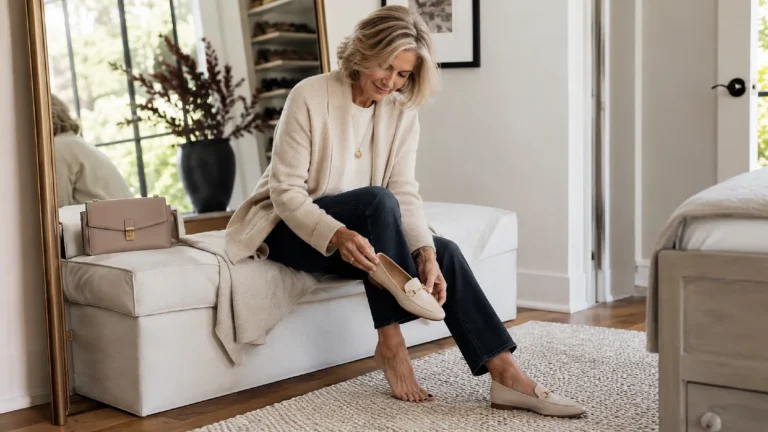
You do not need an entirely trendy wardrobe to keep your style feeling current. In many cases, one updated detail is enough.
A modern shoe, a cleaner handbag, a different jean shape, a fresh neckline, or a slightly updated jacket can change the feel of an outfit without changing your entire personal style.
This approach is particularly useful if you prefer classic clothing. You can keep your favorite timeless pieces while adding one contemporary element.
Try one of these small updates:
- Swap an older pair of jeans for a straight or relaxed-straight shape.
- Replace heavily decorated footwear with a cleaner silhouette.
- Try a structured but relaxed jacket instead of a very stiff blazer.
- Choose a simple modern bag rather than carrying several competing accessories.
- Experiment with one current color while keeping the rest of the outfit classic.
The trick is restraint. When every part of an outfit is trying to make a statement, the overall result can become harder to wear.
One fresh detail surrounded by familiar basics often feels more natural.
The Modern Refresh
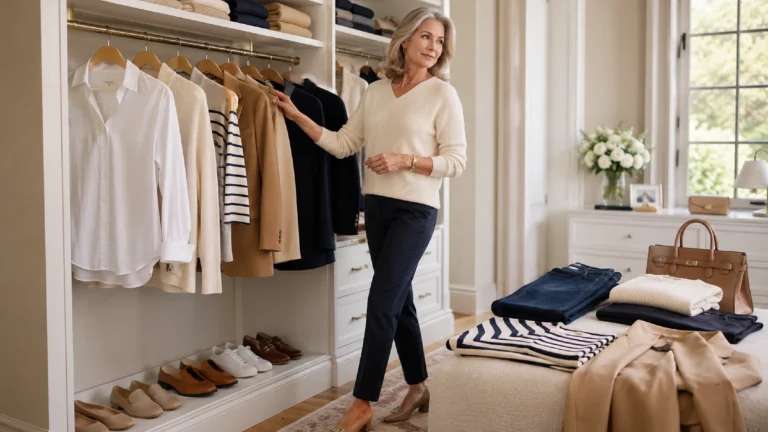
Elevating everyday silhouettes
A modern refresh does not require a shopping spree. Start with one familiar outfit and identify the single piece that makes it feel dated or less comfortable.
Maybe the issue is the shoe. Maybe the trouser shape has changed, or perhaps the jacket is simply too long for the way you currently like to dress.
Change that one element and keep everything else the same. This gives you a practical way to update your wardrobe without throwing away pieces that still serve you well.
Shoe swap: Footwear can change the mood of an outfit quickly. Dark jeans with clean sneakers feel casual, the same jeans with loafers can look polished, and ankle boots can create a sharper finish.
6. Keep Wardrobe Essentials Simple, But Not Plain
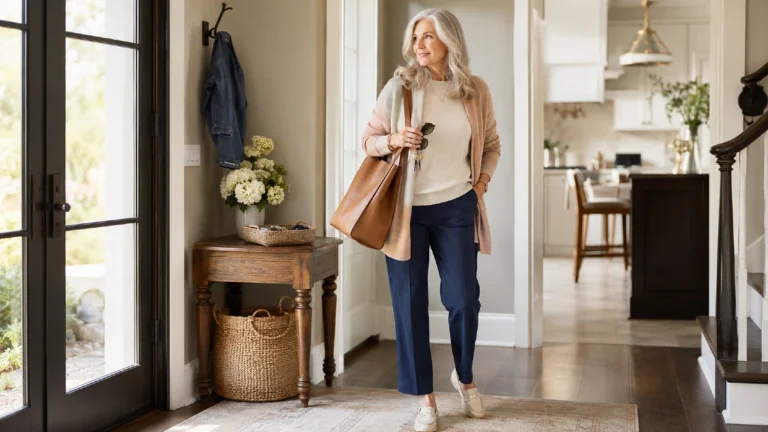
Wardrobe essentials should earn their space. A useful basic is something you can wear comfortably, combine with several other pieces, and reach for repeatedly.
You do not need every item that appears on a list of “must-have” wardrobe pieces. Your essentials should be based on your actual lifestyle.
A practical foundation might include dark straight-leg jeans, comfortable trousers, an ivory or white shirt, a soft knit, one versatile jacket, a midi dress, and two pairs of shoes that you can comfortably walk in.
The important part is not the exact list. It is how well the pieces work together.
Your blazer should ideally work with both denim and trousers. Your knit should pair with more than one bottom. Your dress should be wearable by itself and also adaptable with a jacket, cardigan, belt, or different shoes.
A capsule wardrobe over 50 becomes much more useful when every piece has several possible combinations.
Cost-per-wear note: A garment that you wear dozens of times can be a more practical purchase than an exciting piece that only works for one occasion.
Before buying something new, ask yourself how many outfits you can create with it using clothes you already own.
If you can immediately picture several combinations, it has a better chance of becoming a hardworking part of your wardrobe.
7. Dress for the Life You Actually Have
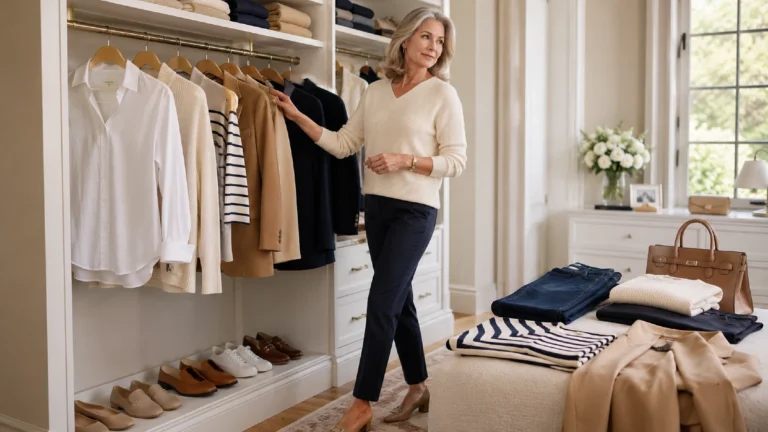
Good style needs to work outside the dressing room. Your clothes have to handle ordinary days, errands, long lunches, travel, weather changes, and everything else that fills your schedule.
That is why elegant casual dressing can be so useful. It allows you to feel comfortable without looking as though you simply grabbed whatever was closest to the door.
A polished everyday outfit might be dark jeans, a striped knit, loafers, and a lightweight trench-style jacket. None of those pieces needs to be complicated.
Comfort is not the opposite of style. The problem usually appears when comfort is achieved by combining several shapeless or unfinished pieces at once.
Comfort upgrade: Look for pull-on trousers with a clean flat front, comfortable shoes with a streamlined shape, and knitwear that holds its form.
These choices can give you ease while still creating a finished appearance.
Dressing over 50 becomes much easier when your wardrobe reflects your real calendar. If you spend most of your week walking, working from home, running errands, meeting friends, or traveling, those activities should influence what you buy.
There is little value in owning a wardrobe full of beautiful clothes that do not fit your everyday life.
Effortless Style After 50
The “not trying too hard” outfit formula
Start with comfort, then add shape. One of the simplest ways to create a current outfit is to combine an easy base with one structured element and one polished finishing detail.
Good fit + One structured piece + Comfortable polish
For example, try straight-leg jeans with a soft knit, a relaxed blazer, and clean loafers. Or combine fluid trousers with a simple shirt, a cropped jacket, and comfortable flats.
The formula is flexible because the individual pieces can change according to the season and occasion.
- Choose a comfortable base: Start with jeans, trousers, a skirt, or a dress that fits well.
- Add definition: Use a jacket, cardigan, belt, or another layer to give the outfit structure.
- Finish simply: Choose clean shoes and one or two accessories rather than adding everything at once.
Stylish after 50 is not about trying harder. It is about giving your outfit shape, ease, and one clear finishing touch.
Frequently Asked Questions
How can I look stylish after 50 without trying too hard?
Start with clothes that fit well and feel comfortable. Then add one structured piece, such as a blazer, cropped jacket, neat cardigan, or polished shirt.
Clean shoes and one intentional accessory can finish the outfit without making it feel overdone. The goal is to look put together while still feeling like yourself.
What clothes should women over 50 avoid?
There is no universal list of clothing that every woman over 50 needs to avoid. Instead, pay attention to what does not work for your body or lifestyle.
If thin fabric clings, choose something with more structure. If long tops make you feel overwhelmed, try a shorter layer or partial tuck. If uncomfortable shoes ruin an outfit, choose a polished flat or low heel instead.
The better question is not “Can I wear this?” but “Does this work for me?”
How do I make casual outfits look less frumpy?
Give the outfit some structure. Casual clothing can look unfinished when every piece is loose, soft, and oversized.
Try straight-leg pants, a cleaner shoe, a structured jacket, a sharper neckline, or a small front tuck. Even one defined element can make a casual outfit look more intentional.
Are jeans still a good choice for women over 50?
Yes. Jeans can be one of the most useful pieces in a wardrobe at any age.
Choose a rise that feels secure, denim with comfortable stretch, and a leg shape that works with your preferred proportions. Straight-leg, slim-straight, relaxed-straight, and bootcut jeans can all be useful options.
The most important factor is not the label of the jean. It is whether the fit feels comfortable and works with the rest of your wardrobe.
How many clothes do I need for a good capsule wardrobe over 50?
There is no required number. A useful capsule wardrobe is built around the clothes you genuinely wear rather than a fixed number of pieces.
Start with versatile pants, jeans, tops, layers, shoes, and one or two occasion pieces if you need them. Focus on creating multiple outfits from each item.
The goal is not to own as little as possible. It is to make the clothes you own easier to use.
Conclusion
Style after 50 does not require you to chase trends, hide your body, or completely rebuild your wardrobe.
The most useful fashion tips for women over 50 are often surprisingly simple: improve the fit, balance your proportions, choose fabrics that move well, update one detail at a time, and build outfits around the life you actually live.
Start with one change rather than trying to transform your entire closet in a weekend.
Try a different trouser shape, adjust the length of a top, change your shoes, or add a structured layer to an outfit you already love.
When your clothes feel comfortable and intentional, personal style becomes much easier. You are not dressing to follow someone else’s rules. You are building a wardrobe that works for the woman you are today.