Image credit: Sagely Chic
Freezing temperatures can make winter dressing feel like a choice between being warm and feeling stylish. Thick sweaters, oversized coats, and heavy boots can quickly make an outfit feel much heavier than you intended.
For women over 50, comfort is important, but that does not mean wearing clothes that feel shapeless or overly complicated. Winter layers can change the proportions of an outfit very quickly, especially when several relaxed pieces are worn together.
The good news is that stylish outfits for women over 50 can still work in very cold weather. Smart fabric choices, thoughtful layering, and balanced silhouettes can provide warmth while keeping your look polished.
The goal is simple: create warmth first, then build the shape of the outfit around it.
Build Warmth Close to Your Body Before Adding Bulk
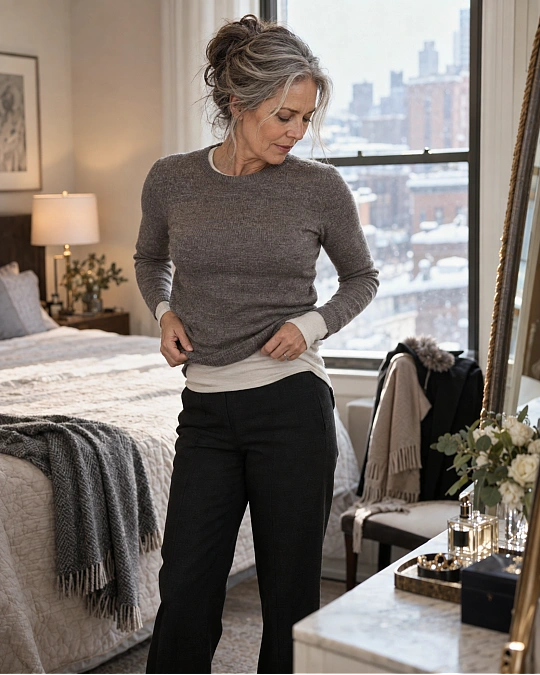
Image credit: Sagely Chic
The warmest winter outfit is not necessarily the one with the thickest sweater. Several lightweight layers can work together to retain warmth without creating excessive volume.
Begin with a thin base layer that fits comfortably underneath your regular clothing. A fitted long-sleeve top, lightweight thermal, or fine merino knit can add insulation while remaining almost invisible beneath a sweater.
The base layer should skim the body rather than hang loosely. This keeps the next layers from becoming unnecessarily bulky.
Fabric note: Merino and other wool fabrics can provide considerable warmth without the thickness of a chunky knit. Synthetic thermal materials can also be useful when you want something lightweight and easy to wash.
Here is a simple guide to useful winter layers:
| Layer or Fabric | What to Look For and Why It Works |
|---|---|
| Merino base layer | Lightweight, warm, and comfortable beneath sweaters and jackets. |
| Cotton tee | Comfortable for indoor wear and useful as a lighter layering piece. |
| Fine wool knit | Provides warmth without the volume of a very chunky sweater. |
| Fleece layer | Useful for casual days when warmth and comfort are the main priorities. |
| Wind-resistant outer layer | Helps block cold air from reaching the layers underneath. |
You do not need every layer at the same time. Each piece should have a purpose, whether that is insulation, wind protection, or comfort.
Keep Your Midlayers Soft and Controlled
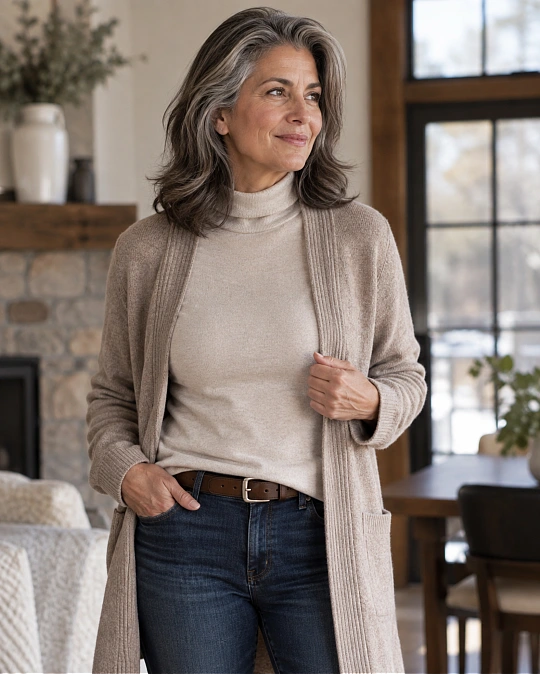
Image credit: Sagely Chic
Winter outfits can begin to look shapeless when every layer has an oversized silhouette. A roomy sweater underneath a loose cardigan and oversized coat can quickly add more width than you want.
Instead, mix different proportions.
If your sweater is relaxed, pair it with straight-leg trousers or jeans. If you prefer wide-leg pants, a cleaner knit around the shoulders and waist can provide more definition.
Fine crewnecks, mock necks, V-neck sweaters, and simple cardigans are especially useful because they add warmth without creating excessive fabric around the arms.
An open cardigan or sweater jacket can also be practical when you spend much of the day indoors. It provides another layer while creating a vertical line through the center of the outfit.
For easy everyday outfits for women over 50, try combinations such as:
- Fine knit sweater + straight-leg jeans + ankle boots
- Thermal top + cardigan + tailored trousers
- Mock neck + dark denim + long wool coat
- Slim knit + wide-leg trousers + structured short jacket
None of these combinations requires hiding your shape. The purpose is simply to make sure every layer has enough room to work without competing with the others.
Let the Coat Create the Shape of the Outfit
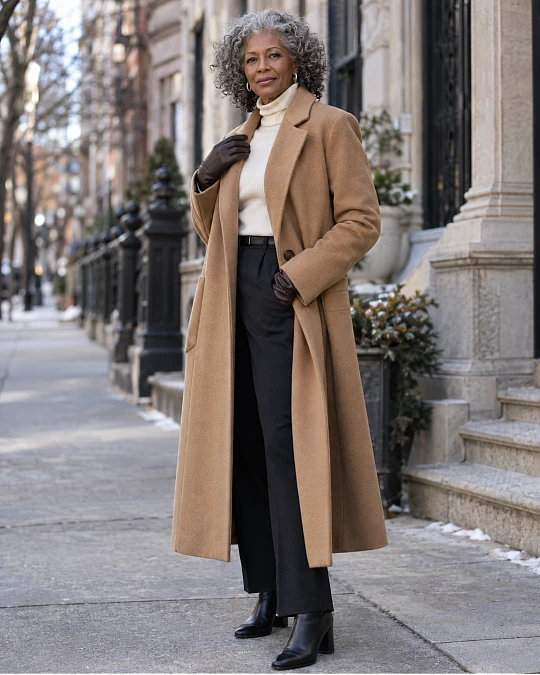
Image credit: Sagely Chic
In genuinely cold weather, your coat is much more than an accessory. It may be the most visible part of your outfit, so its shape deserves attention.
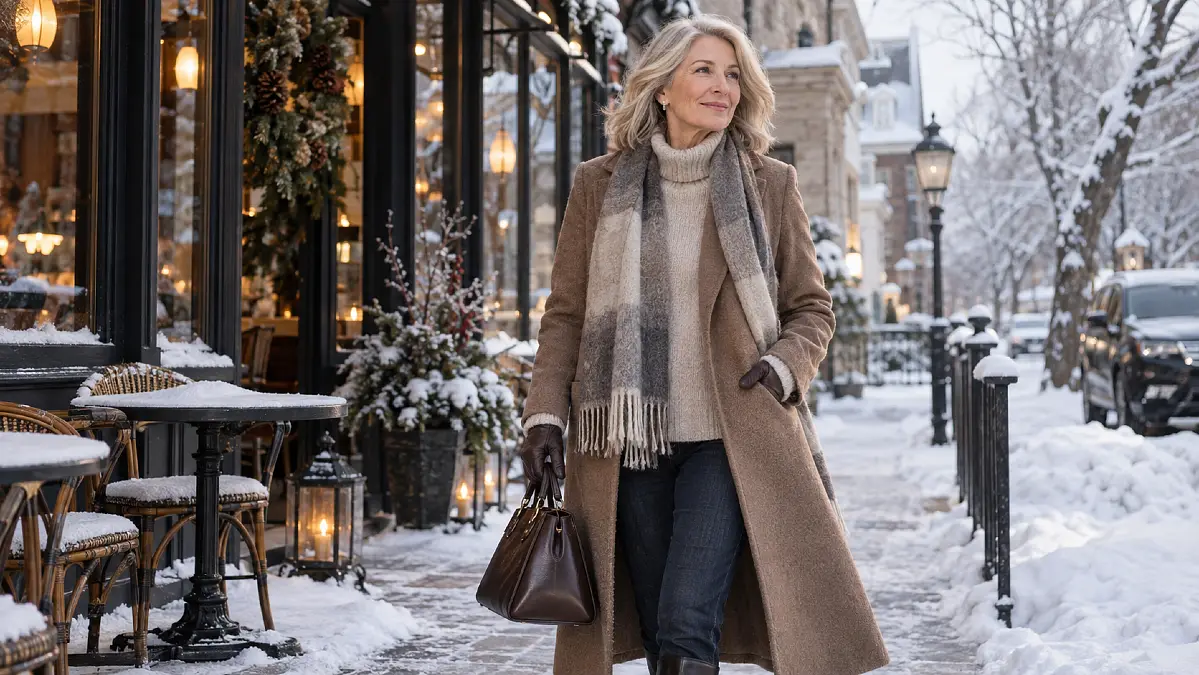
A long coat can make a simple sweater-and-jeans combination look instantly more polished because it creates one clean outer line. A knee-length or longer coat can also provide more protection when temperatures and wind drop.
If you prefer puffer coats, pay attention to the quilting and overall cut. Not every puffer creates the same amount of visual volume. Straighter shapes, subtle shaping, and belted styles can provide warmth while maintaining a cleaner silhouette.
A coat does not need a tightly defined waist to look polished. Good shoulder placement, a clean front, and enough room to move can be more important.
Fit note: Try your winter coat over the sweater or knit you normally wear during cold weather. A coat that feels perfect over a thin shirt may become restrictive across the shoulders or arms once you add real winter layers.
Your coat can also change depending on the weather while your base outfit stays the same.
| Base Outfit | Cold but Dry | Windy Day | Dressier Occasion |
|---|---|---|---|
| Sweater + jeans | Wool coat | Insulated puffer | Long tailored coat |
| Knit + trousers | Short wool jacket | Longer insulated coat | Belted coat |
| Knit dress + tights | Structured coat | Warm full-length coat | Clean longline coat |
| Cardigan + dark denim | Car coat | Hooded insulated coat | Single-breasted coat |
Think of the coat as the frame around your outfit. It should complement the clothing underneath rather than simply hide it.
Use Boots and Winter Accessories to Make Practical Clothes Look Intentional
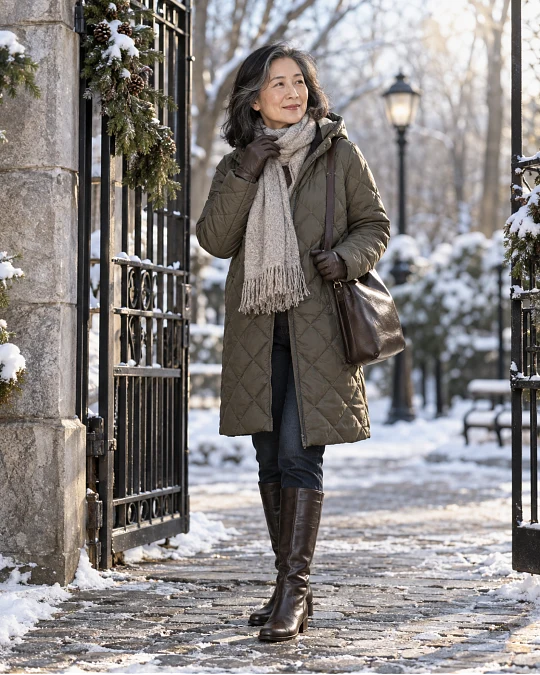
Image credit: Sagely Chic
Even a polished winter outfit can become uncomfortable if your feet are cold. Footwear needs to provide both warmth and practical support when temperatures drop.
A clean leather or weather-resistant ankle boot works well with straight jeans, trousers, and many midi skirts. Knee-high boots provide additional coverage and can work especially well with longer skirts and dresses.
Flat boots can look just as polished as heeled styles. A simple toe shape, clean shaft, and minimal hardware can give a low-heeled boot a refined appearance.
Socks matter too. Lightweight dress socks may not provide enough warmth on extremely cold days, while a warm wool-blend pair can make the same boots considerably more comfortable.
Accessories can provide additional warmth without requiring another full clothing layer. Scarves, gloves, and hats also give you an easy way to refresh a basic coat.
Try coordinating them through color.
A camel coat with chocolate gloves and a cream scarf creates a soft, connected palette. A navy coat with burgundy accessories adds a richer accent without making the outfit look overly busy.
If winter hats are not usually your favorite accessory, start with something simple. A plain knit beanie in a shade close to your coat, scarf, or hair can blend naturally into the outfit.
Fix the Small Details That Make Winter Layers Feel Heavy
You do not have to remove warm pieces simply to achieve a cleaner silhouette. Small adjustments can often make the biggest difference.
If your winter outfit feels uncomfortable or visually heavy, try these changes before replacing the whole look:
- If the sweater feels bulky under your coat: Replace the chunky knit with fine wool or merino.
- If the outfit looks shapeless: Add structure through the coat, trouser line, or neckline instead of automatically reaching for a tight belt.
- If wide-leg trousers feel heavy with winter boots: Try a slightly shorter hem or a boot with a cleaner, narrower shaft.
- If the entire outfit looks dark: Introduce cream, soft gray, camel, burgundy, forest green, or another flattering color near the face.
- If a long coat feels overwhelming: Keep the layers underneath simple and allow the coat to create the main silhouette.
The objective is not to make your body look smaller. It is to create a few clear visual lines so the clothes appear intentional instead of stacked together.
This becomes especially helpful when creating chic outfits for women over 50, because winter dressing often depends more on proportion than decoration.
Build One Winter Uniform You Can Repeat
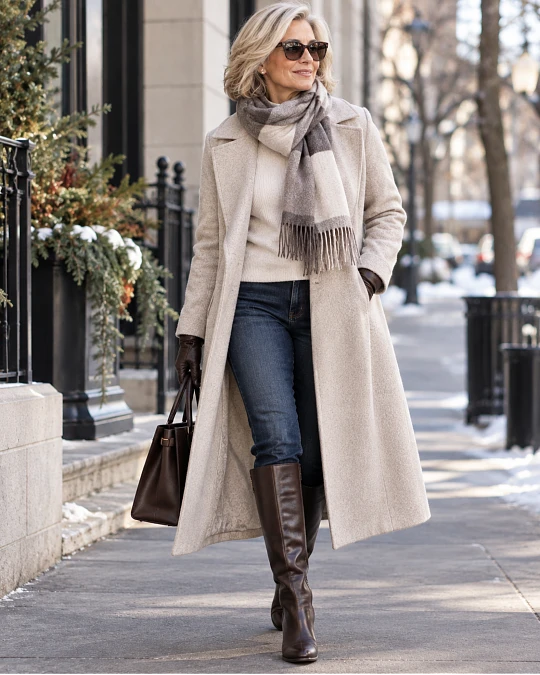
Image credit: Sagely Chic
A winter wardrobe becomes much easier when you stop trying to create a completely different outfit every morning.
Start with one reliable formula that fits your actual lifestyle.
Formula: thin warm base layer + polished knit + straight or softly wide trousers + long coat + practical boots
This formula works because the layers become more structured as they move outward. The base provides warmth, the knit adds insulation, and the coat creates the finished silhouette.
You can then adjust the same formula for different occasions without rebuilding your entire wardrobe.
| Occasion | Pieces | Why It Works |
|---|---|---|
| Errands | Merino top + straight jeans + puffer + ankle boots | Warm, practical, and comfortable for moving around. |
| Lunch out | Fine knit + trousers + wool coat + leather boots | Clean lines make simple pieces feel polished. |
| Casual workday | Mock neck + dark jeans + cardigan + long coat | Comfortable indoors without appearing too relaxed. |
| Evening out | Knit dress + warm tights + long coat + tall boots | Provides warmth without requiring several visible layers. |
Once you know which winter formula works best for you, shopping becomes easier too. New pieces can be judged by how well they work with the clothes already in your wardrobe.
That is one of the simplest ways to create stylish outfits for women over 50 without filling your closet with items that only work for one occasion.
Frequently Asked Questions
How can I dress warmly without looking bulky over 50?
Use several thinner layers instead of depending on one extremely thick sweater. A lightweight thermal, fine knit, and structured coat can provide warmth while keeping the overall shape cleaner.
It also helps to vary proportions. If one part of your outfit is oversized, keep another part more controlled so the entire silhouette does not become loose.
What pants are best for freezing winter weather?
Straight-leg trousers, dark jeans, ponte pants, and softly wide-leg trousers can all work well. Choose styles that allow comfortable movement and pair naturally with your winter boots.
When temperatures are particularly low, a thin thermal layer underneath can add warmth without significantly changing the appearance of the outfit.
Can women over 50 wear puffer coats and still look polished?
Yes. Look for puffers with clean quilting, a simple color, and a silhouette that gives you the amount of volume you actually want.
Pairing a puffer with streamlined trousers, dark denim, or simple boots can help balance the outer layer and keep the outfit looking intentional.
What colors make winter outfits look more modern?
Charcoal, navy, chocolate, camel, cream, and soft gray are versatile winter neutrals. Burgundy, forest green, deep teal, and muted red can add color without making outfits difficult to coordinate.
You do not need a huge color palette. Two or three connected shades in one outfit can often look more polished than many contrasting colors.
How do I make casual winter clothes look less frumpy?
Focus on the finish rather than making every piece dressier. A well-shaped coat, clean boots, neat trouser hem, and intentional accessories can make very basic winter clothing look more refined.
Comfortable clothing can still look polished when the fit, proportions, and overall lines work together.