Some people reach their fifties and discover that time alone feels less like isolation and more like relief. A quiet evening, an open calendar, or an uninterrupted morning can become genuinely enjoyable.
People who enjoy being alone after 50 are not necessarily antisocial or disconnected. In many cases, they have simply become more comfortable with their own preferences, energy levels, boundaries, and need for quiet.
Healthy solitude can create space for reflection, hobbies, rest, and deeper relationships. The important distinction is whether time alone feels restorative or whether it comes with persistent sadness, fear, or withdrawal from people you value.
Here are eight patterns that may appear in people who enjoy being alone after 50, along with practical ways to build a healthier relationship with solitude.
At a Glance
| Focus | Core Trait | Boundary | Potential Benefit |
|---|---|---|---|
| Midlife and beyond | Personal autonomy | Clearer boundaries | More intentional use of time |
Why Solitude Replaces Performance After Fifty
Image credit: Sagely Chic
For many adults, social life changes gradually after 50. Work responsibilities may shift, children may become more independent, and there may be less interest in maintaining every social obligation simply because it has always been part of the routine.
That can make quiet time feel different. Instead of viewing an empty evening as something that needs to be filled, you may begin to see it as an opportunity to read, rest, think, create, or simply enjoy your surroundings.
Enjoying solitude does not mean that relationships no longer matter. It can mean that you become more selective about how you spend your limited attention and energy.
The most useful question is not whether you spend a lot of time alone. It is how you feel during that time. Peace, curiosity, and restoration are very different from persistent loneliness or withdrawal.
💡 PRO TIP
The Core Mechanism of Thriving Alone
Pay attention to what happens to your energy when you step away from constant social demands. If quiet time helps you feel rested and more present, it may be serving a healthy purpose.
The Exact Point Where Social Exhaustion Turns Into Self-Governance

Image credit: Sagely Chic
Imagine arriving home after a long gathering and sitting quietly in the car for a few minutes before going inside. You are not necessarily avoiding anyone. You may simply need a short transition between the outside world and your own space.
As people get older, they may become more aware of which activities leave them energized and which ones leave them drained. That awareness can make it easier to make deliberate choices about social commitments.
Instead of inventing complicated excuses when you need a quiet weekend, you can communicate your preference directly.
A simple response might be: “Thank you for thinking of me, but I’m keeping this weekend quiet.” You do not need to provide a long explanation unless you want to.
If someone asks whether everything is okay, you can simply say, “I’m doing fine. I just need some uninterrupted time to recharge.”
Solitude Shift — At a Glance
| Area | Healthy Shift |
|---|---|
| Pause Time | A few quiet minutes before changing activities |
| Social Pressure | Less need to invent elaborate excuses |
| Energy | More awareness of what feels restorative |
The Reduced Tolerance for Small Talk and Empty Noise

Image credit: Sagely Chic
Small talk can be pleasant, but not every conversation needs to become a long interaction. After years of social experience, some people become more aware of the difference between meaningful connection and conversations that simply fill silence.
You might notice that repetitive complaints or endless casual chatter no longer hold your attention the way they once did. That does not automatically mean you have become impatient or unfriendly.
It may simply mean that you value conversations with a clearer sense of purpose, warmth, humor, or genuine curiosity.
When you need to leave a conversation, there is no need to become cold. A friendly “It was good talking with you, but I need to get back to what I was doing” can be enough.
Signs of Healthy Solitude
- Enjoying quiet mornings at home
- Having enough comfort with yourself to read or pursue hobbies alone
- Choosing deeper conversations when possible
- Leaving social situations without feeling obligated to stay indefinitely
How Internal Validation Replaces External Applause

Image credit: Sagely Chic
Wanting encouragement from other people is completely normal. Sharing an achievement, celebrating good news, or enjoying compliments can all be healthy parts of connection.
The difference comes when outside approval is no longer the only thing making an experience feel worthwhile.
Someone who is comfortable alone may enjoy a personal accomplishment even when nobody else sees it. They might finish a book, tend a garden, complete a creative project, or enjoy a quiet afternoon without needing to announce the experience.
This kind of independence can make solitude feel less like absence and more like personal space.
⚠️ COMMON MISTAKE
The Trap of Isolation
Do not confuse healthy solitude with cutting yourself off from everyone. Maintaining a few meaningful relationships can provide emotional support while still leaving plenty of room for time alone.
The Capacity to Sit With Uncomfortable Truths Without Distraction
Image credit: Sagely Chic
Quiet time can sometimes bring difficult thoughts to the surface. An old regret, an unresolved decision, or a worry about the future may become easier to notice when there is no television, conversation, or phone notification competing for attention.
Instead of immediately distracting yourself, you can give the thought a little space. That does not mean sitting with overwhelming distress indefinitely. It simply means becoming more comfortable noticing your emotions without automatically reacting to them.
For example, if a difficult thought appears during a quiet afternoon, put the phone aside and take a few slow breaths. Ask yourself what the thought is actually asking you to notice.
Sometimes the answer may be practical. Other times, you may simply recognize the feeling and allow it to pass without turning it into a larger problem.
🌱 The Evolution of Solitude
| Stage | What It Can Look Like |
|---|---|
| 1. Exhaustion | Recognizing which social situations regularly leave you drained. |
| 2. The Pause | Protecting small periods of unstructured time without feeling guilty. |
| 3. The Preference | Choosing a peaceful evening when a social obligation feels unnecessary. |
| 4. Deep Peace | Becoming comfortable with your own company and using solitude for restoration. |
An Absolute Refusal to Manage Anyone Else’s Emotional Weather
Image credit: Sagely Chic
Some people spend years trying to keep everyone around them comfortable. They notice every change in tone, rush to smooth over disagreements, and feel responsible whenever someone else is unhappy.
With time, they may realize that caring about someone does not mean managing every emotion that person experiences.
If someone is frustrated at the dinner table, for example, you can remain kind without immediately trying to solve the problem. Adults are generally capable of having difficult feelings without someone else taking responsibility for fixing them.
This does not mean ignoring serious concerns or becoming emotionally unavailable. It means recognizing the difference between offering support and taking ownership of another person’s feelings.
| Old People-Pleasing Habit | Mature Solitude Practice |
|---|---|
| Jumping in to fix every bad mood | Allowing others room to manage their feelings |
| Apologizing for needing quiet time | Stating your need for space directly |
| Accepting every invitation out of guilt | Choosing commitments more intentionally |
| Monitoring everyone’s comfort | Respecting your own emotional limits too |
The Deep Appreciation for Uninterrupted Routines
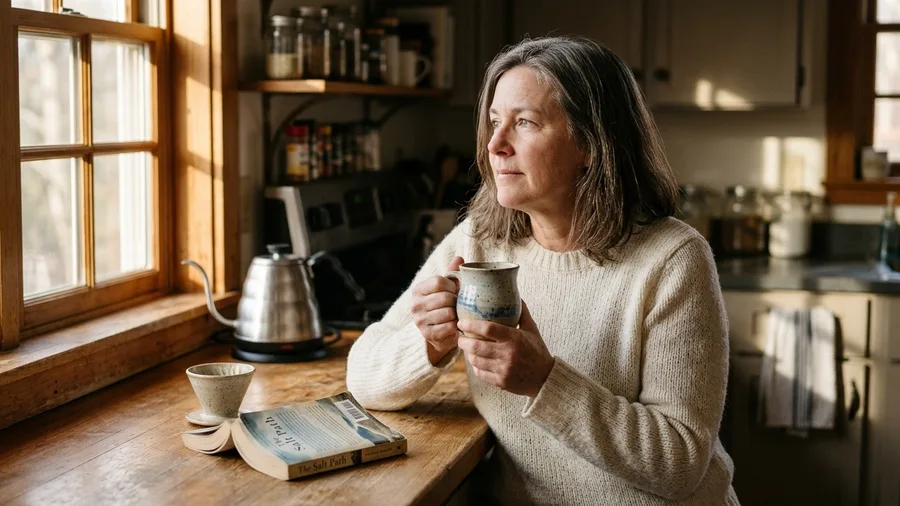
Image credit: Sagely Chic
Spontaneity can be enjoyable, but many people also discover that predictable routines make their days easier to manage. A familiar morning coffee, a quiet reading period, a walk, or an hour devoted to a hobby can create useful structure.
Think about the first two hours of your day. Are they mostly shaped by your own priorities, or do notifications, messages, and other people’s requests immediately take over?
If your mornings regularly begin with outside demands, experiment with protecting a small period for yourself. You might read, stretch, make breakfast slowly, sit outside, or simply enjoy your coffee without checking your phone.
The goal is not to create a rigid schedule. It is to make sure that some part of the day belongs to you.
When someone asks you to change a routine that matters to you, a simple response can work: “My mornings are usually quiet, but Thursday afternoon works for me.”
The Path to Comfortable Solitude
| Stage | Focus | What to Notice |
|---|---|---|
| Month 1 | Noticing the Drain | Which social activities consistently leave you tired? |
| Month 3 | Claiming Pockets | Are you protecting short periods of uninterrupted time? |
| Month 6 | Dropping the Mask | Can you enjoy quiet time without over-explaining it? |
| Year 1+ | Full Sanctuary | Does solitude feel like a healthy source of renewal? |
Frequently Asked Questions
Is enjoying being alone a sign of depression?
Not necessarily. Enjoying solitude can be completely healthy when you still have activities, interests, and relationships that matter to you. Depression can involve persistent low mood, loss of interest, hopelessness, or significant changes in daily functioning. If those symptoms continue or interfere with everyday life, talking with a qualified healthcare professional can be helpful.
How do I start enjoying quiet time if I am used to constant noise?
Start small. Try five or ten minutes without television, podcasts, social media, or other background noise. Sit with a cup of coffee, take a short walk, or look outside the window and simply notice your surroundings.
You do not need to enjoy complete silence immediately. Give yourself time to discover which kind of quiet feels comfortable.
Does preferring solitude mean cutting off friends?
No. You can enjoy plenty of time alone while maintaining close friendships and family relationships. The goal is to create a balance that gives you enough personal space without removing the relationships that bring meaning and support to your life.
How can I set boundaries without hurting people’s feelings?
Keep your response respectful and straightforward. You can say, “Thank you for inviting me, but I won’t be able to make it this time.” You do not have to create an elaborate explanation for every decision.
The One Choice That Locks In Your Peace
If you want to explore the benefits of solitude, start with one protected period rather than changing your entire schedule.
Try keeping the first 30 minutes of your morning free from unnecessary notifications or obligations. Use that time for something that genuinely restores you.
Over time, you may learn that enjoying being alone after 50 is less about withdrawing from life and more about becoming intentional about how you participate in it.
Take Your Next Step Toward Quiet Clarity
Look at your calendar for the coming week and identify one commitment you accepted mainly out of habit or pressure.
If it is safe and appropriate to decline, replace that time with something you genuinely enjoy: reading, walking, gardening, cooking, creating, or simply having an uninterrupted morning.
Healthy solitude does not require giving up connection. It gives you the space to choose connection more intentionally.