The Best Jewel Tones for Women Over 50 (And How to Wear Them)
Jewel tones can instantly give an outfit more depth, but finding the right version of a rich color is not always as simple as choosing the shade you like most. Emerald, sapphire, teal, plum, ruby, and amethyst can all look beautiful, yet the wrong intensity or combination can sometimes feel overpowering.
After 50, changes in hair color, skin contrast, and personal style may affect how certain colors look near your face. That does not mean you need to give up strong colors. Instead, it helps to pay attention to shade depth, fabric, proportion, and the neutrals you wear alongside them.
The easiest way to make jewel tones feel sophisticated is to treat them like practical wardrobe colors rather than special-occasion shades. A well-chosen jewel-tone sweater, blouse, jacket, or trouser can work just as easily for everyday dressing as it can for dinner.
Key Takeaways:
- Start with rich shades such as emerald, sapphire, deep teal, plum, or amethyst.
- Choose color intensity based on your natural contrast rather than your age.
- Keep the silhouette simple when the color is already visually strong.
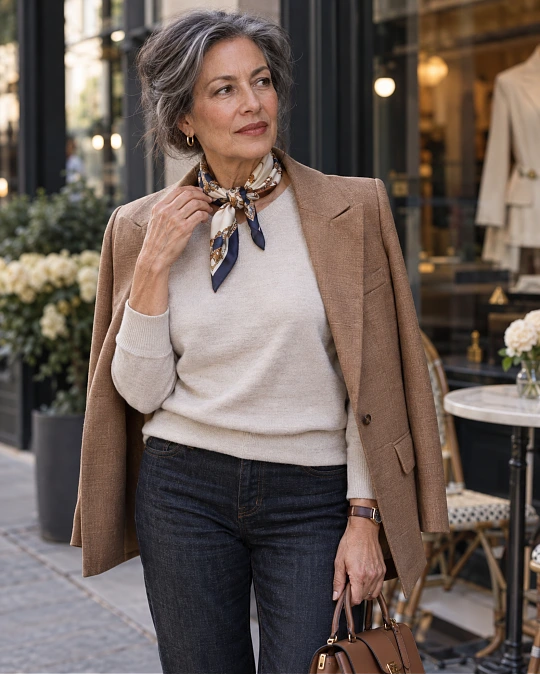
- Use cream, camel, denim, charcoal, navy, or chocolate to balance saturated shades.
- Fabric can completely change whether a jewel tone feels casual or dressy.

Why Jewel Tones Can Look So Good Near the Face
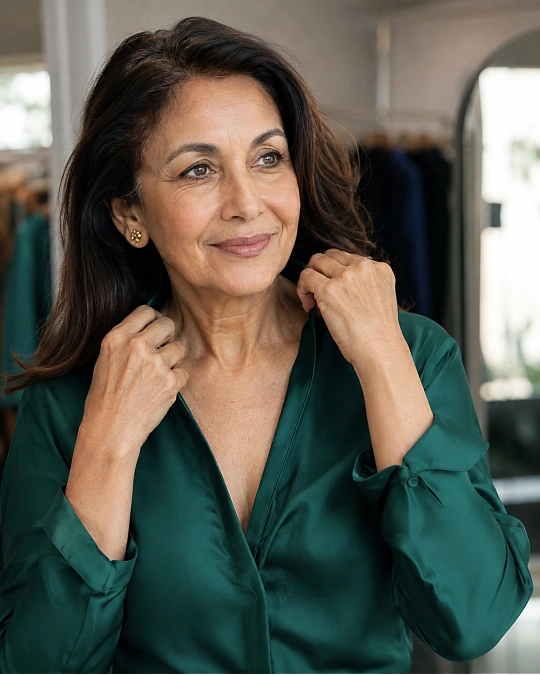
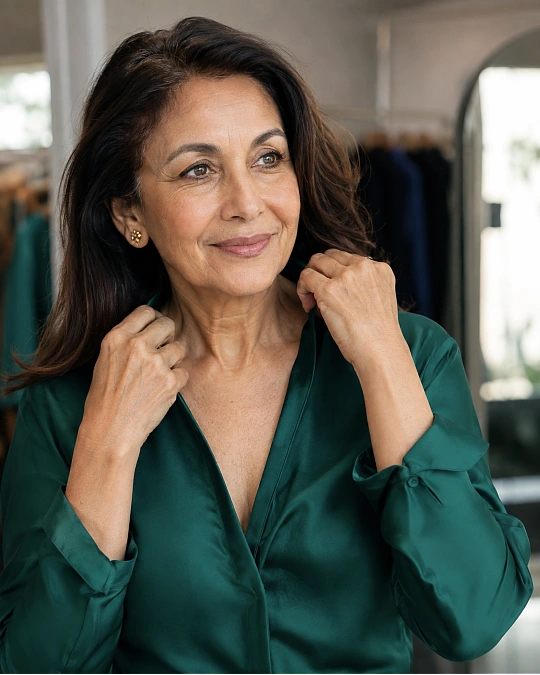
Jewel tones have more depth than many everyday brights, which gives them a polished appearance without requiring neon-level intensity. Emerald, sapphire, ruby, deep teal, amethyst, and plum are all examples of colors that can create definition around the face.
This can be especially useful when your overall coloring has become softer over time. Silver or grey hair, lighter brows, or less contrast between your hair and skin can sometimes make very pale clothing seem less noticeable.
A richer blouse, sweater, scarf, or jacket can restore some visual definition. The goal is not to make the color louder than you are. Ideally, the shade should make your complexion look clear while still allowing your face to remain the focus.
Use these shades as a starting point rather than a strict color rule:
| Jewel Tone | What to Look For | Easy Neutral Pairing |
|---|---|---|
| Emerald | Clear green or a balanced blue-green | Navy, camel, cream |
| Sapphire | Rich medium-to-deep blue without looking almost black | Charcoal, white, taupe |
| Ruby | Deep red with richness rather than neon brightness | Black, chocolate, ivory |
| Amethyst | Blue-purple or berry-based purple | Grey, navy, soft beige |
| Deep Teal | Balanced blue-green with noticeable depth | Cream, denim, brown |
| Plum | Muted wine-purple rather than vivid violet | Camel, charcoal, blush |
You do not need a wardrobe filled with every jewel tone. Two or three shades that consistently make your complexion look fresh can become your personal starting palette.
Emerald, Sapphire, Teal, and Plum Are Easy Places to Start
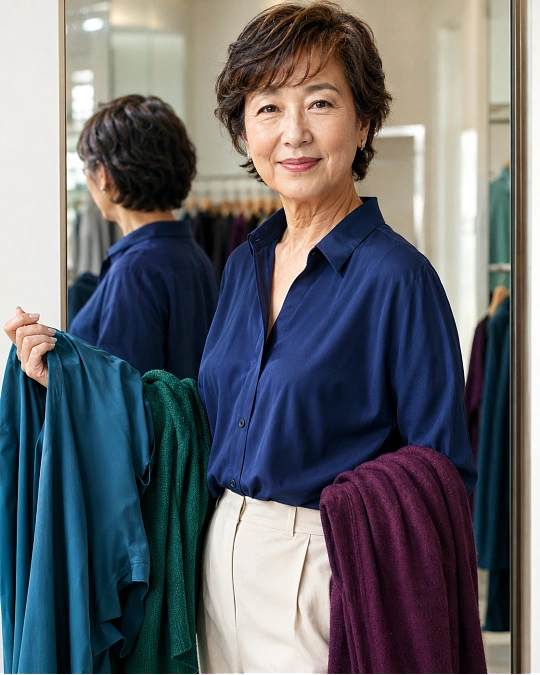
If saturated colors feel unfamiliar, begin with shades that already have a familiar base. Blue, blue-green, and purple-based colors can be especially easy to work into an existing wardrobe.
Sapphire looks natural in everyday pieces such as a V-neck sweater, button-front blouse, blazer, or simple knit dress. Because it is based on blue, it can feel familiar even when the color has more depth than your usual navy.
Emerald makes a stronger statement, so it works well when the garment has a clean shape. Try it in a fine sweater, straight-leg trousers, simple blouse, or softly structured jacket.
Deep teal is another useful middle ground. It combines the familiarity of blue with some of the richness of green and works particularly well with denim, brown leather, cream, and neutral knits.
Plum and amethyst offer a softer way to introduce purple. They can add warmth and depth without the high intensity of a vivid violet.
Color Tip: Test a garment beside your face in natural daylight. If your skin looks clearer and more even before you notice the garment, the color is likely working with your natural coloring.
Let Your Skin Contrast Choose the Strength of the Color
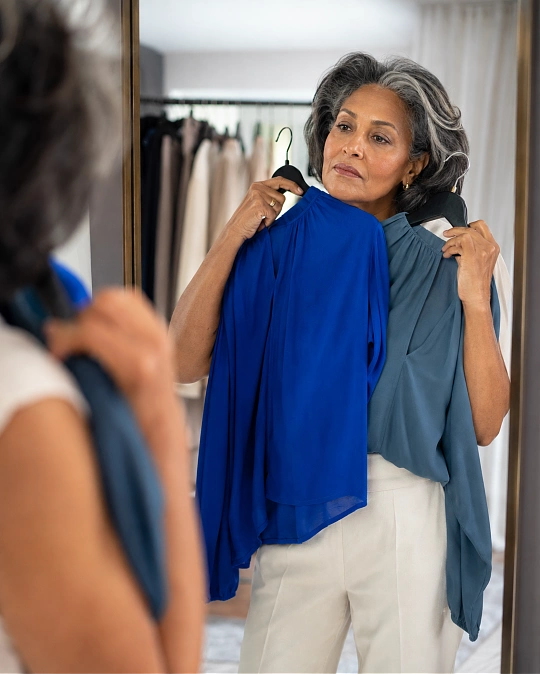
The name of a color tells you only part of the story. Two sweaters described as emerald can have completely different levels of brightness, saturation, and depth.
If very intense colors seem to dominate your face, look for softened versions. Smoky teal, muted emerald, aubergine, berry, petrol blue, and softened plum can still provide richness without feeling overwhelming.
If deeper shades make your complexion look more defined, you may find that strong sapphire, ruby, forest green, or rich violet feels completely natural.
Instead of judging each color by itself, compare two versions side by side:
- Place bright emerald beside a softer teal.
- Compare ruby red with a deeper burgundy-red.
- Test clear sapphire against petrol blue.
- Compare vivid violet with plum or aubergine.
This approach is more useful than trying to follow a rigid age-based color chart. You are simply discovering how much saturation works comfortably with your own coloring.
| Common Rule | A More Practical Approach |
|---|---|
| Grey hair means you should only wear soft colors. | Test both rich and softened shades near your face. |
| Black is the only reliable partner for jewel tones. | Try navy, cream, charcoal, camel, or chocolate as alternatives. |
| Strong colors should only appear in accessories. | A simple jewel-tone sweater, dress, or blouse can carry the outfit. |
| Warm coloring requires warm colors only. | Consider undertone together with depth and saturation. |
| Jewel tones are automatically formal. | Pair them with denim, knitwear, flat shoes, and relaxed layers. |
Getting dressed after 50 becomes much easier when color is treated as something you can adjust rather than a collection of permanent rules.
Keep the Silhouette Simple When the Color Is Strong
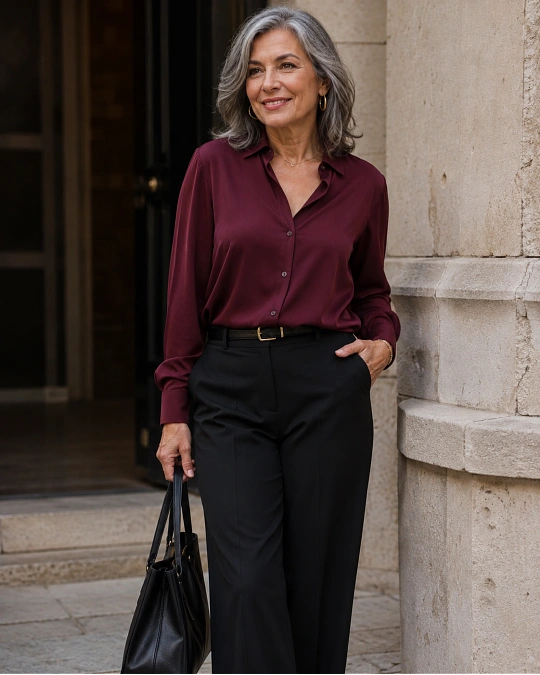
A saturated color already gives an outfit plenty of visual interest. Because of that, the rest of the look often benefits from clean lines and fewer competing details.
For example, an emerald blouse can look polished with straight dark trousers and simple shoes. The color and fabric provide enough interest without needing several statement accessories at once.
The same principle works for casual dressing. A sapphire sweater with straight-leg jeans and loafers feels intentional because every piece has a clear purpose.
Proportion matters too. If your jewel-tone top is loose or flowing, a straighter trouser or cleaner denim shape can create balance. If the strong color appears in wide-leg trousers or a fuller skirt, a simpler knit or tucked-in top can keep the outfit from feeling visually heavy.
Fit Tip: Because saturated colors naturally attract attention, check the details that affect the overall shape first. Shoulder placement, sleeve length, waist position, and trouser length can make more difference than adding another accessory.
Fabric Can Make the Same Jewel Tone Look Casual or Dressy
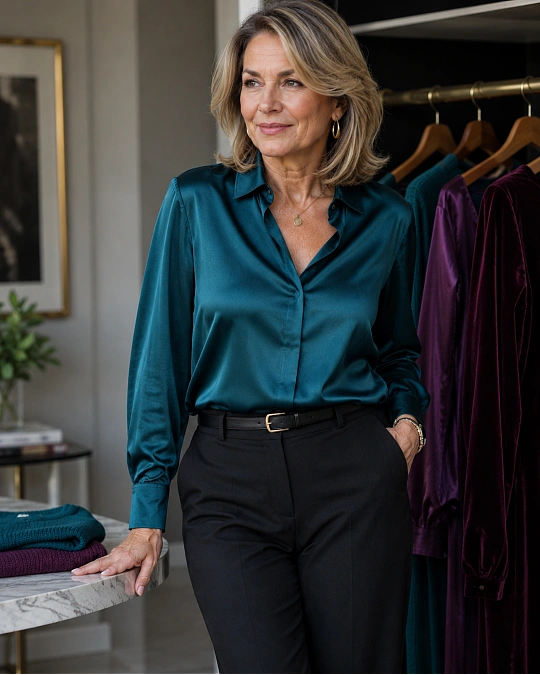
The fabric can completely change the personality of a jewel tone. The same deep red that looks elegant in satin may feel relaxed and practical when made into a cotton sweater.
Satin, velvet, silk-like fabrics, and fine-gauge knits tend to make saturated shades look richer. These textures can work particularly well for dinners, celebrations, winter gatherings, and evening outfits.
Matte materials create a more casual effect. Cotton, denim, jersey, wool blends, and textured knits make strong colors easier to wear during ordinary days.
This means you do not need different colors for every occasion. One favorite shade can work throughout your wardrobe when the fabric changes.
| Fabric | Good For | Effect |
|---|---|---|
| Fine Knit | Work, travel, everyday outfits | Polished without feeling overly formal |
| Cotton or Jersey | Errands and relaxed dressing | Makes saturated colors feel approachable |
| Satin | Dinner and special occasions | Adds light reflection and richness |
| Velvet | Evening and winter events | Creates depth through texture |
| Wool Blend | Coats, sweaters, trousers, jackets | Adds structure to rich color |
Comfort Tip: If shiny fabrics feel too clingy, choose a design with gentle movement through the body. A well-draped garment often looks more refined than simply choosing a much larger size.
Use Neutrals to Control How Bold the Outfit Feels
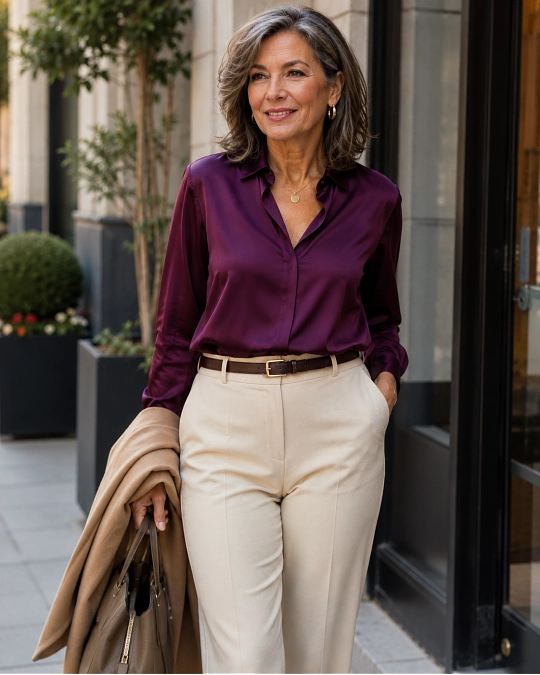
There is no need to build an entire outfit around jewel tones. One strong color surrounded by quieter pieces is often the easiest way to make saturated shades feel sophisticated.
For a softer combination, try cream, camel, taupe, mushroom, soft grey, or medium-wash denim. These neutrals allow the color to stand out without creating a hard contrast.
If you prefer a sharper look, charcoal, navy, chocolate brown, crisp white, or black can provide more definition.
The neutral you choose can also change the mood. Emerald with black feels crisp and dramatic, while emerald with camel has a warmer and more relaxed character.
Sapphire paired with white looks clean and fresh. Sapphire with grey feels quieter. Deep teal with chocolate brown creates a softer combination with an earthy quality.
One simple styling trick is to repeat your neutral. For example, wear a plum sweater with charcoal trousers and charcoal loafers. Repeating the neutral makes the outfit feel connected without introducing several unrelated colors.
When Jewel Tones Start Looking Too Heavy
A strong color is not necessarily the problem when an outfit feels overwhelming. More often, several visually powerful details are competing at the same time.
Before removing the jewel tone completely, change one part of the outfit:
- If the color dominates your face: Move it lower in the outfit by wearing it as trousers, a skirt, shoes, or a bag.
- If the outfit feels too formal: Swap satin or velvet for cotton, denim, knitwear, or suede.
- If the overall look feels too dark: Add cream, soft white, lighter denim, or a lighter neckline.
- If the outfit feels dated: Simplify the accessories and choose a cleaner shoe or bag shape.
Jewel tones become much more versatile when you stop treating them as holiday-only colors. A teal sweater can be part of a normal weekday outfit, and an emerald blouse does not have to wait for a special dinner.
A Jewel-Tone Outfit Formula You Can Repeat All Year
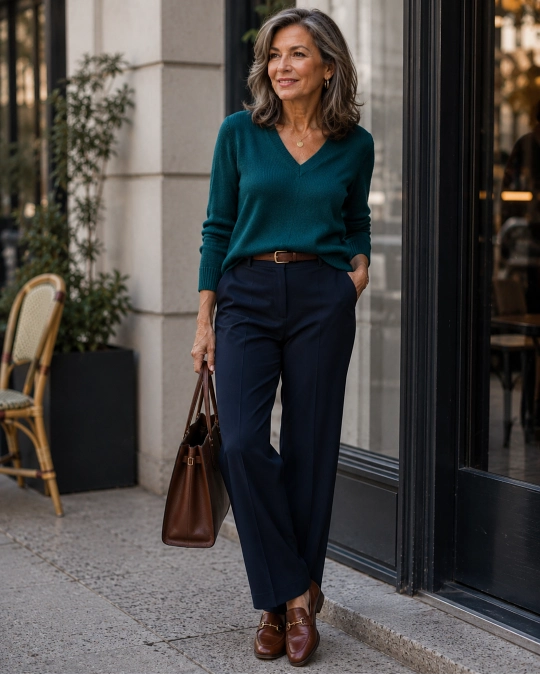
A useful color formula should make getting dressed easier rather than giving you another set of rules to remember.
Formula: jewel-tone top + simple neutral bottom + streamlined shoe
Try an emerald sweater with navy trousers and loafers, or a sapphire blouse with dark jeans and ankle boots. The jewel tone provides personality while the rest of the outfit remains familiar.
For warmer weather, switch the sweater for a sleeveless teal shell and pair it with cream trousers or a linen-blend bottom. When temperatures drop, add a camel coat or charcoal blazer without changing the basic color formula.
You can also reverse the idea:
Formula: neutral top + jewel-tone bottom + neutral shoe
A cream sweater with plum trousers and brown loafers brings color into the outfit without placing the strongest shade directly beside your face.
This approach works especially well when you enjoy jewel tones but prefer a more understated appearance.
Frequently Asked Questions
What jewel tones look best on women over 50?
There is no universal list that works for every woman. Emerald, sapphire, deep teal, ruby, plum, and amethyst are useful shades to test, but the most flattering version depends on your coloring, contrast, and the depth of the particular shade.
Try two versions of the same color near your face in natural light. The better option should make your complexion appear clearer without making the clothing the first thing you notice.
Can women with grey hair wear jewel tones?
Absolutely. Grey and silver hair can provide an interesting contrast against saturated colors and may make rich shades look especially defined.
If very clear colors feel too strong, try softened versions such as smoky teal, muted emerald, berry, aubergine, or petrol blue. You can keep the depth without using maximum saturation.
What neutral looks best with jewel tones?
Navy, cream, charcoal, camel, chocolate brown, soft grey, and denim are all versatile choices.
The best option depends on the effect you want. Cream and camel soften rich colors, while charcoal and black create stronger contrast.
Can jewel tones work for casual outfits?
Yes. The fabric and styling make a major difference.
Try a sapphire cotton sweater with jeans, an emerald knit with relaxed trousers, or a deep teal top under a denim jacket. Casual fabrics and simple footwear keep saturated colors from feeling too formal.
Should accessories match a jewel-tone outfit?
They do not have to match exactly. Neutral leather shoes, a simple handbag, or understated metallic jewelry can give the color enough support without competing with it.
If you enjoy colorful accessories, repeat one small accent rather than trying to coordinate every piece perfectly.
Let Rich Color Become Part of Your Normal Wardrobe
Jewel tones do not belong to one particular age or occasion. The most useful shade is the one that works with your natural coloring, fits comfortably into your wardrobe, and suits the way you actually live.
Creating polished outfits after 50 is less about following strict color rules and more about balancing shade depth, fabric, fit, proportion, and contrast.
Start with one color you genuinely like—perhaps emerald, sapphire, deep teal, plum, or amethyst. Wear it with a familiar neutral and notice how the combination feels. Once you find a version that works, you can repeat that formula in different fabrics and outfits throughout the year.