How to Wear a Trench Coat Over 50 Like a Parisian Woman
A trench coat has a way of making an everyday outfit look instantly more polished. But getting the proportions right can sometimes be tricky. A coat that is too stiff, too long, or too loose can overwhelm the rest of your clothes.
For women over 50, creating a Parisian-inspired outfit is less about following a strict fashion formula and more about finding an easy balance between structure and comfort. The trench should complement your clothes rather than take over the entire look.
Fortunately, you can create this style with pieces you probably already have. Straight-leg jeans, tailored trousers, simple sweaters, loafers, sneakers, and dresses can all work beautifully beneath a well-chosen trench coat.
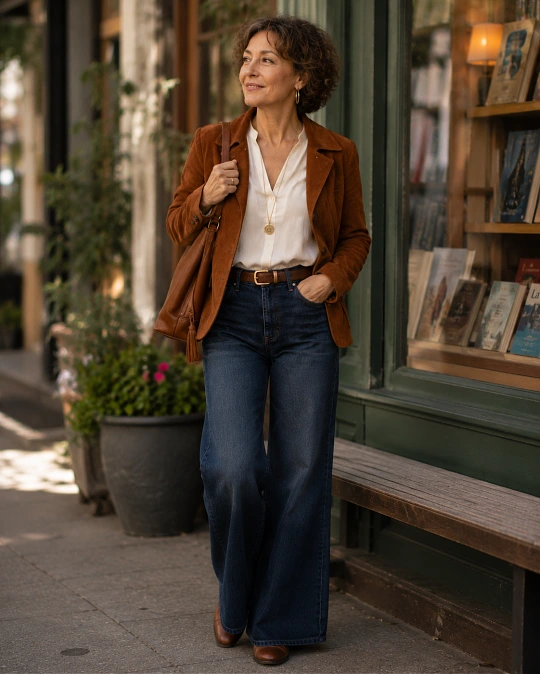
The Parisian Look Starts With a Trench That Hangs, Rather Than Clings
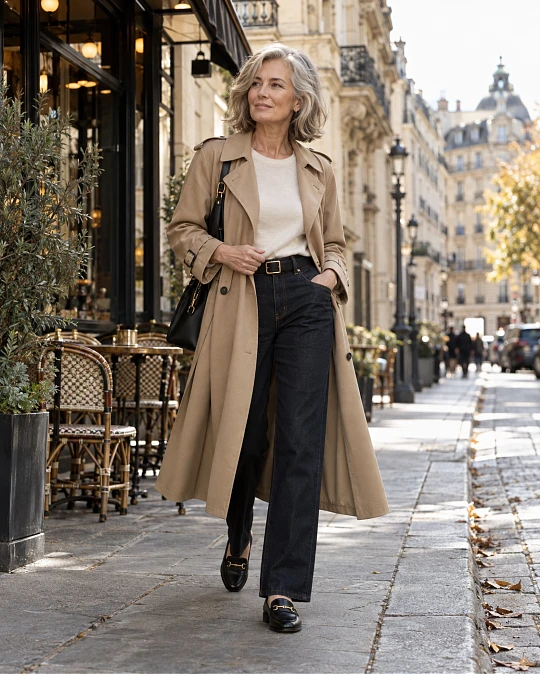
Image credit: Sagely Chic
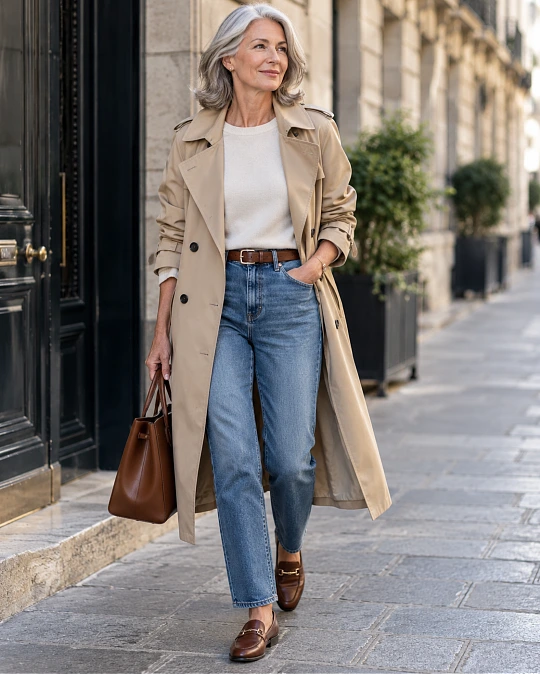
The right trench coat should follow your natural shape without gripping the body. You want enough space through the shoulders, chest, and hips to move comfortably and to accommodate the layers you normally wear.
A slightly relaxed fit gives the coat an effortless appearance. It also makes it much easier to wear over a lightweight sweater or a thin jacket without creating uncomfortable bulk.
Length plays an important role too. A trench that reaches around the knee or extends a little below it can create a long, streamlined appearance that works especially well with trousers, jeans, and dresses.
The shoulder area should have enough definition to keep the coat looking intentional, but it does not need excessive padding. Raglan sleeves or softly structured shoulders can create a relaxed shape without making the coat appear boxy.
Use these details as a simple reference when choosing a trench or evaluating one already hanging in your closet.
| Trench Detail | What to Look For | Why It Works |
|---|---|---|
| Shoulder | Comfortable with natural movement | Keeps the coat structured without feeling restrictive |
| Length | Near the knee or slightly longer | Helps create a clean vertical shape |
| Sleeve | Near the wrist or a little longer | Maintains a polished proportion |
| Fabric | Gabardine, cotton blend, or soft twill | Provides structure while allowing comfortable movement |
| Belt | Long enough for a relaxed knot | Allows several different ways to style the coat |
Fit note: Check the trench over the layers you actually wear. A coat can fit perfectly over a thin top but feel tight once a sweater or blazer is added underneath.
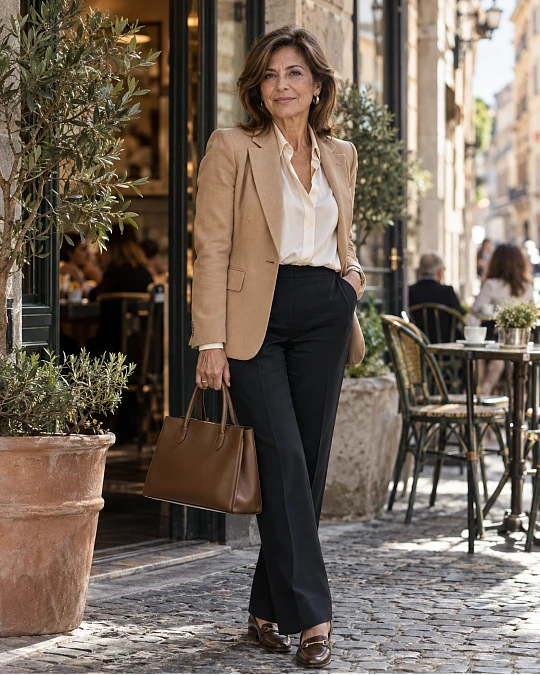
Do Not Overstyle What Goes Underneath the Coat
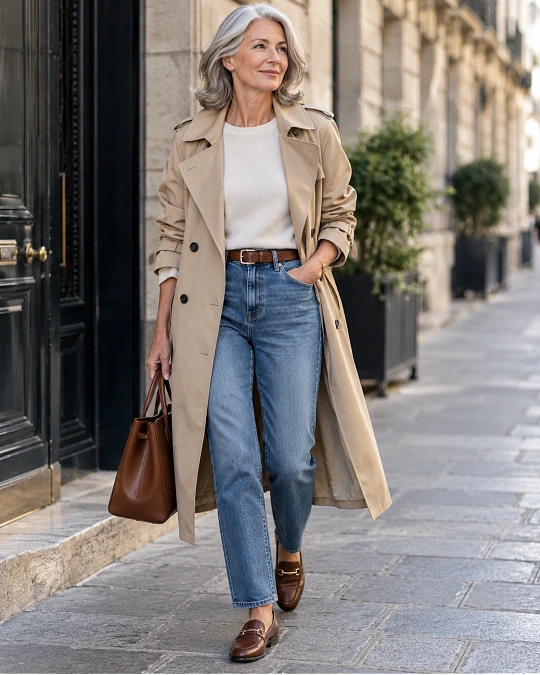
Image credit: Sagely Chic
A relaxed French-inspired outfit usually does not need a complicated collection of statement pieces. The clothing underneath the trench can be simple, comfortable, and easy to coordinate.
Try straight-leg denim with a fine sweater, tailored black trousers with a crisp shirt, or a simple dress paired with understated shoes. The trench then becomes the layer that pulls everything together.
For an everyday combination, try a beige trench with dark straight-leg jeans, a soft cream sweater, and brown loafers. A structured handbag is enough to finish the outfit without adding unnecessary accessories.
If you want something a little more polished, switch the jeans for ankle-length black trousers and wear a white or striped cotton shirt underneath.
This approach works particularly well for women over 50 because the outfit feels considered without looking overly constructed. Each piece has a purpose, and there is enough simplicity for the overall silhouette to remain relaxed.
You do not have to remove personality from your outfit to keep things simple. The idea is simply to avoid having too many competing details at once.
Wear the Belt Loosely Instead of Making It a Waist-Cinching Project
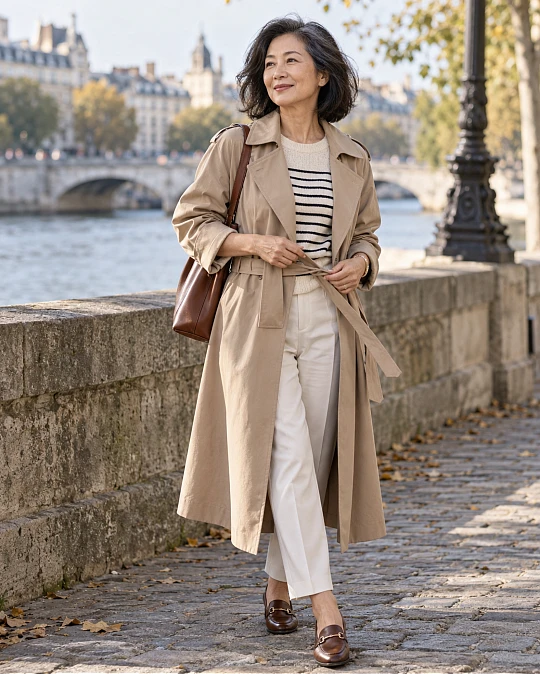
Image credit: Sagely Chic
The trench belt can completely change the way the coat looks. While a tightly fastened belt creates a defined waist, it is not the only way to wear this classic detail.
For a more relaxed outfit, try tying the belt in a loose knot at the front. You can also fasten it behind your back while leaving the front of the coat open.
Another option is to leave the belt hanging naturally. This works particularly well when the trench already has enough structure to maintain its shape without additional definition.
- Tie the belt loosely in front instead of pulling it tight.
- Fasten it behind the coat when wearing the trench open.
- Let the belt hang naturally for an effortless appearance.
- Push the sleeves slightly upward when you want a more casual daytime look.
A relaxed belt allows the coat to retain its shape while giving you more freedom to move. You should be able to sit, walk, and layer comfortably without feeling restricted around the middle.
Comfort upgrade: If the original belt feels bulky, try tying it at the back. It can create a cleaner front while keeping the relaxed character of the trench.
Let Shoes Decide How Casual or Polished the Trench Feels
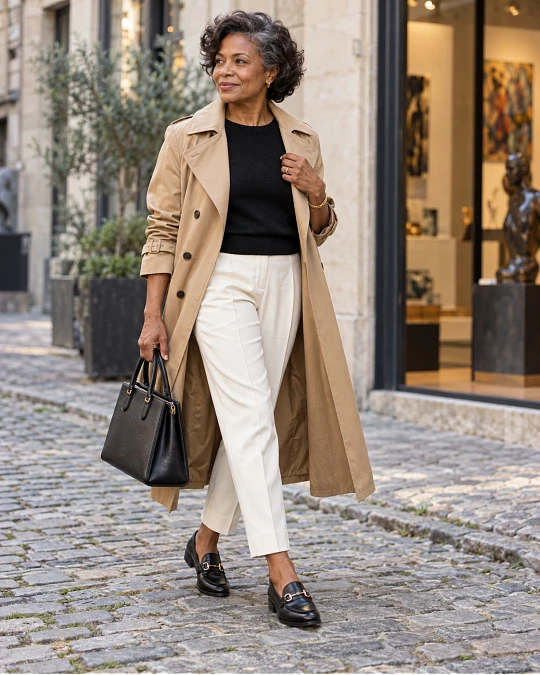
Image credit: Sagely Chic
The shoes you choose can change the entire personality of a trench coat. The same coat can look casual for a morning of errands or much more refined for lunch or dinner simply by changing the footwear.
Loafers give the outfit a classic, sophisticated feel. Clean sneakers make it more relaxed, while ankle boots add warmth and visual weight when the weather becomes cooler.
For evening occasions, a low heel or sleek flat can make the coat feel more elegant without making the outfit uncomfortable.
Pay attention to proportions. Very chunky athletic shoes can sometimes make a long trench appear heavier at the bottom. A streamlined sneaker, loafer, or boot can keep the overall silhouette more balanced.
| Occasion | Wear Under the Trench | Shoes | Overall Feel |
|---|---|---|---|
| Errands | Straight jeans and a knit top | Simple sneakers | Relaxed and current |
| Lunch | Dark jeans and a white shirt | Loafers | Classic and polished |
| Work | Straight trousers and a fine knit | Pointed flats | Smart and refined |
| Dinner | Midi dress or black trousers | Low heels or ankle boots | Elegant and uncomplicated |
| Travel | Soft trousers and a lightweight sweater | Leather sneakers | Comfortable and pulled together |
If you are petite, you do not necessarily have to choose a short trench. Wearing trousers and shoes in similar tones can help create a continuous visual line underneath a longer coat.
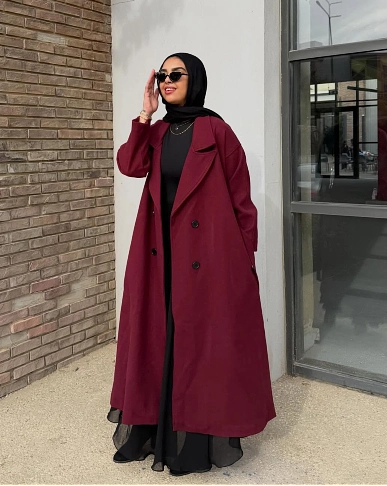
Use Color the Way a Parisian Wardrobe Often Does: Quietly
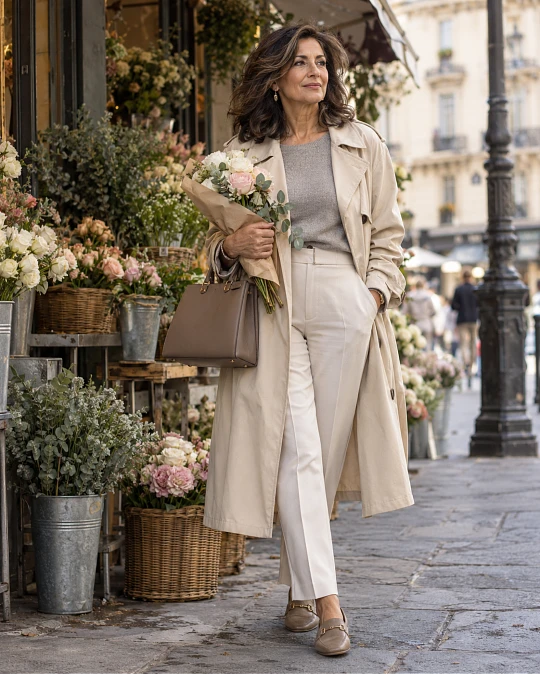
Image credit: Sagely Chic
The traditional beige trench is incredibly versatile, but it is far from the only color worth considering. Stone, camel, navy, olive, chocolate brown, and soft black can all work beautifully as alternatives.
The most practical choice is the color that works naturally with the clothing already in your wardrobe. A trench should make getting dressed easier, not require you to purchase an entirely new collection of clothes.
If your closet contains lots of navy, denim, cream, and gray, a camel or stone trench can introduce warmth while remaining easy to coordinate.
For wardrobes built around black, charcoal, burgundy, and other deeper shades, olive or dark brown can provide a rich alternative to traditional beige.
You can also create contrast by changing the color underneath. Black beneath a tan trench creates a sharper effect, while navy and beige feel softer together.
Cream worn beneath olive can brighten the outfit around the face, while darker trousers can ground a lighter trench.
Color note: Your neutral shades do not need to match perfectly. Combining cream, beige, camel, taupe, and brown in slightly different tones can make an outfit look more dimensional.
A Few Trench Coat Habits Can Make the Look Feel Heavier Than It Needs To
There are no universal fashion rules that women over 50 have to follow. However, if your trench outfits feel bulky, overly formal, or less current than you would like, a few small styling adjustments can make a noticeable difference.
| If the Outfit Feels Off | Try This Instead |
|---|---|
| The coat feels stiff and formal | Wear it open with jeans and a soft sweater |
| Everything looks oversized | Balance a relaxed coat with straighter or cleaner trousers |
| The waist looks too defined | Tie the belt loosely or fasten it behind the coat |
| The outfit feels too beige | Add black, navy, dark denim, or burgundy underneath |
| The coat dominates your frame | Show a little wrist, ankle, neckline, or a cleaner trouser shape |
Often, the problem is not the trench itself but everything surrounding it. A classic trench already contains plenty of visual details, including its lapels, buttons, belt, and sometimes epaulettes and storm flaps.
Because the coat has so much structure, the rest of the outfit can be considerably simpler. That contrast keeps the finished look from feeling heavy.
Think about balance rather than adding more. If the coat is relaxed and roomy, a cleaner trouser shape underneath can help. If the trench is more fitted, you have a little more freedom with the layers beneath it.
Build One Trench Coat Formula You Can Repeat Without Thinking
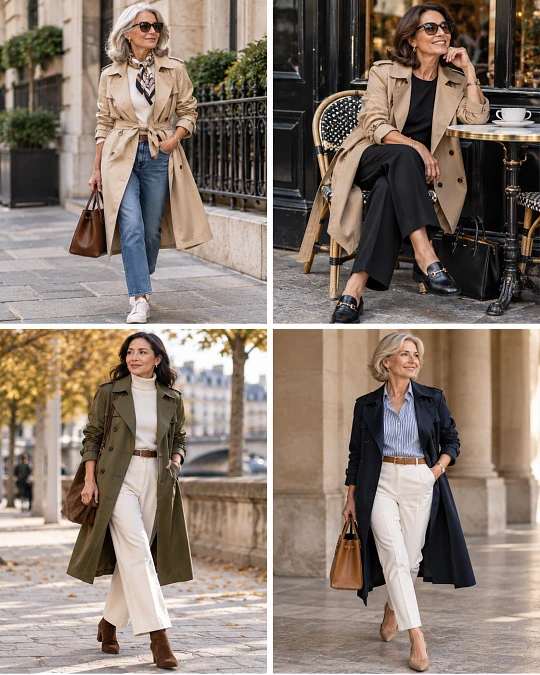
Image credit: Sagely Chic
One of the easiest ways to make your wardrobe more useful is to create a dependable outfit formula. Instead of starting from zero every time you wear your trench, use a combination you already know works.
Formula: trench coat + fine knit or shirt + straight-leg trousers or jeans + clean leather shoe
This simple combination can be changed countless ways. Swap cream for navy, denim for black trousers, loafers for sneakers, or a sweater for a crisp shirt.
For one weekday outfit, pair a camel trench with a cream sweater, dark jeans, and loafers. A few days later, wear the same trench with black trousers, a white shirt, and ankle boots.
On a casual weekend, switch to relaxed denim and clean sneakers. The basic formula stays familiar while the individual pieces change the mood.
This type of repeatable dressing is practical because you do not need a closet full of statement pieces to create stylish outfits. A small collection of clothes that coordinate naturally can give you far more combinations.
The Parisian-inspired idea is really about making clothes work together with ease. When the proportions are comfortable and the colors complement one another, the outfit can look polished without appearing like you tried too hard.
Frequently Asked Questions
Can a woman over 50 wear an oversized trench coat?
Yes. An oversized trench can be a stylish choice when the coat still has enough structure to maintain a clear shape.
To balance a roomier coat, consider wearing straight-leg trousers, simple jeans, or a more streamlined layer underneath. Showing a little neckline or wrist can also prevent the outfit from looking completely covered.
What color trench coat is easiest to wear after 50?
Beige, camel, stone, navy, olive, and dark brown are all versatile options. The easiest shade is ultimately the one that coordinates with the colors you already wear regularly.
If traditional beige does not complement your coloring or does not work with your wardrobe, there is no need to choose it simply because it is the classic trench shade.
Should you button or leave a trench coat open?
Either option can work. Leaving the coat open gives you a relaxed appearance and allows the outfit underneath to remain visible.
Closing or loosely tying the trench creates a little more structure. For casual outfits, wearing it open with the belt tied behind the back is an especially easy styling option.
Can you wear a trench coat with sneakers?
Yes. Sneakers are an easy way to make a traditional trench feel more casual and practical.
If you want the outfit to retain a polished appearance, look for a relatively streamlined sneaker rather than an extremely bulky athletic style. Clean lines usually work particularly well with the structured shape of a trench.
What should you wear under a trench coat for a Parisian look?
Start with uncomplicated wardrobe staples such as straight-leg jeans, black trousers, white shirts, striped knits, fine crewneck sweaters, or simple midi dresses.
The overall effect usually comes from good proportions, coordinated colors, and clean lines rather than a large number of accessories. Let the trench provide the finishing layer instead of asking every piece to make a statement.