How to Wear 90s Style Over 50 the Way You Wish You Could Have the First Time
Image credit: Sagely Chic
There is something especially fun about seeing 90s fashion come back around. The straight-leg jeans, slip dresses, leather jackets, loafers, simple knits, and understated outfits may bring back plenty of memories, but you do not have to recreate your old wardrobe exactly.
For women over 50, the most wearable version of 90s fashion is about taking the parts that still look great and updating them for today. Cleaner proportions, comfortable fabrics, and thoughtful styling can make the decade’s signature pieces feel fresh rather than costume-like.
You can enjoy the denim, minimal tailoring, rich colors, sleek shoes, and relaxed layers while choosing pieces that suit your current lifestyle. The result is a wardrobe that captures the attitude of the decade without looking like you stepped out of an old photograph.
Start With the Clean 90s Silhouette, Not the Costume
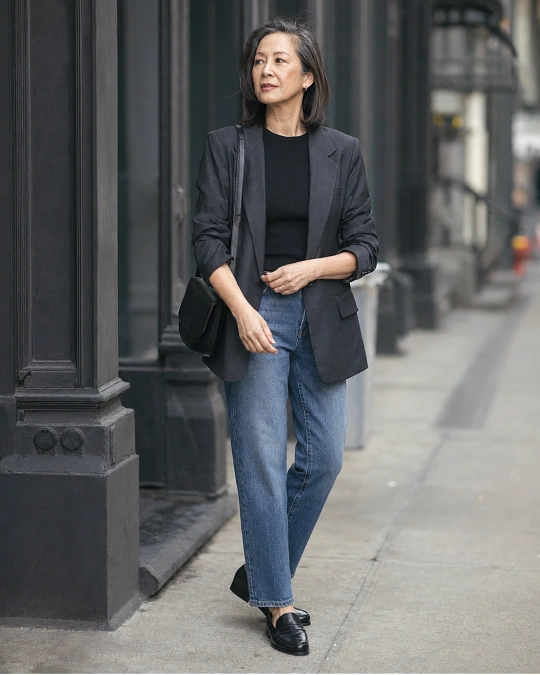
Image credit: Sagely Chic
Much of the best 90s style was remarkably uncomplicated. Straight jeans, simple trousers, fitted knits, long coats, column dresses, crisp shirts, and classic leather shoes did most of the work.
That simplicity makes the decade surprisingly easy to reinterpret today. Instead of combining several obvious throwback trends, start with one recognizable shape and surround it with pieces you already enjoy wearing.
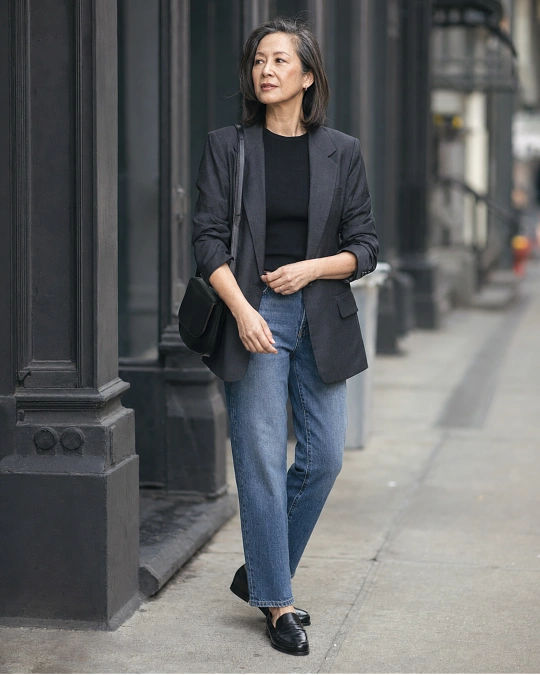
For example, straight-leg jeans with a fine knit and loafers can capture the understated spirit of the 90s without making the outfit feel like a themed costume.
If you remember the decade well, think of this as an edit rather than a complete revival. Keep the colors, fabrics, silhouettes, or attitude that you loved and leave behind anything that was uncomfortable or never really suited you.
Here is a simple way to modernize the look:
| Instead of Recreating This | Try This Now |
|---|---|
| Head-to-toe grunge | Straight jeans, a soft tee, and one leather jacket |
| Extremely low-rise jeans | Mid-rise or comfortable high-rise straight jeans |
| Very fitted tiny cardigans | A fine-gauge cardigan with gentle shaping |
| Heavy shoes with every outfit | Loafers, streamlined ankle boots, or simple sneakers |
| Several obvious 90s trends together | One nostalgic piece combined with modern basics |
The goal is to create a subtle connection to the decade. Someone should see a cool, current outfit first and notice the 90s influence second.
Let Straight Jeans Do More of the Work
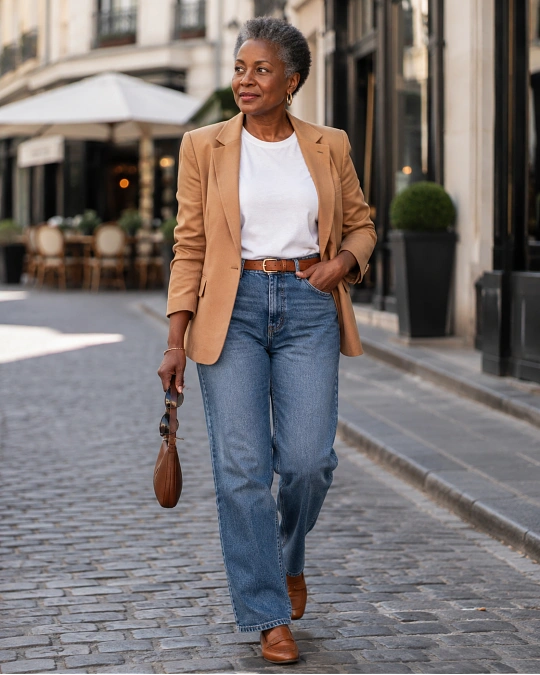
Image credit: Sagely Chic
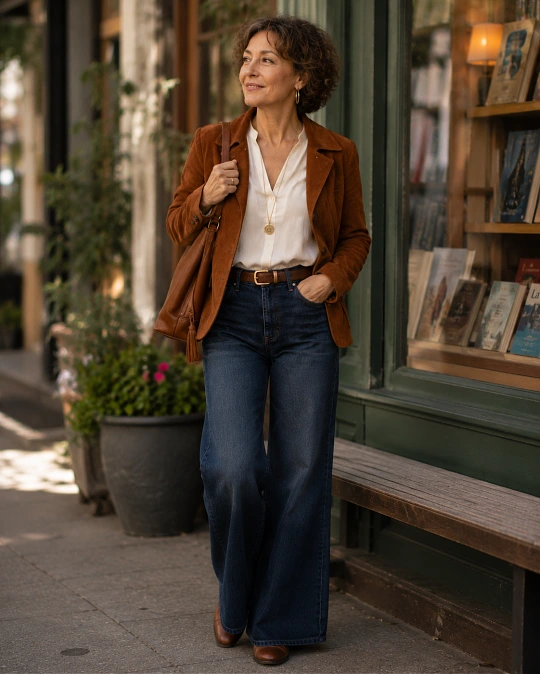
Denim is probably the easiest place to begin if you want to bring 90s style into your wardrobe. The key is choosing a straighter silhouette rather than relying on excessive distressing or exaggerated proportions.
A straight-leg jean creates a clean line from the hip toward the ankle. That makes it particularly versatile with loafers, ankle boots, sneakers, or a low heel.
Look for denim that has enough structure to maintain its shape while still allowing you to sit, walk, and move comfortably. A little stretch can be useful, but overly thin fabric may cling rather than skim.
Fit note: Pay attention to how the jeans look from every angle. A comfortable waistband is important, but so is the way the fabric falls across the hips and thighs. If there is excessive bunching, another cut may give you a smoother result.
For a simple daytime outfit, combine straight jeans with a crewneck knit and loafers. Add a longer coat or structured jacket when you want to make the same formula feel more polished.
This combination also makes a practical foundation for casual outfits for women over 50 because it works for everything from errands and coffee dates to travel and relaxed lunches.
Use Minimal 90s Tailoring to Make Basics Look Intentional
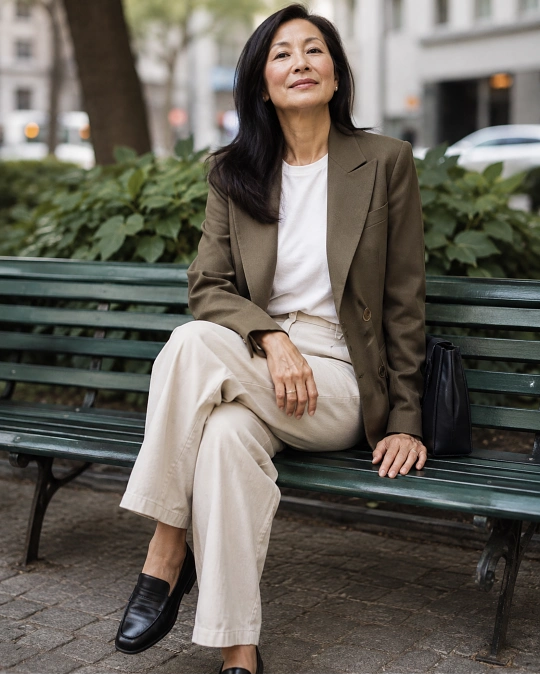
Image credit: Sagely Chic
90s tailoring had a relaxed quality that still works beautifully today. Jackets were often uncomplicated, trousers had clean lines, and outfits depended more on silhouette than decoration.
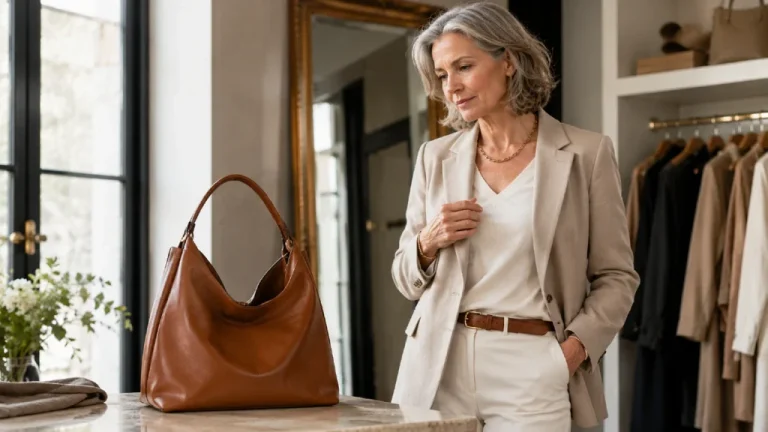
You can bring that idea into your wardrobe without choosing an exaggerated shoulder line or an extremely boxy blazer. Look for a jacket with gentle structure that gives your shoulders definition while still allowing comfortable movement.
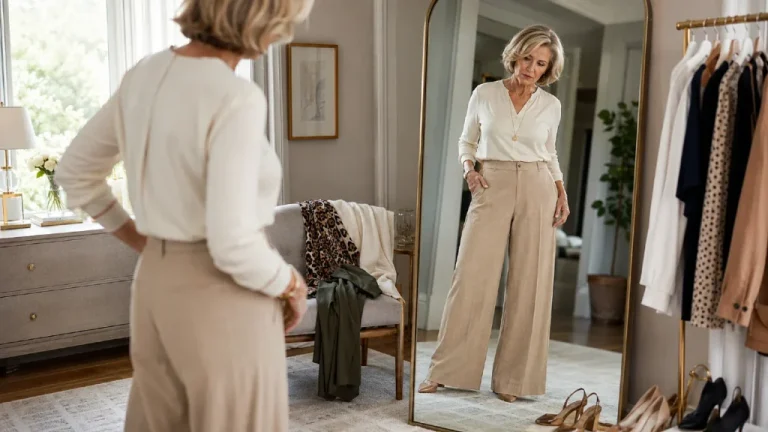
Trousers can follow the same principle. A flat-front style with a smooth drape can create a long, polished line without feeling restrictive.
When shopping for these pieces, pay close attention to the fabric as well as the cut.
| Piece | What to Look For | Why It Works |
|---|---|---|
| Blazer | Soft structure and clean shoulders | Creates shape without feeling stiff |
| Trousers | Fluid fabric and a smooth front | Provides a polished, lengthening line |
| White shirt | Cotton with comfortable drape | Looks crisp without restricting movement |
| Knit top | Fine or medium-weight knit | Layers easily beneath jackets |
| Long coat | Straight or gently shaped silhouette | Pulls simple outfits together |
Fabric note: When an outfit has very few pieces, fabric quality becomes more noticeable. Cotton poplin, denim, suede, leather, wool blends, and smooth knits can give simple clothing plenty of visual depth.
Try wearing the blazer open rather than tightly defining the waist. The uninterrupted vertical lines can create a relaxed but polished effect.
Bring Back Slip Dresses Without Feeling Overexposed
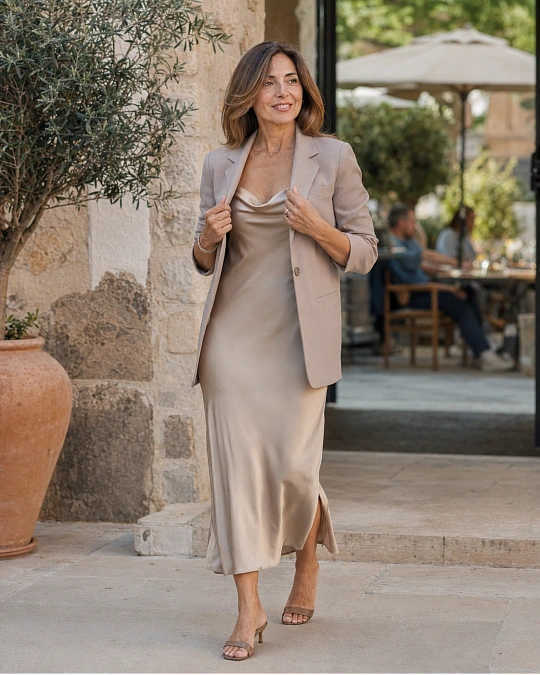
Image credit: Sagely Chic
The slip dress is one of the most recognizable 90s pieces, but there is no reason to wear it exactly as it was styled decades ago.
For a more comfortable modern version, choose a fabric with some substance. Satin, crepe, and other fluid materials can skim the body beautifully without feeling excessively clingy.
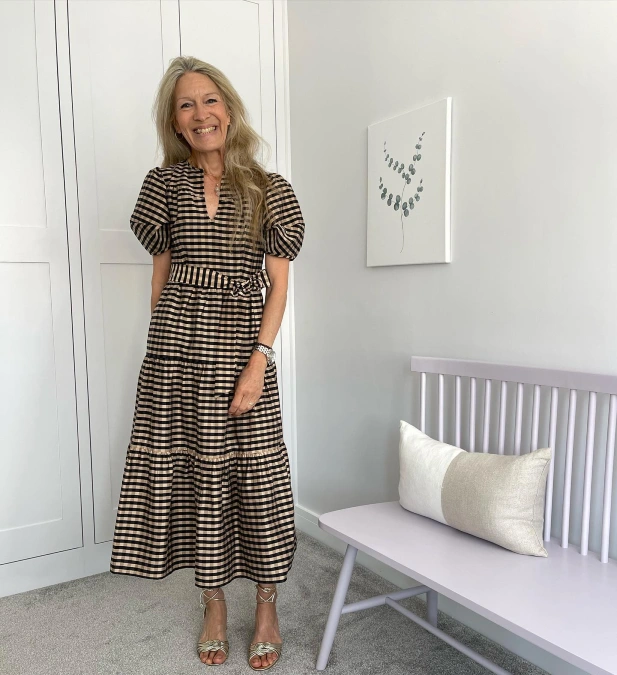
A midi length can also make the dress more versatile. It works with sandals in warm weather, ankle boots during cooler months, and elegant shoes when you are dressing for an evening occasion.
If narrow straps make you uncomfortable, layering is an easy solution. Add a soft blazer, cropped cardigan, lightweight sweater, or fine knit top underneath or over the dress.
You can also choose a dress that takes inspiration from the slip silhouette without being a literal lingerie-style dress. Wider straps, a higher neckline, and subtle waist shaping can give you the same minimalist feeling with more coverage.
Keep accessories understated. A small shoulder bag, delicate jewelry, and sleek shoes allow the clean shape of the dress to remain the focus.
For cooler weather, replace sandals with ankle boots and add a long wool coat. The extra layer gives the outfit more structure while keeping the 90s influence intact.
Make Loafers, Boots, and Sneakers Your 90s Shortcut
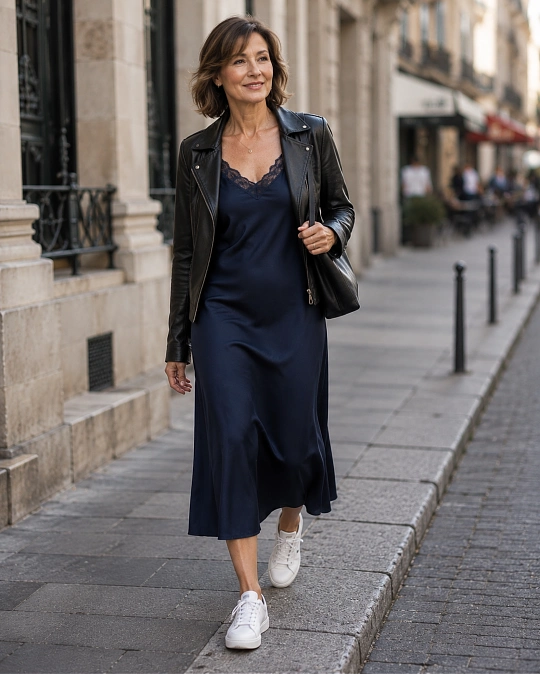
Image credit: Sagely Chic
The right footwear can change the personality of an outfit immediately. That makes shoes one of the easiest ways to experiment with 90s style without replacing half your wardrobe.
Loafers give jeans and trousers a classic minimalist feel. Ankle boots add a little more edge to dresses and denim, while streamlined sneakers keep the same pieces casual.
Try these combinations as starting points:
- Straight-leg jeans with loafers for lunch, errands, or everyday plans.
- Fluid trousers with simple sneakers for travel days.
- A midi slip dress with ankle boots for dinner.
- A white shirt and straight jeans with a low block heel for smart-casual occasions.
Do not overlook comfort when choosing your shoes. The most stylish pair in your closet is not useful if you avoid wearing it because it hurts after an hour.
Comfort upgrade: If traditional flat loafers do not feel good on your feet, look for a pair with light cushioning, a supportive sole, a small heel, or a slightly thicker base. You can maintain the same visual effect while improving comfort.
Keep the 90s Color Palette Rich, Quiet, and Easy to Mix
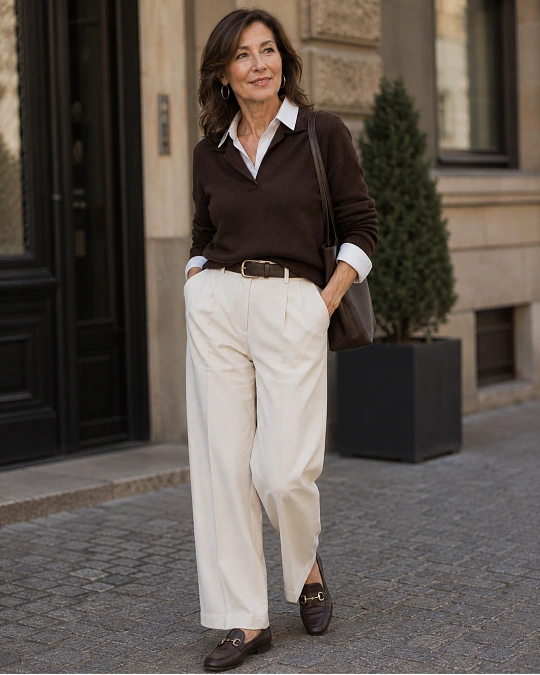
Image credit: Sagely Chic
The 90s are closely associated with colors such as black, cream, camel, chocolate brown, gray, navy, denim blue, olive, burgundy, and deep red.
These shades are also extremely practical because they can be mixed together without much effort. That makes them useful for creating simple outfits for women over 50 that still look considered.
You do not have to dress exclusively in neutrals. A burgundy sweater, deep red handbag, forest-green jacket, or colorful scarf can give a familiar combination a completely different feel.
If black feels too strong near your face, keep it on the lower half of your outfit. Pair black trousers or shoes with cream, warm beige, soft blue, or another shade that you enjoy wearing near your face.
The same color foundation can also move easily from one season to another.
| Base Piece | Warmer Weather | Cooler Weather |
|---|---|---|
| Straight jeans | Cotton tee and loafers | Fine knit and ankle boots |
| Slip-style midi dress | Sandals and lightweight cardigan | Boots and long coat |
| Tailored trousers | Sleeveless knit and flats | Crewneck sweater and loafers |
| White shirt | Rolled sleeves with denim | Layered beneath a blazer |
| Black column skirt | T-shirt and simple sandals | Knit top and tall boots |
A consistent color palette is also helpful when building a capsule wardrobe over 50 because individual pieces can be combined in many different ways.
Watch the Proportions When You Add Oversized Pieces
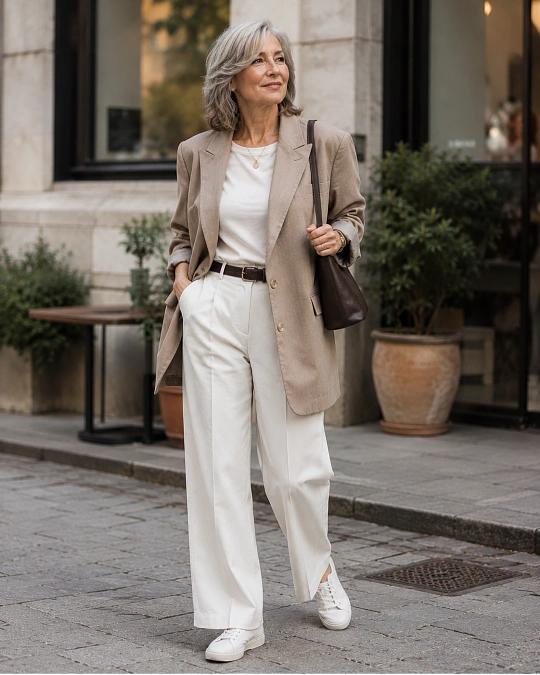
Image credit: Sagely Chic
Relaxed proportions are a big part of the 90s look, but wearing several oversized pieces together can sometimes make an outfit lose its definition.
A simple solution is to create contrast. Pair a roomy blazer with straight trousers, wide jeans with a neater knit, or a long coat with a closer-fitting base layer.
This does not mean every outfit needs to follow a strict formula. It simply gives you a starting point for finding a combination that feels balanced.
- If a large blazer feels overwhelming, try a softer shoulder or a slightly shorter length.
- If wide-leg jeans feel too heavy, choose footwear with a defined shape.
- If a long coat hides your entire outfit, keep the layers underneath more streamlined.
- If a boxy shirt lacks definition, try a partial tuck or a fabric with more natural drape.
Think of proportion as a styling tool rather than a rule. The right combination is the one that makes you feel comfortable and gives the outfit the shape you want.
Build One 90s Outfit Formula You Can Repeat
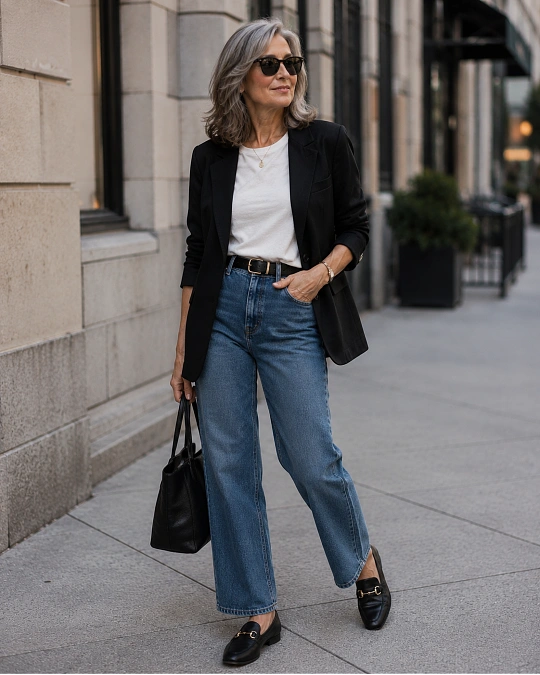
Image credit: Sagely Chic
Having a reliable outfit formula can make getting dressed much easier. Once you know which silhouettes work for you, you can change individual pieces without starting from scratch every morning.
Formula: straight-leg jeans + simple knit or tee + structured outer layer + clean leather shoe
The outer layer could be a blazer, trench coat, leather jacket, or long wool coat. Your footwear could be loafers, ankle boots, or streamlined sneakers depending on the occasion.
Once the basic combination feels right, change one element at a time. Replace blue jeans with black trousers, switch the T-shirt for a fine knit, or trade loafers for sneakers.
That is how everyday outfits for women over 50 can feel personal rather than overly trend-driven. You have a familiar silhouette that works, but enough flexibility to keep it interesting.
For dinner, try black trousers with a silky top. For casual errands, return to jeans and sneakers. For travel, use softer trousers with a cardigan or lightweight jacket.
The formula stays familiar while the details change with your plans.
Frequently Asked Questions
Can women over 50 wear 90s fashion?
Absolutely. The easiest approach is to borrow the decade’s most wearable elements rather than trying to recreate an entire 90s outfit.
Straight-leg denim, relaxed tailoring, loafers, simple knits, leather jackets, midi dresses, and long coats can all fit naturally into a modern wardrobe.
How do you wear 90s trends without looking dated?
Use one or two nostalgic elements and combine them with pieces that feel current to you. Fit, fabric, footwear, and accessories can make a bigger difference than the trend itself.
For example, straight jeans and loafers can feel completely current when worn with a favorite modern knit or structured bag.
What 90s clothes are easiest to wear after 50?
Straight-leg jeans, simple knit tops, relaxed blazers, long coats, midi dresses, loafers, ankle boots, and crisp white shirts are all useful starting points.
They are versatile enough to combine with many of the pieces you may already have in your closet.
Can I wear oversized 90s styles if I prefer more shape?
Yes. You do not need to make the entire outfit oversized. Try using one relaxed item and keeping the rest of the silhouette more defined.
A roomy blazer with straight trousers, a loose shirt with streamlined jeans, or wide trousers with a neat knit can all create a balanced result.
Do I need to buy vintage clothes to get a 90s look?
No. Modern clothing can often give you the same overall effect while offering fabrics, fits, rises, and construction that better match your current preferences.
Before shopping, check your existing wardrobe. You may already own straight jeans, simple black pieces, loafers, blazers, white shirts, or long coats that can form the foundation of the look.
Wear the 90s Better This Time Around
Revisiting 90s fashion gives you something you did not necessarily have the first time: the freedom to choose only the parts that genuinely work for you.
You can keep the straight denim, relaxed jackets, minimalist dresses, leather details, simple shoes, and understated color palette while leaving behind anything that felt uncomfortable or impractical.
Style after 50 does not need a long list of restrictions. A better approach is to pay attention to fit, fabric, comfort, proportion, and the way each piece fits into your actual life.
Start with one outfit formula and experiment with pieces you already own. You may find that a small change in silhouette or styling is all it takes to give an old favorite a completely new feeling.