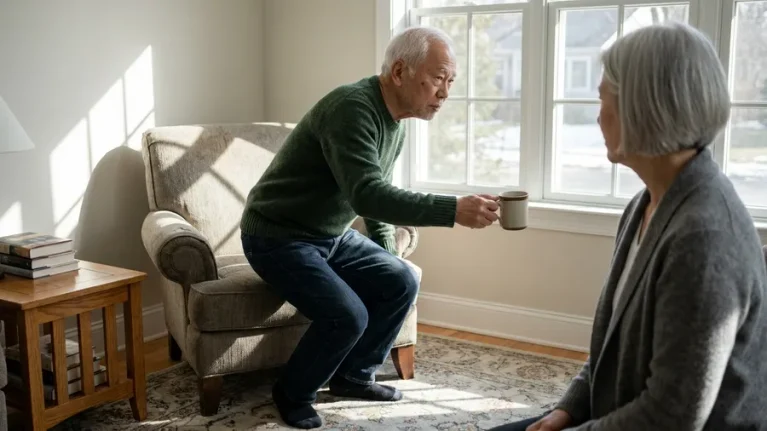
At seventy-two, I stood in a quiet room holding a small bouquet of dried lavender, ten years after losing my first husband and several years after my partner had also become a widower.
People sometimes assume that getting married later in life is mostly about companionship and practicality. For me, it became a completely different kind of relationship, shaped by independence, experience, family history, and a much clearer understanding of what I needed.
Starting over at this stage of life changes the way couples approach emotional intimacy, finances, adult children, personal space, and everyday routines.
What worked for us was not a universal formula. It was a collection of choices that allowed two independent adults to build a relationship without giving up everything they had already established.

Image credit: Sagely Chic
Quick Tips Before You Start
⚖️
Protect Estates Early
Discuss wills, estates, property, and prenuptial agreements with qualified professionals before the wedding rather than leaving financial questions unresolved.
🏡
Keep Separate Spaces
If separate homes or personal rooms work for both partners, keeping them can preserve familiar routines and valuable alone time.
💬
Speak Directly
Say what you need early instead of expecting your partner to guess. Clear conversations can prevent small frustrations from becoming larger resentments.
1. Emotional Baggage Is Replaced by Radical Emotional Honesty
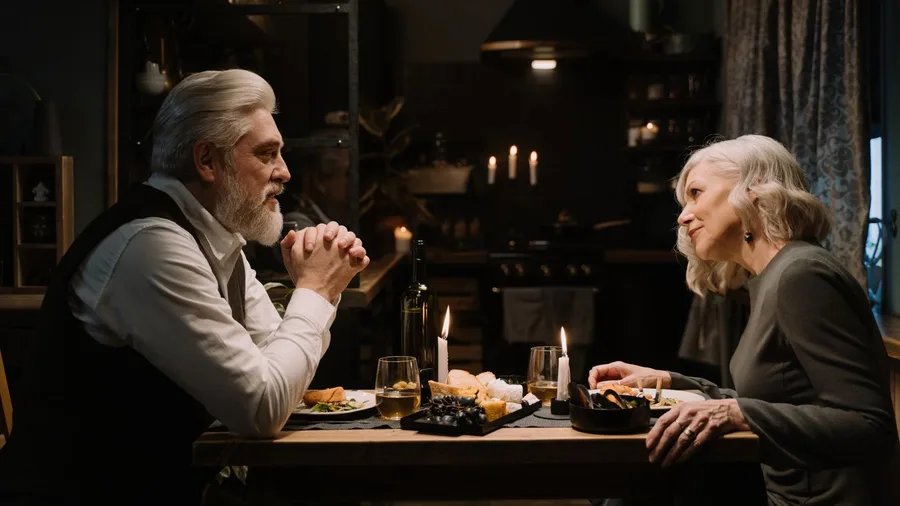
Image credit: Sagely Chic
By the time you reach your seventies, you have usually learned that avoiding a difficult conversation does not make the underlying issue disappear.
After years of managing my own household and making my own decisions, I had little interest in guessing games. During our early dates, I explained that I needed several quiet evenings each week for reading and writing. I expected a long discussion, but he simply told me that he needed dedicated time for his workshop too.
That kind of honesty changed how we handled disagreements. Instead of hoping the other person would eventually notice a problem, we could say what was bothering us and work out a practical solution.
One example came when our family schedules became complicated. Rather than allowing frustration to build, we sat down, compared calendars, and worked out a plan for family dinners.
The goal was not to avoid every disagreement. It was to make disagreements easier to resolve by talking about them before they became personal.
💡 Tip: State important boundaries early. A clear request is usually easier to work with than an expectation your partner never knew existed.
| Aspect | First Marriage (Younger Years) | Second Marriage (Age 72) |
|---|---|---|
| Living Arrangement | Shared home from day one | Separate pre-owned condos maintained independently |
| Financial Setup | Merged accounts and joint debt | Separate estates with formal prenuptial agreements |
| Family Dynamics | Raising young children together | Managing relationships with four adult children |
| Decision Timeline | Rapid courtship and career building | 18-month dating timeline focused on present peace |
First Marriage vs. Remarriage at 72
💡 PRO TIP
The Power of Direct Requests
Instead of waiting for a partner to notice what you need, say it plainly. Clear requests can remove much of the unnecessary tension from everyday life.
2. Adult Children Need a Completely Different Kind of Reassurance

Image credit: Sagely Chic
Remarriage later in life can raise questions for adult children that have little to do with romance. Property, inheritances, wills, and financial arrangements may suddenly become topics everyone wants clarified.
In our case, the adult children on both sides had understandable questions about what marriage would mean for the future. Rather than dismissing those concerns, we decided to discuss them openly.
We reviewed our estate plans and legal arrangements with the appropriate professionals and explained the decisions that affected our families. The purpose was not to give our children control over our marriage. It was to remove unnecessary uncertainty.
Once everyone understood that the relationship and financial planning were being handled separately and thoughtfully, many of the initial concerns became easier to discuss.
Estate Transparency — At a Glance
👨👩👧👦 Adult Children
4 Total
📁 Estate Review
Fully Shared
🛡️ Asset Protection
Prenup Secured
Key Takeaway
Clear conversations about estate planning can help adult children understand how a late-life marriage fits into the family’s broader financial picture.
3. Maintaining Separate Living Spaces Preserves Our Hard-Won Independence

Image credit: Sagely Chic
Living together under one roof is not the only way to create a committed relationship.
We chose to maintain our own condos, which meant that both of us could keep the routines we had developed over many years. I could wake up in my familiar space, write in the morning, and arrange my home exactly as I liked it.
He had the same freedom in his own home. We spent plenty of time together, but neither of us had to give up every familiar habit simply because we got married.
Separate homes also reduced some of the everyday negotiations that can become surprisingly tiring. We did not need to agree on every thermostat setting, television schedule, closet arrangement, or household routine.
When I returned to my own home after spending time with him, I still had a place that felt completely mine. That independence became part of what made our time together enjoyable.
Separate Living Perks
☕ Morning Routines Unchanged
🧹 Fewer Household Chore Arguments
🚪 Built-In Solitude Time
4. Financial Independence Replaces Joint Financial Vulnerability

Image credit: Sagely Chic
Keeping separate homes required us to think carefully about money as well. By the time two people marry later in life, they may already have property, savings, retirement accounts, debts, and family responsibilities.
We chose to keep many of our financial assets separate and used a formal prenuptial agreement to clarify our intentions. Legal and financial decisions should be tailored to each couple’s circumstances, but having the conversations early gave us greater clarity.
For everyday shared expenses, we created a simple arrangement that worked for both of us. We contributed to the costs we agreed to share instead of combining every financial decision.
That structure meant our relationship did not have to carry the weight of unresolved questions about property or family inheritance.
⚠️ COMMON MISTAKE
Merging Finances Too Quickly
Combining every account immediately may not be the only option for a later-life couple. Discuss existing assets, family obligations, debts, and estate goals before deciding what should be shared.
5. Companionship Takes Absolute Priority Over Societal Milestones

Image credit: Sagely Chic
When you marry at seventy-two, the usual milestones of marriage look different. There is no pressure to build a career together, raise young children, or create the same kind of future that younger couples often imagine.
Our wedding was small and simple. Instead of focusing on a large celebration, we concentrated on the relationship we were building and the people closest to us.
The eighteen months we spent getting to know each other gave us time to see how our routines, families, finances, and expectations fit together.
For us, the most important part was not creating an impressive event. It was creating a peaceful partnership that made everyday life better.
Our Path to the Registry
1
☕ First Date
Met at a local bookstore cafe.
➜
2
🏡 Separate Homes
Agreed to keep our own condos.
➜
3
⚖️ Legal Prenup
Created a clear financial plan for both families.
➜
4
💍 Quiet Wedding
Celebrated with our adult children.
6. Social Circles Expand Through Deliberate Choice Rather Than Obligation

Image credit: Sagely Chic
Marriage can change your social calendar, but that does not mean every invitation suddenly becomes an obligation.
We already had established friendships before meeting each other. Instead of trying to combine every friendship and social activity, we chose which gatherings genuinely added something to our lives.
That meant occasionally saying no. A crowded dinner or weekend event might sound pleasant but still leave us exhausted if it became another obligation.
We also discovered new interests together, including art classes and garden tours. Those activities introduced us to people who shared interests without requiring us to abandon the friendships we already had.
Over time, our social life became more intentional. We spent time with people because we wanted to, rather than because we felt obligated to maintain every old routine.
7. Health Vulnerabilities Are Faced as a Team From Day One

Image credit: Sagely Chic
One major difference in a later-life relationship is that health planning cannot always be pushed into the distant future.
Both partners may already have medical histories, medications, mobility concerns, or preferences about future care. Talking about these subjects while everyone is healthy can make difficult situations easier to manage later.
We discussed practical matters such as powers of attorney and future care preferences rather than assuming everything would work itself out.
When one of us eventually needed extra support, those earlier conversations gave us a starting point. We were not discovering each other’s wishes for the first time in the middle of a stressful situation.
💡 Tip: Consider discussing healthcare directives and powers of attorney before a medical crisis makes the conversation urgent.
Health & Aging Preparation
Addressing practical realities proactively
Medical POA Discussions — Done
Future Care Planning — Clear
Daily Mobility Support — Discussed
8. Past Grief No Longer Competes With Present Joy

Image credit: Sagely Chic
I once wondered whether loving someone new meant I had to somehow put my first marriage behind me.
Over time, I learned that remembering a late spouse does not prevent someone from forming another meaningful relationship. Memories can remain part of your life without becoming a threat to the person beside you.
We both had histories that mattered. Photographs, stories, traditions, and memories did not need to disappear simply because we were building something new.
Allowing both parts of our lives to exist together made the relationship feel more honest. There was no need to pretend that the past had never happened in order to appreciate the present.
9. Daily Routines Require Conscious and Deliberate Negotiation

Image credit: Sagely Chic
After decades of living independently, both people can arrive in a new relationship with routines that feel completely natural to them.
One person may go to bed early while the other likes to stay up reading. One may want a spotless kitchen while the other is perfectly comfortable leaving a few things until morning.
During our eighteen months of dating, we learned that these differences did not automatically need to be fixed.
Sometimes compromise was necessary. Other times, the simplest answer was to allow each person to maintain their own rhythm.
Our separate homes made this especially easy. We could spend time together without requiring every part of our daily schedules to match.
The important lesson was learning the difference between a genuine problem and a harmless habit that simply differed from our own.
Trying to redesign another adult’s personality after decades of independent living would have created unnecessary tension.
Instead, we learned to negotiate the things that mattered and let the smaller differences remain.
10. The Perspective of Limited Time Deepens Daily Appreciation

Image credit: Sagely Chic
Getting older changes the way many people think about time. After seventy, an ordinary Tuesday morning can feel more meaningful because you understand that time is not unlimited.
That perspective can make small disagreements feel less important. A forgotten task or scheduling disagreement may still need to be addressed, but it does not have to consume an entire afternoon.
For me, one of the most valuable parts of remarrying at seventy-two was realizing that companionship did not have to look like the relationships I knew when I was younger.
There was less pressure to prove anything. We could enjoy coffee, share a quiet meal, work on separate hobbies, or simply spend time together without turning every moment into a milestone.
The relationship became less about building a particular version of the future and more about appreciating the life we were actually living.
Frequently Asked Questions
Is it practical to maintain separate homes after remarrying?
For some older couples, it can be. Separate homes may preserve established routines, personal space, and independence. The practical side depends on finances, distance, health needs, and what both partners genuinely want.
How do you handle adult children’s concerns about inheritance?
Start with clear estate planning and professional legal or financial advice. Couples can discuss wills, trusts, property, beneficiary designations, and prenuptial agreements so everyone understands that the marriage and the estate plan are being handled deliberately.
Does remarrying later in life mean erasing memories of a late spouse?
No. A new relationship does not require someone to erase an earlier marriage or stop remembering a late spouse. Couples can acknowledge the past while creating new traditions and experiences together.
How do you manage differing daily habits when living apart?
Begin by deciding which differences actually matter. Separate spaces can make some routine differences easier to manage, while direct communication helps with the issues that do require compromise.
The Sanctuary of Late-Life Peace
Remarrying later in life gave me a chance to approach partnership differently.
I did not need to recreate my first marriage or pretend that decades of independence had never happened. Instead, I could bring everything I had learned into a new relationship.
That meant clearer boundaries, more honest conversations, thoughtful financial planning, respect for adult children, and enough personal space for both people to remain themselves.
At seventy-two, companionship became less about following a traditional script and more about creating a relationship that fit the lives we already had.
For anyone considering remarriage later in life, the important questions may be simple ones: What do I need to feel secure? What am I willing to share? What do I want to keep independent? And have we talked openly about the practical issues that come with combining two established lives?
Evaluate Your Own Path to Balance
Take a look at the boundaries, routines, financial arrangements, family relationships, and personal space that matter most to you.
A later-life relationship does not have to follow the same structure as a first marriage. What matters is creating clear expectations that both people understand and genuinely accept.