
Image credit: Sagely Chic
Getting older does not automatically make people-pleasing disappear.
After decades of trying to keep everyone comfortable, saying no can still feel surprisingly difficult. You may know that your time and energy matter, yet still find yourself agreeing to requests you would rather decline.
At 68, I finally started changing that pattern. I stopped cushioning every refusal with a long explanation, stopped automatically volunteering for things I did not want to do, and began paying closer attention to what I actually had the energy for.
The result was not the social disaster I had imagined. It was a clearer calendar, less resentment, and more room for relationships that felt mutual.
The Guilt Factor
MYTH
They will automatically think I am rude.
FACT
People may be surprised by a new boundary, but they can usually make other arrangements when you cannot help.
MYTH
I have to explain exactly why I cannot help.
FACT
A brief, honest explanation is enough. You do not have to turn every refusal into a detailed defense.
MYTH
Saying no will ruin the friendship.
FACT
Healthy relationships can usually accommodate reasonable boundaries and differences in availability.
THE STARTING POINT

Image credit: Sagely Chic
For years, I had a habit of saying yes before I had even considered whether I wanted to help.
One ordinary October, a neighborhood committee asked whether they could use my living room for their monthly meeting. I had the space, but I did not have the energy or desire to host.
Normally, I would have agreed and spent the following days preparing, worrying about the details, and quietly resenting the commitment.
This time, I simply said that I was not available to host that month.
I did not invent an elaborate scheduling conflict. I did not write a paragraph explaining myself. I gave an honest answer and let it stand.
🗓️ The First 30 Days of Refusal
1
Week 1: The Panic
At first, even a small refusal can feel much bigger than it actually is. You may imagine that you have disappointed everyone or damaged a relationship.
2
Week 2: The Silence
You begin to notice that most people simply accept your answer and move on with their day.
3
Week 3: The Attrition
Some people who mainly contacted you for favors may reach out less often. That can feel uncomfortable, but it also gives you information about the relationship.
4
Week 4: The Baseline
Your calendar starts to feel more like your own. The initial guilt becomes easier to tolerate because you have evidence that saying no does not automatically create a crisis.
WEEK ONE WITHDRAWAL

Image credit: Sagely Chic
The hardest part of saying no was not actually saying the word.
It was sitting with the uncomfortable feelings afterward.
When you are accustomed to being the dependable person who solves problems, choosing your own capacity can initially feel selfish. You may reread a short email, worry about someone’s reaction, or imagine conversations that never happen.
I learned to use a simple sentence: “I am certain, and I do not have the capacity.”
Most of the time, the other person simply adjusted their plans. The dramatic fallout I had imagined usually never arrived.
The Anxiety Gap
🧠
The Imaginary Fallout
- They will demand an explanation.
- The friendship will quietly end.
- Everyone will talk about it.
- They will never ask me again.
✅
The Actual Reality
- They may simply say, “Okay, no problem.”
- They find another solution.
- The situation is often forgotten quickly.
- You get your time back.
THE PHYSICAL TOLL

Image credit: Sagely Chic
People-pleasing is often described as an emotional habit, but it can also feel physically exhausting.
Before I started changing my behavior, I regularly woke up thinking about everything I had agreed to do for other people. My calendar could look manageable on paper while my mind was already racing through obligations, favors, errands, and social commitments.
That constant anticipation created tension that I carried through the day.
When I started declining requests I genuinely did not have the capacity for, I noticed that I felt less mentally crowded. My shoulders felt less tense, my mornings felt calmer, and I was no longer starting every day by mentally solving everyone else’s problems.
Not every physical symptom is caused by people-pleasing, of course. But reducing unnecessary commitments can make it easier to notice which parts of your daily stress are actually within your control.
The Anatomy of a Forced Yes
🦷 Physical symptom
Jaw clenching or general tension
📉 Energy impact
Feeling drained before the task has even begun
🕰️ Recovery time
Needing extra downtime after obligations you never wanted to accept
💭 Mental state
Quiet resentment or repeated worry about what comes next
THE FRIENDSHIP SHIFT

Image credit: Sagely Chic
One of the biggest surprises was discovering that not every relationship responded to my new boundaries in the same way.
Some people were surprised when I declined a favor I would previously have accepted without hesitation. A few relationships became less frequent once I was no longer automatically available.
That could hurt, but it also helped me see which relationships were built around genuine connection and which ones depended heavily on my willingness to accommodate.
The friendships that remained became easier. I was no longer silently keeping track of every favor I had done or worrying about whether someone was disappointed with me.
I could talk, laugh, and spend time with people without constantly scanning the room for another problem I needed to solve.
Who Stays Around
☕ The low-maintenance friends
📞 The honest callers
🤝 The people who respect mutual boundaries
THE SURPRISE RELIEF

Image credit: Sagely Chic
One of the most exhausting parts of people-pleasing is the invisible scorecard.
You help someone, make an accommodation, rearrange your plans, or take on an extra responsibility. Somewhere in the back of your mind, you may expect that all of those sacrifices will eventually come back to you as loyalty, appreciation, or support.
Then someone fails to reciprocate, and the disappointment feels much larger than the original request.
I realized I was keeping track of favors without admitting that I was keeping track. When I stopped doing that, I also stopped expecting other people to read my mind.
If I needed help, I learned to ask directly.
If I wanted to help someone, I tried to do it because I genuinely wanted to rather than because I was secretly purchasing future security.
That distinction changed the way I understood generosity. Helping someone can feel good when you are choosing it freely. When you feel that the other person owes you something afterward, the emotional cost becomes much higher.
💡 PRO TIP
Let the Silence Hang
After you say no, the other person may pause. You do not have to immediately fill the silence with another explanation.
Give them a moment to process the answer. A short, respectful refusal does not need to become a negotiation simply because the conversation feels temporarily uncomfortable.
THE BOUNDARY SCRIPT
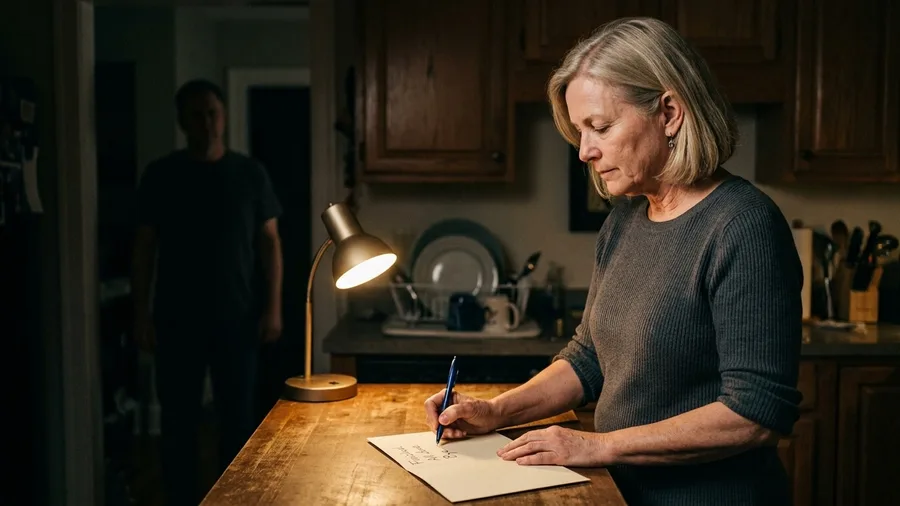
Image credit: Sagely Chic
Setting boundaries became much easier once I stopped treating every refusal like a courtroom defense.
For years, I thought I needed a convincing reason for every no. I would explain my schedule, describe everything else I had going on, apologize several times, and then offer alternatives.
The problem was that every additional detail created another opportunity for negotiation.
If you say you cannot help because you are busy on Thursday, someone may suggest Friday. If you say you already have plans, they may ask whether you can move them.
A simpler answer can be more effective: “I won’t be able to make it this week.”
You can be warm without being vague. You can be respectful without giving someone a complete inventory of your private schedule.
The Before-You-Answer Audit
✕
Am I agreeing just to end the conversation?
Pause before replying if the answer is yes.
!
Will I resent this tomorrow morning?
That may be a sign that you need to reconsider before committing.
✓
Do I genuinely have the energy for this?
If you want to help and have the capacity, then saying yes can be a genuine choice.
THE ONE DAILY HABIT

Image credit: Sagely Chic
How do you change a reflex that has been part of your personality for decades?
Stop answering every request immediately.
When someone asks for a favor, your first impulse may be to say yes because you want to end the awkwardness. Instead, give yourself permission to think.
You can say, “Let me check my schedule and get back to you.”
That short delay creates enough space to ask a better question: Do I actually want to do this, or am I simply uncomfortable disappointing them?
A ten-minute pause will not solve every boundary problem, but it can interrupt the automatic yes.
🌱 GROWING TIP
Start With Texts
Written messages can be an easy place to practice. Draft your response, wait a few minutes, reread it, and make sure you are answering based on your actual capacity rather than guilt.
Frequently Asked Questions
Do people get angry when you stop accommodating them?
Some people may be surprised, disappointed, or briefly frustrated when a pattern changes. That does not automatically mean the relationship is unhealthy.
Give the other person room to adjust while keeping the boundary clear and respectful. If someone repeatedly ignores reasonable boundaries, that is useful information about the relationship.
How do you handle family members who expect an automatic yes?
Start by changing small patterns. You might decline an inconvenient errand or explain that you cannot take on an additional responsibility.
Use the same calm language each time. You do not need to make the boundary dramatic for it to be real.
What do you say when someone presses you for a reason?
You can give a brief honest explanation if you want to, but you do not have to provide a detailed defense.
Try saying, “I am not available this time.” If they continue asking, you can calmly repeat the same answer rather than inventing an excuse.
Is it too late to change social habits in your sixties?
No. People can change long-standing communication and boundary habits at many stages of life.
The process may feel uncomfortable at first because other people are accustomed to the old pattern. Give yourself time to practice saying no without turning every boundary into a major confrontation.
How do you tell the difference between kindness and people-pleasing?
Kindness is usually a freely chosen action. People-pleasing often involves agreeing because you fear rejection, disappointment, conflict, or disapproval.
A useful question is: “If this person responded with complete acceptance to my no, would I still want to help?” If the answer is yes, you may be choosing generosity. If the answer is no, guilt may be driving the decision.
The Weight You Leave At The Door
Letting go of people-pleasing does not mean becoming cold, selfish, or unavailable.
It means becoming more deliberate about what you agree to.
The temporary discomfort of saying no can be much easier to handle than the long-term resentment that comes from repeatedly saying yes when you do not have the time, energy, or desire.
Your time matters. Your energy matters. And healthy relationships can make room for an honest answer.
Audit Your Next Request
The next time someone asks you for a favor, do not answer automatically.
Give yourself ten minutes. Check your calendar, consider your energy, and ask whether you genuinely want to help.
Then give the clearest answer you can.