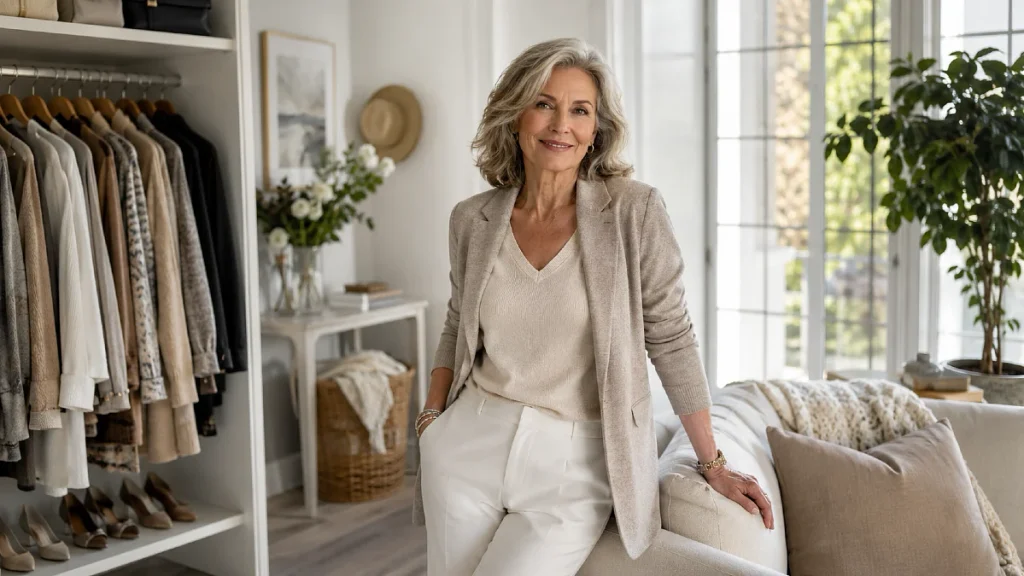
Getting dressed can become surprisingly difficult when the clothes that once felt natural no longer seem to work. Your personal taste may not have changed, but your lifestyle, comfort preferences, proportions, and wardrobe needs probably have.
For women over 50, finding a comfortable and stylish wardrobe is not about looking younger or following every new fashion rule. It is about understanding what feels right now and choosing clothing that supports the way you actually live.
Stylish outfits for women over 50 can be simple, modern, comfortable, and personal. The key is to focus on fit, proportion, useful outfit formulas, and a few details that make everyday clothes feel like your own.
You Haven’t Lost Your Style, You’ve Lost Your Starting Point
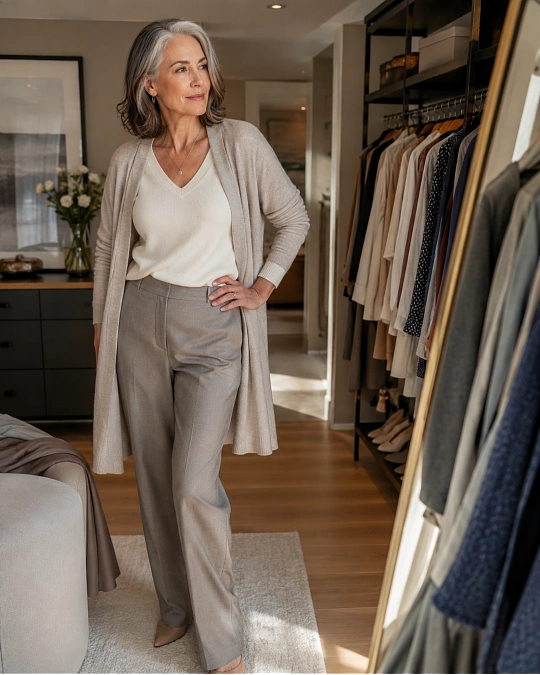
Most women do not suddenly lose their sense of style. What often changes is the easy formula they once relied on to get dressed.
A favorite pair of jeans may no longer have the same fit. Shoes that used to feel comfortable all day might not suit your current routine, and a blazer that once looked polished may now feel too restrictive or formal.
Fashion also changes gradually. Trouser shapes, jacket lengths, footwear, colors, and layering techniques can shift enough to make an older outfit formula feel less current without actually being wrong.
You do not need to chase every trend. Instead, rebuild your wardrobe around your current lifestyle, comfort level, personality, and the silhouettes you genuinely enjoy.
One of the easiest ways to begin is by replacing outdated style rules with more useful questions.
| Old Rule | What Actually Works Now |
|---|---|
| Dress younger to look current | Use modern proportions while keeping your personal taste |
| Hide every area you dislike | Create balance through shape, structure, and thoughtful draping |
| Buy more clothes to create more choices | Build a smaller collection of pieces that work together |
| Avoid trends after a certain age | Select only the trends that genuinely suit your wardrobe |
| Comfort means wearing very casual clothes | Combine comfortable fabrics and shoes with polished silhouettes |
Your wardrobe does not need to become completely different. A successful style refresh is often more about editing and updating than starting over.
Start With What Actually Fits Your Life Now
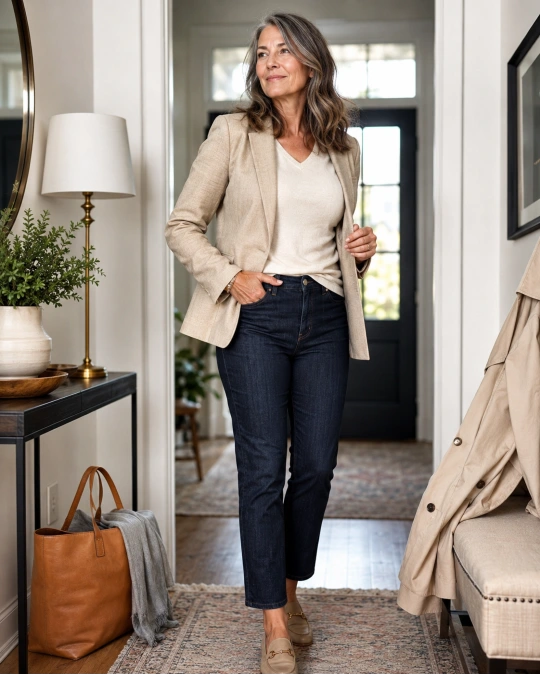
Before shopping for anything new, take a close look at the clothes you actually wear during an ordinary week.
Your real lifestyle should influence your wardrobe more than an imagined one. If your days involve errands, casual lunches, appointments, travel, family activities, or working from home, those situations deserve the most attention.
There is little value in owning several special-occasion dresses if your everyday wardrobe lacks comfortable trousers, versatile tops, useful jackets, and shoes you can walk in.
Comfort should also be evaluated over time. A waistband that feels fine for ten minutes but becomes uncomfortable after lunch is not necessarily a good everyday choice.
Fit note: Do not let the number printed on a clothing label decide whether a garment works. Pay more attention to shoulder placement, fabric movement, trouser length, waist comfort, and your ability to move naturally.
Clothing does not have to be tight to look polished. A controlled amount of ease can create a cleaner appearance because the fabric falls naturally instead of pulling across the body.
This is an important part of dressing over 50: instead of asking whether you are still allowed to wear something, ask whether the garment actually supports your life today.
Build a Personal Uniform You Can Trust
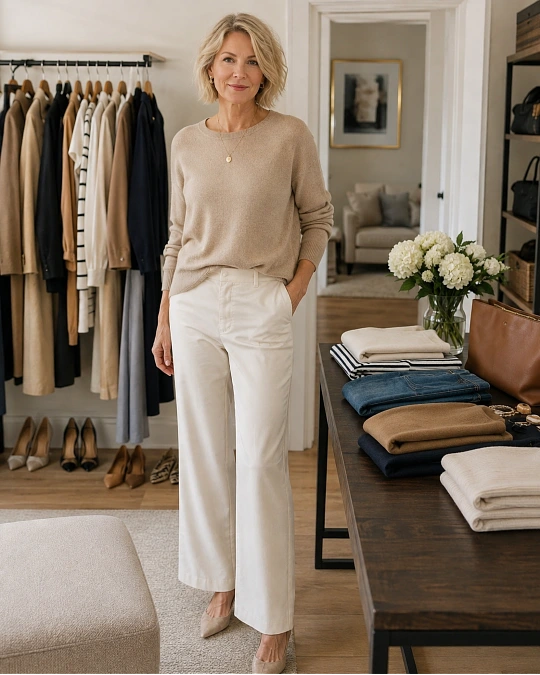
A personal uniform does not mean wearing an identical outfit every day. It means having a dependable outfit structure that makes getting dressed faster and easier.
Your formula might be straight-leg jeans with a soft knit and loafers. Someone else may prefer wide-leg trousers, a tucked shirt, and simple sneakers.
The important part is discovering which combinations repeatedly make you feel comfortable and put together.
Start by identifying a few reliable wardrobe building blocks:
- One or two trouser or jean silhouettes you genuinely enjoy wearing.
- Two or three tops that work naturally with those bottoms.
- A useful third layer such as a blazer, cardigan, jacket, or overshirt.
- Two comfortable shoe styles that can change the mood of an outfit.
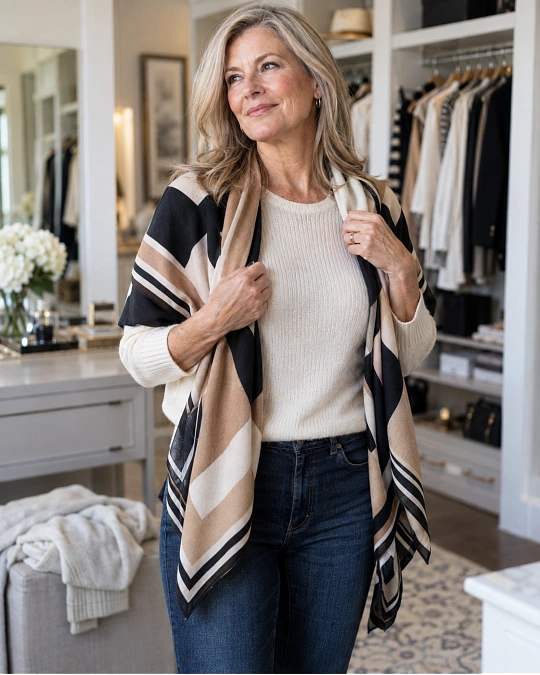
- One finishing detail such as earrings, a belt, scarf, watch, or structured handbag.
Once you have a dependable base, small changes can create many different outfits without requiring a large wardrobe.
| Occasion | Pieces | Why It Works |
|---|---|---|
| Everyday errands | Straight jeans + soft knit + clean sneakers | Relaxed pieces still have a defined and intentional shape |
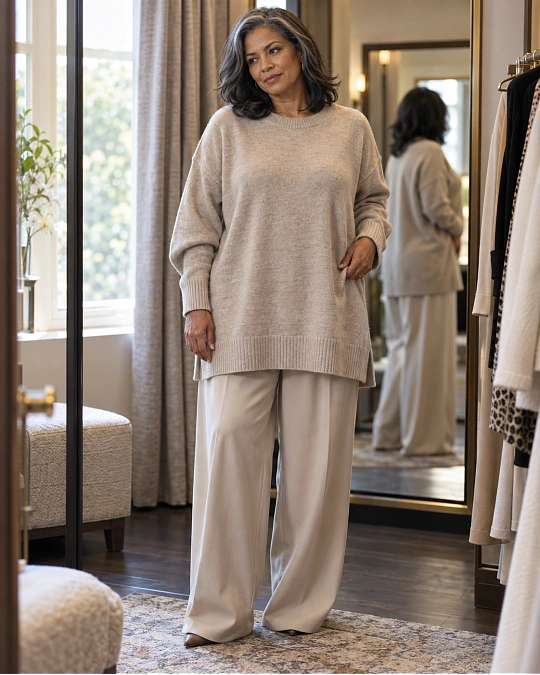
| Lunch with friends | Wide-leg trousers + fitted knit + loafers | A closer-fitting top balances the volume of the trousers |
| Smart casual day | Dark jeans + blouse + relaxed blazer | Shoulder structure makes denim look more polished |
| Travel day | Pull-on trousers + tee + cardigan + supportive sneakers | Soft layers provide comfort without looking like sleepwear |
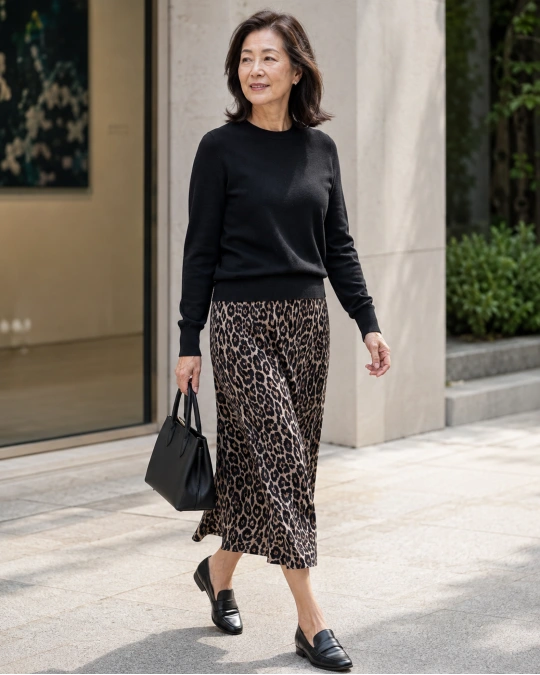
| Casual evening | Midi skirt + fine knit + ankle boots | The simple top lets the skirt provide visual interest |
Think of these combinations as starting points rather than strict rules. Change the color, neckline, shoe, jacket, or accessory until the outfit feels unmistakably yours.
Let Fit, Fabric, and Proportion Do More Work Than Trends
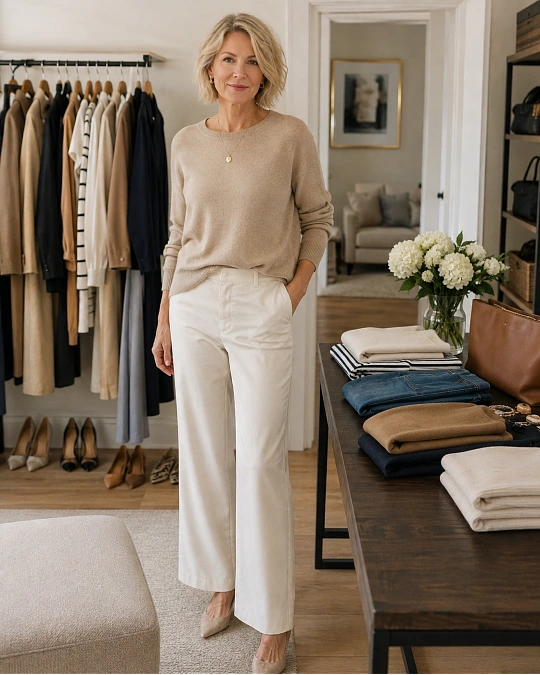
An outfit can feel outdated or uncomfortable even when nothing is technically wrong with the individual pieces. Often, the issue is simply the relationship between the shapes.
Loose trousers can work beautifully with a top that has a little more definition. A longer relaxed shirt may feel more balanced with a straighter trouser or jean.
Small styling adjustments can also change an outfit considerably. Try a partial tuck, roll your sleeves, open the neckline, change the jacket, or switch the shoes before deciding that the clothing itself no longer works.
Fabric deserves the same attention as silhouette.
Very lightweight jersey can cling more than expected, while extremely stiff materials can add unwanted bulk. Fabrics with enough weight and movement to skim the body often create a more intentional appearance.
| Fabric or Garment | What to Look For and Why |
|---|---|
| T-shirts | Medium-weight cotton or blends that skim rather than cling |
| Knitwear | Fine or medium knits with enough structure to maintain their shape |
| Trousers | Comfortable fabric with movement, drape, and a little stretch when useful |
| Shirts | Soft woven or blended fabrics that tuck without creating unnecessary bulk |
| Jackets | Light structure through the shoulders with room for comfortable layering |
Fabric note: A higher price does not automatically make a garment better. Look at the fabric, move it between your hands, check the seams, and see whether it returns to its original shape.
The best wardrobe pieces should work when you are standing, sitting, walking, reaching, and moving through an ordinary day.
Add Modern Details Without Feeling Like You’re Trying Too Hard
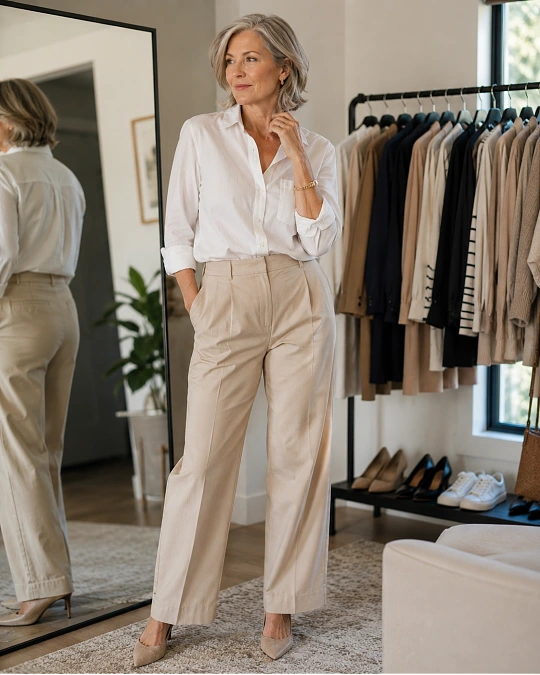
Looking current does not require replacing your wardrobe every season. One updated proportion or accessory can often refresh clothes you already enjoy.
For example, a wider trouser can create a completely different silhouette with a familiar knit. A modern loafer, streamlined sneaker, ankle boot, or low block heel can also change the overall mood of an outfit.
When updating your wardrobe, start with small details:
- Try a cleaner trouser shape. Straight, relaxed, gently wide, and tapered trousers can all work when balanced with the rest of the outfit.
- Refresh your jacket proportion. A relaxed blazer, cropped jacket, or neat hip-length layer can give older outfits a fresher appearance.
- Simplify accessories. One distinctive accessory can often have more impact than several competing pieces.
- Use color thoughtfully. A blouse, knit, scarf, or jacket in a color you love can transform neutral basics.
- Change the shoes first. Footwear can quickly shift an outfit from casual to polished or from traditional to modern.
You do not need to adopt every new fashion direction. Choose the details that make sense with the clothing you already own.
This approach can help develop style confidence over 50 without making your wardrobe feel like a costume or a collection of trends.
Edit Your Wardrobe With Compassion, Not Panic
Cleaning out a closet can be surprisingly emotional. Clothes can represent memories, previous lifestyles, body changes, money spent, and earlier versions of ourselves.
There is no reason to throw everything away simply because your style is evolving. Instead, separate clothing according to how useful and comfortable it is.
Keep the garments you enjoy wearing and feel good in. If you have sentimental pieces that you want to preserve, store them separately so they do not create confusion when you are choosing everyday outfits.
Then look carefully at the pieces that almost work.
A jacket with excellent fabric might simply need sleeve alterations. A pair of trousers that feels ordinary with one shoe may look completely different when paired with another silhouette.
Budget-friendly swap: Before replacing a garment, style it with three different pieces from your existing closet. Try changing the shoes, tuck, sleeves, belt, or third layer first.
When you do shop, consider how frequently you will realistically wear the item. A practical pair of trousers worn every week can provide more wardrobe value than a dramatic piece that leaves the closet only once a year.
A smaller wardrobe where pieces coordinate naturally can provide more useful outfits than a crowded closet filled with unrelated purchases.
A Small First Step You Can Take Today
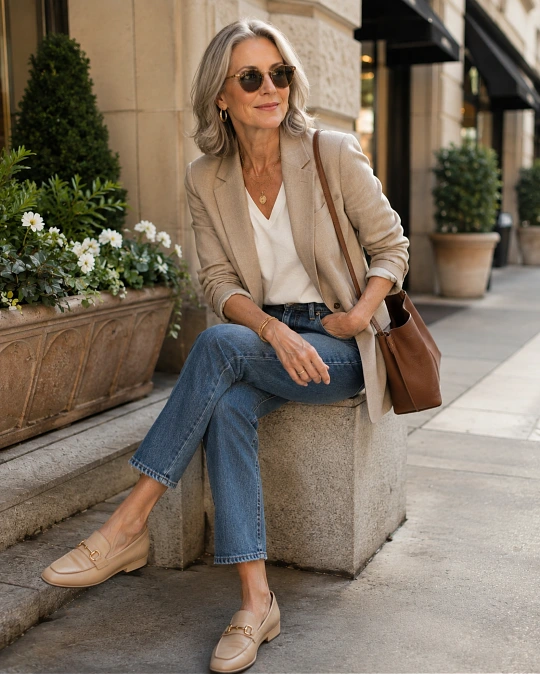
You do not have to discover your entire personal style in one afternoon. Start with one outfit that represents how you want to feel when you get dressed.
Choose a bottom you already trust. Add a top that balances its shape, then finish with a comfortable shoe and one detail that makes the outfit feel intentional.
Formula: favorite trousers or jeans + simple top + useful third layer + comfortable modern shoe
Take a quick photo of the finished outfit. Seeing several outfits together can make recurring preferences easier to identify.
You might notice that you consistently prefer open necklines, shorter jackets, monochromatic colors, wider trousers, structured handbags, or particular footwear.
Those repeated choices are valuable clues. They can become the foundation of a personal style formula that makes shopping and getting dressed much easier.
The best everyday outfits for women over 50 do not need to be complicated. They come from repeating the silhouettes and combinations that work while making small changes that keep your wardrobe interesting.
Frequently Asked Questions
Style Guide
A practical style guide for women over 50 should focus on clothing that fits comfortably, works with real-life routines, and reflects individual preferences. There is no single wardrobe formula that every woman needs to follow.
Start with your most useful pieces, identify the silhouettes you naturally prefer, and then add modern details gradually. This makes it easier to develop a wardrobe that feels current without losing your personal identity.
The Ageless Edit
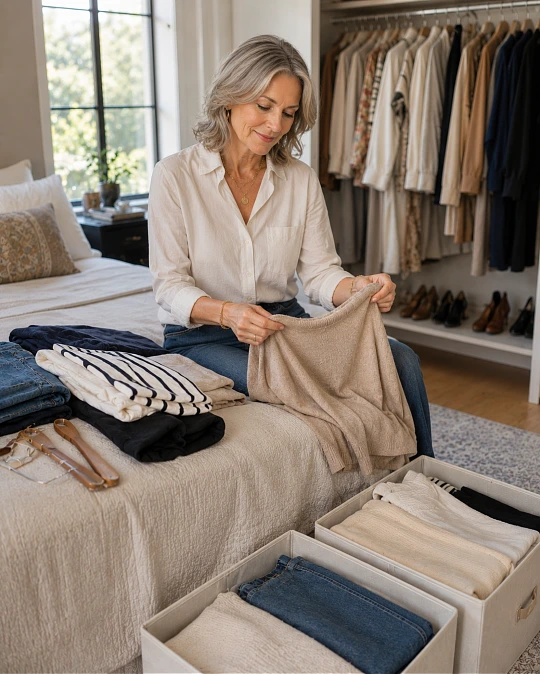
Style does not have an expiration date. The most useful wardrobe is one that evolves as your life changes while keeping the details that still feel authentically you.
Choose comfort where it matters, structure where it helps, and trends only when they genuinely add something to an outfit. With a few dependable formulas and thoughtful wardrobe edits, getting dressed can become simple, modern, and enjoyable again.