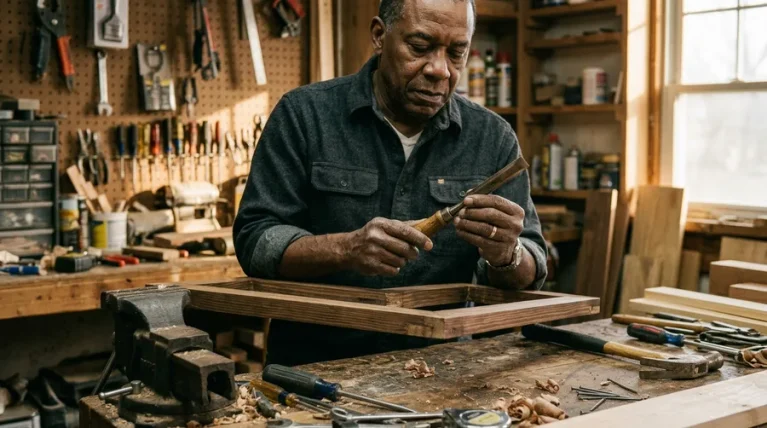
At 78, I left my 2,100-square-foot Ohio home for an 850-square-foot independent living apartment. After decades of managing a house and building a family life around it, the move felt less like a fresh start and more like giving up a piece of myself.
But the reality turned out to be more complicated than that fear suggested. I had to grieve the home and possessions I left behind, adjust to shared spaces, learn new social boundaries, and rethink what independence actually meant to me.
During my first 14 months, I discovered practical freedoms I had not expected alongside the difficult parts. These are the lessons I wish I had understood before making the move.
Quick Tips Before You Start
📦 Audit Belongings Early
Start downsizing several months before your move. Giving yourself time makes it easier to make thoughtful decisions instead of rushing through sentimental belongings at the last minute.
🚪 Establish Door Rules
Decide how you want to signal privacy and when you are comfortable with visitors. A simple routine can help protect quiet time without making you feel disconnected.
🚗 Keep Outside Ties
Continue maintaining relationships, activities, and appointments away from the community. Outside connections can keep your routine broad and your perspective fresh.
🍽️ Pace Dining Hall Meals
You do not have to attend every communal meal. Using your apartment kitchen for some breakfasts, lunches, or dinners can give you a useful break from constant social interaction.
The Emotional and Physical Transition
Leaving a longtime family home changes much more than your address.
Sorting through decades of belongings can bring old memories and former versions of yourself back to the surface. Then, once you arrive, even ordinary routines such as finding the laundry room or arranging your kitchen can feel unfamiliar.
The adjustment takes time. What eventually helped me was treating the transition as a new stage of life rather than expecting my old routine to immediately fit inside a smaller space.
1. Downsizing Possessions Triggers Genuine Grief Before Relief Arrives

There is something surprisingly emotional about holding an object you have not used in years and realizing that you still connect it to an important part of your life.
I cleared a large portion of my belongings before moving from my three-bedroom house and half-acre property. Workshop tools, extra dishes, furniture, and other household items were not simply objects to me. Many were connected to memories, responsibilities, and earlier versions of my life.
The first several weeks after moving were harder than I expected. I occasionally reached for kitchen items or workshop equipment that was no longer there.
By the third month, though, the smaller space began to feel lighter. There were fewer closets to organize, fewer possessions to maintain, and less visual clutter competing for my attention.
💡 Tip: Photograph sentimental belongings you cannot keep and create a small photo book. It can preserve the memory without requiring you to store every physical item.
2. Shedding Home Maintenance Liberates an Enormous Amount of Mental Bandwidth
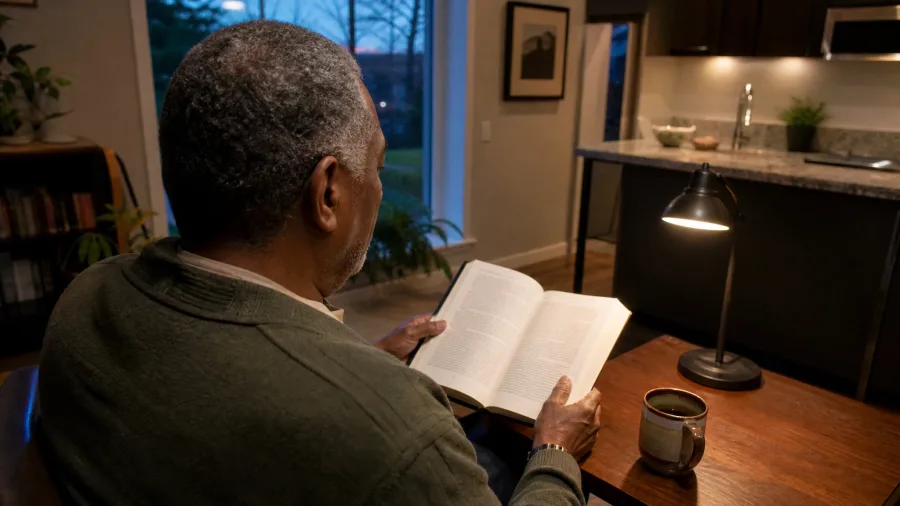
Owning a home can provide privacy and independence, but it also comes with a long list of responsibilities that rarely disappear completely.
For years, I kept track of gutters, furnace filters, lawn care, repairs, weather damage, and countless smaller jobs. In my new community, many of those responsibilities were handled by the property management team.
When something needed attention, I could make a maintenance request instead of rearranging my entire day around a repair. That change gave me more uninterrupted time for reading, walking, writing, and mentoring.
For me, giving up some home maintenance did not feel like giving up independence. It changed where I spent my energy.
Monthly Living Cost Shift
- 🏠 Property Taxes & Home Insurance: $620 / month
- ⚡ Utilities: $380 / month
- 🌱 Lawn Care & Seasonal Snow Removal: $240 / month
- 🔧 Structural Repairs & Appliance Reserve: $450 / month
- 🥗 Dining Hall Meals & Ingredients: $550 / month
- CCRC Baseline: $3,400 all-inclusive fee covering utilities, 30 meals, campus transportation, and repairs
My entrance fee was $185,000 and was part of the specific life-care contract I selected.
3. The Identity Shock of Being a Senior Resident Fades Fast

I worried that moving into a community made up primarily of older adults would make me feel older overnight.
During my first few weeks, I noticed safety devices, mobility equipment, and reminders that everyone around me was at a different stage of aging. At first, those details were difficult to ignore.
Then I started paying more attention to the people themselves.
My neighbors were readers, travelers, former teachers, business owners, artists, parents, grandparents, and people with interests that had little to do with their age. The shared experience of being in a later stage of life became only one small part of who we were.
My own identity gradually became centered on familiar interests such as books, learning, mentoring, and meaningful conversations rather than on the fact that I lived in a retirement community.
💡 PRO TIP
Reframe the Campus Safety Devices
Instead of seeing a wall-mounted check-in button or similar safety feature as a symbol of decline, think of it as another practical building feature. It is there for convenience and safety, not as a definition of who you are.
Social Complexities and Daily Life
Community living can create opportunities for connection, but living close to hundreds of other people also introduces social dynamics you may not expect.
Dining rooms, hallways, elevators, activity rooms, and shared events can make meeting people easy. Building relationships that actually feel meaningful takes more intention.
4. Dining Hall Seating Replicates High School Social Dynamics

The dinner rush can feel surprisingly familiar. People develop favorite tables, regular companions, and predictable routines.
My monthly plan included communal meals, but I learned quickly that I did not need to treat every dinner as a social obligation. Arriving a little earlier made finding a comfortable table easier, while eating some meals alone gave me valuable quiet time.
Constant conversation can be tiring, especially when you are still adjusting to a new environment. Cooking simple meals in my apartment a couple of nights each week helped me enjoy community dining without feeling overwhelmed by it.
💡 Tip: Balance communal meals with quiet meals at home. A retirement community can be social without requiring you to socialize every time you eat.
5. Building Deep Friendships Requires Deliberate Vulnerability Over Casual Proximity

Being surrounded by people does not automatically prevent loneliness.
You can exchange greetings with dozens of neighbors every day and still not have anyone you feel comfortable calling when something meaningful happens.
Early conversations often stayed on safe subjects such as weather, meals, activities, and everyday aches and complaints. Those conversations were pleasant, but they did not necessarily create genuine friendship.
I found that smaller gatherings worked better for me. Several months after moving, I helped organize a small history discussion group in the library. Having a shared interest gave us something deeper to talk about, and the smaller setting made personal conversations easier.
One morning, a retired scientist in the group admitted that he had been struggling with the question of what his life was supposed to look like after a long career. That honesty changed the tone of the conversation.
We began talking about changing identities, grief, careers, relationships, and the uncertainty that can accompany major life transitions. That was when I understood that meaningful friendships often require a little vulnerability instead of waiting for them to develop through proximity alone.
Navigating Daily Campus Socialization
⚠️
Superficial Connection
- Lingering in large common areas simply for random conversation
- Attending every large generic social mixer
- Allowing conversations to revolve around complaints
- Letting conversations continue even when your social energy is low
✨
Intentional Friendship
- Starting small groups around a genuine shared interest
- Inviting one or two neighbors for coffee
- Being honest about meaningful life changes when trust develops
- Setting reasonable limits when you need time alone
6. Clear Personal Boundaries Are Essential to Protect Daily Privacy
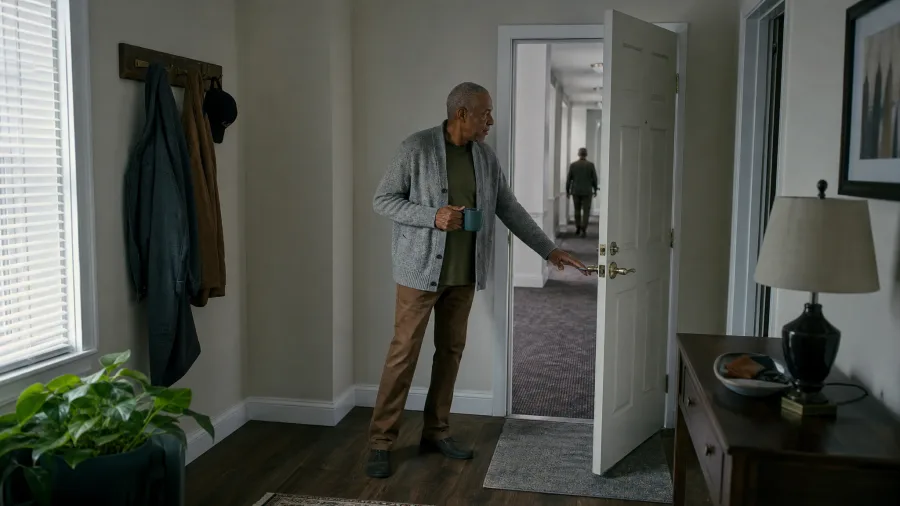
During my first couple of months, I assumed being friendly meant always being available.
That approach quickly became exhausting. Neighbors stopped by, invitations appeared throughout the week, and staff interactions sometimes interrupted the quiet parts of my morning.
Living close to many other people makes boundaries especially important.
I eventually developed a simple routine. A closed, latched door meant I wanted privacy. Leaving the door slightly open meant I was comfortable with casual visitors.
When someone asked me to join another activity or committee, I learned to answer kindly without automatically saying yes.
A sentence such as, “Thank you for thinking of me, but I keep my afternoons reserved for reading,” became an easy way to protect my time without rejecting the person.
Your apartment can still be your private sanctuary even when you live in a highly social community.
7. Watching Neighbors Experience Physical Decline Demands Emotional Resilience

One of the hardest parts of community living is seeing people you know experience serious changes in their health or independence.
During my first year, several neighbors I had regularly seen at meals or in the hallways moved into higher levels of care. Sometimes those changes happened quickly, and an empty chair at dinner could become a powerful reminder that life can change without much warning.
It is tempting to retreat into your apartment when those experiences become uncomfortable. I found that avoiding them did not make the reality disappear.
When a friend named Arthur died, several of us gathered to talk about him and later attended his memorial service. Being together gave us a way to process the loss rather than pretending it had not happened.
Living around people at different stages of aging can make mortality more visible. It can also encourage gratitude for the health, mobility, relationships, and abilities you still have.
The important boundary for me was learning to care about someone else’s situation without assuming that their experience predicted my own future. Compassion does not require you to surrender your sense of possibility.
⚠️ COMMON MISTAKE
Avoid Isolating During Campus Losses
If a community member passes away, it can be tempting to withdraw because the situation feels uncomfortable. When appropriate, attending a memorial or spending time with supportive neighbors can provide a healthier way to acknowledge the loss and maintain connection.
Autonomy, Family, and Long-Term Peace of Mind
One of the biggest changes for me was how the move affected my relationship with my adult children.
When household maintenance and future care planning were less uncertain, our visits could focus more on being family. Instead of spending every visit checking the house, fixing something, or discussing what might happen in an emergency, we had more room for ordinary conversations and shared experiences.
8. Relieving Adult Children From Caregiving Duties Restores Pure Family Connection

For years, my son would sometimes walk through the door and immediately start checking the house.
He would look at the furnace, notice something that needed repair, or ask whether I was managing everything safely. Those gestures came from love, but I realized that our visits could easily become focused on household responsibilities rather than simply spending time together.
My move changed that pattern.
The specific CCRC contract I selected included a continuing-care structure that gave me a plan for possible future changes in care. That did not remove every uncertainty, but it gave my family a clearer framework for discussing what could happen later.
Our visits became more relaxed. We could talk about grandchildren, books, meals, travel, and everyday life without beginning every visit with a list of repairs or safety concerns.
💡 Tip: If you are considering a continuing-care community, review the contract structure and future-care provisions with your family early. Everyone should understand exactly what the agreement does and does not cover.
🛡️ The Path to Long-Term Autonomy
1
Downsizing and Contract Selection
Review your belongings, compare communities carefully, and understand the details of any life-care contract before signing.
2
Establishing Independent Routines
Create apartment routines that give you both privacy and access to community amenities.
3
Curating Campus Micro-Communities
Build smaller circles around genuine interests instead of depending entirely on large community events.
4
Preserving Family Roles
Look for ways to keep family visits centered on relationships rather than household chores and crisis management.
9. Personal Autonomy Expands Because Physical Energy Is Conserved

It took me a while to separate physical self-reliance from personal independence.
One afternoon, I watched a maintenance crew handle landscaping while I sat on my balcony planning a trip and preparing notes for people I mentor.
I was not doing the yard work myself, but I was deciding exactly how to use the time and energy I had saved.
For me, independence became less about personally completing every household task and more about having control over how I spent my day.
10. Off-Campus Commitments Prevent the Community From Becoming an Insular Bubble

One of the easiest traps is allowing the community to become your entire world.
Everything you need may be nearby. There may be meals, transportation, activities, healthcare services, friends, and familiar routines within a few minutes of your apartment.
That convenience is useful, but I found it important to keep relationships and activities outside the campus as well.
I continued seeing my physician in town, volunteering at the county library, and attending local civic meetings. Those outside experiences brought new ideas and conversations back into my daily life.
CCRC Living Profile — At a Glance
- 📐 Apartment Size: 850 sq ft
- 💵 Monthly Fee: $3,400 all-in
- 🍽️ Meal Plan: 30 dinners / month
- 🚗 Driving Status: Fully active
- 🤝 Outside Roles: 2 weekly shifts
- Primary Benefit: Access to higher levels of care within the same community under the terms of the selected contract
11. Moving Five Years Early Guarantees You Make the Choice Yourself

I used to think people should wait until they absolutely needed a retirement community.
Now I see why making the decision while you are still capable can give you more choices. You can tour communities, compare contracts, decide what belongings to keep, select an apartment, and learn the new environment before a health crisis makes those decisions urgent.
I remember seeing an older neighbor arrive after a serious fall. Her family had to manage admissions and belongings while everyone was still dealing with the immediate shock of the situation.
My own move happened under very different circumstances. I had time to research, compare options, sort my possessions, choose where I wanted to live, and gradually become familiar with the community.
That does not mean everyone should move at the same age or for the same reasons. Housing costs, health, family circumstances, contracts, location, and personal preferences all matter.
What mattered to me was having the ability to make the decision deliberately rather than waiting for circumstances to make it for me.
💡 Tip: Visit retirement communities well before you expect to move. Early visits can help you understand costs, contracts, waiting lists, apartment options, transportation, dining, and care arrangements without the pressure of an immediate move.
Key Transition Metrics
These are the personal figures I tracked during my first 14 months of independent community living.
- 65%
Belongings Downsized
Approximate volume of possessions I let go of before moving - 2 Hours
Daily Time Reclaimed
Time I redirected from property upkeep toward reading, writing, and other activities - Care Continuum Access
On-Campus Future-Care Planning
Access to higher levels of care according to the terms of my selected community contract
Frequently Asked Questions
What is the difference between independent living and assisted living in a CCRC?
Independent living generally provides a private residence with access to community amenities while allowing residents to manage their own daily routines. Assisted living typically adds hands-on support with activities such as medication management, dressing, bathing, or other personal-care needs. Exact services vary by community.
How do entry fees work for continuing care retirement communities?
An entry fee is an upfront payment required by some continuing care retirement communities. The amount, refund provisions, services included, and future-care arrangements vary significantly by contract. Read the agreement carefully and consider professional financial or legal advice before committing.
Can I bring my own car and leave campus whenever I want?
Many independent living communities allow residents to keep personal vehicles and come and go freely, but policies differ. Before moving, ask about parking, driving requirements, transportation services, visitor rules, and any restrictions that could affect your routine.
What happens if my care needs increase down the road?
Continuing care communities are designed to provide different levels of support, but the exact transition process depends on the community and contract. Ask specifically how independent living, assisted living, memory care, and skilled nursing are handled and what additional costs may apply.
The Proactive Decision Window
For me, the right time to investigate retirement community living was not when I could no longer manage my home. It was while I still had enough energy to tour communities, ask detailed questions, sort through my belongings, and make decisions without feeling rushed.
Fourteen months after moving, my small key fob no longer feels like a symbol of lost independence. It reminds me that I chose my next home, established my own routines, and built a new version of everyday life on my own terms.
Review the Transition Metrics
Look back at the transition figures above and consider which changes would matter most in your own situation, from downsizing possessions to reducing home-maintenance responsibilities and planning for future care.