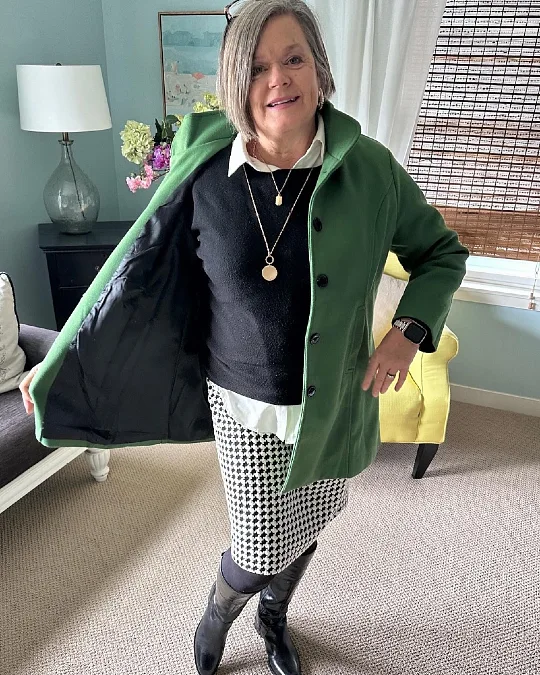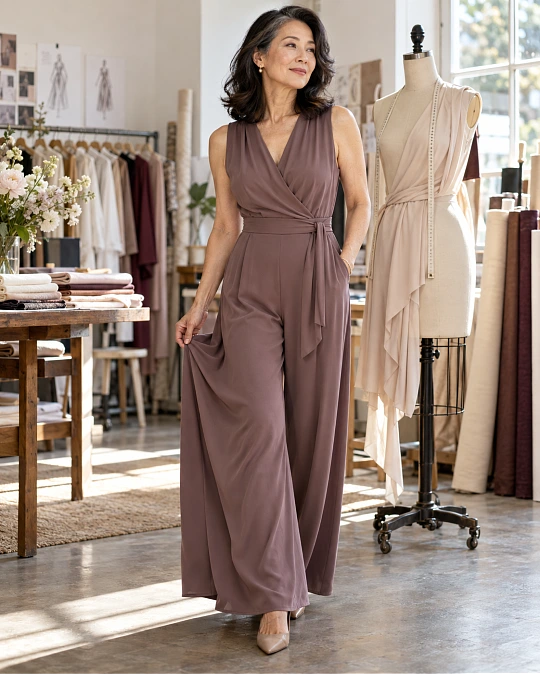
Image credit: Sagely Chic
Winter wardrobes can become crowded quickly. Coats, sweaters, boots, scarves, and seasonal pieces can fill a closet without necessarily making it easier to get dressed.
The problem is often not having too few clothes. It is having too many pieces that do not work comfortably together, especially when thicker fabrics and multiple layers are involved.
A practical capsule wardrobe over 50 focuses on versatile pieces that layer comfortably, coordinate naturally, and suit your everyday routine.
You do not need to replace your entire wardrobe. A carefully selected group of coats, knits, bottoms, shoes, and accessories can create plenty of outfits throughout the season.
A Winter Essential Should Earn Its Space in More Than One Outfit
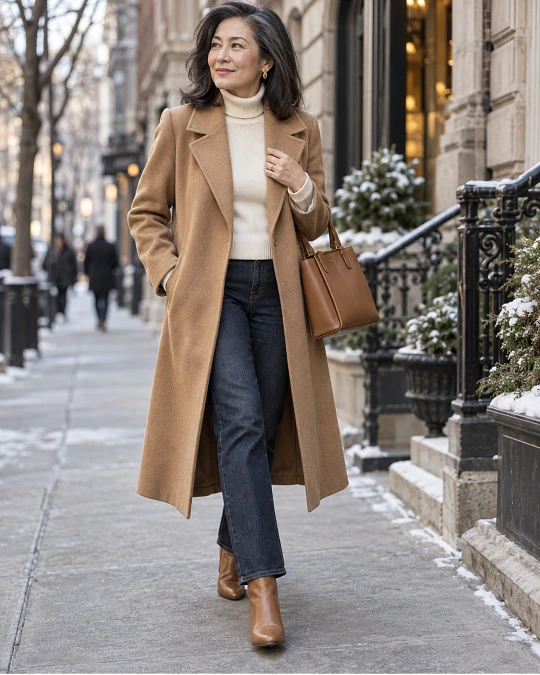
Image credit: Sagely Chic
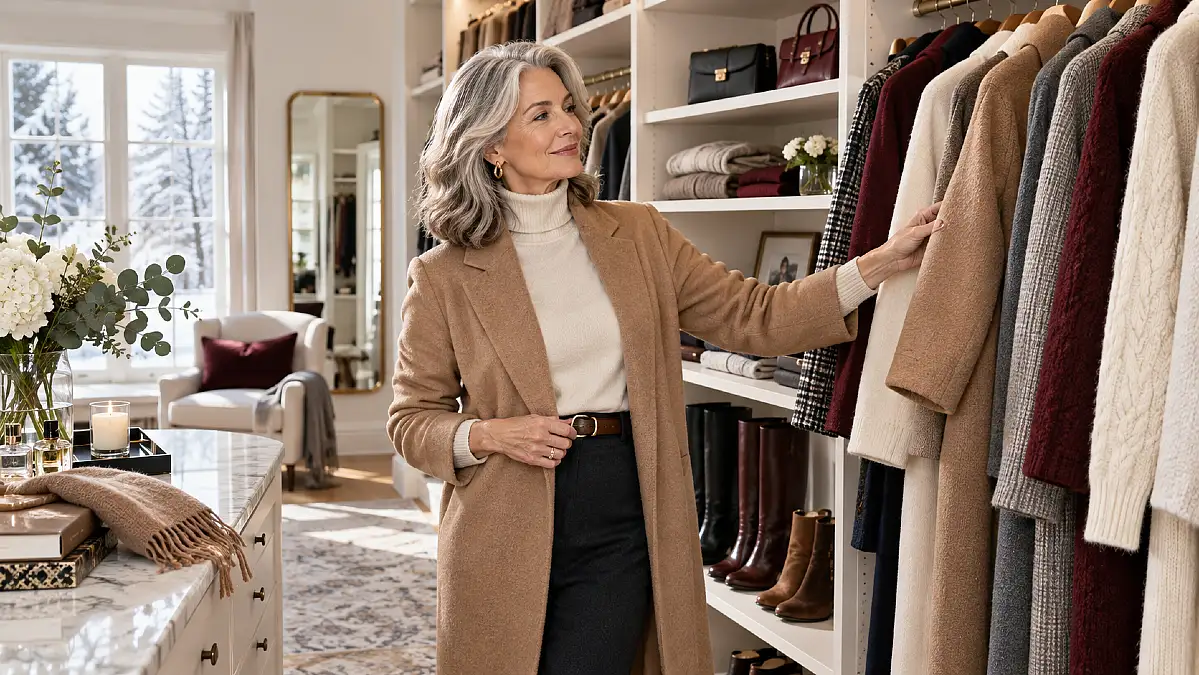
A useful winter essential should have more than one purpose. The best pieces solve several dressing needs and work with multiple items already in your closet.
For example, a lightweight merino sweater can work with jeans, tailored trousers, skirts, and coats. A highly specific statement piece may be beautiful but much less useful if it only works with one outfit.
Fit is equally important. Winter layers naturally create more visual volume, so clothing that skims the body without squeezing or overwhelming it usually creates a cleaner result.
Before purchasing something new, think about at least three outfits you could create with it. If you cannot easily imagine those combinations, it may not be the best addition to your capsule.
Here are some practical categories to consider:
| Piece | What to Look For | Mixes Well With |
|---|---|---|
| Winter coat | Clean shoulders, enough room for knitwear, knee or mid-thigh length | Jeans, trousers, dresses, skirts |
| Fine knit | Merino, cotton blend, cashmere blend, or smooth lightweight wool | Blazers, coats, jeans, tailored pants |
| Dark jeans | Straight, slim-straight, or relaxed cut with a clean finish | Knits, shirts, boots, loafers |
| Tailored trousers | Straight, softly wide, or gently tapered leg | Sweaters, blouses, jackets |
| Midi skirt | Fluid knit, wool blend, or soft pleating | Fine knits, boots, structured jackets |
| Ankle boots | Comfortable heel, supportive sole, simple toe shape | Denim, trousers, skirts, dresses |
These categories are simply a starting point. Your climate, lifestyle, preferred colors, and personal style should determine exactly which versions belong in your wardrobe.
Start With a Coat That Works With Your Real Winter Clothes
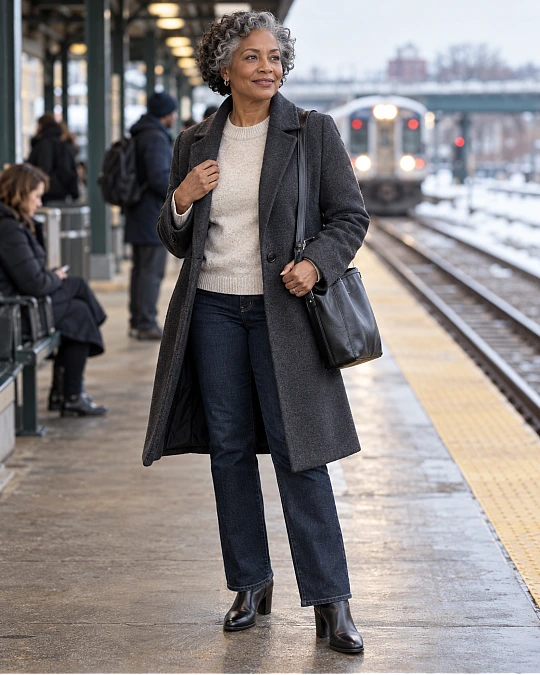
Image credit: Sagely Chic
Your coat covers a large portion of your outfit, so choosing one that works with your existing clothes can make winter dressing much easier.
Look for enough room through the shoulders, arms, and body to accommodate the thickest sweater you normally wear. A coat that only fits comfortably over a thin shirt may become frustrating once temperatures drop.
Mid-thigh and knee-length coats are versatile because they can work with jeans, trousers, dresses, and different skirt lengths.
A softly structured wool or wool-blend coat can also make straightforward everyday outfits for women over 50 look more finished without requiring complicated styling.
Fit note: Try your coat over your usual winter knit. Button it completely, move your arms forward, sit down, and walk around before deciding whether the size and shape actually work.
Neutral shades such as navy, charcoal, camel, chocolate, black, olive, and soft taupe can make a strong foundation for a winter capsule.
If you already own a well-fitting neutral coat, there is no need to replace it just because a different coat shape becomes popular. You can refresh the outfit through knitwear, scarves, footwear, or accessories.
Fine Knits Give You More Layering Options Than Bulky Sweaters
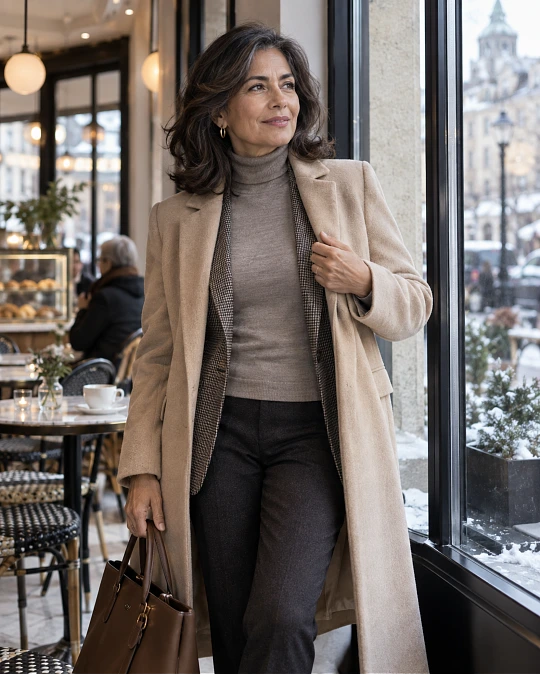
Image credit: Sagely Chic
Chunky sweaters have their place, but relying on thick knitwear for every outfit can make coats and jackets difficult to layer.
Fine and medium-weight knits are often more versatile because they provide warmth while leaving room for another layer on top.
Merino wool, cotton blends, cashmere blends, and smooth wool knits can work beneath coats and jackets without creating excessive bulk around the shoulders.
A crew neck is easy to wear beneath a blazer or coat, while a V-neck leaves more open space around the face. A mock neck provides additional warmth without the feeling of a high folded turtleneck.
You can still include a few textured sweaters for variety. A cable knit, brushed cardigan, or relaxed sweater can add visual interest when the rest of your wardrobe has cleaner lines.
For color, combine dependable neutrals with one or two shades you particularly enjoy. Burgundy, forest green, plum, rust, cream, soft blue, or deep red can add personality to winter outfits.
The same knitwear can also be styled differently depending on the weather and occasion:
| Base Piece | Casual Day | Smart Casual | Colder Day |
|---|---|---|---|
| Fine crew-neck knit | Straight jeans + sneakers | Wool trousers + loafers | Thermal layer + coat |
| Turtleneck | Dark denim + ankle boots | Midi skirt + structured jacket | Scarf + long coat |
| Cardigan | Tee + relaxed trousers | Blouse + tailored pants | Buttoned over a thin merino knit |
| Knit dress | Flat boots | Belt + refined ankle boots | Long coat + opaque tights |
This is one of the biggest advantages of a capsule wardrobe. The same pieces can serve different situations simply by changing the layers, footwear, or accessories.
Jeans, Trousers, and Skirts Should Balance Your Winter Layers
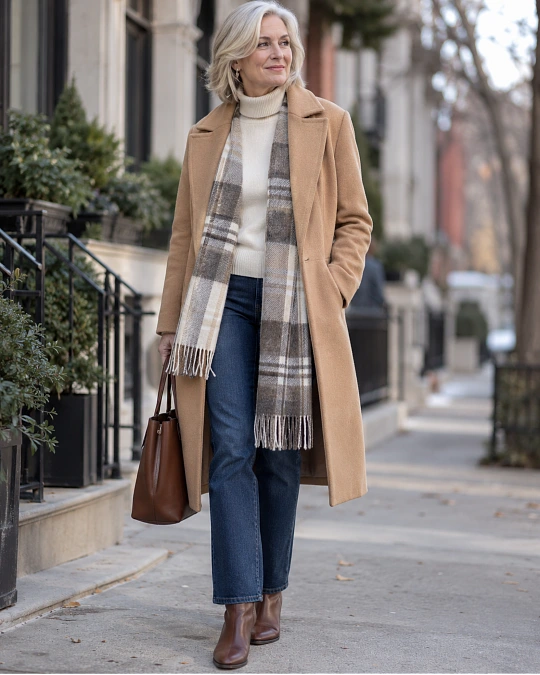
Image credit: Sagely Chic
Winter layers often add volume to the upper half of an outfit. Your bottoms do not need to be fitted, but they should help create a clear overall shape.
Straight-leg jeans are particularly flexible because they sit between very narrow and very wide silhouettes. They work with ankle boots, sneakers, loafers, and many heavier winter shoes.
For trousers, straight legs, softly wide shapes, and gently tapered cuts can all work well. Fabrics such as ponte and wool blends can provide more structure and warmth than lightweight trousers.
If you prefer wide-leg trousers, check the hem carefully. Excess fabric pooling around your footwear can make an already layered outfit feel heavier.
A winter capsule can also include skirts. A fluid midi skirt paired with a fine sweater and boots can create a polished casual outfit while keeping the wardrobe varied.
Comfort upgrade: If traditional waistbands become uncomfortable during long days, look for stretch fabrics, partial elastic backs, or subtle side elastic. You can maintain a polished appearance without sacrificing comfort.
Let Your Shoes Set the Practical Limit of the Capsule
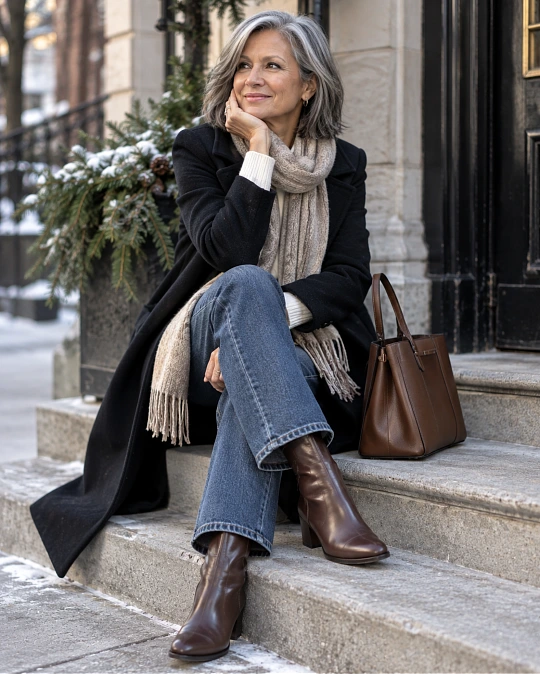
Image credit: Sagely Chic
A winter wardrobe needs footwear that matches real life. Walking, commuting, errands, travel, wet pavement, and cold temperatures can all affect which shoes you actually reach for.
A streamlined ankle boot is a useful starting point. A flat sole, low block heel, or modest platform can provide comfort while working with trousers, skirts, and dresses.
Depending on your climate, you may also want a supportive sneaker, loafer, or comfortable flat for days when boots are unnecessary.
The goal is not to own every shoe style. Instead, choose enough footwear to cover the situations you regularly encounter.
Pay attention to the relationship between your shoes and trouser hems. Wider trousers often work well with footwear that has some visual weight, while straight trousers can look polished with sleeker boots or loafers.
Shoe swap: If you like the elongated effect of heels but do not enjoy wearing them for long periods, try a pointed or almond-toe flat boot instead.
Accessories can then provide additional personality. A patterned scarf, textured handbag, statement earrings, or colorful gloves can make familiar winter pieces feel different without expanding the wardrobe significantly.
Build Your Winter Colors Around Three Neutrals and a Few Accents
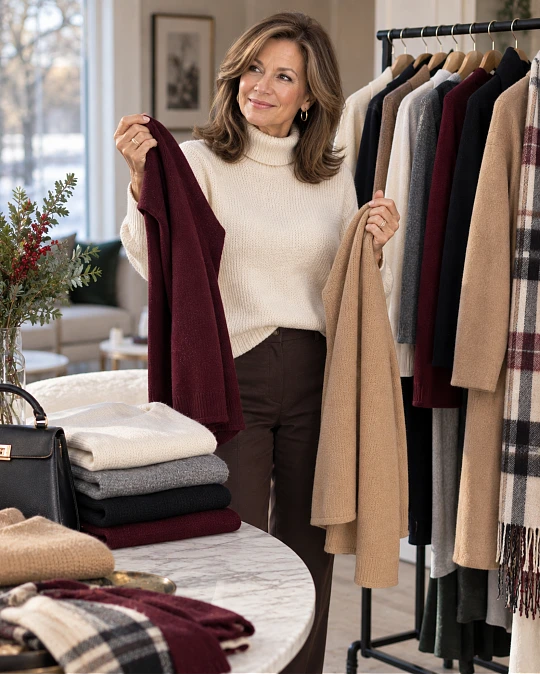
Image credit: Sagely Chic
A capsule wardrobe does not have to be limited to beige, black, and white. What matters is creating enough color connection that most of your pieces can be worn together.
Start with two or three neutrals already present in your closet. Navy, charcoal, cream, camel, chocolate, olive, black, and denim can all provide a flexible foundation.
Then introduce one or two accent colors that you genuinely enjoy wearing. These colors can appear in sweaters, scarves, shirts, bags, or smaller accessories.
You also do not have to match every neutral perfectly. Combinations such as charcoal and black, camel and cream, navy and denim, or chocolate and burgundy can create depth without looking overly coordinated.
This approach makes dressing over 50 more straightforward because you are creating a connected wardrobe rather than collecting isolated outfits.
Use Three Outfit Formulas Instead of Planning From Scratch Every Morning
A useful capsule wardrobe over 50 should reduce daily decisions. You want combinations that you can rely on when you do not have time or energy to plan an outfit from scratch.
Choose a few personal outfit formulas based on combinations that already feel comfortable and polished. Then change the color, fabric, footwear, or accessories to keep them from feeling repetitive.
| Occasion | Formula | Why It Works |
|---|---|---|
| Errands or casual lunch | Straight jeans + fine knit + ankle boots + coat | Simple proportions balance heavier winter layers |
| Work or appointments | Tailored trousers + soft blouse or knit + structured coat | Clean lines create polish without feeling overly formal |
| Dinner or gathering | Midi skirt + fitted knit + boots + earrings | The fitted top balances the movement of the skirt |
| Travel day | Stretch trousers + merino knit + cardigan + flat boots | Soft layers provide comfort through changing temperatures |
Formula: straight jeans + fine knit + ankle boots + long coat.
This combination works because every item has a clear purpose. Change the knit, replace denim with trousers, add a scarf, or switch the boots and the same basic structure can create another outfit.
Buy the Missing Link, Not Another Version of What You Already Own
Before buying another winter item, identify what is actually missing from your current wardrobe.
You may already have several beautiful sweaters but lack trousers that feel comfortable with them. Or perhaps your jeans and tops work well together, but your coats do not leave enough room for proper winter layering.
Try sorting your wardrobe by function rather than category:
- Keep pieces that fit comfortably and work with several other garments.
- Set aside clothes that require constant adjusting or complicated styling.
- Notice repeated gaps, such as missing dark trousers, versatile knitwear, or practical footwear.
- Prioritize purchases that create several new outfit combinations immediately.
Cost per wear is particularly useful when building a capsule. A well-fitting coat that you wear several times a week may be more valuable to your routine than a dramatic sweater that only gets worn once or twice.
You also do not have to complete your capsule in one shopping trip. Wear what you already own, notice what repeatedly causes problems, and then fill those specific gaps.
Your Winter Capsule Quick Guide
Use this checklist when editing your wardrobe or planning winter outfits. The goal is to keep useful pieces that layer well and work for your actual lifestyle.
1. Start With Outerwear
Choose one dependable coat that fits comfortably over your everyday sweaters and coordinates with most of your jeans, trousers, dresses, or skirts.
2. Keep Knits Layer-Friendly
Use fine and medium-weight sweaters so you can add warmth without creating excessive bulk beneath your coat.
3. Balance Your Bottoms
Keep jeans, trousers, and skirts that maintain a clean shape when combined with your heavier winter layers.
4. Choose Shoes for Real Life
Prioritize boots, loafers, sneakers, or supportive flats that suit your climate, walking habits, and everyday activities.
5. Build Around Core Colors
Choose two or three reliable neutrals and add a handful of accent colors through sweaters, scarves, bags, or other accessories.
6. Fill Gaps, Not Closets
Before purchasing something new, identify the missing piece that would make several existing outfits easier to wear.
Easy Winter Formula:
Straight jeans or trousers + fine knit + ankle boots + long coat + one personal accent.
Frequently Asked Questions
How many pieces should a winter capsule wardrobe have?
There is no universal number that works for every woman. Your capsule should reflect your lifestyle, climate, laundry routine, and the situations you regularly dress for.
Instead of focusing on a specific total, make sure your tops, bottoms, layers, outerwear, and shoes can create several complete outfits together.
What colors work best in a winter capsule wardrobe for women over 50?
Start with the colors you already enjoy wearing. Navy, charcoal, cream, camel, chocolate, olive, black, and denim are versatile choices that can form a strong foundation.
Then add a few colors that work well near your face. Burgundy, plum, forest green, soft blue, rust, and red can bring variety without making the wardrobe difficult to coordinate.
Can I include trends in a capsule wardrobe?
Absolutely. A capsule wardrobe can still reflect current fashion and personal style.
Keep the majority of your frequently worn pieces versatile, then bring in trends through a modern trouser shape, updated knit, current shoe style, colorful scarf, or distinctive accessory.
Are jeans necessary in a winter capsule?
No. Jeans are useful for many women, but they are not required.
If you prefer trousers, skirts, dresses, or knit pants, those can become the foundation of your winter outfits. The most useful pieces are the ones you genuinely wear and can combine with several other garments.
How can I stop winter layers from making me look bulky?
Focus on thinner layers and intentional proportions rather than making every garment tight. Fine knits beneath structured outerwear can provide warmth while keeping the silhouette more controlled.
You can also balance volume. For example, pair a relaxed sweater with straighter trousers, or combine wider trousers with a more streamlined knit.